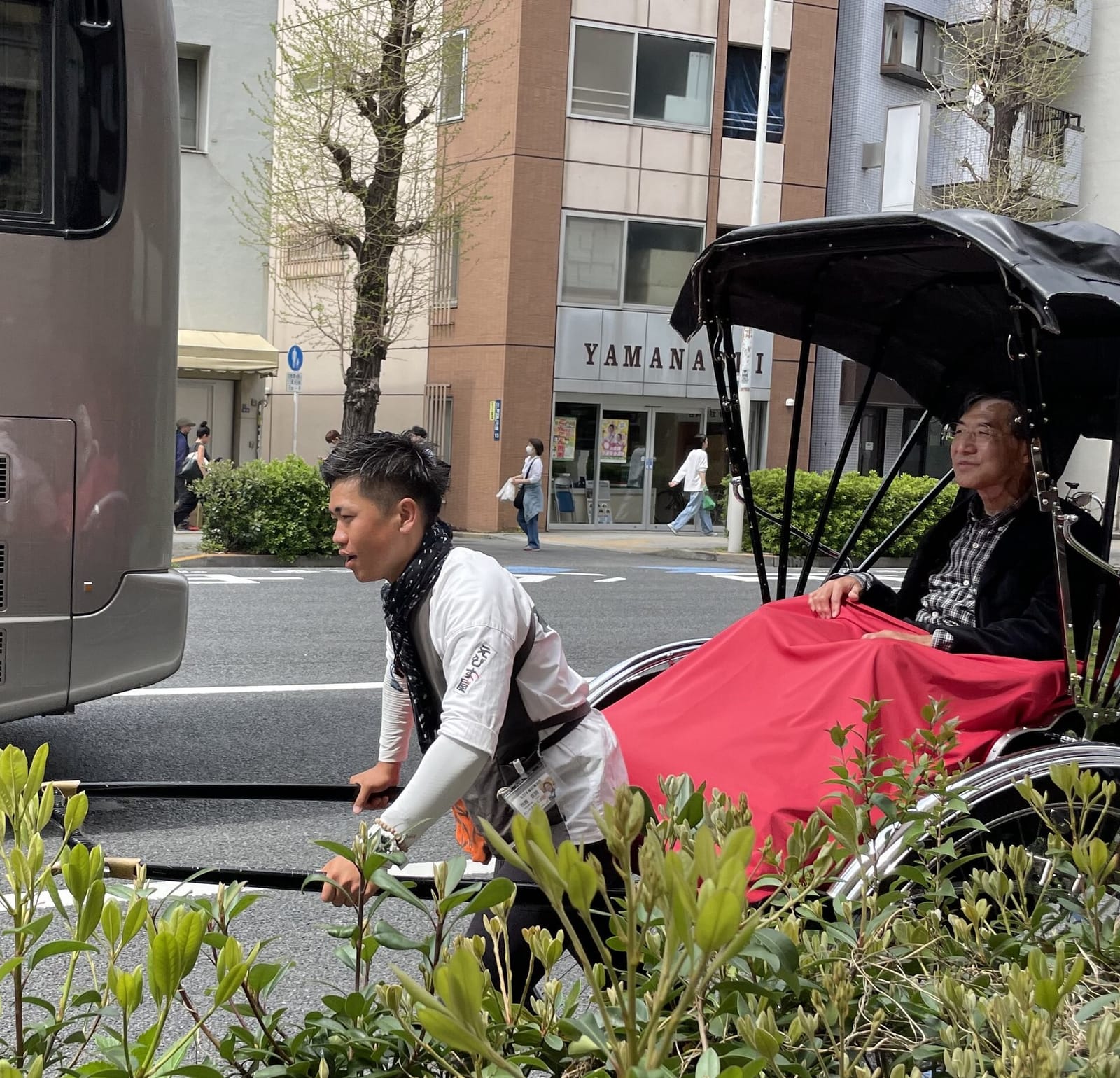
Asakusa Rickshaw Ride Prices: How Long, How Much, Where to Board
Asakusa rickshaw prices as of November 2026 from two operators' fare tables: 12 minutes to 3 hours, what each covers, groups of three and booking.
The most common mistake with Asakusa rickshaws is reading the price as per person. Every operator here prices by the rickshaw, which seats two, so a couple pays ¥5,000 for a short ride while a family of three pays for two rickshaws. The second mistake is choosing a length by the clock alone: the shortest ride barely leaves the Kaminarimon area, while 30 minutes is what it takes to reach the river and the shrines behind Senso-ji. Below are the fares from two operators’ own price tables, what each length covers, and where to board.
How much does a rickshaw ride in Asakusa cost?
A short ride costs ¥4,000–¥5,000, 30 minutes about ¥10,000 for two, and an hour ¥20,000 for two. These are the tax-included fares for rides from the Asakusa side, as of November 2026:
| Length | Ebisuya, 1 rider | Ebisuya, 2 riders | Jidaiya, 1 rider | Jidaiya, 2 riders |
|---|---|---|---|---|
| About 10–12 min | ¥4,000 (12 min) | ¥5,000 (12 min) | ¥4,000 (about 10 min) | ¥5,000 (about 10 min) |
| 20 min | — | — | ¥7,000 | ¥8,000 |
| 30 min | ¥9,000 | ¥10,000 | ¥9,000 | ¥10,000 |
| 45 min | ¥13,000 | ¥15,000 | ¥13,000 | ¥15,000 |
| 60 min | ¥16,000 | ¥20,000 | ¥16,000 | ¥20,000 |
| 90 min | ¥23,500 (¥2,500 per extra 10 min) | ¥29,000 (¥3,000 per extra 10 min) | ¥23,500 | ¥29,000 |
| 120 min | ¥31,000 | ¥38,000 | ¥31,000 | ¥38,000 |
| 180 min | ¥50,000 (with souvenir) | ¥60,000 (with souvenir) | Ask | Ask |
Ebisuya does not list 90 and 120 minutes as courses; the figures above apply its published rate for each extra 10 minutes beyond an hour, which lands on the same totals as Jidaiya. Confirm the total when you book. Its 180-minute tour includes a T-shirt or a limited-edition plush toy.
Rides that start at Tokyo Skytree cost more. Jidaiya’s fares from its stand at Tokyo Skytree Town are ¥13,000 for one rider or ¥15,000 for two for 30 minutes, and ¥20,000 or ¥25,000 for an hour.
Extras at Ebisuya, each ¥1,000 per rickshaw: a guide who speaks a language other than Japanese, a specific named guide, or bringing a pet you can hold. Pick-up at another location, or finishing far from the stand, starts at ¥1,000 depending on distance.
What does a group of three or more pay?
Add up the rickshaws. Each one carries two, so three people take one two-rider rickshaw and one single. Jidaiya’s own example: three people for 30 minutes pay ¥10,000 + ¥9,000 = ¥19,000. Five people take two two-rider rickshaws and one single. Jidaiya lets preschool children ride free on an adult’s lap, depending on the child’s size, and asks you to check first.
Where do you board a rickshaw in Asakusa?
Right around Kaminarimon. Both operators have stands within a minute of the gate, and Jidaiya has a third at Tokyo Skytree Town across the river.
Ebisuya rickshaw stand
Ebisuya runs rickshaws in several tourist towns, and its Asakusa office is at 1-34-2 Asakusa. The 12-minute ride is walk-in only, and the company takes same-day riders with or without a booking when a slot is free. It accepts cash, credit cards and digital wallets.
- Hours
- From 9:00 until evening; hours change by season
- Price
- 12 min ¥4,000 (1 rider) / ¥5,000 (2 riders); 30 min ¥9,000 / ¥10,000 (as of November 2026)
- Access
- East of Kaminarimon Gate along Kaminarimon-dori; about 1 min on foot from Asakusa Station on the Ginza Line
- Source
- www.ebisuya.com
Jidaiya Meiji-kan (main counter)
Jidaiya says it revived rickshaws in Asakusa more than 25 years ago and calls itself the oldest operator here. Its Meiji-kan office has an indoor waiting room, a free guide booklet and map, and restrooms for its customers. It also offers bag storage, which helps if you are riding before or after checking out of a hotel. Rides also leave from the rickshaw lane on the road beside Kaminarimon, where the exact boarding point shifts a little day to day.
- Hours
- 9:30–17:30, open every day
- Price
- About 10 min ¥4,000 (1 rider) / ¥5,000 (2 riders); 30 min ¥9,000 / ¥10,000 (as of November 2026)
- Access
- Close to Kaminarimon, at 2-3-5 Kaminarimon
- Source
- jidaiya.biz
Jidaiya stand at Tokyo Skytree Town
Jidaiya is the official rickshaw of Tokyo Solamachi and the only operator that starts and finishes inside Tokyo Skytree Town. Courses from here can end in Asakusa, so you can ride one way across the river after visiting the tower.
- Price
- 30 min ¥13,000 (1 rider) / ¥15,000 (2 riders) (as of November 2026)
- Access
- In Hanami-zaka Hiroba, right in front of Tobu Tokyo Skytree Station; the stand is marked with white lines
- Source
- jidaiya.biz
What do you see on a 10–12 minute ride?
The Kaminarimon area and a photo, not much more. The short ride is a taste of being pulled through the streets, and it suits you if you mainly want the picture with the gate behind you.
Kaminarimon
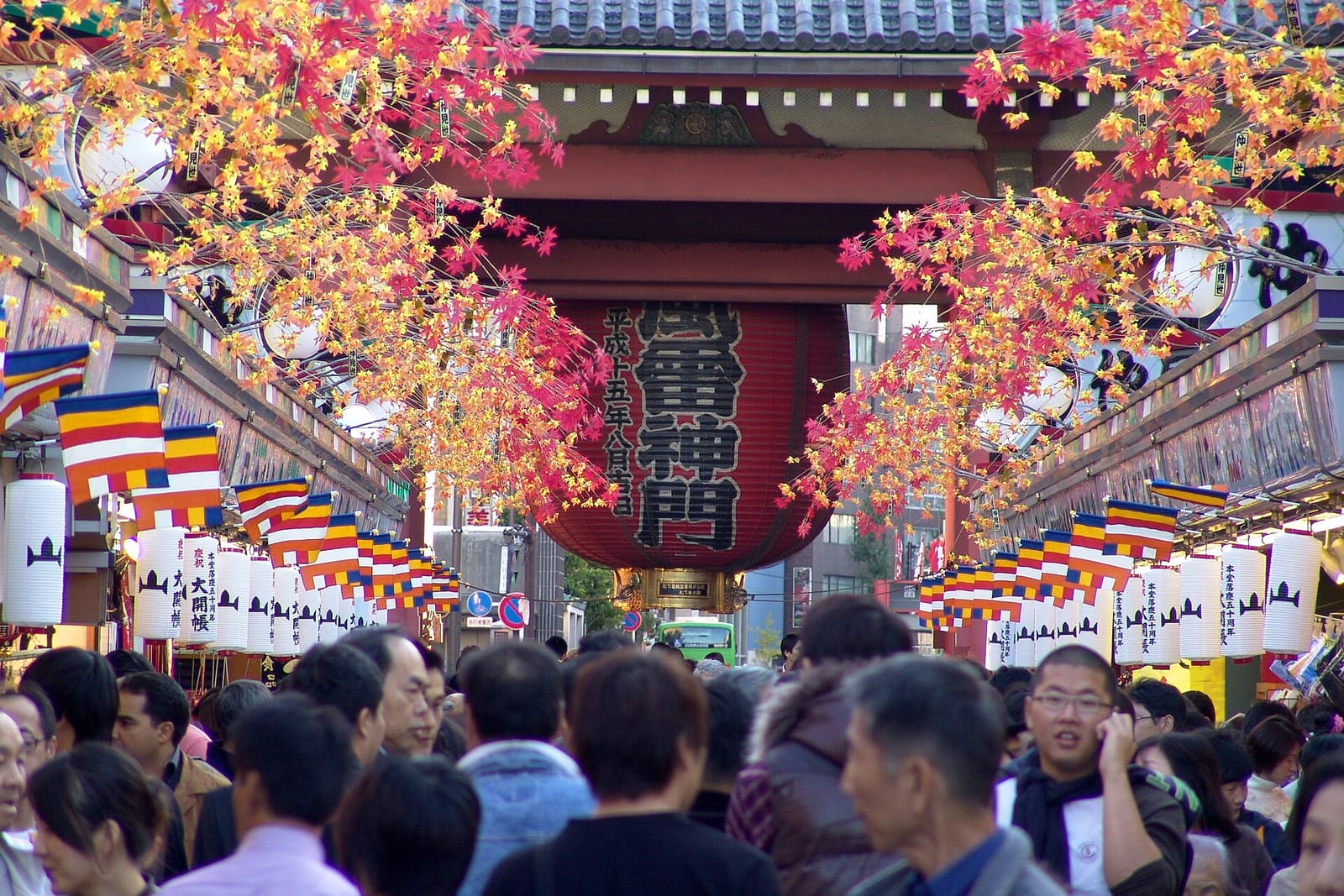
Every course starts here. On the way, the puller explains the gate’s history, its formal name and the giant lantern. Expect to stop for photos with the gate and the rickshaw.
What does a 30-minute ride cover?
A full loop of one side of Asakusa. Jidaiya publishes two 30-minute model routes. The Edo route heads east to the river and back through the temple’s side gates, and the Showa retro route heads west through the old entertainment district: Tanuki-dori, Asakusa Rokku, the Asakusa Engei Hall comedy theater, Hanayashiki amusement park and Asakusa Public Hall. Routes change with your requests and traffic. These are the Edo route’s stops in order after Kaminarimon:
Sumida Park
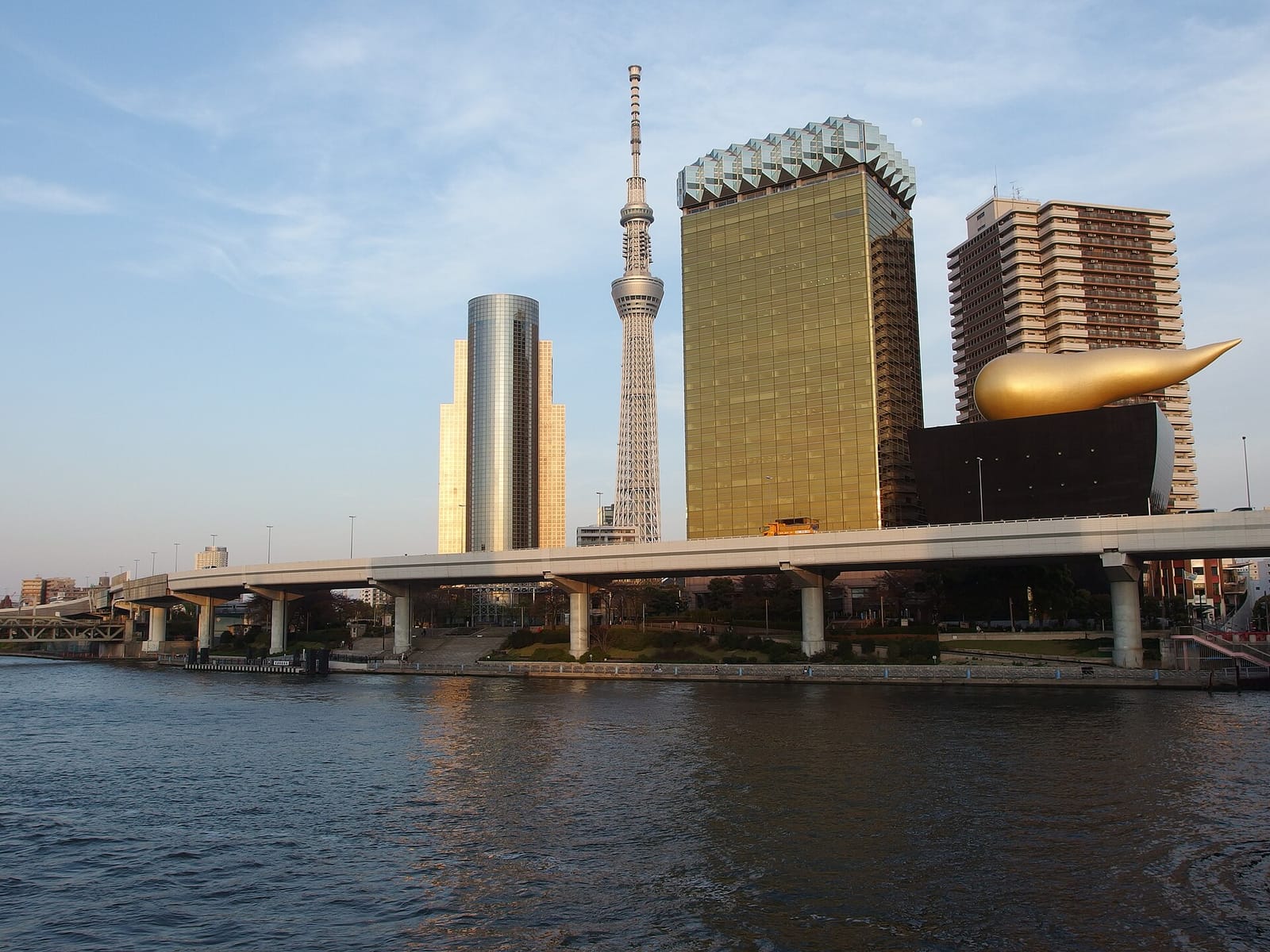
A riverside park that has been a place to relax since the Edo period, and a cherry blossom spot in spring. On the Edo route, the stop after the park is a photo spot with a distant view of Tokyo Skytree across the Sumida River.
Bentenyama and the Bell of Time
A temple bell that has rung the hours for more than 300 years and appears in a haiku by Matsuo Basho. The small Benten hall beside it is visited by people praying for progress in the arts.
Nitenmon Gate
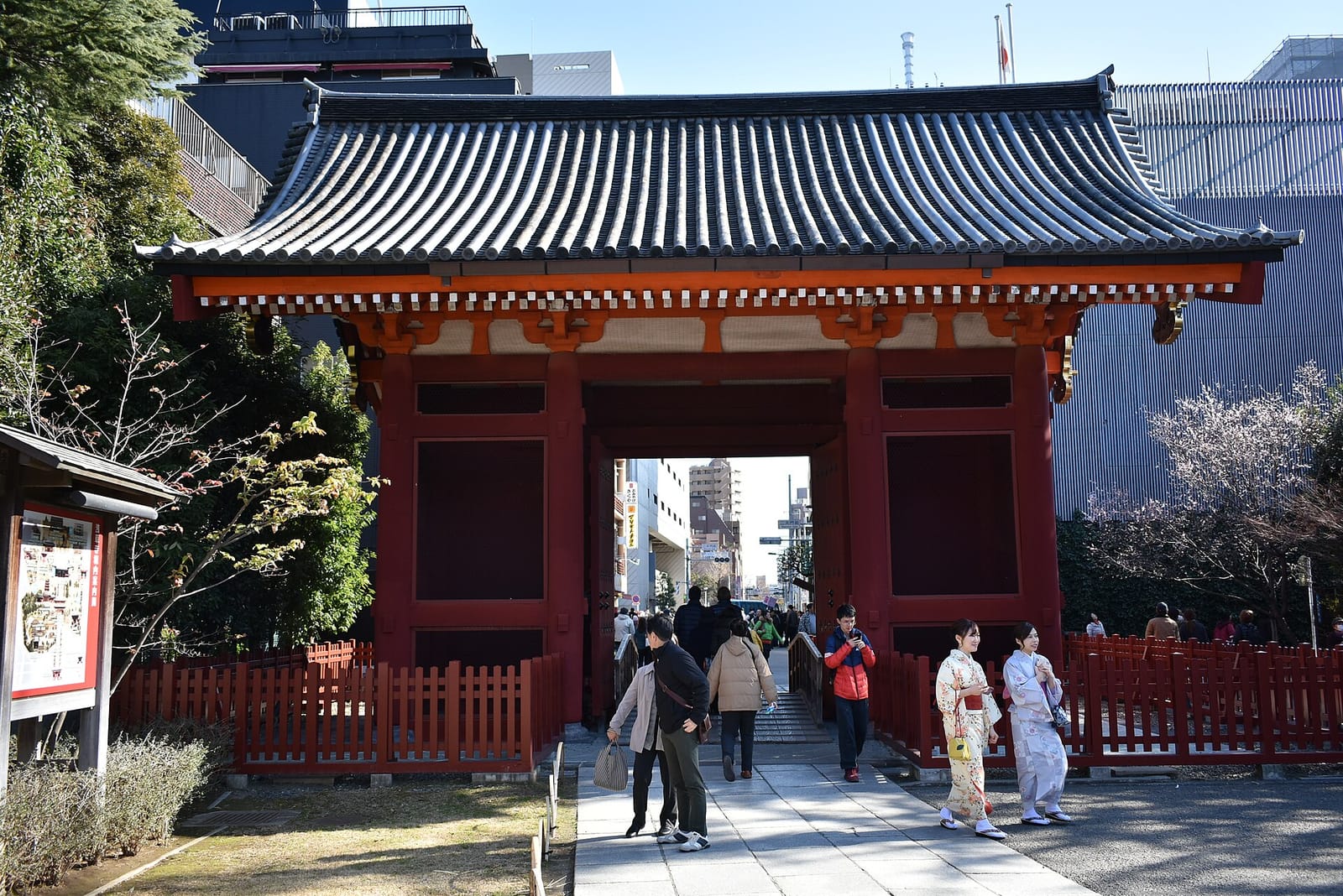
The east gate of Senso-ji has stood for more than 370 years, surviving the 1923 earthquake and the wartime fires that destroyed most of old Asakusa. It is an Important Cultural Property and was first built as a gate to the Asakusa Toshogu shrine, which ties it to the Tokugawa family.
Asakusa Shrine
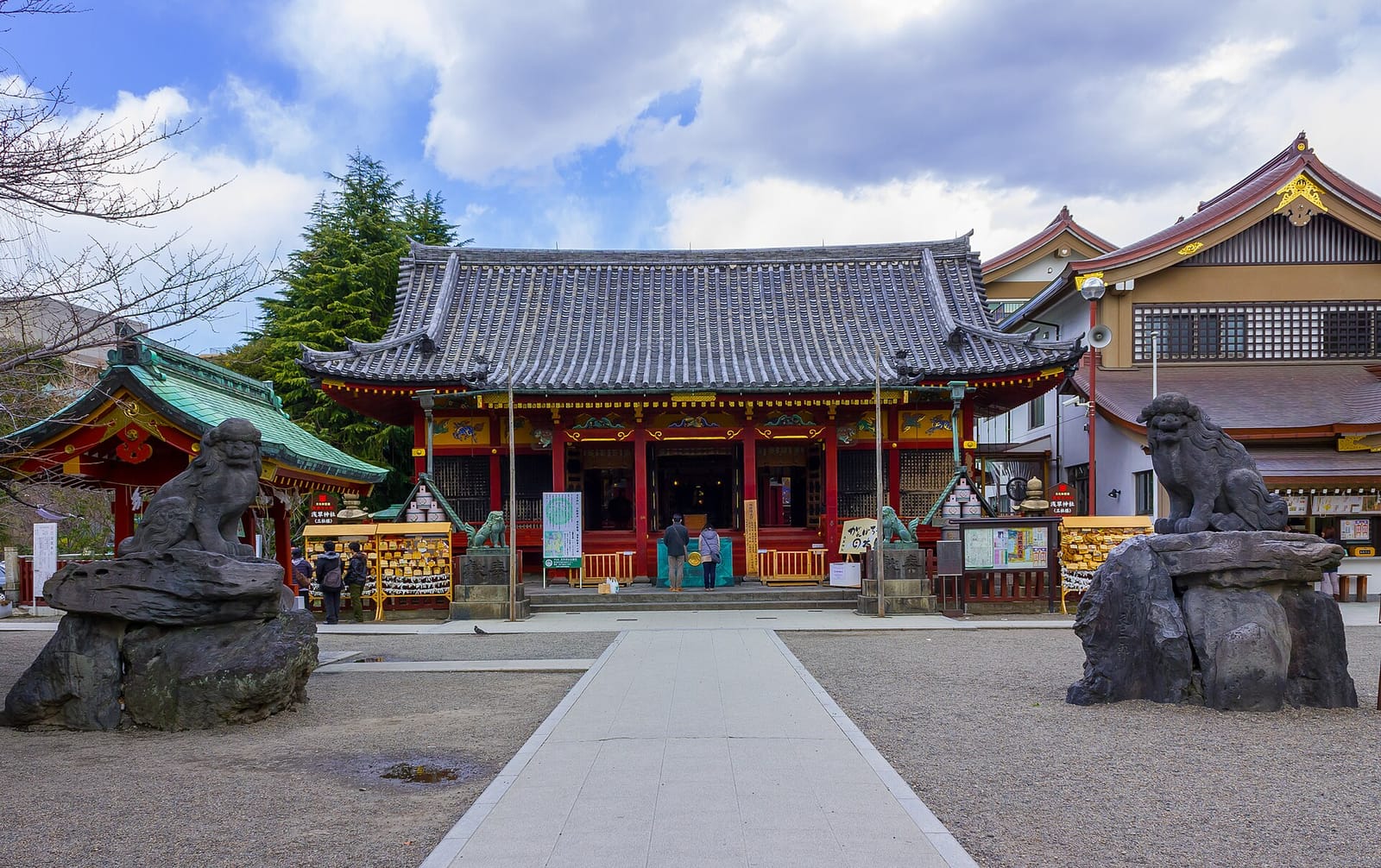
The shrine to the three men linked to Senso-ji’s founding, known locally as Sanja-sama. Its hall is also more than 370 years old and is an Important Cultural Property. The Sanja Matsuri, counted among Edo’s three great festivals, belongs to this shrine. This is the last stop before the ride returns to Kaminarimon.
What do you get with 60 minutes or more?
Shrines and the far bank of the river. Jidaiya’s shrines and temples course runs from 30 to 180 minutes and is planned around what you want to pray for. Its list includes Matsuchiyama Shoden and Imado Shrine, Higan Inari, and Ushijima and Mimeguri shrines across the river. Its Skytree and Sumida course, 30 to 120 minutes, adds the Mukojima geisha district, a reflected-Skytree photo spot and Kototoi Bridge.
Ushijima Shrine
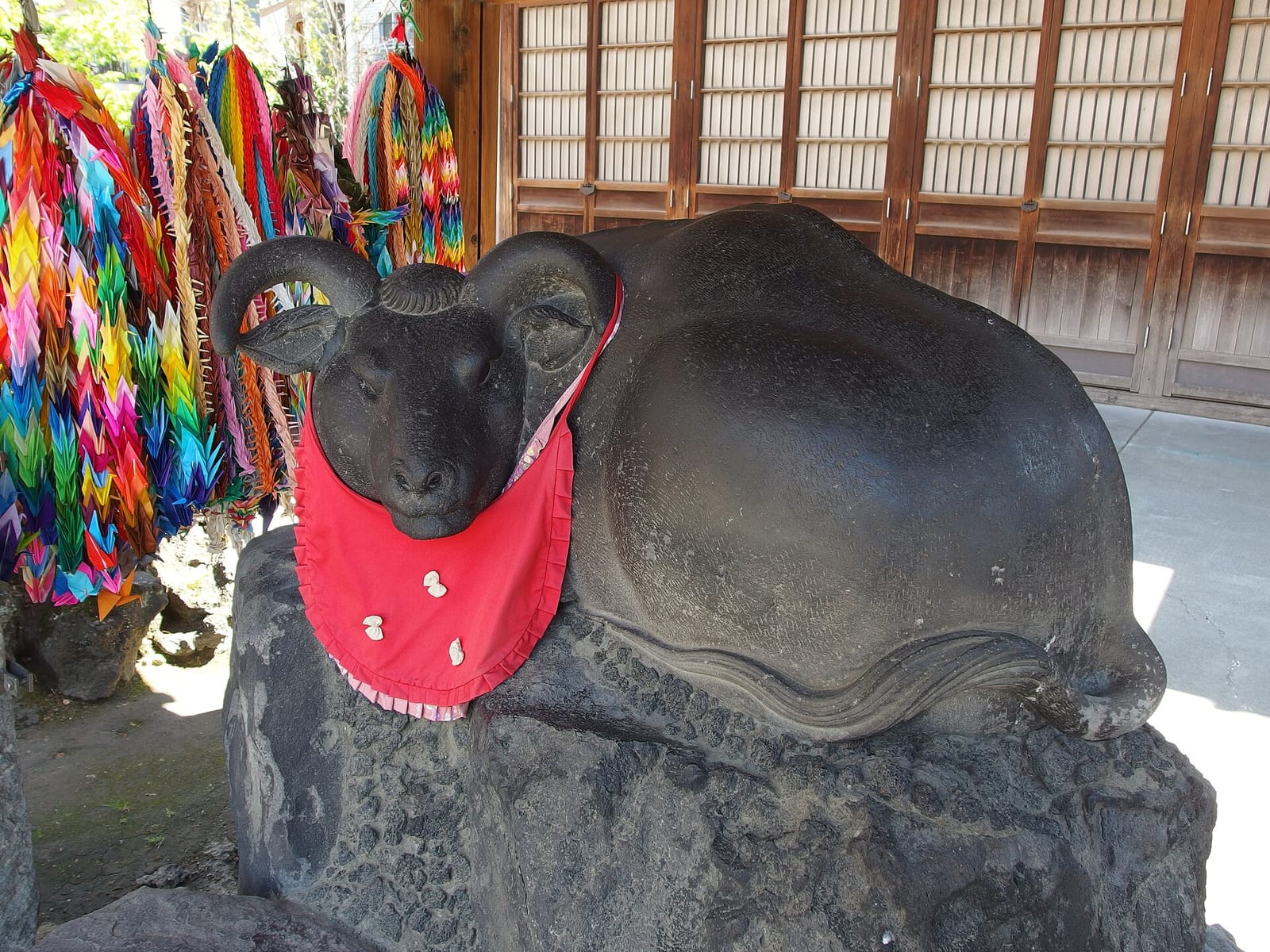
A shrine surrounded by the trees of Sumida Park on the far bank of the river. Look for its rare three-part torii and the stone ox, nade-ushi, which visitors rub for health. It appears on both of Jidaiya’s longer courses.
Is a rickshaw ride in Asakusa worth it?
Yes, for 30 minutes or more; the short ride is mostly a photo. At ¥10,000 for two, a 30-minute ride loops the river and the temple’s side gates with a guide who explains each stop and knows where to stand for photos. If your plan already includes walking the temple and the river, a 10–12 minute ride is the cheaper way to try it.
Who it suits: couples, anyone who wants photos in kimono, travelers with limited time, and older travelers who want to see the side streets without the walk. Wheelchair users can ride with Jidaiya’s ramped Barrier-Free Rickshaw Station, set up on request for courses of 30 minutes or more, for an extra ¥8,800 in Asakusa (as of November 2026). Ask in advance, because the platform has to be assembled.
Should you book an Asakusa rickshaw in advance?
Only if you need a fixed time, a long course or an English-speaking guide. Short rides are walk-in: Ebisuya’s 12-minute ride takes no reservations, and Jidaiya accepts bookings only for 30 minutes and up. Both operators wait near Kaminarimon, so on a quiet weekday you can usually walk up. For a weekend, a holiday or a specific guide, book ahead and confirm the language fee, pick-up point and the final price in writing.
Planning the rest of the day
A rickshaw fits best at the start or end of a day in Asakusa. Our one day in Asakusa itinerary has morning and afternoon plans around Senso-ji’s hours, and Asakusa at night after the shops close covers what is open once the rickshaws are done for the day. Visiting over New Year? See Senso-ji at New Year for first-timers before you plan a ride.
All the stops above have map links, so you can add them to your route and walk the same loop after the ride if you want a second look.
 Sukiyaki in Asakusa: How to Reserve, Lunch to Dinner (5 Places)
 Sumida River Cruise: Asakusa to Hamarikyu and Odaiba in One Day
FAQ
How much is a rickshaw ride in Asakusa?
At the two operators checked here, about ¥4,000–¥5,000 for a 10–12 minute ride, ¥9,000–¥10,000 for 30 minutes and ¥16,000–¥20,000 for an hour, as of November 2026. The lower figure is for one rider and the higher for two, because the price is per rickshaw. Both list tax-included prices.
Is a rickshaw ride in Asakusa worth it?
It is worth it if you want a guided loop of the side streets and riverside in a short time, with someone who stops for photos and explains what you are passing. It is less useful if you only want to see Senso-ji, which is a short walk from Kaminarimon. The 30-minute course is the best balance of cost and ground covered.
Do you need to book an Asakusa rickshaw in advance?
Not for a short ride. Ebisuya's 12-minute ride takes no reservations, and both operators wait by Kaminarimon for walk-ins. Book ahead for a specific time, a longer course, an English-speaking guide or a pick-up: Jidaiya accepts reservations for 30 minutes or longer.
Can children ride an Asakusa rickshaw?
Yes. Jidaiya lets preschool children ride free on an adult's lap, though it asks you to check in advance because it depends on the child's size. Otherwise every rider counts toward the two-person limit per rickshaw.
Can wheelchair users ride a rickshaw in Asakusa?
Jidaiya has a ramped boarding platform, the Barrier-Free Rickshaw Station, that lets riders move from a wheelchair into the seat without steps. It is set up on request for courses of 30 minutes or more and costs ¥8,800 on top of the fare in Asakusa, as of November 2026.
Sources
- Ebisuya Rickshaw — Asakusa branch, prices and stand
- GO TOKYO — Rickshaw Tourist Experience (Ebisuya)
- Jidaiya — Rickshaw fares in Asakusa (Japanese)
- Jidaiya — Rickshaw stands (Japanese)
- Jidaiya — Barrier-free rickshaw station (Japanese)
- Jidaiya — Edo course, 30-minute model route (Japanese)
- Jidaiya — Showa retro course, 30-minute model route (Japanese)
- Jidaiya — Shrines and temples course, 30 to 180 minutes (Japanese)
- Jidaiya — Skytree and Sumida course and Skytree fares (Japanese)
- Jidaiya — Hours and contact (Japanese)
This article contains affiliate links. We may earn a commission at no extra cost to you.