Golden Gai Guide for First-Timers: Charges, Door Signs and Photo Rules
How Shinjuku Golden Gai works for first-timers: which exit to use, how to read door signs and seat charges, the photo rules, and early vs late evening.
The first rule of Golden Gai is one most visitors never see written down: you read the door before you open it. Each of the tiny bars in this six-lane block of Shinjuku sets its own hours, its own seat charge and its own idea of who it is for, and the door is where it tells you. The second rule is printed in plain sight on GO TOKYO, the city’s official travel site: no smoking or drinking in the street, and no photos without permission. Follow those two and Golden Gai is an easy place to spend an evening. This guide covers getting there by exit, how charges and door signs work, the photo rules, and how the first 30 minutes of a visit differ early in the evening and late at night.
Where exactly is Golden Gai, and which exit should you use?
Use the East Exit of Shinjuku Station and walk about 5 minutes. That is the walking time GO TOKYO gives from Shinjuku Station, and it describes Golden Gai as a few minutes from the East Exit, on the edge of Kabukicho. Shinjuku City places the district in the southeast corner of Kabukicho.
The easiest way to arrive is along Shiki no Michi, a narrow tree-lined path that runs along the edge of Golden Gai. If you come by subway, Shinjuku City gives Exit B5 of Shinjuku-sanchome Station (Tokyo Metro and Toei lines) as a 4-minute walk to Shiki no Michi, and Seibu-Shinjuku Station as about 4 minutes. If you are not sure how the big station is laid out, our Shinjuku Station exits guide explains which side is which.
Shinjuku Promenade Park Shiki no Michi
This 260-meter path follows the old track bed of Toei tram route 13, which closed in March 1970, and Shinjuku City opened it as a walking park in June 1974. It has toilets, and smoking is not allowed. Walking it is a calm way to approach the bar lanes, which open off one side of the path.
- Access
- About 5 min on foot from the East Exit of Shinjuku Station; 4 min from Exit B5 of Shinjuku-sanchome Station; about 4 min from Seibu-Shinjuku Station
- Source
- www.city.shinjuku.lg.jp
What is Golden Gai, and how big is it?
Golden Gai is a block of narrow lanes packed with very small bars that date back to the years after the Second World War. GO TOKYO counts around 280 bars in “a tight six-row block of alleys,” and the Shinjuku Sanko shopping street association, which manages one part of the district, puts the figure at about 290. Many bars seat only five or six people, according to GO TOKYO.
Shinjuku City describes the area as a food and drink district that keeps the history and atmosphere of the Showa era, and also notes that its dense wooden buildings and narrow lanes are a fire-safety challenge. After a fire in April 2016 damaged several buildings, local groups adopted their own fire prevention rule. It is one more reason the “no smoking in the street” sign matters here.
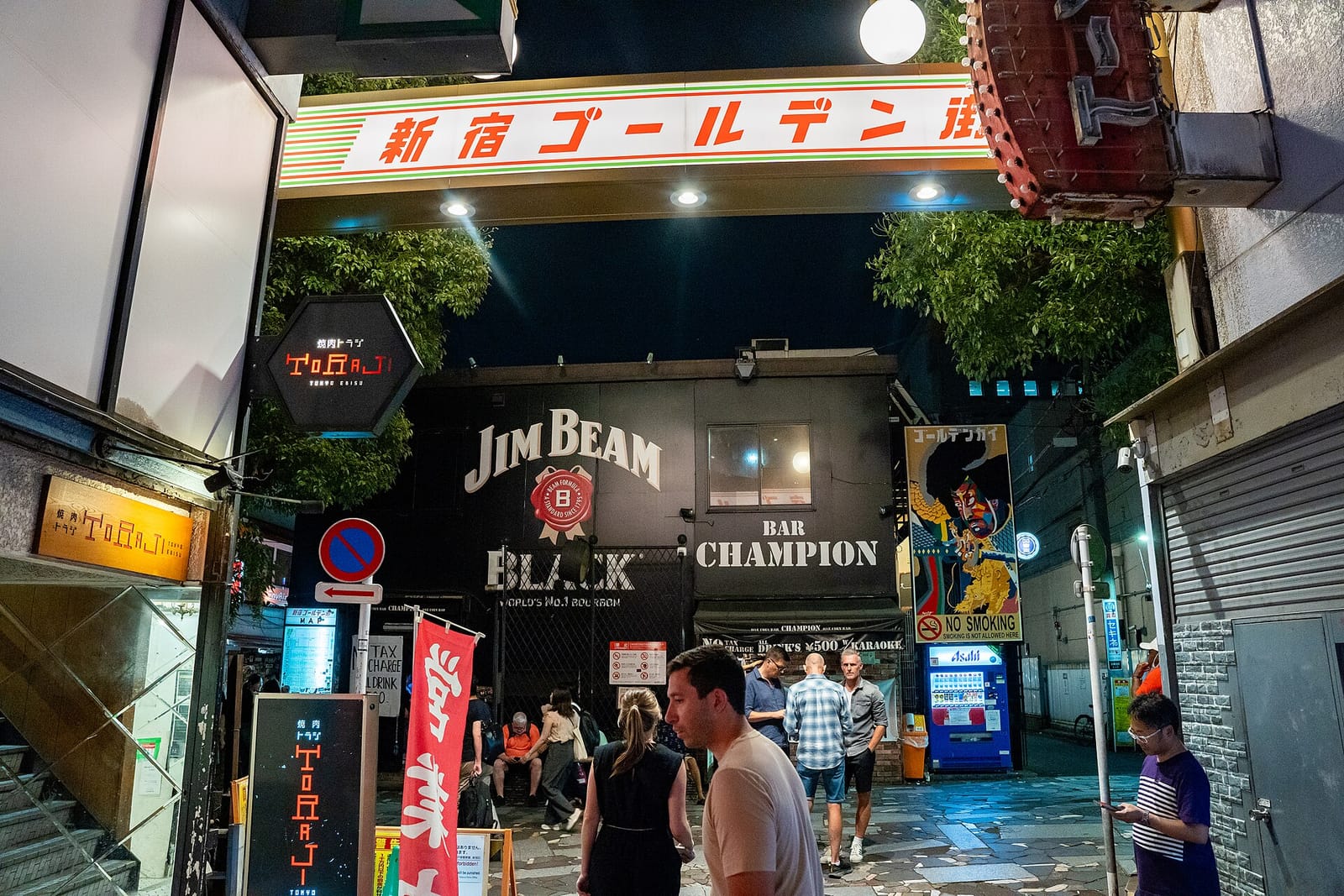
Shinjuku Golden Gai
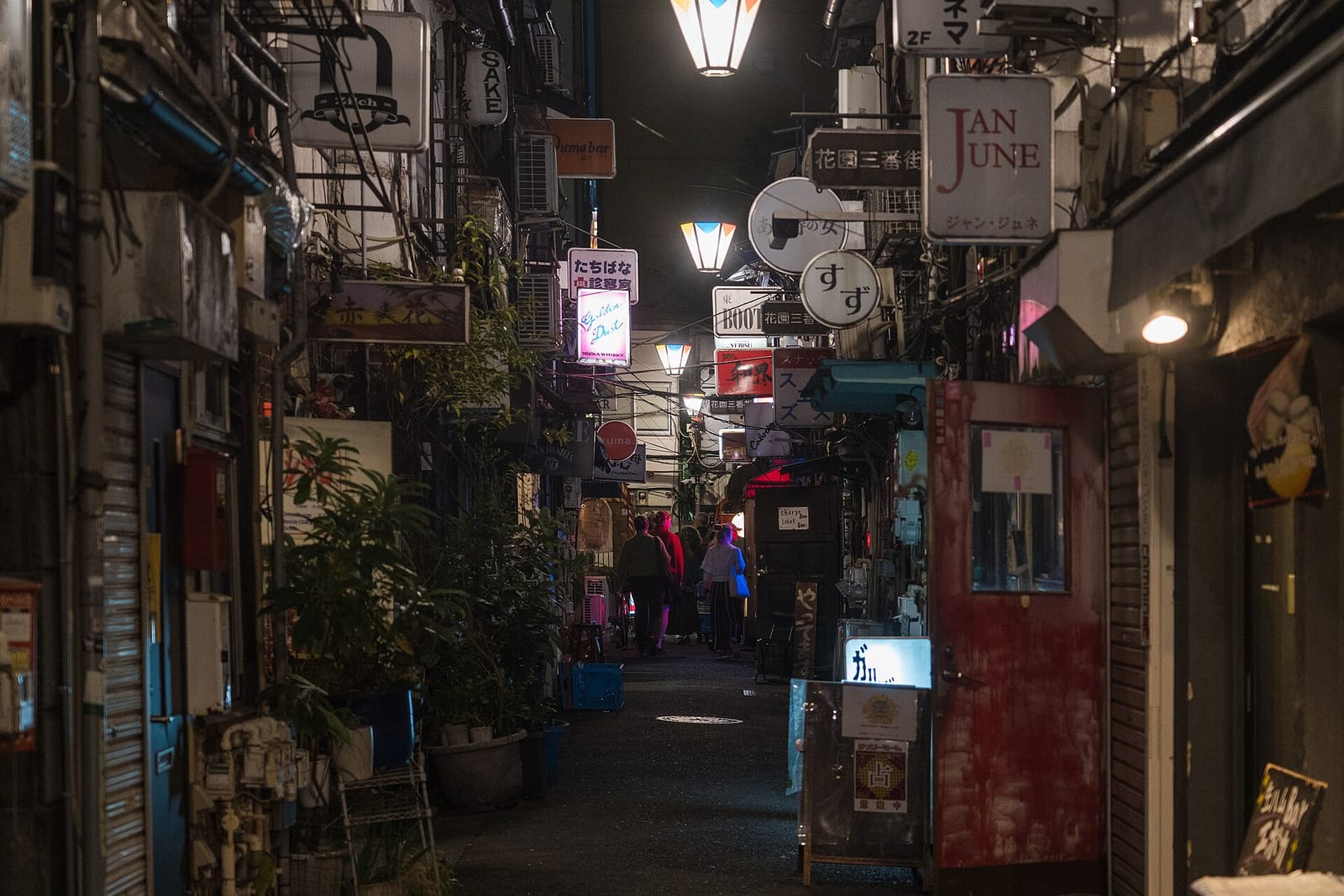
Every bar is a separate business, so there is no single opening time, menu or price list for the whole area. GO TOKYO notes that some bars are members only while others are open to everyone. The lanes are quiet before 20:00 and get busier as the evening goes on.
- Hours
- Varies by bar; most open around 20:00 (as of November 2026)
- Access
- About 5 min on foot from the East Exit of Shinjuku Station
- Source
- www.gotokyo.org
How do seat charges work, and how do you read the door signs?
Expect to pay a seat charge (often called a cover or table charge) on top of your drinks at many bars, and check it before you sit down. The amount is set by each bar, so there is no area-wide price. The door is where most bars communicate, and these are the things worth looking for:
| What you see at the door | What it tells you |
|---|---|
| A price board with the charge and drink prices | You can work out the cost of one drink before you go in |
| A “No charge” or “No cover” notice | That bar does not add a seat charge; drinks are the main cost |
| An English menu or “Welcome” notice | The bar expects visitors from overseas |
| “Members only” or a Japanese-only notice | The bar is for regulars; move on to the next door |
| No sign at all | Open the door, ask “How much is the charge?” and leave politely if it doesn’t suit you |
Charges can also change during local events. The Shinjuku Sanko association lists past festivals, such as its spring 2025 cherry blossom event, when participating bars dropped the seat charge and sold drinks for 500 yen each. It also notes that not every bar takes part, so the door sign still decides.
A few more customs come with the small size of the bars. Go in alone or in a pair rather than as a large group, since a party of six can fill a bar. Order something for each person. If a bar is full, close the door and try another one rather than waiting in the lane.
Can you take photos in Golden Gai?
Not freely. GO TOKYO lists “Photography is not allowed without permission” among the area’s rules, next to the bans on smoking and drinking in the street. The Shinjuku Sanko association explains why: all the lanes in its area are private roads, and any filming there, whatever its size, needs a permit, with a permit number issued and an armband worn while shooting. It also charges fees for unauthorized filming.
In practice, that means keeping your camera away in the lanes and not photographing bar fronts, signs or people. Inside a bar, the association’s street permit rules do not apply, but the bar is someone’s small private room, so ask the staff before you take any picture.
What should you do in your first 30 minutes?
Spend the first 30 minutes walking and reading, not drinking. Here is a simple timeline for a first visit:
- Minutes 0–5: Arrive from the East Exit or Shinjuku-sanchome Exit B5 and enter from Shiki no Michi.
- Minutes 5–15: Walk all six lanes once without stopping. Note which doors show prices, an English menu or a “no charge” notice.
- Minutes 15–20: Pick one bar whose door gives you the charge and drink prices. Open the door, check there is a seat, and confirm the charge if you are unsure.
- Minutes 20–30: Order one drink. Settle in, and ask the bartender if they can suggest a second bar when you are ready to move on.
If none of the bars feels right in that first lap, that is fine. Many visitors combine Golden Gai with other stops in the area; our Shinjuku night route puts it in walking order with the free observatory, Omoide Yokocho and Kabukicho.
Is it better to go early in the evening or late at night?
Go early if you are nervous and want a calm first look; go late if you want the busier, more social side. The difference is mostly about which bars are open and how full they are.
| Early evening (before about 20:00) | Later in the evening | |
|---|---|---|
| Bars open | Fewer; GO TOKYO says most open around 20:00 | Most of the bars that are open that night |
| Crowds in the lanes | Thin, easy to walk and read the doors | Busier, especially on weekends |
| Seats | Easier to find | Small bars fill up quickly |
| Best use | Walk the lanes, then eat nearby first | Bar-hop, one drink per bar |
The early-evening plan works well because the lanes and the dinner options nearby are both within a short walk. Eat first on the West Exit side or near Shinjuku-sanchome, walk to Golden Gai as the doors open, and visit Hanazono Shrine on the way.
Omoide Yokocho
Omoide Yokocho is a drinking and dining district next to the West Exit of Shinjuku Station that grew out of a postwar street market, much like Golden Gai. The official site says about 80 shops are packed into the area, many of them yakitori and motsuyaki counters, which makes it an easy place for dinner before you cross to the East Exit side. It also notes that shop hours and menus can change without notice.
- Access
- On the West Exit side of Shinjuku Station
- Source
- shinjuku-omoide.com
What else is right next to Golden Gai?
Hanazono Shrine is the closest sight, and it is a calm place to stop before or after the bars. GO TOKYO says the shrine is just 10 minutes on foot from Shinjuku Station, which puts it on the same walk as Golden Gai. Shrine grounds are places of worship, so keep your voice down and do not bring open drinks onto the grounds.
Hanazono Shrine
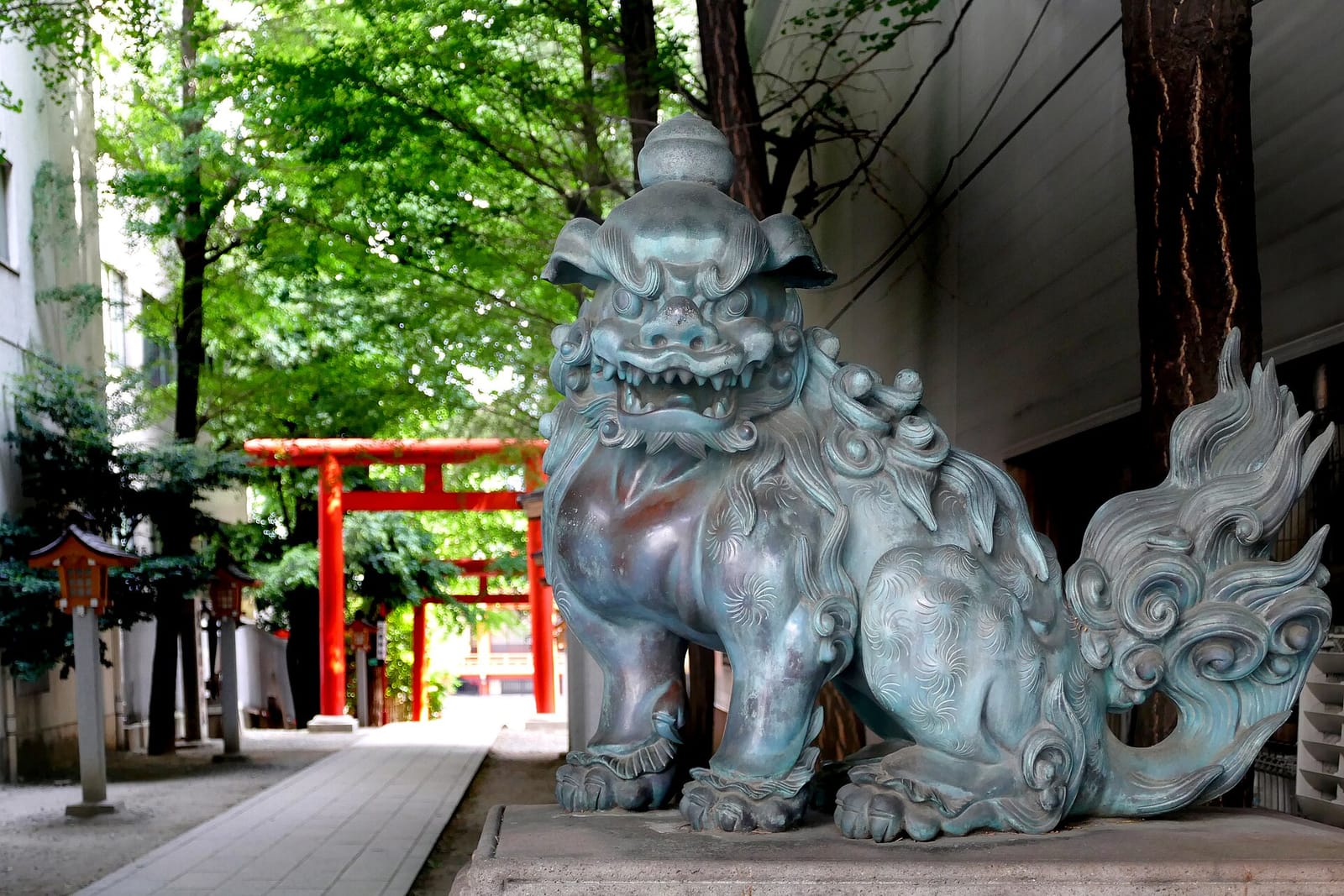
Hanazono Shrine is a Shinto shrine on the east side of Shinjuku, next to Golden Gai. Its red buildings stand out from the narrow lanes around them. For festival dates and the shrine office’s hours, check the shrine’s own website before you go, as these change by year.
- Access
- About 10 min on foot from Shinjuku Station
- Source
- www.gotokyo.org
Where can you go if you miss the last train?
If you stay late in Golden Gai and miss the last train, Thermae-yu in Kabukicho is a short walk away. Its official site says it is open 24 hours a day, all year, and gives the walk from the East Exit of JR Shinjuku Station as about 9 minutes, or about 2 minutes from Exit E1 of Shinjuku-sanchome Station.
Thermae-yu Shinjuku
Thermae-yu is a large bathhouse with hot spring baths, saunas and rest areas, and a common place to wait for the first train. Admission prices change by day and time, so check the official site for the current fee before you go.
- Hours
- Open 24 hours, every day (as of November 2026)
- Access
- About 9 min on foot from the East Exit of JR Shinjuku Station; about 2 min from Exit E1 of Shinjuku-sanchome Station
- Source
- www.thermae-yu.jp
How do you plan the evening?
Tick “Add to my route” on the stops above and the box at the end of the page opens them as one walking route in Google Maps. A simple order is Omoide Yokocho for dinner, then across to the East Exit side, Shiki no Michi into Golden Gai, a stop at Hanazono Shrine, and Thermae-yu only if the night runs long.
If you would rather not worry about the last train at all, staying on the east side of the station makes the walk home short; our guide to where to stay in Shinjuku for first-timers compares the areas around each exit.
 Shinjuku Hotels With Big Rooms for Families: 6 Picks by Group Size
 Shinjuku Hotels Connected to the Station: What 'Direct' Means
FAQ
Is there a cover charge in Golden Gai?
Many bars charge a seat or cover charge on top of drinks, and each bar sets its own amount. Look for a price sign on the door, and if there is none, ask the price before you sit down.
Can you take photos in Golden Gai?
Not freely. GO TOKYO states that photography is not allowed without permission, and the Shinjuku Sanko shopping street association explains that its lanes are private roads where filming of any size needs a permit. Inside a bar, ask the staff first.
What time does Golden Gai open?
There is no single opening time because every bar sets its own hours. GO TOKYO notes that most bars open relatively late in the evening, typically around 20:00.
Which exit is closest to Golden Gai?
GO TOKYO puts Golden Gai about 5 minutes on foot from Shinjuku Station, on the East Exit side. Exit B5 of Shinjuku-sanchome Station is about 4 minutes from the Shiki no Michi promenade that runs along the edge of the district, according to Shinjuku City.
Are all Golden Gai bars open to tourists?
No. GO TOKYO notes that some bars are for members only, while others are open to everyone. Many bars show at the door whether they welcome first-time or overseas visitors.
Sources
- GO TOKYO — Shinjuku Golden Gai
- Shinjuku Sanko Shopping Street Association (Golden Gai) — official site
- Shinjuku Sanko Shopping Street Association — About
- Shinjuku Sanko Shopping Street Association — Filming and photography permission
- Shinjuku City — Shinjuku Promenade Park Shiki no Michi (Japanese)
- Shinjuku City — Shinjuku Golden Gai district planning (Japanese)
- GO TOKYO — Shinjuku
- Shinjuku Omoide Yokocho (official site)
- Thermae-yu Shinjuku (official site, Japanese)
This article contains affiliate links. We may earn a commission at no extra cost to you.