Hakone Open-Air Museum Tips: Tickets, Route and Late-Autumn Timing
Hakone Open-Air Museum tips: the ¥1,800 online ticket, last entry at 16:30, the Woods of Net closure from Nov 30 to Dec 4, 2026, free lockers, and a route.
Two dates matter if you are visiting the Hakone Open-Air Museum this season. From November 30 to December 4, 2026, Woods of Net, the giant knitted climbing net that most families come for, is closed all day for its annual inspection, and the museum warns the closure may be extended for weather or work delays. And every day of the year, last admission is at 16:30. In late autumn, when afternoons in the mountains are short, that cut-off comes sooner than many visitors expect. Here is how to time your visit, what to buy before you go, and a route through the garden in the order the map lays it out.
When should you visit the Hakone Open-Air Museum?
Go in the morning, and arrive no later than 14:00. The museum is open 9:00–17:00, 365 days a year, and last admission is 30 minutes before closing. Ordinary hours apply over the New Year period too, so the museum works as a winter-holiday option when other places close.
The museum’s map counts 114 outdoor works spread across a sloping hillside, on top of the Picasso Pavilion and several indoor galleries. Two to three hours is a realistic visit. If you start at 14:00, you still have time for the garden loop, the Symphonic Sculpture and the Picasso Pavilion before the 17:00 close.
If you are travelling with children between November 30 and December 4, 2026, move the visit outside those dates if you can. The notice covers Woods of Net only, but for small children it is often the main reason to come.
How much are tickets, and how do you save?
Buy online. As of November 2026, the museum’s prices are:
| Ticket | At the counter | Online ticket |
|---|---|---|
| Adults | ¥2,000 | ¥1,800 |
| University and high school students | ¥1,600 | ¥1,400 |
| Elementary and junior high students | ¥800 | ¥600 |
| Preschool children | Free | Free |
The online ticket also lets you enter without queuing at the ticket counter. Groups of 15 or more need a reservation and pay the same price as the online ticket.
If you do pay at the counter, the museum’s discount ticket page takes ¥100 off general admission when you show it at checkout, including at the cashless ticket machines. It covers up to 14 people per entry and cannot be combined with other discounts. If you hold a Hakone Freepass, ask at the counter whether a pass discount applies; Hakone Navi says the pass gives discounts at around 70 tourist spots. To decide whether the pass is worth buying for your trip, see our Hakone Freepass break-even guide.
Visitors with a disability certificate pay ¥1,000 as adults, students with a certificate enter free, and one caregiver per person pays ¥1,000.
How do you get there?
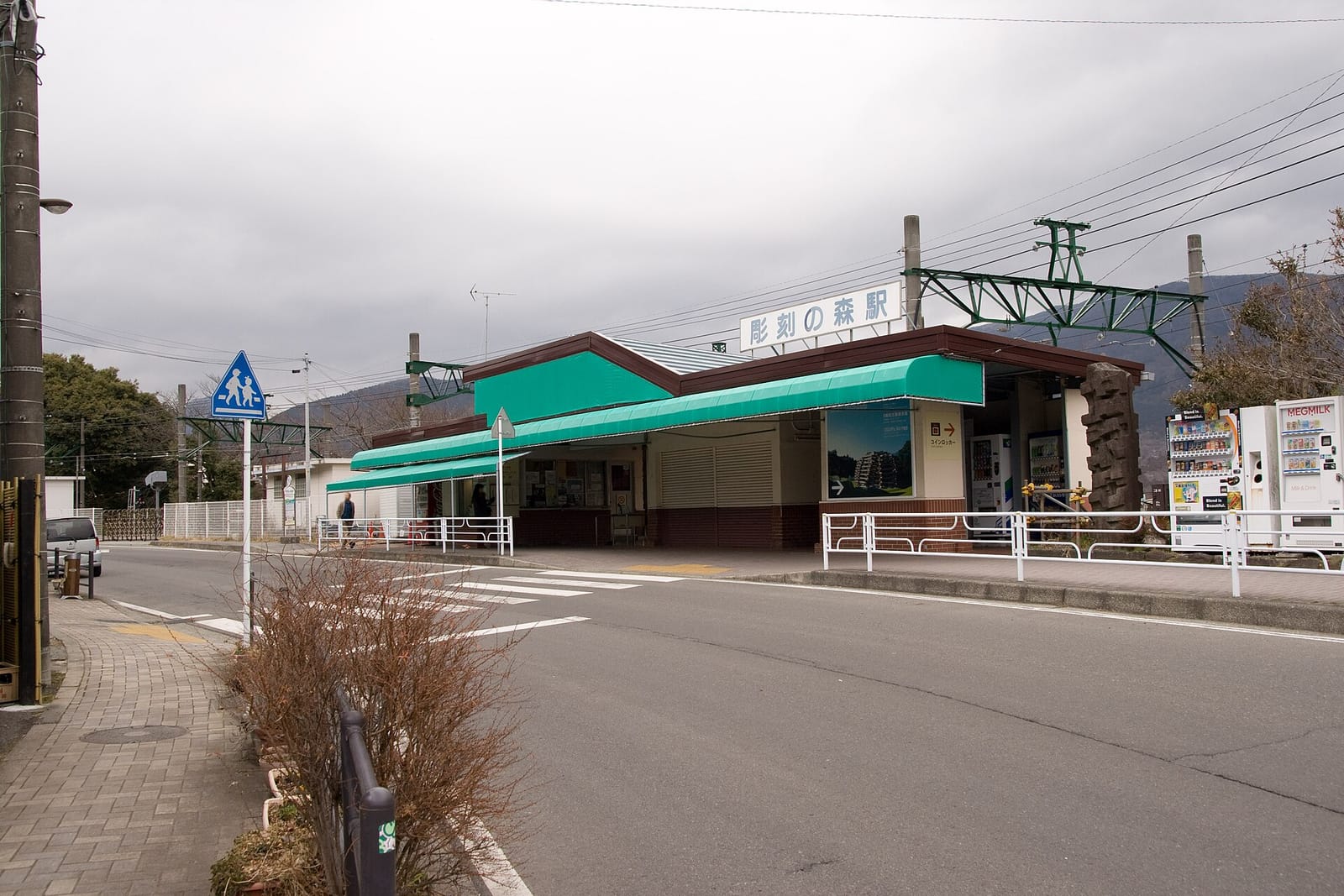
Take the Hakone Tozan Railway to Chokoku-no-Mori Station. The museum is a 2-minute walk from the station. From Shinjuku, you first ride the Odakyu Line to Hakone-Yumoto, then change to the mountain train. Our Hakone day trip from Shinjuku has the full timed route.
By bus, take an H, J or Z bus from Odawara Station’s East Exit bus terminal (stop 3 for H, stop 5 for J or Z) or from stops 1 or 2 at Hakone-Yumoto Station, and get off at Ninotaira-iriguchi. From there it is a 6-minute walk.
If you come by car, parking is ¥500 for up to 3 hours and ¥500 for each extra hour, for museum visitors only.
Where do you put your luggage?
In the free coin lockers at the museum entrance. You insert a ¥100 coin and get it back when you open the locker. For bags that will not fit, the museum asks you to speak to staff. Chokoku-no-Mori Station also has paid lockers.
Watch the wheeled items. The museum does not allow mobility scooters, strollers without seat belts, wagons that carry several children, any type of three-wheeler, or suitcases with seats. You can leave a stroller at the New Gallery information desk and borrow one, or a wheelchair, for free. Pets are not allowed, even in a carrier, except assistance dogs.
What is the best route through the museum?
Follow the map from the entrance buildings, down through the sculpture lawns, and up to the Picasso Pavilion and Woods of Net at the far end. That order saves the indoor stops and the children’s play area for last, which also works if rain moves in. The stops below are numbered in that order; add them to your route to follow them on the map.
Main Gallery
The first building past the entrance, next to the shops and restaurants. Its current show, the “Unique Collection”, opened on January 31, 2026. The Art Hall and the Multi Hall sit on the same terrace, so this is the place to start if the weather is uncertain. Indoors, flash, video, tripods and selfie sticks are not allowed.
- Hours
- 9:00–17:00, last admission 16:30 (as of November 2026)
- Access
- 2-minute walk from Chokoku-no-Mori Station
- Source
- www.hakone-oam.or.jp
Monument to Balzac by Rodin
Just outside the Main Gallery, Auguste Rodin’s bronze stands 270 cm tall. The Société des Gens de Lettres commissioned the monument in 1891, and this bronze was cast in 1939. From here the path leads past Bourdelle’s large figures toward the pond with Marta Pan’s floating sculpture.
Miss Black Power
Niki de Saint Phalle’s 5-metre figure from her “Nana” series, made in 1968 from painted polyester resin. It stands on the Green Plaza, surrounded by a cluster of Henry Moore pieces, so this is the slope to slow down on if you like modern sculpture.
Symphonic Sculpture
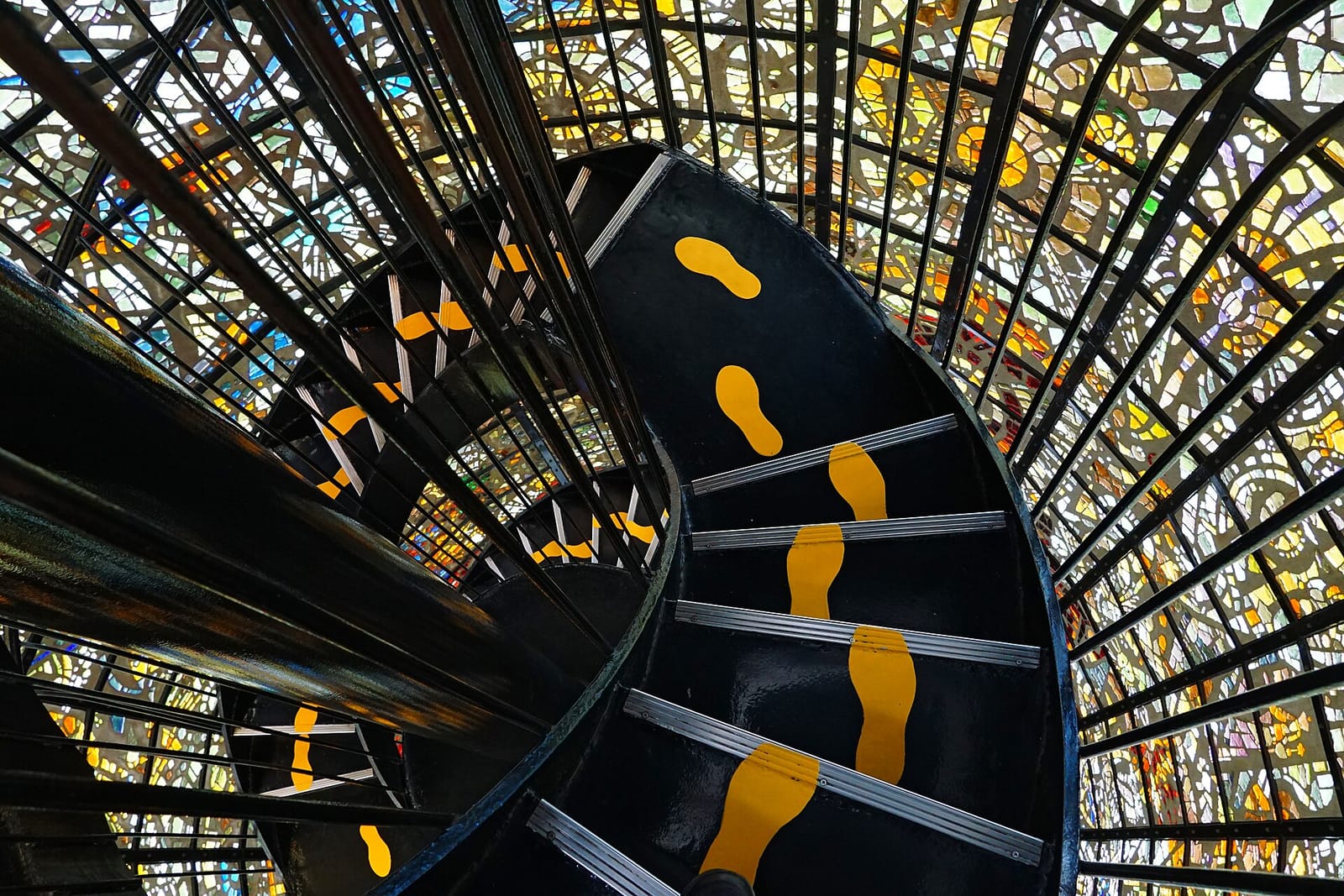
Gabriel Loire’s 18-metre tower, built in 1975, has walls of 480 sheets of stained glass depicting the four seasons. A spiral staircase inside takes you up to a viewpoint over the garden and the mountains. Go up in the late morning or early afternoon, when the light comes through the glass. The staircase is narrow, so leave large bags in the lockers.
Forest Foot Bath
Beside the Symphonic Sculpture, next to the Café and Log Plaza “KITOKI”. The foot bath reopened after renewal on July 27, 2024. It uses Ninodaira Onsen water from a spring on the museum grounds, runs about 28 m long and seats 39 people at once. There is seating for wheelchair users and a separate hand bath. Bring a small towel or socks you can take off easily.
Picasso Pavilion
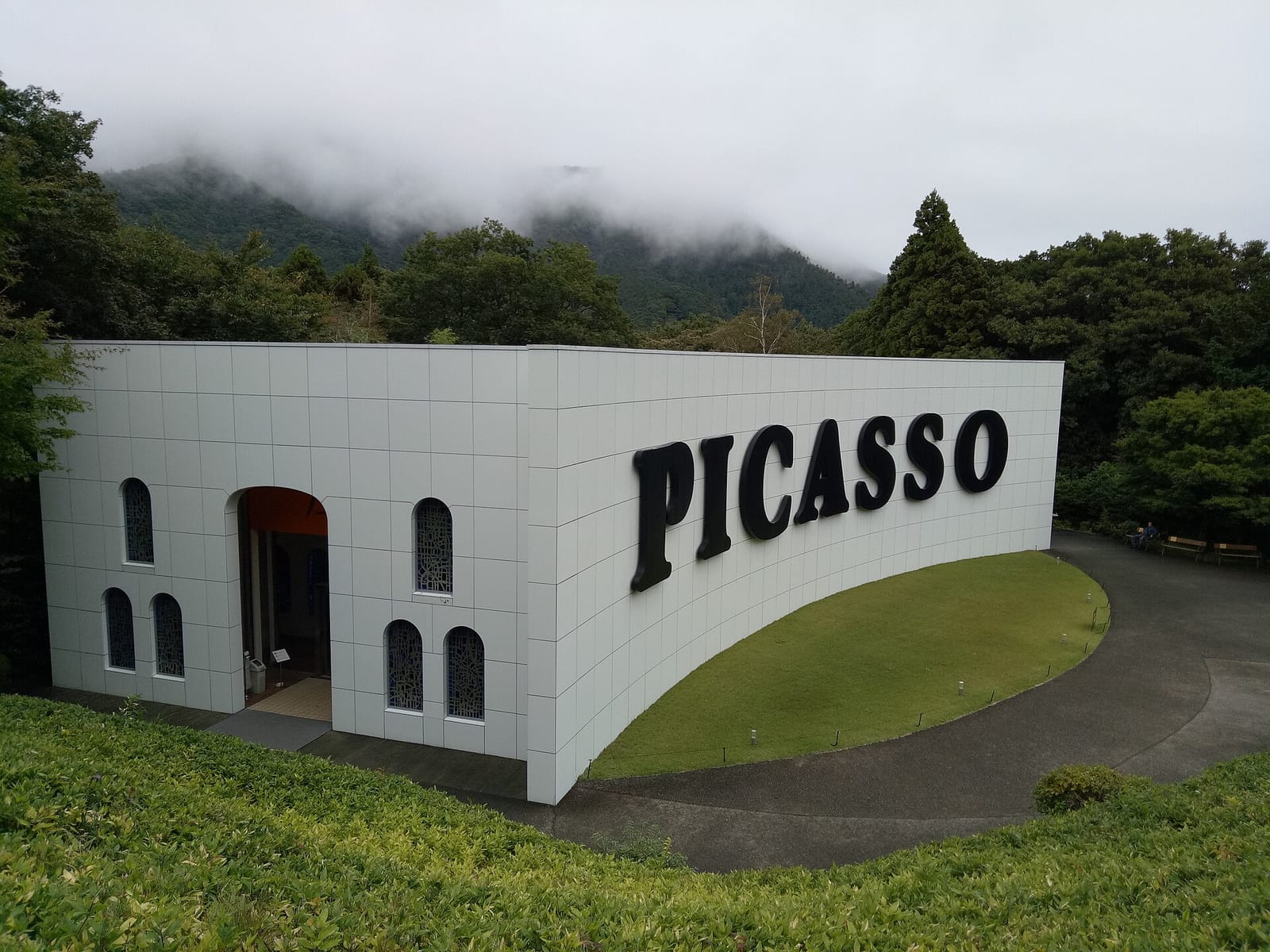
Opened in 1984 and reopened after renovation on July 27, 2019, the pavilion focuses on Picasso’s ceramics and his work in other media. Its permanent exhibition, “Picasso’s Driving Force”, began on June 29, 2025. The museum has rotated more than 319 works from its collection through this building since it opened. Allow at least 30 minutes, and keep the camera rules for indoor galleries in mind.
Woods of Net
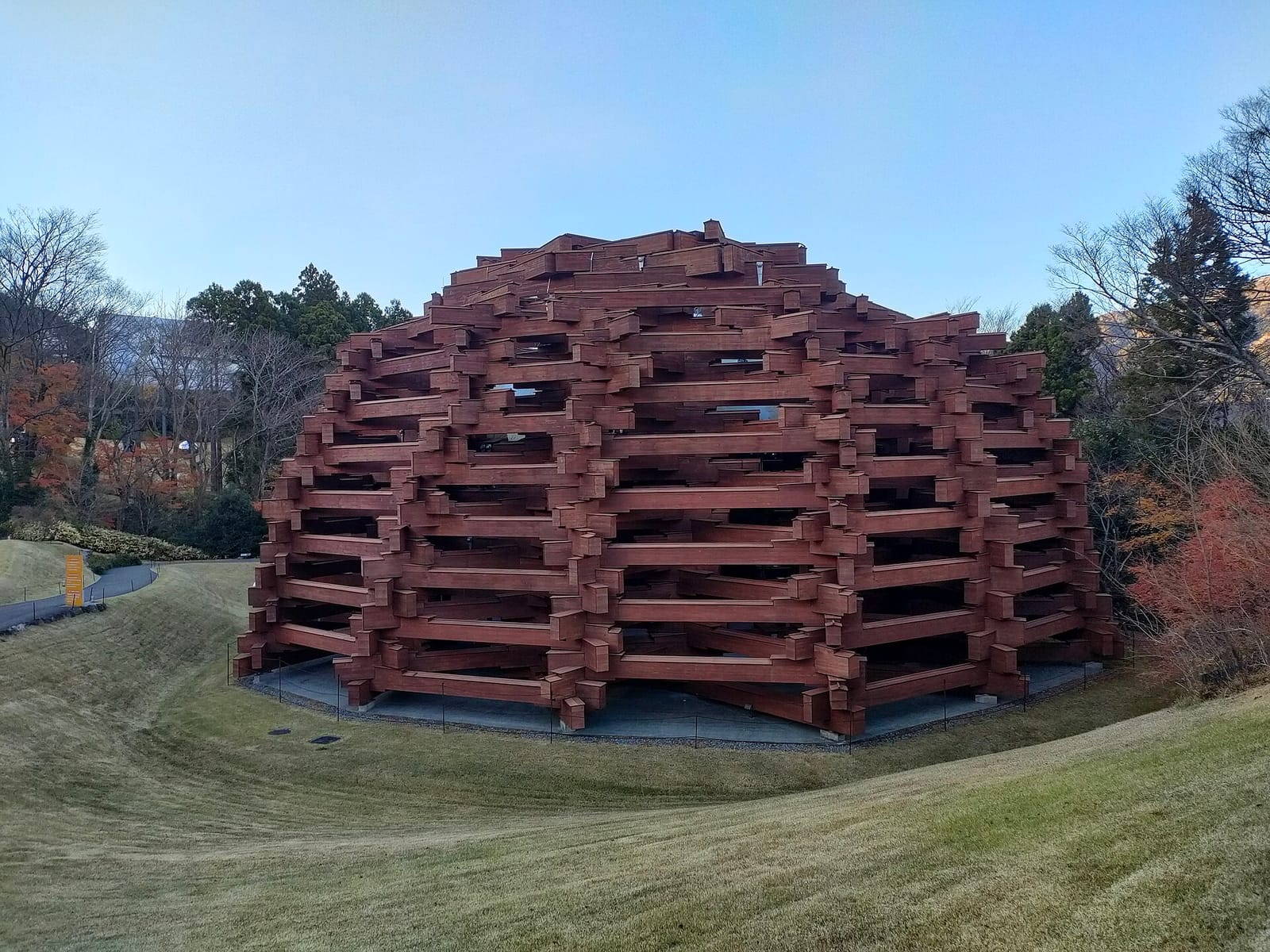
A wooden pavilion around Toshiko Horiuchi MacAdam’s knitted net, “Knitted Wonder Space 2”. Only children aged 12 and under may go inside, and everyone removes their shoes, even on rainy days. The museum may close it in bad weather, and it is closed from November 30 to December 4, 2026 for its annual inspection, possibly longer.
The Hakone Open-Air Museum Café
On the first floor of the Green Gallery next to the Picasso Pavilion, serving desserts and sandwiches. For a full lunch, the Bella Foresta buffet is open 11:00–15:30 on weekdays and 11:00–16:00 on weekends and holidays, with last orders at 15:00. CHOKOKU-NO-MORI Dining is open 10:00–17:00, and the Museum Shop 9:00–17:00.
- Hours
- 9:00–17:00, last seating 16:30 (as of November 2026)
- Source
- www.hakone-oam.or.jp
What tips make the visit easier?
Five things that the museum’s own rules and timetables point to:
- Book online the night before. You save ¥200 per adult and skip the ticket line. The ¥100 discount page only helps if you are paying at the counter.
- Eat before 15:00. Bella Foresta takes last orders at 15:00 every day, so a late lunch means the café’s sandwiches instead.
- Wear shoes you can slip off. Woods of Net and the foot bath both mean taking shoes off, and the garden paths climb and drop between the zones.
- Photograph outdoors, not indoors, with a tripod. Tripods, selfie sticks, flash and video are banned in the indoor galleries. Everywhere, works marked “NO PHOTO” are off limits, live streaming is banned, and photos are for personal use only.
- Eat and drink only where allowed. The museum allows food and drink only in designated places, and asks visitors not to touch the artworks or bring toys or drones.
The museum opened in 1969 and its collection now counts more than 2,000 works, so what is on display changes. The map notes that pieces may move for special exhibitions, so treat the route above as a guide rather than a fixed list.
Where should you stay nearby?
If you would rather not rush the museum on a day trip, stay one night and visit first thing in the morning. Our guide to where to stay in Hakone for one night compares Hakone-Yumoto and the areas further up the mountain line.
All eight stops above have a map pin, so you can add them to your route and walk them in order.
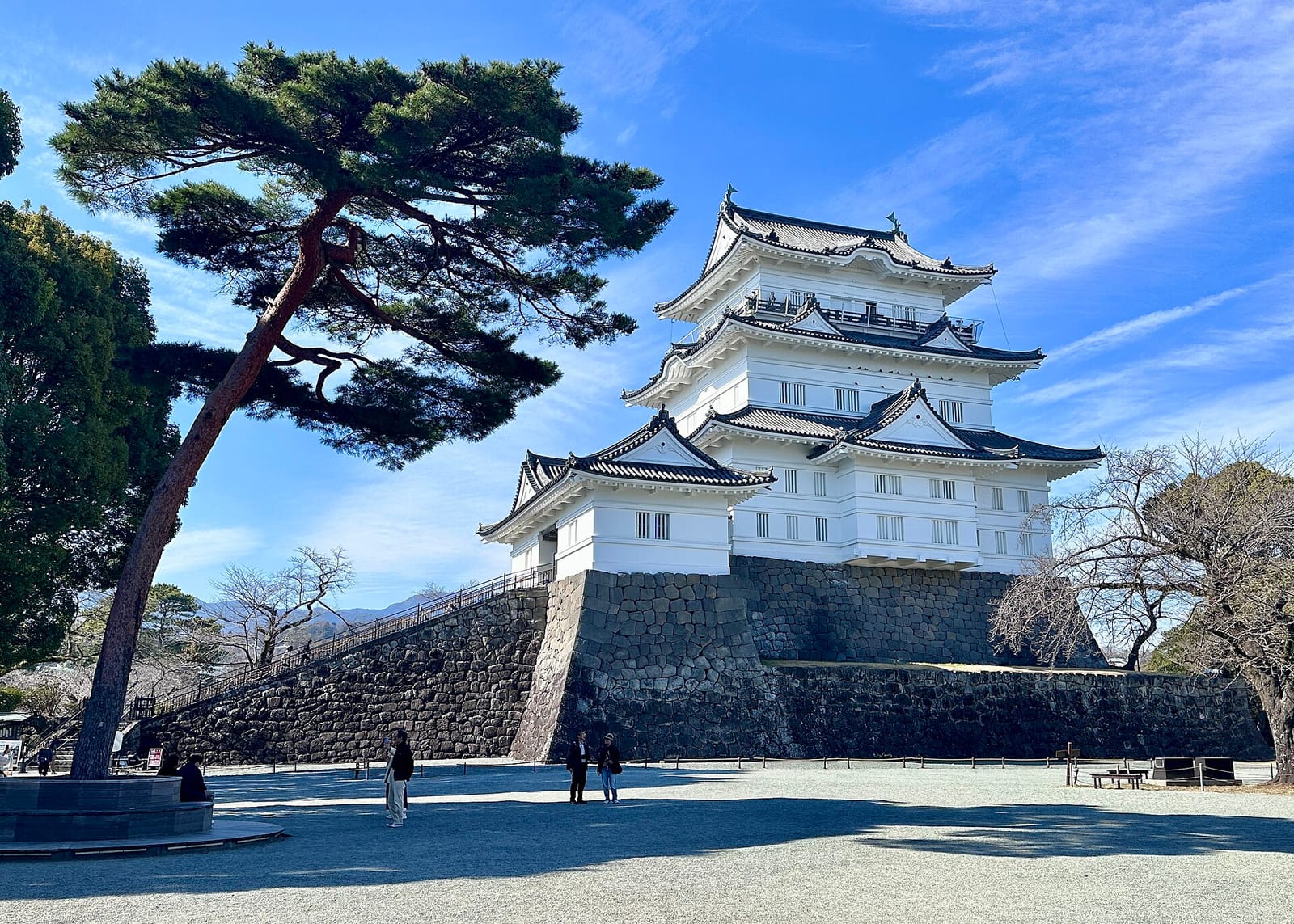 Hakone Stopover Between Tokyo and Kyoto with Luggage: 3 Bag Plans
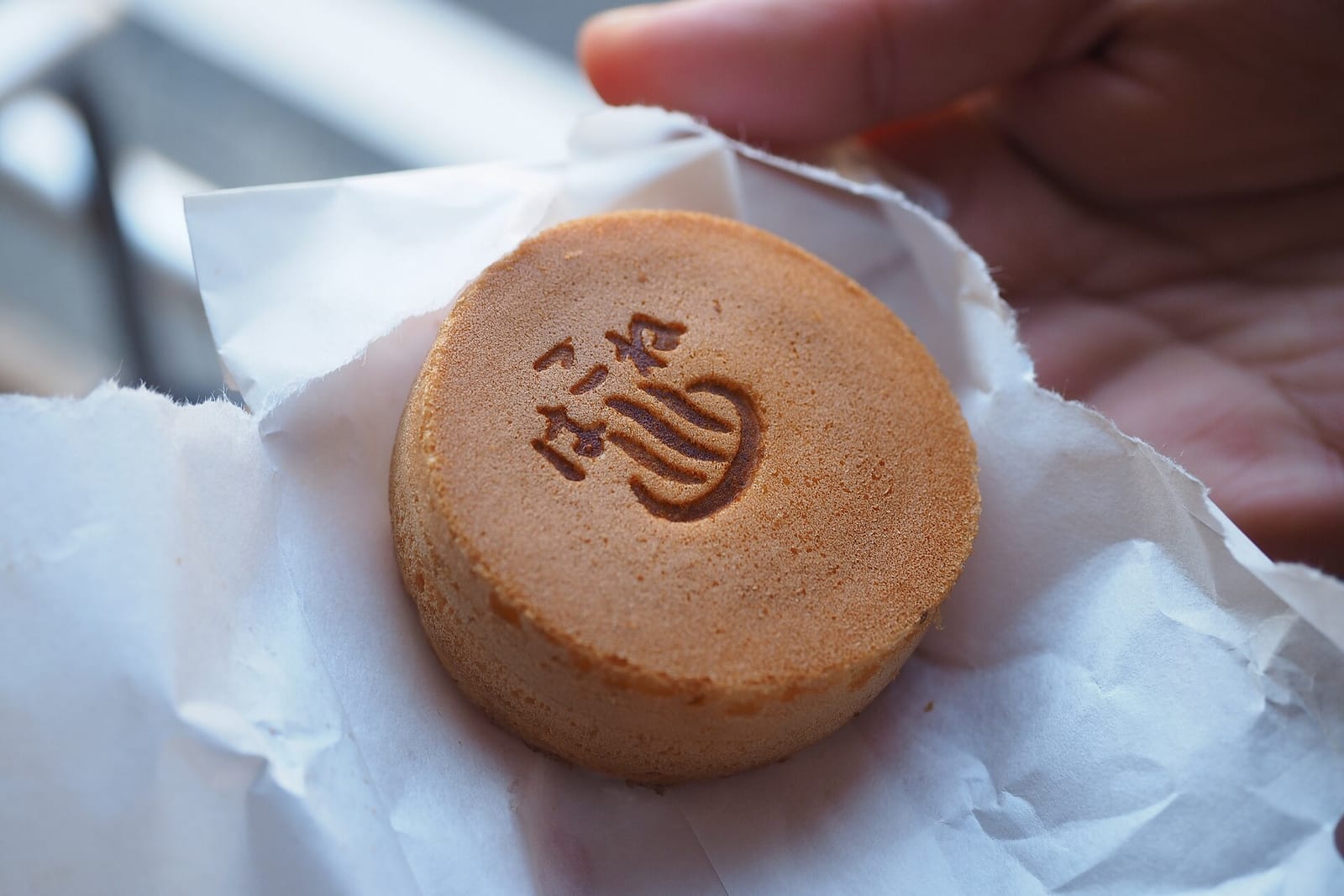 Hakone-Yumoto Street Food: What to Eat From 7:30 to 22:00
FAQ
How long do you need at the Hakone Open-Air Museum?
Plan on two to three hours. The map lists 114 outdoor works spread over a hillside, plus the Picasso Pavilion and several indoor galleries. Families who let children play in Woods of Net and use the foot bath should allow the longer end.
How much is the Hakone Open-Air Museum?
As of November 2026, adults pay ¥2,000 at the counter or ¥1,800 online, university and high school students ¥1,600 or ¥1,400, and elementary and junior high students ¥800 or ¥600. Preschool children are free.
What time does the Hakone Open-Air Museum close?
It closes at 17:00, and last admission is 30 minutes before closing, at 16:30. The museum is open 365 days a year, including the New Year period, on its ordinary hours.
Can you leave luggage at the Hakone Open-Air Museum?
Yes. Coin lockers at the entrance are free: you insert a ¥100 coin and get it back. For bags that do not fit, the museum asks you to talk to staff. Chokoku-no-Mori Station also has paid lockers.
Can you take photos at the Hakone Open-Air Museum?
Yes, for personal use. Indoors, flash, video recording, tripods and selfie sticks are banned, and works marked 'NO PHOTO' cannot be photographed anywhere. Drones and live streaming are not allowed.
Sources
- The Hakone Open-Air Museum — Visit Us (hours, admission, lockers, parking)
- The Hakone Open-Air Museum — Getting Here
- The Hakone Open-Air Museum — Home (Woods of Net closure notice, November 30 – December 4)
- The Hakone Open-Air Museum — Kids & Family
- The Hakone Open-Air Museum — Map of Outdoor Exhibits
- The Hakone Open-Air Museum — Outdoor Sculptures
- The Hakone Open-Air Museum — Indoor Exhibits
- The Hakone Open-Air Museum — Food, Cafés & Shops
- The Hakone Open-Air Museum — Not Allowed (items and photography)
- The Hakone Open-Air Museum — Discount Ticket
- The Hakone Open-Air Museum — Forest Foot Bath (Japanese)
- Hakone Navi — Hakone Freepass (discounts at around 70 spots)
- The Hakone Open-Air Museum — About Us
This article contains affiliate links. We may earn a commission at no extra cost to you.