Oshino Hakkai Day Trip From Tokyo: Train, Bus and the Pond Route
Oshino Hakkai from Shinjuku by Fuji Excursion and local bus: 2026 train times, the trains back, a pond-by-pond walking order, winter ice and access tips.
Getting to Oshino Hakkai means a train to the foot of Mt. Fuji and a bus up into a farming village. Board a reserved-seat Fuji Excursion at Shinjuku, get off at Mt. Fuji Station just under two hours later, and change to a Fujikyu local bus for roughly 25 minutes east. You step off beside eight spring ponds fed by Fuji snowmelt, lined with thatched roofs and food stalls. Below: the trains in both directions, which buses to look for, a walking order for the ponds and sights nearby, and what to know about winter ice, dark evenings and wheelchair access, as of November 2026.
Why go in the morning, and which route should you take?
Take one of the first two Fuji Excursions and be at the ponds by about 10:30. The Oshino village tourism association says there are few streetlights around the ponds and does not recommend visiting in the evening, and the trains back to Shinjuku start in mid-afternoon. A morning start also gives you the best chance of seeing Mt. Fuji reflected in Kagami-ike before cloud builds.
There are three realistic ways to get there from Shinjuku:
| Route | Changes | Rough time to Oshino Hakkai | Fare notes (as of November 2026) |
|---|---|---|---|
| Fuji Excursion to Mt. Fuji Station, then Fujikyu bus | At Mt. Fuji Station | About 2 hr 30 min | Train ¥4,010 to Shimoyoshida (one stop before); bus extra |
| JR to Otsuki, Fujikyu Line to Mt. Fuji Station, then bus | Otsuki, Mt. Fuji Station | About 2 hr 45 min (village’s figures) | Fujikyu section Otsuki–Mt. Fuji ¥1,040 |
| Highway bus from Busta Shinjuku | Via Fuji-Q Highland | About 2 hr 20 min (village’s figures) | From ¥2,000 online to Fuji-Q Highland |
The Fuji Excursion and a local bus
The Fuji Excursion (Fuji Kaiyu) runs on JR and Fujikyu tracks from Shinjuku through Otsuki, Shimoyoshida and Mt. Fuji Station to Kawaguchiko, all reserved seats. Fujikyu’s timetable (valid from March 14, 2026) gives these trains toward Mt. Fuji Station:
| Shinjuku dep. | Mt. Fuji Station dep. | Runs |
|---|---|---|
| 7:30 | 9:23 | Daily |
| 8:30 | 10:21 | Daily |
| 9:02 | 11:10 | Weekends and holidays, Oct 24 – Feb 28 |
| 9:30 | 11:23 | Daily |
| 10:30 | 12:19 | Daily |
Fujikyu lists ¥4,010 one way from Shinjuku to Shimoyoshida, a ¥2,390 basic fare plus a ¥1,620 limited express charge. It does not print the Shinjuku–Mt. Fuji fare on that page, so expect a little more for the extra stop. Tickets go on sale one month before the travel date at JR East ticket offices and machines, on Ekinet, and at Fujikyu stations including Mt. Fuji.
At Mt. Fuji Station, Fujikyu runs two local routes through Oshino: the Mt. Fuji Station – Oshino Hakkai – Uchino line, and the longer line that runs from Kawaguchiko via Mt. Fuji Station and Oshino to Yamanakako and Gotemba. Fujikyu also runs the Fujikko-go, a sightseeing bus for the Fujiyoshida, Oshino and Yamanakako area. The village gives about 25 minutes by bus, and the prefecture says the ponds are about 5 minutes on foot from the Oshino Hakkai stop. Fujikyu does not publish times or fares for these buses on its English route page, so check the timetable at the station.
If you plan to ride the Fujikko-go more than twice, Fujikyu’s 2-day Fuji Passport covers it, at ¥3,300 for adults (as of November 2026). It is sold at Mt. Fuji Station and Kawaguchiko Station.
JR to Otsuki, then the Fujikyu Line
If the Fuji Excursion is sold out, take a JR Chuo Line train from Shinjuku to Otsuki and change to the Fujikyu Line. The village’s access page gives about 90 minutes to Otsuki and 50 minutes on to Mt. Fuji Station. Fujikyu lists the adult fare from Otsuki to Mt. Fuji at ¥1,040, or ¥1,039 with an IC card. Fujikyu also notes that Mt. Fuji Station has stopped selling JR Azusa and Kaiji limited express tickets from Otsuki, so buy any JR limited express ticket for the way back before you leave Tokyo.
Highway bus from Busta Shinjuku
The village’s access page lists a Chuo Expressway bus from Shinjuku of about 100 minutes to Fuji-Q Highland, then about 40 minutes on to Oshino Hakkai. Fujikyu’s Shinjuku–Kawaguchiko buses leave from the 4th floor of Busta Shinjuku. The adult fare to Fuji-Q Highland is from ¥2,200, or ¥2,000 when paid online, as of November 2026. Book on Fujiyama Connect up to one month ahead, and note that Fujikyu suspends this route on days Fuji-Q Highland is closed. Our Busta Shinjuku guide explains where to board.
What will you pass on the way, and in what order?
These stops run in route order: from Mt. Fuji Station to the main cluster of ponds, then out to the sights around it and the separate Deguchi-ike. Tick “Add to my route” on the ones you want, and the box at the end of the page opens them in order in Google Maps.
Mt. Fuji Station
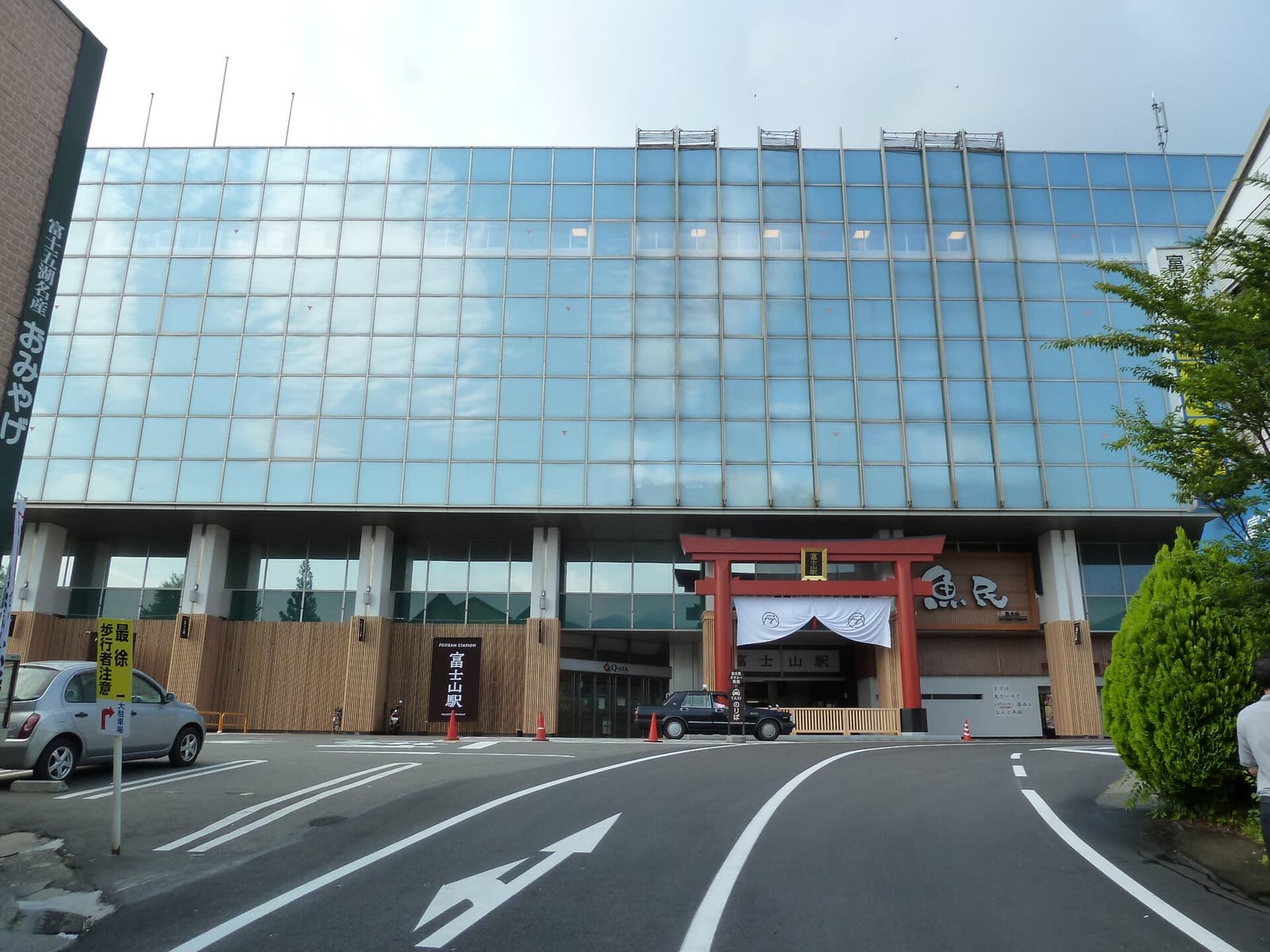
Your transfer point from train to bus. Fujikyu’s local buses for Oshino start here. The station also sells Fujikyu’s Fuji Passport bus pass. Older guides call this station Fujiyoshida.
- Access
- Fuji Excursion from Shinjuku, or Fujikyu Line from Otsuki
- Source
- www.fujikyu-railway.jp
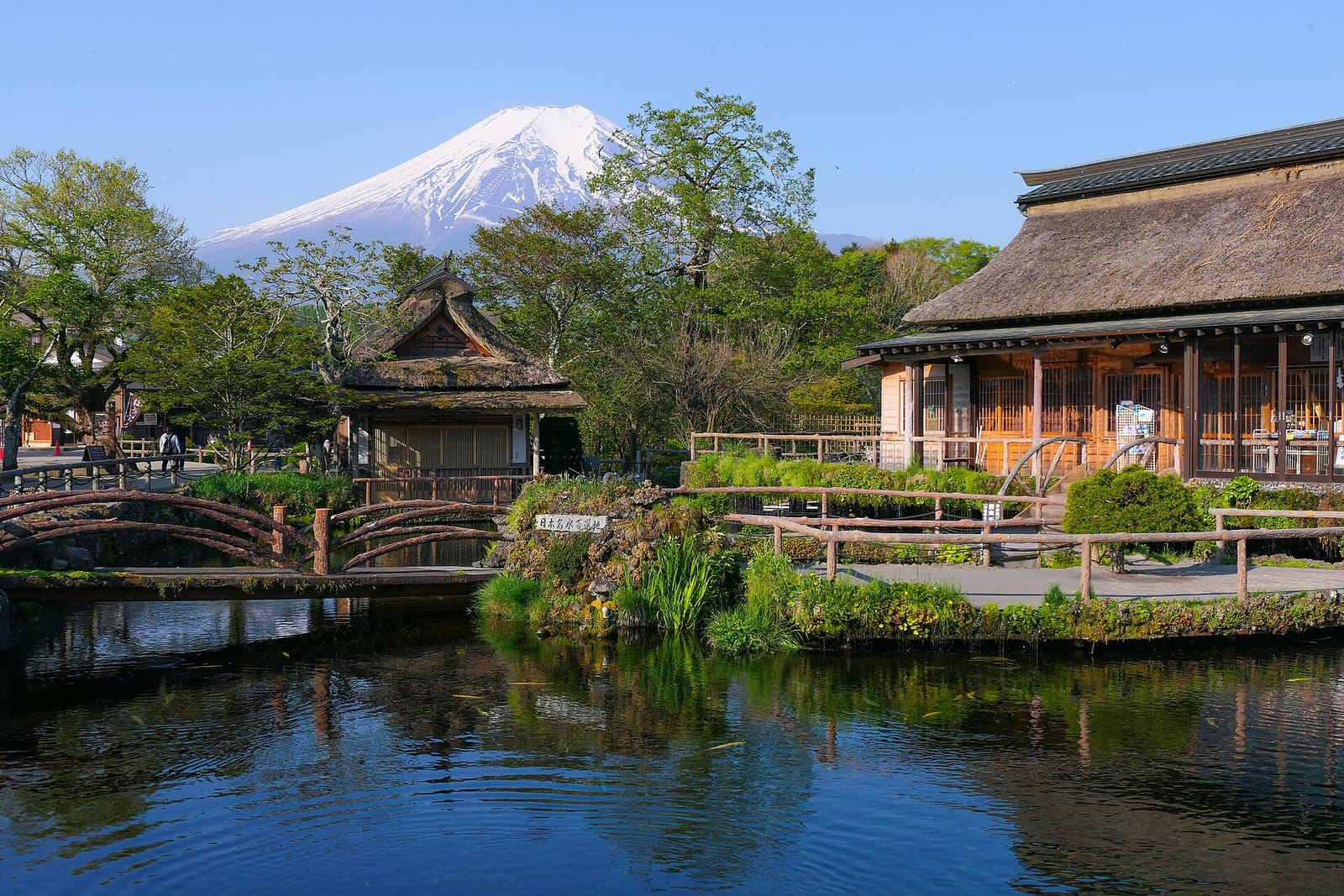
Waku-ike Pond
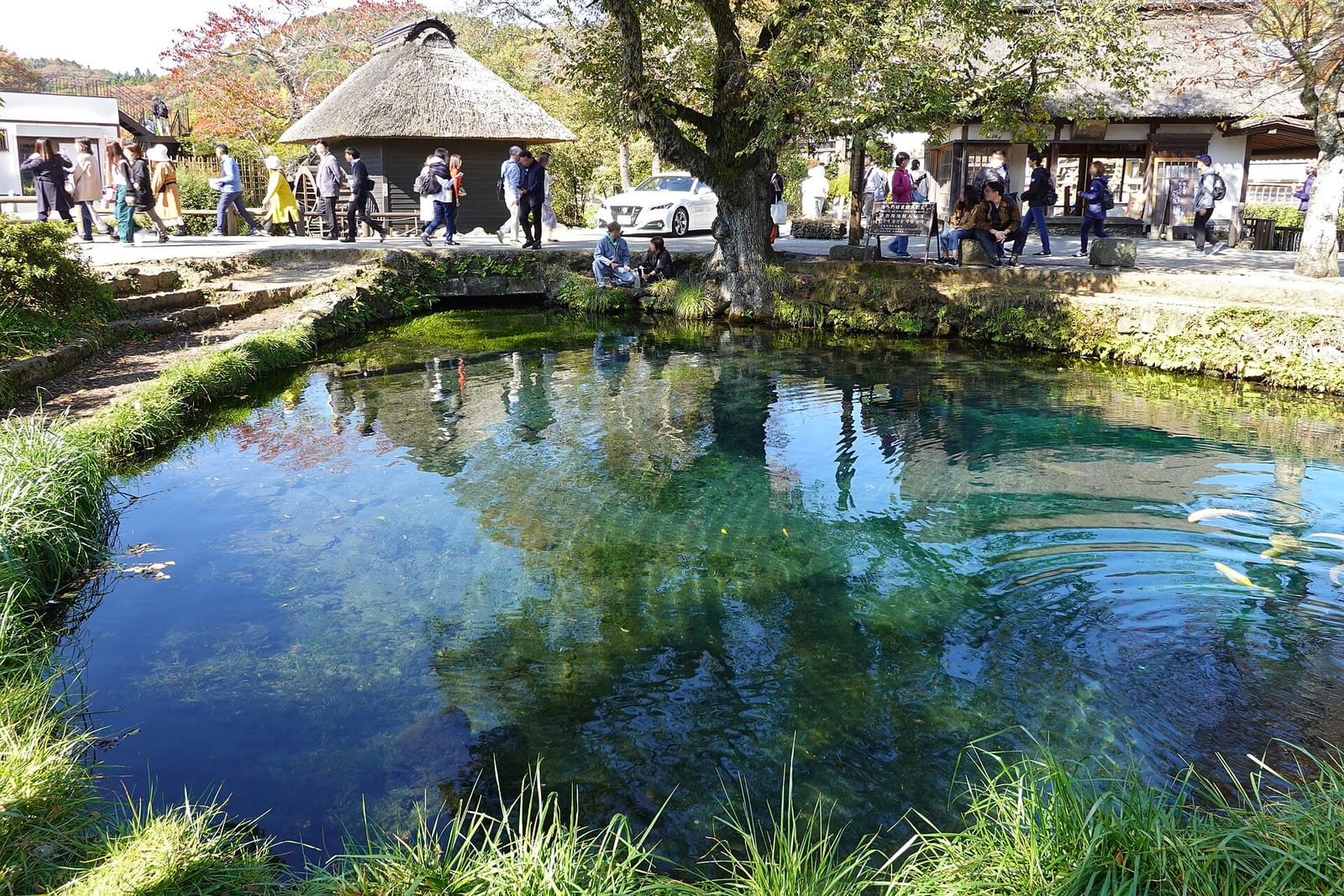
The village calls Waku-ike the pond with the biggest spring flow and the finest view of the eight. It is 4 meters deep and stays at about 12–13°C year round, which is why the bottom looks so sharp through the moving surface. It sits on the busiest street in the area, with souvenir shops across from it and a water mill opposite.
- Hours
- No set hours
- Access
- About 5 min walk from the Oshino Hakkai bus stop
- Source
- oshino-navi.com
Kagami-ike Pond
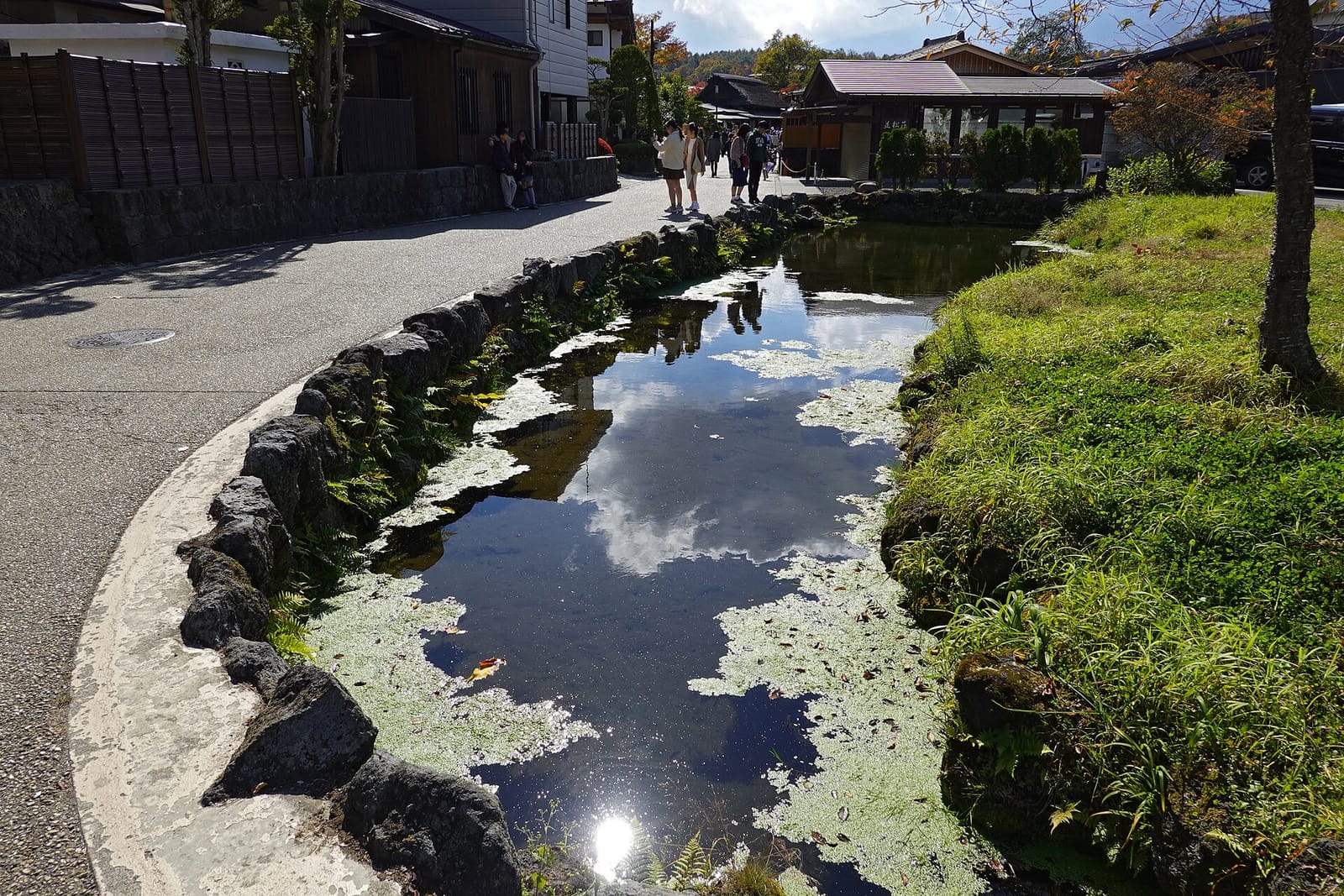
Kagami means mirror. This pond has very little spring flow, so its surface is calm, and the village says that when conditions are right you can see Mt. Fuji reflected clearly upside down in it. It is the seventh of the eight sacred ponds on the old Fuji pilgrimage circuit.
- Hours
- No set hours
- Access
- North side of the street that runs from Waku-ike
- Source
- oshino-navi.com
Hannoki Bayashi Shiryokan (Sokonuke-ike)
A thatched farmhouse with a kept garden, which the village calls the original landscape of Oshino. Sokonuke-ike, the third of the eight ponds, is inside its grounds, so it is the only pond with set hours and the only one you pay to see. The prefecture marks the museum as paid but does not publish the price, so have some cash ready. The village says the museum can close on some days and asks you to call ahead if a full set of eight matters to you.
- Hours
- Sokonuke-ike viewable 9:00–17:00 (as of November 2026)
- Source
- www.yamanashi-kankou.jp
Sengen Shrine (Shibokusa)
The village tourism association dates this shrine to 807. Its main hall has a cypress-bark roof and is a village cultural property, and a yew grove on the grounds is protected by the prefecture. It is a quiet counterpoint to the busy pond street, and fits the area’s history as a stop for Fuji pilgrims.
- Access
- In the Shibokusa district of Oshino
- Source
- oshino-navi.com
Okada Koyo Photo Museum
A museum for Koyo Okada (1895–1972), who spent his life photographing Mt. Fuji. The prefecture says it shows about 50 of his Fuji photographs, including “Kohan no Haru”, the image used for the Mt. Fuji design on the 1,000-yen note, plus the cameras he used. It also opens on Tuesdays during Golden Week and in July and August.
- Hours
- 10:00–17:00, last entry 16:30; closed Tuesdays (next day if a holiday), the day after holidays except weekends, and from Dec 28 for New Year
- Access
- About 12 min by bus from Mt. Fuji Station
- Source
- www.yamanashi-kankou.jp
Fujiyusui no Sato Aquarium
A freshwater aquarium inside Sakana Park, filled with Fuji spring water. The prefecture lists fish from Yamanashi’s rivers and lakes, a double circular tank and a micro-aquarium corner, and the park around it has walking paths and a pond. It is the best indoor backup if it rains.
- Hours
- 9:00–17:00 (October–June); closed Tuesdays
- Access
- About 20 min by bus from Mt. Fuji Station
- Source
- www.yamanashi-kankou.jp
Deguchi-ike Pond
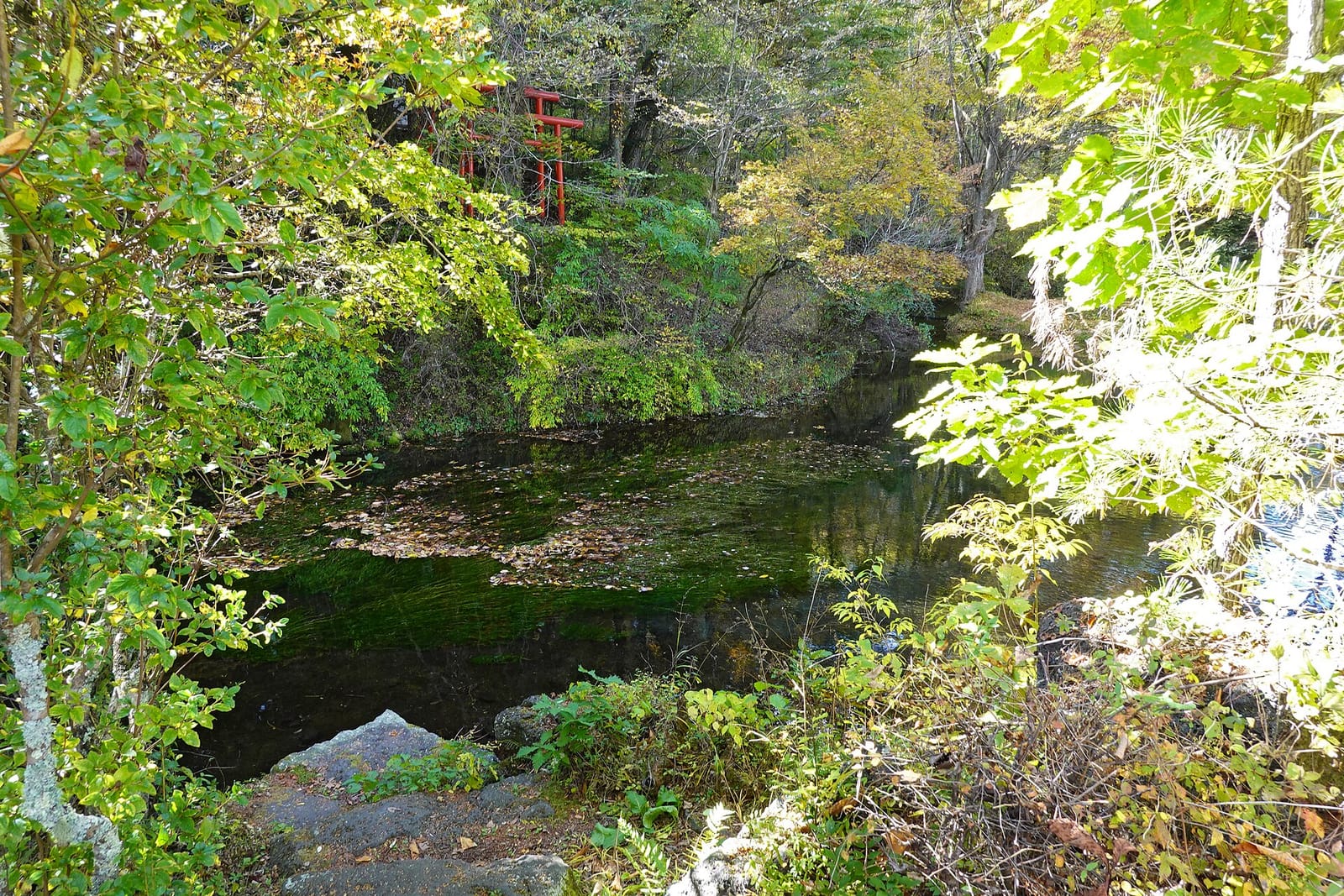
The first of the eight sacred ponds and the largest, at 1,467 square meters, but it stands apart from the others with a hill right behind it and a small Inari shrine in the trees above. The village notes there are no shops around it and far fewer visitors, so this is the pond to see in its most natural state. If you use a wheelchair, the village recommends going by car because of the distance.
- Hours
- No set hours
- Access
- Separate from the main group of ponds
- Source
- oshino-navi.com
How do you get around the ponds comfortably?
Walk the main cluster first, then decide on the outlying stops. The ponds sit close together around Waku-ike, but the village notes that going around all of them is hard in a wheelchair, and the paths are a mix of streets and narrow pond-side walkways.
- Wheelchair and stroller access. The village lists Deguchi-ike, Sokonuke-ike, Waku-ike, Nigori-ike, Kagami-ike and part of Choshi-ike as reachable in a wheelchair, but not Okama-ike or Shobu-ike. The tourist information center lends wheelchairs for free, and it has only three, so reserve ahead.
- Facilities. The prefecture lists toilets, wheelchair-accessible toilets and an AED at the site, and signage in English, Chinese, Korean, Thai and French.
- Winter. The village says snow usually falls from late November to March, and shady spots can ice over even without snow. Wear shoes with grip, and if you drive, studless tires are recommended.
- Don’t stay after dark. There are few streetlights, and the village does not recommend walking the ponds in the evening.
- Driving? There is no public lot at the ponds. The prefecture asks you to use the private paid lots nearby, and the village asks you to set your navigation to the parking lot’s address rather than the tourist office.
How do you plan the day?
Leave Shinjuku on the 7:30 or 8:30 Fuji Excursion, take the bus from Mt. Fuji Station, and give yourself two to three hours in Oshino for the main ponds, the Hannoki Bayashi museum and one of the museums. Then return to Mt. Fuji Station for a train back.
The Fuji Excursion leaves Mt. Fuji Station for Shinjuku at these times (as of November 2026):
| Mt. Fuji Station dep. | Shinjuku arr. (weekday) | Runs |
|---|---|---|
| 14:16 | 16:08 | Daily |
| 15:06 | 16:59 | Daily |
| 15:47 | 17:45 | Weekdays, Oct 22 – Dec 29 and Jan 12 – Feb 26 (not Jan 4–8) |
| 16:20 | 18:29 (weekend) | Weekends and holidays, Oct 24 – Feb 28 |
| 16:56 | 18:48 | Daily |
| 17:49 | 19:48 | Daily |
A few practical points:
- Book the return seat at the same time as the outbound one. Every seat is reserved, and there are only five or six trains back a day.
- Allow for the bus. Leave Oshino at least an hour before your train, since you need about 25 minutes on the bus plus the wait for it.
- Leave big bags in Shinjuku. The pond paths are narrow and busy. See our Shinjuku Station luggage storage guide.
- Add the Chureito Pagoda. Shimoyoshida is one stop before Mt. Fuji Station, so you can climb to the pagoda first. Our Chureito Pagoda from Shinjuku guide covers the walk and the local rules.
- Prefer to stay on the bus all day? Our Mt. Fuji day trip from Shinjuku by bus plans a Kawaguchiko day around highway bus times.
What is Oshino Hakkai, and why is the water so clear?
The eight ponds are what is left of an old lake. The village explains that the whole area was once a large lake, Uno-ko, which a major eruption around the year 800 split into two. The Oshino half slowly drained, and its bed became today’s village, while rain and snowmelt from Mt. Fuji filter through the ground and well up in the ponds. They were a pilgrimage site for Fuji worshippers from the Edo period, were named a national natural monument in 1934 and one of Japan’s 100 famous waters in 1985, and became part of the Mt. Fuji World Heritage site in 2013.
 Shinjuku Hotels With Big Rooms for Families: 6 Picks by Group Size
 Shinjuku Hotels Connected to the Station: What 'Direct' Means
FAQ
How long does it take to get from Tokyo to Oshino Hakkai?
Plan on about 2 hours 30 minutes from Shinjuku. The Fuji Excursion takes just under two hours to Mt. Fuji Station, and the Oshino village tourism association gives about 25 minutes by Fujikyu bus from there to Oshino Hakkai, plus a 5-minute walk from the stop.
Is there a train station at Oshino Hakkai?
No. The nearest station is Mt. Fuji Station (Fujisan) on the Fujikyu Line, and you continue by local bus. Fujikyu runs a local bus line from Mt. Fuji Station via Oshino Hakkai to Uchino, and its Fujikko-go sightseeing bus also serves Oshino.
How much does an Oshino Hakkai day trip cost?
The train is the biggest cost. Fujikyu lists ¥4,010 one way on the Fuji Excursion from Shinjuku to Shimoyoshida, the stop before Mt. Fuji Station, as of November 2026, so budget a little over ¥4,000 each way. Fujikyu's 2-day Fuji Passport, which covers the Fujikko-go bus, is ¥3,300 for adults.
What are the opening hours of Oshino Hakkai?
The ponds are a natural site with no opening hours, and there are no closing days. The exception is Sokonuke-ike, which sits inside the Hannoki Bayashi Shiryokan museum and can be seen 9:00–17:00. The village advises against walking around after dark because there are few streetlights.
Can you combine Oshino Hakkai with Chureito Pagoda in one day?
Yes. Shimoyoshida, the station for Chureito Pagoda, is one stop before Mt. Fuji Station on the same Fujikyu Line. Do the pagoda first in the morning, then ride one stop to Mt. Fuji Station for the bus to Oshino.
Sources
- Fujikyu Railway — Fuji Excursion (Fuji Kaiyu): stops, timetable, fares, tickets
- Fujikyu Railway — Fares
- Fujikyu Bus — Shinjuku to Kawaguchiko highway bus
- Fujikyu Bus — Fuji Five Lakes / Fujiyoshida area local buses
- Fujikyu Bus — Fuji Passport
- Oshino Village Tourism Association — Access
- Oshino Village Tourism Association — Oshino Hakkai
- Oshino Village Tourism Association — FAQ
- Oshino Village Tourism Association — Waku-ike
- Oshino Village Tourism Association — Kagami-ike
- Oshino Village Tourism Association — Deguchi-ike
- Oshino Village Tourism Association — Hannoki Bayashi Shiryokan
- Oshino Village Tourism Association — Sengen Shrine (Shibokusa)
- Yamanashi Prefecture Tourism — Oshino Hakkai
- Yamanashi Prefecture Tourism — Okada Koyo Photo Museum
- Yamanashi Prefecture Tourism — Fujiyusui no Sato Aquarium
This article contains affiliate links. We may earn a commission at no extra cost to you.