Owakudani Black Eggs: What to Know Before You Buy (2026)
Owakudani's black eggs: ¥500 for four, sold hot and same-day only, why the shells turn black, the guided trail to the cooking ponds, gas cautions and hours.
Eat one black egg at Owakudani and you add seven years to your life. That line is on souvenir bags, tour-bus commentary and most travel guides. The company that actually makes the eggs is more careful. Okuhakone Kanko, which runs Owakudani Kurotamago-kan, says the longevity belief comes from the valley’s Enmei Jizo statue, and that the “seven years” part spread without a clear origin, most likely because seven is a lucky number in Japan. The other common assumption, that the egg is black or sulfur-flavoured all the way through, is not right either. This guide sorts out what the eggs are, where and when you can buy them as of November 2026, how to see them being cooked, and what else is worth your time around them.
What are Owakudani black eggs, really?
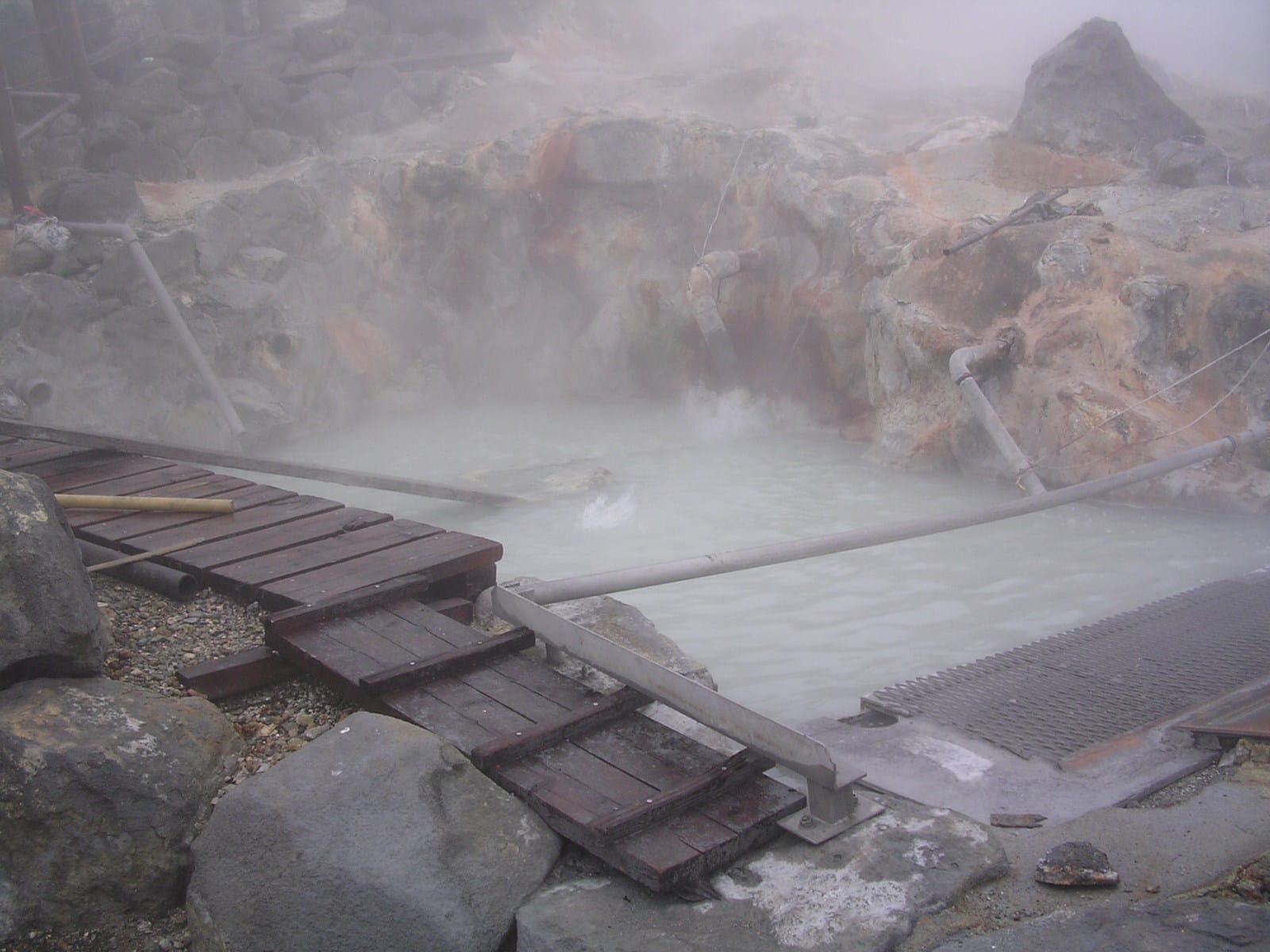
They are ordinary hen’s eggs cooked in volcanic hot-spring water, and only the shell turns black. Okuhakone Kanko boils raw eggs for about 60 minutes in a spring pond at roughly 80°C. The shell is full of tiny pores, so minerals from the pond water stick to it and darken it. The eggs are then steamed for about 15 minutes at around 100°C and sent down to the shop on a small dedicated ropeway.
Crack one open and you get a normal hard-boiled egg. The maker notes that the white sometimes has small black spots: sulfur from the egg’s own amino acids reacts with iron from the spring water when heated. It says these spots are harmless. As for flavour, it cites a test on the Japanese TV show Tokoro-san no Me ga TEN!, which found about 20% more umami components in eggs boiled in the hot spring than in plain hot water.
Three facts catch people out:
- Bags only. Kurotamago-kan sells them as ¥500 for four (tax included, as of November 2026), not one at a time.
- Same day only. The maker sells the eggs freshly cooked and hot, only on the day they are made. Unsold eggs are not held over. They now go into smoked eggs and furikake rice seasoning to cut waste.
- Owakudani only. According to Okuhakone Kanko, the eggs are sold only at Kurotamago-kan and at Gokuraku Chaya, both in Owakudani. You will not find them at Hakone-Yumoto or in Tokyo.
Where and when can you buy the eggs?
Buy them at Owakudani Kurotamago-kan, the large building beside the ropeway station, before about 16:40. Okuhakone Kanko lists egg sales from 9:00 to 16:40 and the Kurotama Shop from 9:00 to 16:30, and warns that hours change with the season and the eggs can sell out. If you arrive on the last ropeway runs of a winter afternoon, do not count on them.
These stops are listed in the order you reach them walking out of the station. Tick “Add to my route” on the ones you want, and the box at the end of the page opens them in order in Google Maps.
Owakudani Station (Hakone Ropeway)
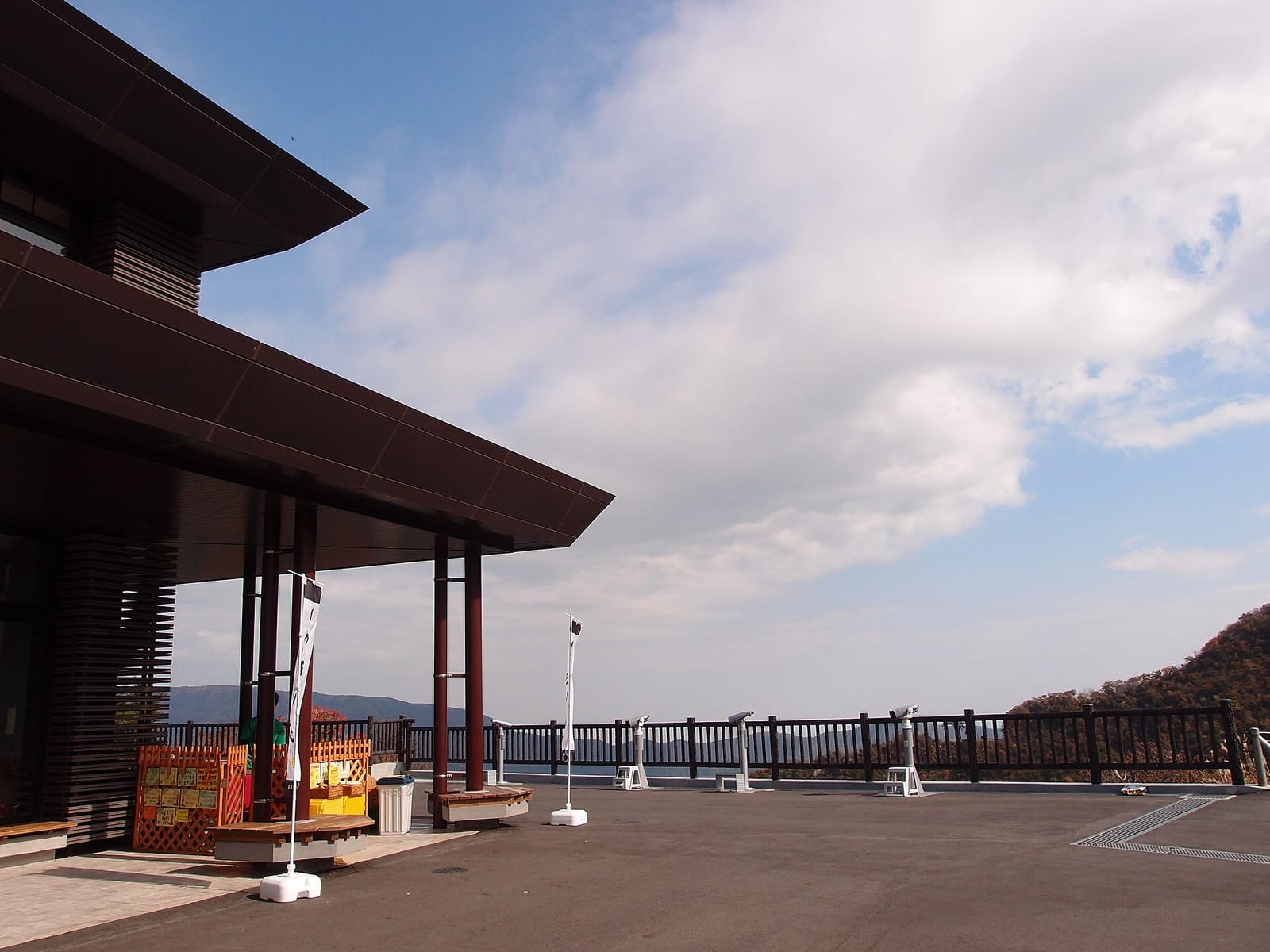
Most visitors arrive here by gondola. Hakone Navi says each leg, Sounzan to Owakudani and Owakudani to Ubako, takes about 15 minutes, with an 18-person gondola about every minute, and riders on the full route change cabins here. Service stops for wind of 30 m/s or more, bad weather and maintenance. Hakone Navi recommends a light outer layer in spring, autumn and winter, and warm clothing in winter. Owakudani sits at about 1,000 m.
- Hours
- Feb–Nov 9:00–17:00 at Owakudani Station; Dec–Jan 9:00–16:15 (as of November 2026)
- Price
- Ropeway one way ¥2,000, round trip ¥3,000, adults (as of November 2026)
- Access
- About 15 min by ropeway from Sounzan or from Ubako
- Source
- hakonetrip.odakyu-global.com
Owakudani Kurotamago-kan
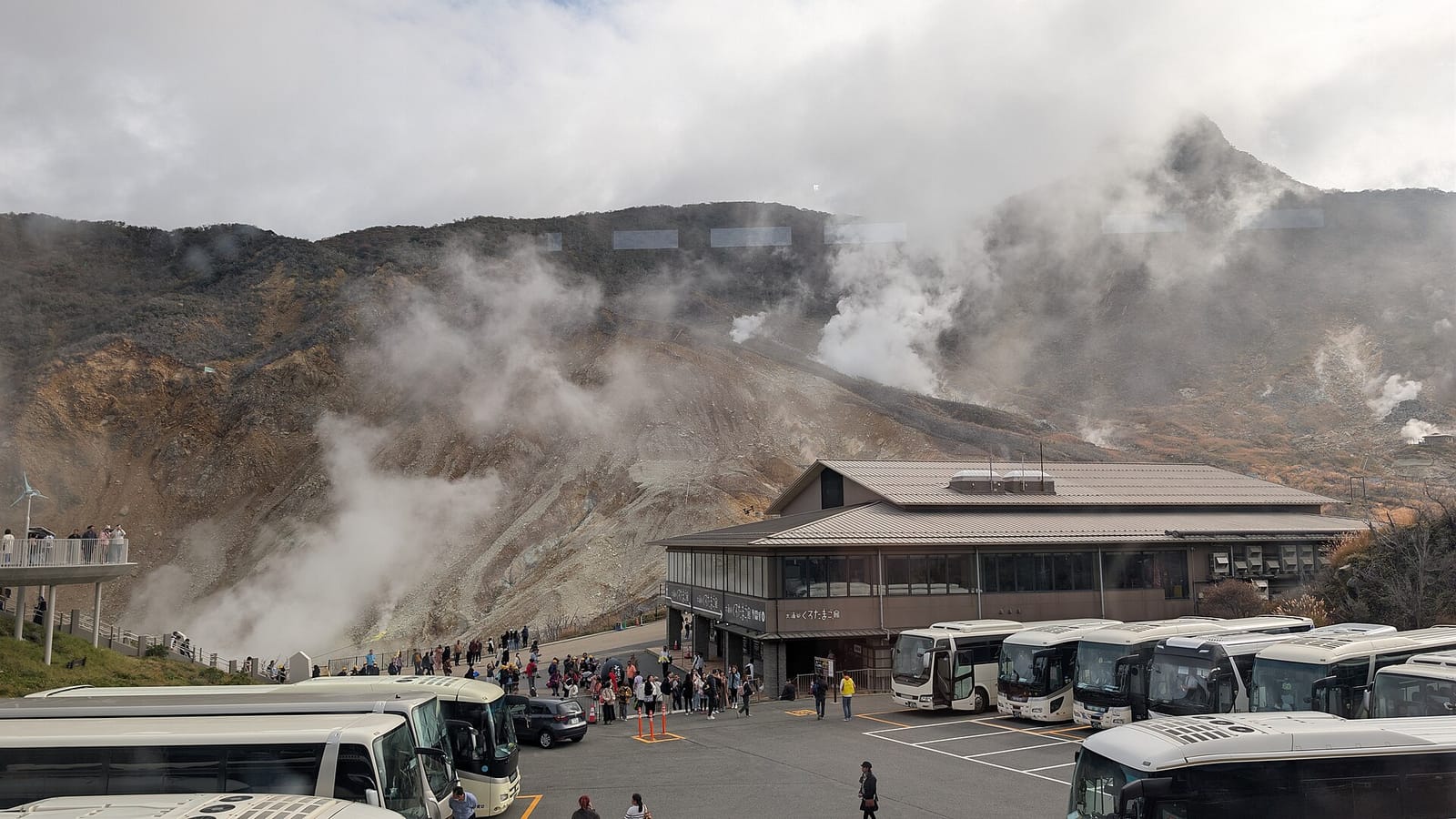
The main place to buy the eggs. The Kurotama Shop also stocks Owakudani-only souvenirs such as Kuromaro manju (¥1,080 for a box of eight) and Gudetama and Sanrio black-egg goods. Before you go in, look for the giant black-egg monument by the main entrance: the maker says that on a clear day you can photograph it with Mt. Fuji behind. On weekends the car park gets congested, so the operator recommends coming by ropeway.
- Hours
- Egg sales 9:00–16:40; Kurotama Shop 9:00–16:30; varies by season (as of November 2026)
- Price
- Black eggs ¥500 for 4, tax included (as of November 2026)
- Access
- Next to Hakone Ropeway Owakudani Station
- Source
- owakudani.com
Wakuwaku Kitchen & Cafe
A seat to eat your eggs indoors. The cafe allows you to eat black eggs bought in the shop at its tables, which helps on cold or windy days. It serves drinks and fast food only (there is no lunch buffet), including a black curry bread (¥450) whose batter is coloured with black cocoa and bamboo charcoal.
- Hours
- 9:00–16:00 (as of November 2026)
- Access
- Inside Owakudani Kurotamago-kan
- Source
- owakudani.com
Can you see the eggs being cooked?
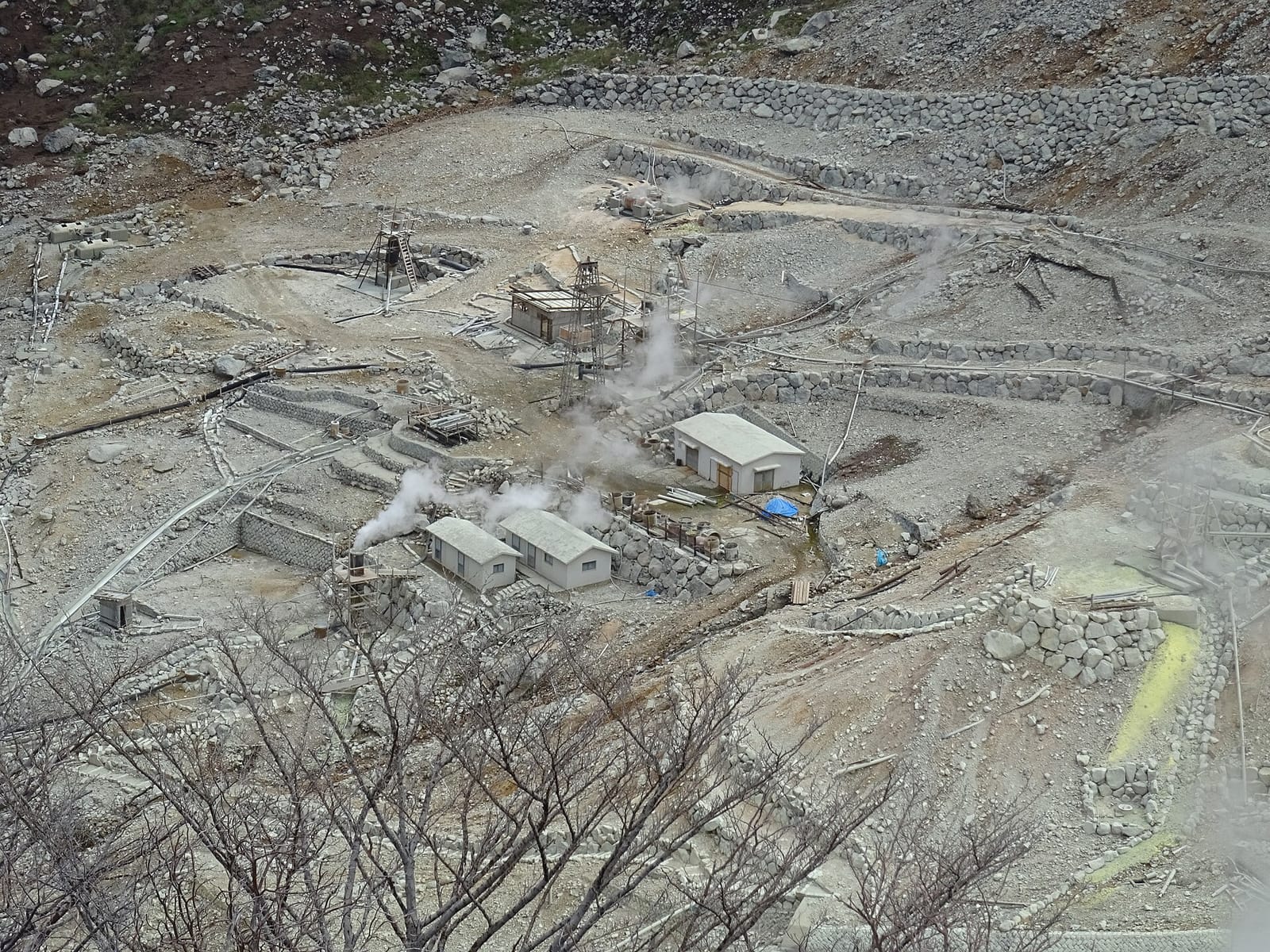
Yes, but only on the guided Owakudani Nature Trail tour, which needs a reservation. The fumarole area where the cooking ponds are is closed to general visitors, and the trail reopened on March 28, 2022 with escorted entry only. The trail runs about 700 m to the steam vents, past the “egg steaming” stop where workers called steamers cook the day’s eggs in a hot-spring pond on Enmadai.
Before you book, read the conditions on the Hakone Tourism Association’s reservation page and the Kurotamago-kan trail page:
| Detail | What the official pages say (as of November 2026) |
|---|---|
| Sessions | 10:00, 11:30, 13:00, 14:30 daily, about 40 minutes each |
| Group size | Up to 30 people, led by two safety monitors |
| Fee | ¥800 per person, paid on the day; cashless only (cards, transit IC and other e-money, no cash) |
| Language | Japanese only; the page asks you to apply only if you understand Japanese |
| Meeting point | Owakudani Information Center, at the Hakone Geo Museum entrance on Kurotamago-kan’s 1st floor, 20 minutes before the start |
| Who can join | Elementary school age and up; no respiratory or heart conditions; able to move to safety unaided; helmet provided |
| Cancellation | Decided 30 minutes before each session, for gas levels, rain, strong wind or fog |
Two catches worth knowing. Black-egg sales at the teahouse on the trail are suspended, so buy your eggs at Kurotamago-kan. And eating is not allowed on the trail.
Hakone Geo Museum
A small museum on the Hakone volcano, and the meeting point for the Nature Trail tour: the Owakudani Information Center sits at its entrance. If your tour is cancelled for weather or gas, this is the indoor way to learn what the trail would have shown you.
- Hours
- 9:00–16:00, open year-round, may close in bad weather (as of November 2026)
- Access
- 1st floor of Owakudani Kurotamago-kan
- Source
- www.hakone-geomuseum.jp
Owakudani Nature Trail
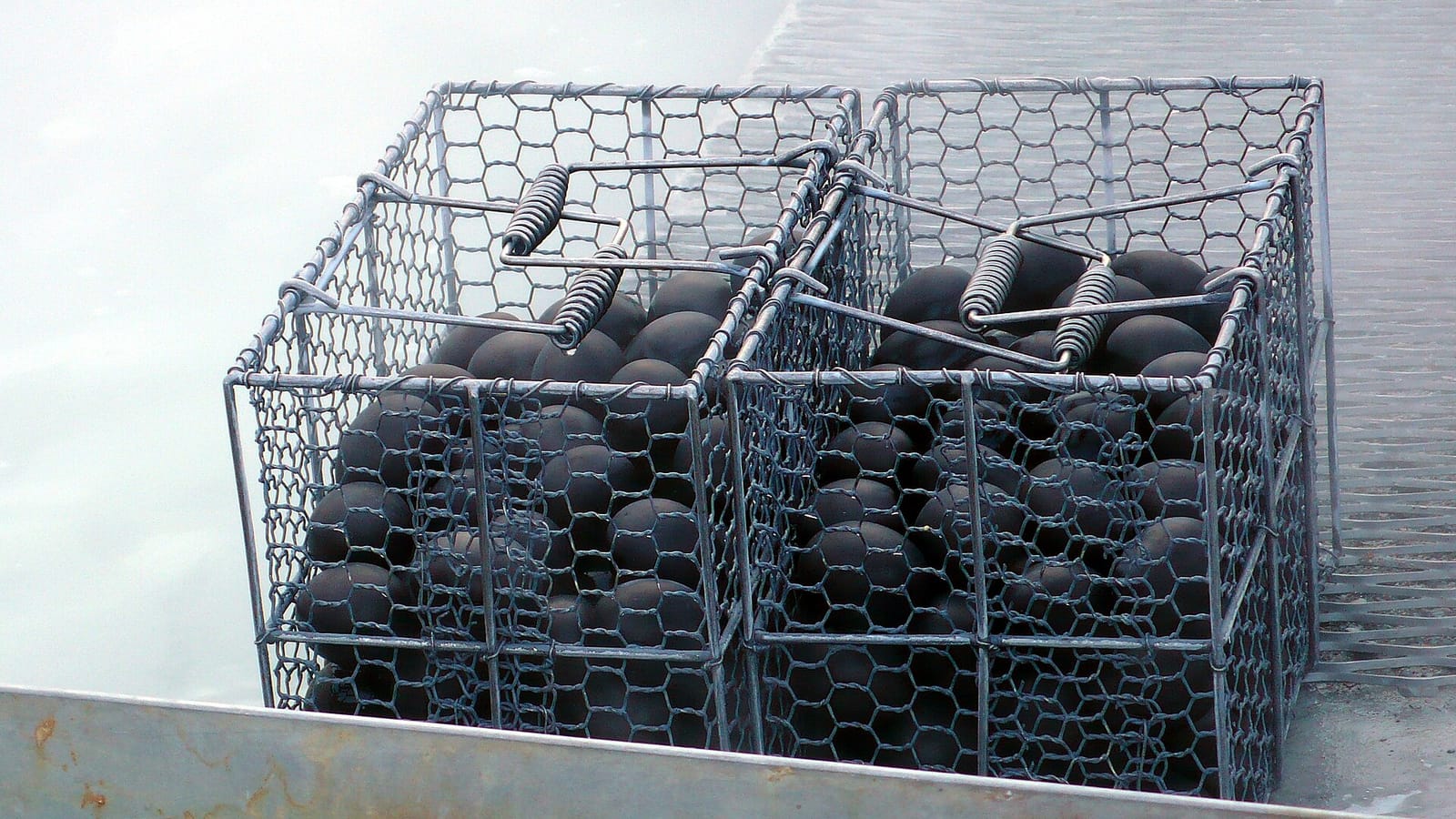
The roughly 700 m loop to the fumaroles. Okuhakone Kanko lists rising steam plumes, the egg-steaming area, and an observation deck with views over the Hakone mountains toward Mt. Fuji. There are seven shelters along the route in case of an eruption. Follow the monitors at the front and back of the group at all times.
- Hours
- Guided sessions 10:00, 11:30, 13:00, 14:30 (as of November 2026)
- Price
- ¥800 per person, cashless only (as of November 2026)
- Access
- Reservation required; meet at the Owakudani Information Center 20 min before
- Source
- www.hakone.or.jp
What else is there around the eggs?
The Earth Valley Observation Area and the Enmei Jizo, the statue behind the longevity legend. Both are a few steps from the shop, so they fit into a short stop between ropeway rides.
Earth Valley Observation Area
Opened on April 25, 2025 with the rebuilt Owakudani Station. Hakone Navi describes three zones: the round Wind Circle Terrace with 360° views and a low barrier for photos, the Breath Deck with a glass floor over the fumaroles, and the Edge of the Vast Sky, where ropeway gondolas pass close overhead.
- Access
- Plaza in front of Owakudani Station
- Source
- www.hakonenavi.jp
Enmei Jizo
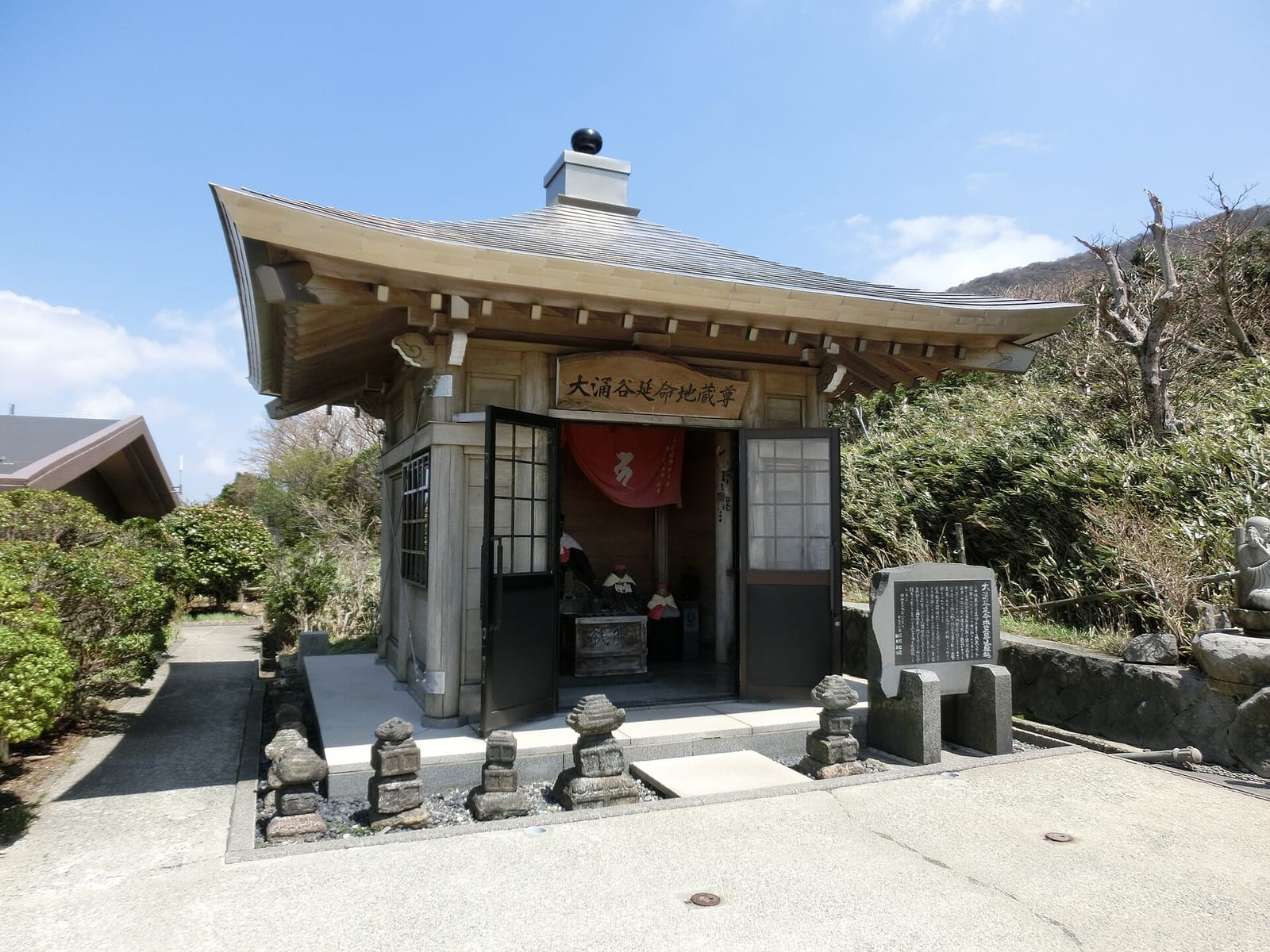
The reason the eggs are linked to long life. Okuhakone Kanko says the stone Jizo is said to date back more than 1,100 years, to when the monk Kobo Daishi carved it to pray for people suffering in this hellish-looking valley. It is also worshipped as a protector of children, and a black-egg pond once sat nearby.
Which black-egg snacks can you find besides the egg?
Egg soft serve, black curry and black-egg sweets, spread across four counters. Prices below are tax included, as listed by each operator.
Owakudani Station Diner and Tani no Marché
The station’s restaurant on the 2nd floor serves Owakudani curry with a soft-boiled egg in a blackish-brown roux, and takes no reservations. Hakone Freepass holders get 20% off soft drinks. Downstairs, Tani no Marché sells black-egg macarons (¥1,190) and black-egg tart cookies (¥780), good options to carry home since the real eggs are sold for the same day only.
- Hours
- Diner 10:30–16:30 (last order 16:00); Marché shop 9:30–16:30 (as of November 2026)
- Price
- Owakudani curry with soft-boiled egg ¥1,350
- Access
- Owakudani Station, 2nd floor (Diner) and 1st floor (Marché)
- Source
- www.hakonenavi.jp
Kurotamago Yuland
A fast-food stand run by the egg maker, by the entrance to the Nature Trail. Besides egg soft serve it sells oden with eggs, yakisoba and other snacks, plus beer and sake.
- Hours
- 9:00–16:00 (as of November 2026)
- Price
- Egg soft serve ¥450 (as of November 2026)
- Access
- Annex of Kurotamago-kan at the Nature Trail entrance
- Source
- owakudani.com
Is Owakudani safe, and who should skip it?
It is safe for most visitors who follow the signs, but the operators ask some people to stay out. Okuhakone Kanko says the valley gives off hydrogen sulfide and sulfur dioxide, and that people with asthma, respiratory or heart conditions, or who feel unwell should not enter the Nature Trail. If the smell gets strong, or your eyes, nose or throat sting, leave the area. When gas is especially high, the trail closes.
The Kanagawa Park Association, which runs the Owakudani car park and information center, also notes that volcanic activity continues and that the site sits at about 1,040 m with a harsh climate. On weekdays its car park charges less and traffic is lighter: from ¥500 for the first 2 hours on weekdays, against ¥500 for 30 minutes on weekends and holidays (as of November 2026). Cars cannot leave after 16:40.
How do you fit the eggs into a Hakone day?
Treat it as a stop between two ropeway rides. The simplest plan is to break the ropeway ride here: you buy one ticket to your final station and Hakone Navi says you do not need a separate ticket to get off partway. From December to January the last ropeway is at 16:15, so aim to be at Owakudani before lunch in winter.
If you are coming from Tokyo, our Hakone day trip from Shinjuku gives timed connections for the whole loop, and the Hakone Freepass break-even guide shows when the pass pays for an Owakudani-and-back trip. For a seat on the train down from Shinjuku, see our Romancecar booking guide, and if you want to stay the night, our one-night Hakone stay guide covers where to base yourself.
 Hakone Stopover Between Tokyo and Kyoto with Luggage: 3 Bag Plans
 Hakone-Yumoto Street Food: What to Eat From 7:30 to 22:00
FAQ
Do Owakudani black eggs really add seven years to your life?
It is a local legend, not a promise. The egg maker, Okuhakone Kanko, links the longevity belief to Owakudani's Enmei Jizo statue and says the 'seven years' figure spread without a clear origin, probably because seven is a lucky number in Japan.
How much are the black eggs at Owakudani?
¥500 including tax for a bag of four at Owakudani Kurotamago-kan, as of November 2026. You cannot buy single eggs there, so a bag is easy to share between two to four people.
Can you take Owakudani black eggs home?
They are made to be eaten fresh. The maker sells them hot and only on the day they are cooked, and unsold eggs are not kept for the next day. If you want something to carry home, the shops sell black-egg sweets and souvenirs instead.
What do Owakudani black eggs taste like?
Like a hard-boiled egg. The black is only on the shell, and the white is white, sometimes with small black spots that the maker says are harmless. A Japanese TV test cited by the maker found about 20% more umami components than in eggs boiled in plain water.
Is it safe to visit Owakudani with asthma?
The operators advise against it. Owakudani gives off hydrogen sulfide and sulfur dioxide, and the black-egg maker asks people with asthma, respiratory or heart conditions, or who feel unwell, not to enter the Nature Trail. Leave the area if the smell is strong or your eyes, nose or throat sting.
Sources
- Owakudani Kurotamago-kan (Okuhakone Kanko) — official site: egg price, sales hours
- Owakudani Kurotamago-kan — How black eggs are made
- Owakudani Kurotamago-kan — Secrets of the black egg (legend, same-day sale, where sold)
- Owakudani Kurotamago-kan — Owakudani Nature Trail
- Owakudani Kurotamago-kan — Volcanic gas
- Owakudani Kurotamago-kan — Spots (fumaroles, Enmei Jizo, egg monument)
- Owakudani Kurotamago-kan — Wakuwaku Kitchen & Cafe
- Owakudani Kurotamago-kan — Kurotamago Yuland
- Hakone Tourism Association — Owakudani Nature Trail reservations
- Hakone Navi — Earth Valley Observation Area and the new Owakudani Station
- Hakone Navi — Hakone Ropeway
- HAKONE TRIP (Odakyu) — Hakone Ropeway
- Hakone Geo Museum
- Kanagawa Park Association — Owakudani Parking & Information Center
This article contains affiliate links. We may earn a commission at no extra cost to you.