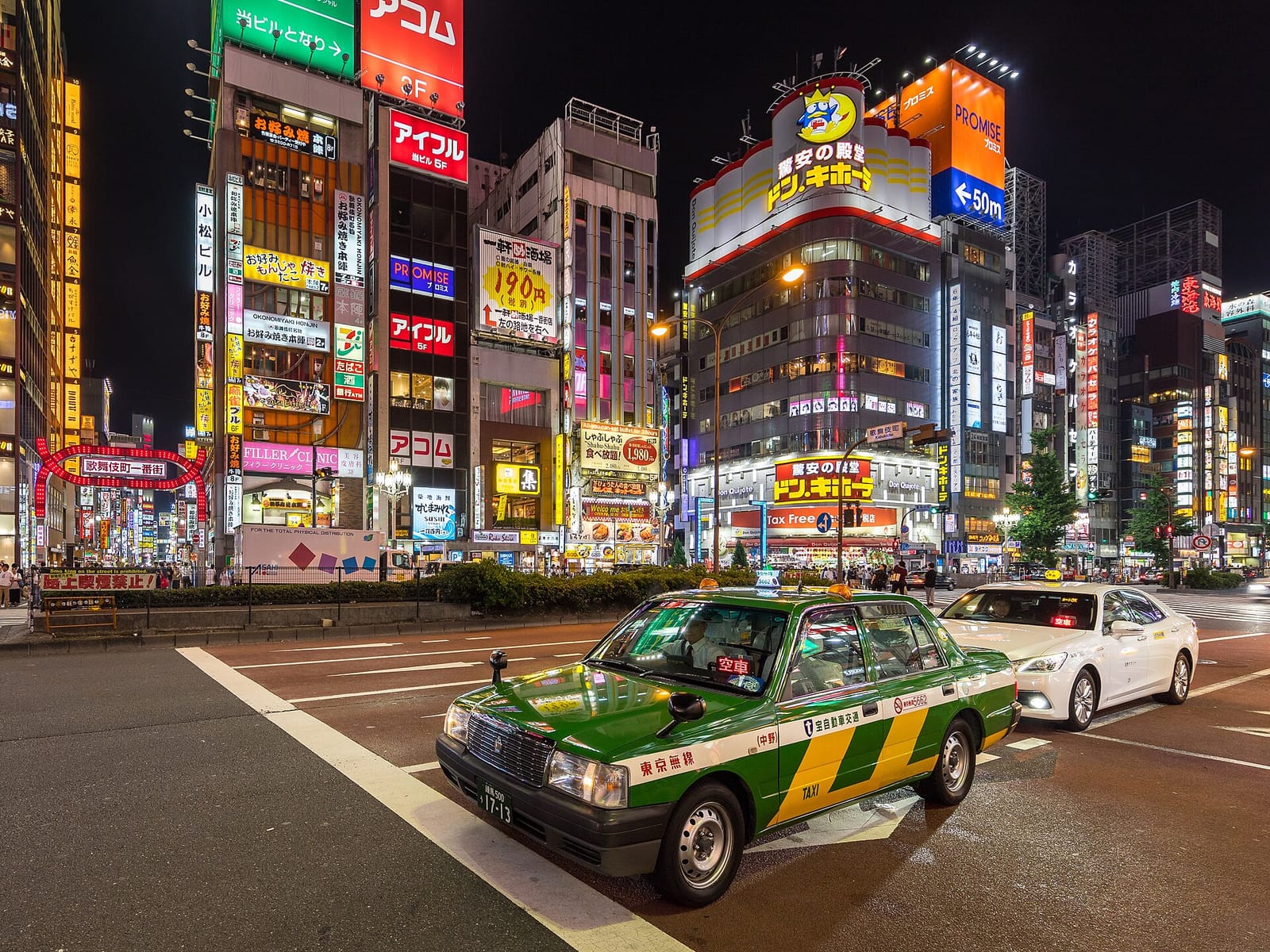
Taxi Apps in Tokyo for Tourists: Getting a Cab From Shinjuku
GO, Uber, DiDi or S.RIDE from Shinjuku? Compare fees, card payment and cancellation rules checked in November 2026, plus the ranks that need no app at all.
Calling a taxi with GO can add ¥300 before the wheels turn: a ¥100 app charge and a ¥200 international service charge, both on the price page GO revised in July 2026. The taxi company’s pick-up fee comes on top, and a peak charge at busy times. The car that arrives is a normal licensed taxi, so from Shinjuku Station you can often skip every one of those fees by walking to a rank.
So the short version is this. At the station, use a rank. From a hotel, a restaurant or a back street, use an app, and have two installed. Fees and rules below come from the operators’ own pages, as of November 2026.
What is the fastest way to get a taxi from Shinjuku?
Walk to a rank if you are within five minutes of the station, and open GO or DiDi if you are not. Here is how the four apps compare for a visitor.
| GO | Uber | DiDi | S.RIDE | |
|---|---|---|---|---|
| What you get | Licensed taxis in all 47 prefectures | Licensed taxis, up to 4 riders | Licensed taxis, including S.RIDE partner cars for visitors in Tokyo | Licensed taxis in urban areas; more than 10,000 in Tokyo |
| English | Yes | Yes | Yes | English website |
| Pay in the app | International cards, Apple Pay | Card or PayPal | Credit or debit card, PayPay | Registered card |
| Pay the driver instead | Yes, ¥100 handling charge may apply | Not stated | Yes, by the methods that taxi accepts | Not stated |
| Fees on top of the fare | App ¥100, international ¥200, pick-up fee, peak ¥30–¥100 | Shown before you book | Pick-up fee, tolls | Pick-up fee by company |
| Cancellation | ¥500, first one free | See the app | ¥500 | See the app |
GO
- What you get
- Licensed taxis in all 47 prefectures
- English
- Yes
- Pay in the app
- International cards, Apple Pay
- Pay the driver instead
- Yes, ¥100 handling charge may apply
- Fees on top of the fare
- App ¥100, international ¥200, pick-up fee, peak ¥30–¥100
- Cancellation
- ¥500, first one free
Uber
- What you get
- Licensed taxis, up to 4 riders
- English
- Yes
- Pay in the app
- Card or PayPal
- Pay the driver instead
- Not stated
- Fees on top of the fare
- Shown before you book
- Cancellation
- See the app
DiDi
- What you get
- Licensed taxis, including S.RIDE partner cars for visitors in Tokyo
- English
- Yes
- Pay in the app
- Credit or debit card, PayPay
- Pay the driver instead
- Yes, by the methods that taxi accepts
- Fees on top of the fare
- Pick-up fee, tolls
- Cancellation
- ¥500
S.RIDE
- What you get
- Licensed taxis in urban areas; more than 10,000 in Tokyo
- English
- English website
- Pay in the app
- Registered card
- Pay the driver instead
- Not stated
- Fees on top of the fare
- Pick-up fee by company
- Cancellation
- See the app
“Not stated” means the operator’s public page does not say, not that it is impossible. Every app shows its price before you confirm, so check two of them side by side when demand is high.
How does the GO app work, and what does it really cost?
GO is the safe first choice because of coverage: its English page says it works in all 47 prefectures and accepts international credit cards and Apple Pay. You set pick-up and drop-off points, tap “Request a Taxi”, and match the car with a confirmation number.
Its price page, revised July 24, 2026, lists these charges on top of the fare:
| Charge | Amount |
|---|---|
| Pick-up fee | Set by each taxi company |
| GO App charge | ¥100; some companies do not charge it |
| International service charge | ¥200 |
| Handling charge, if you choose to pay in the car | ¥100 where it applies |
| Peak charge | About ¥30–¥100 at busy times and places |
| Off-peak discount | About ¥30–¥100 off at quiet times |
| Reservation fee | ¥370–¥980 |
| Airport flat rate fee | ¥400 |
Three settings save money. Register a card and pay in the app, so the handling charge does not arise. Open “Taxi companies” or “Ride preferences” to see which companies skip the app charge. And read the “Fee details” screen before you confirm, because it shows the pick-up fee, which the price page cannot.
You can also choose a pre-fixed fare instead of the meter. GO warns that, depending on traffic, the fixed fare may come out higher than the meter would have. It is worth it in a jam or at night when you want no surprises.
Is Uber worth using in Shinjuku?
Yes, if it is already on your phone with a card attached. Uber in Tokyo books taxis driven by licensed taxi drivers, around the clock, for up to four people. Payment is by card or an online method such as PayPal, and you cannot change the destination in the app after confirming; ask the driver instead.
Uber’s own Tokyo page names the west exit of Shinjuku Station as a place where taxi queues get long, which is a fair warning about Friday nights. It also lists flat prices to and from Haneda and Narita. Uber averages a 19-minute taxi ride in Tokyo at ¥4,499, so treat it as a comfort choice, not a saving.
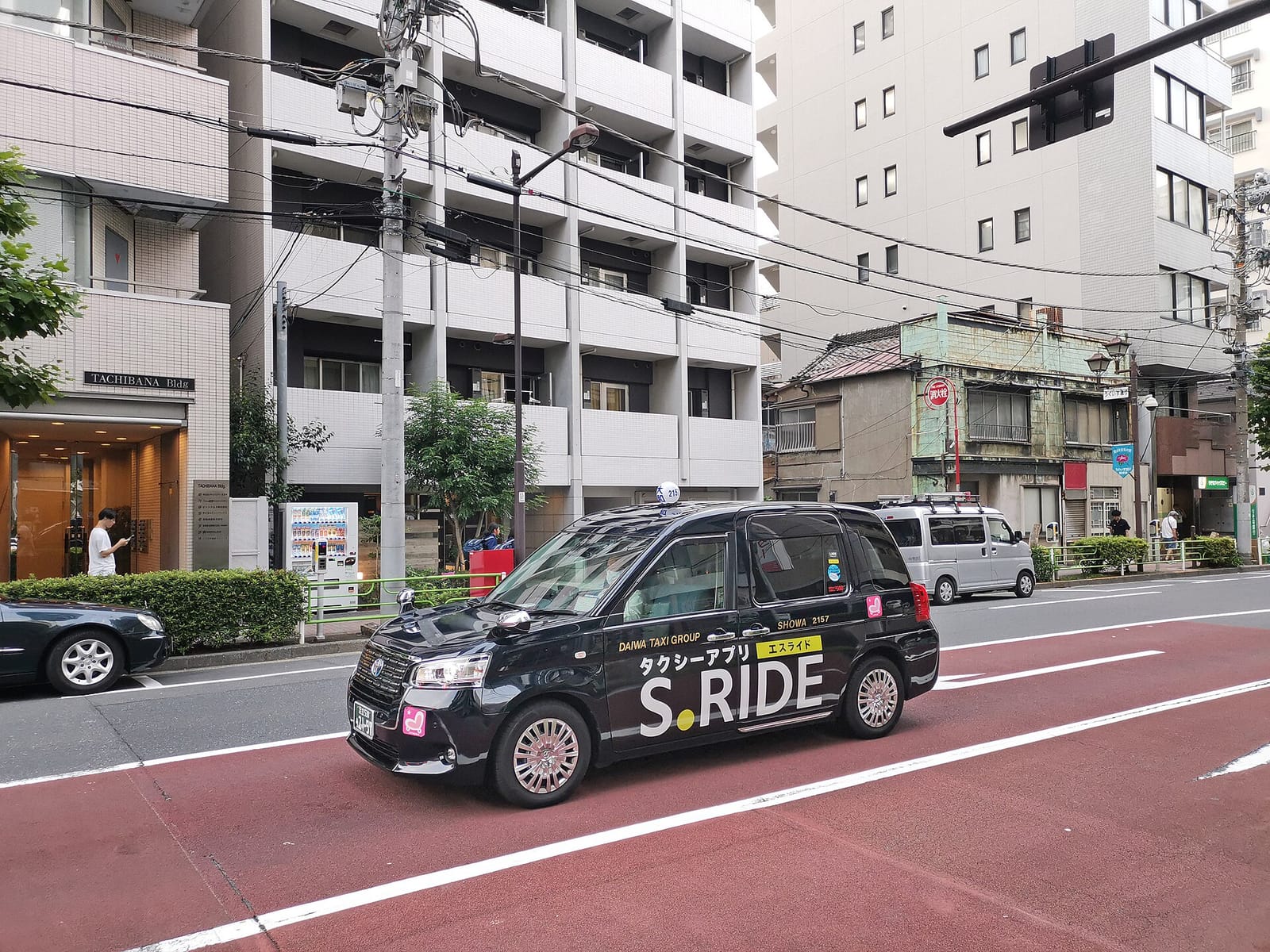
One development to watch: S.RIDE said in April 2026 that its taxis would start serving some Uber requests from visitors, beginning in the Yokohama area, with Tokyo and other cities to follow. That should mean more cars behind the same button. No Tokyo date was in the announcement.
When is DiDi or S.RIDE the better pick?
Use DiDi when GO shows no cars. Since mid-February 2026 visitors using DiDi can book and pay for S.RIDE partner taxis across Tokyo’s 23 wards, Musashino and Mitaka, so one English app reaches two fleets. DiDi’s visitor page advertises an average pick-up of about five minutes after a successful booking, a nationwide 2024 figure.
- Paying. “App payment” uses a card or PayPay you registered. “Cash and other” means paying in the taxi by whatever that company accepts. You cannot switch after ordering.
- Groups. DiDi Van offers larger vehicles, useful for five people or big suitcases.
- Hilton guests. Until the end of 2026, rides called from the Hilton Honors app during a stay are 20% off, up to ¥1,000 a ride, with app payment.
- Cancelling. ¥500 if you cancel three minutes or more after a driver accepts, or after the car arrives.
S.RIDE itself is aimed at people who live here: a monthly Premium plan, points, and taxi spots shown on a map. Its useful trick for visitors is S.RIDE WALLET, which lets you pay cashless in a taxi you hailed on the street or took from a rank.
Where are the taxi ranks at Shinjuku Station?
On the west and south sides, with two “superior” stands that only drivers and companies meeting a set safety and service standard may enter. From a rank you pay the meter and no pick-up or app fee.
West Exit underground rank
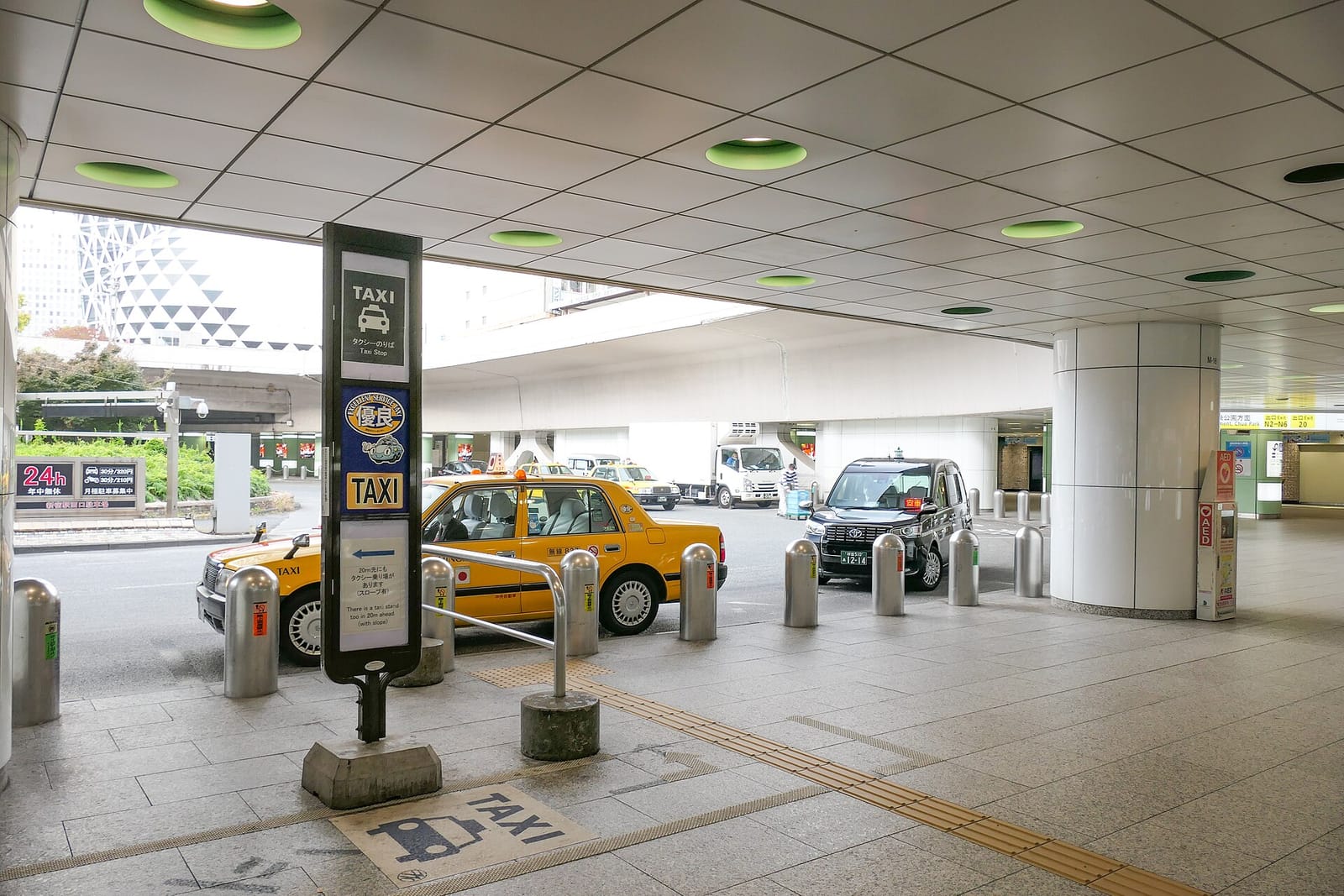
A superior stand since 2009 on the Tokyo Taxi Center’s list, and under cover. The plaza around it is a construction site. From the first train on December 19, 2026 a passage in the West Exit underground area closes and a new temporary one opens, so follow the temporary signs rather than an old map.
- Access
- West Exit, basement level of the station plaza (JR side)
- Source
- www.tokyo-tc.or.jp
West Exit street-level ranks
Tokyo moved the bus and taxi stands here on September 27, 2025, and its map marks two taxi stands at ground level. More roadworks run in the plaza from October 2026, so check the portal’s latest map if a sign and your phone disagree.
- Access
- West Exit plaza, ground level: beside the bus bays, and near the Keio Department Store side
- Source
- www.shinjuku-kojiinfo.metro.tokyo.lg.jp
Busta Shinjuku rank
The second superior stand, listed since 2016. It suits arrivals by highway bus and anyone with cases on the south side of the station. The bus terminal guide explains the floors.
- Access
- Busta Shinjuku, above the tracks on the south side of the station
- Source
- www.tokyo-tc.or.jp
If you are not sure which side you are on, start with our Shinjuku Station exits guide. On a busy evening, a rank queue that moves can be quicker than an app that keeps searching.
Where should you set the pick-up point?
Away from the station plaza, at a named door. Drivers have to find you, and you pay if they cannot.
- From a hotel, set the hotel’s main entrance. Larger hotels have their own forecourt, and taxis may already be waiting.
- From Kabukicho or Golden Gai, walk out to a wide road such as Yasukuni-dori and choose a building with a name on the map. A driver finds that faster than a doorway in the lanes.
- From the station, do not call a car into the West Exit plaza while the works go on. Use the rank.
- Match the car. Check the plate and the confirmation number in the app before you get in. DiDi and S.RIDE, announcing their link, named illegal taxis around airports and sights as a risk for visitors.
How much does a taxi from Shinjuku cost?
Work from the meter: ¥500 for the first 1.0 km, then ¥100 for every 232 m in a standard car, as the Tokyo Hire-Taxi Association lists it. By that formula, a 5 km ride is about ¥2,300 in distance alone, and about ¥2,800 with the 20% late-night rate from 22:00 to 5:00. Slow traffic adds ¥100 for each 1 minute 25 seconds below 10 km/h. On long trips, there is a 10% discount on the part over ¥9,000.
For airports, a flat fare removes the meter’s uncertainty. DiDi’s airport page, for a service run by NearMe in large cars, lists ¥14,880 between Haneda and Shinjuku Ward and ¥30,500 between Narita and Shinjuku Ward as regular flat rates, with a discount pack bringing Haneda down to ¥9,380 and up at the time of checking. Split between four or five people, that can make sense. Otherwise compare the limousine bus to Haneda and, for late landings, our Haneda to Shinjuku late-night guide.
What if no taxi app finds a car?
Change one thing at a time: the app, the spot, then the clock.
- Switch apps. GO and DiDi reach different fleets, and DiDi reaches S.RIDE cars for visitors.
- Walk two blocks. Move the pin to a wider road or a hotel forecourt.
- Hail one. You can flag a taxi down on the street in Shinjuku. Ginza is the exception: from 22:00 to 1:00 on weekdays, taxis there may only be boarded at ranks, so plan for that on the way back from dinner.
- Check the trains. Around midnight the last trains are the cheaper answer. If they have gone, our guide to Shinjuku after the last train covers where to sleep or wait until morning.
What should you set up before you fly?
Install two apps, register one card in each, and make sure you have data. Taxi apps need a live connection to match your position with the car.
Carry some cash and a physical card as a back-up for a rank taxi. Our travel essentials page has the rest of the list.
 Shinjuku Hotels With Big Rooms for Families: 6 Picks by Group Size
 Shinjuku Hotels Connected to the Station: What 'Direct' Means
FAQ
Does Uber work in Tokyo?
Yes, as a taxi app. Uber's Tokyo page says every taxi ride is operated by a fully licensed taxi driver, for up to four riders, at any hour. You pay in the app with a card or an online method such as PayPal.
Which taxi app is best for tourists in Tokyo?
GO says it covers all 47 prefectures, and it takes international cards and Apple Pay. DiDi is the one to add for Tokyo: since February 2026 visitors using it can also book S.RIDE's partner taxis in the 23 wards. Two apps beat one on a rainy night.
Can you use a taxi app in Japan without a Japanese phone number?
With GO, yes: its English page refers to users whose accounts are verified with non-Japanese numbers, though it no longer gives them coupons. Register before you travel, while your home number can still receive texts.
How much is a taxi in Tokyo in 2026?
For a standard car in the 23 wards, Musashino and Mitaka, the Tokyo Hire-Taxi Association lists ¥500 for the first 1.0 km and ¥100 for each further 232 m, plus a time charge in slow traffic. From 22:00 to 5:00 the fare rises by 20%. Tolls are extra.
Do you get charged if you cancel a taxi app ride in Tokyo?
GO charges ¥500 if you cancel three minutes or more after a taxi is confirmed, or if the driver cannot find you five minutes after arriving; the first cancellation is free. DiDi charges ¥500 for similar cases, including once the driver has reached the pick-up point.
Sources
- GO — Pricing (revised July 24, 2026)
- GO — English guide for visitors
- GO — App cancellation policy (Japanese)
- Uber — Taxi in Tokyo
- DiDi — Guide for visitors
- DiDi — User FAQ (Japanese)
- DiDi — Airport flat rate (Japanese)
- DiDi — S.RIDE dispatch link for visitors, January 2026 (Japanese)
- DiDi — Hilton Honors app link, November 2026 (Japanese)
- S.RIDE — Our services
- S.RIDE — Press release on the Uber link, April 2026 (Japanese)
- Tokyo Hire-Taxi Association — Rates table
- Tokyo Hire-Taxi Association — Main boarding locations
- Tokyo Taxi Center — Superior taxi stands (Japanese)
- Tokyo Metropolitan Government — Shinjuku Station construction portal
- Tokyo Metropolitan Government — West Exit bus and taxi stand changes (PDF, Japanese)
This article contains affiliate links. We may earn a commission at no extra cost to you.