Ameyoko Street Food: What to Eat Between Ueno and Okachimachi
What to eat on Ameyoko in Ueno: street stalls, a snack wholesaler, a seafood hall by Okachimachi, anmitsu and late supplies, with cash tips and opening hours.
Ameyoko has one rule every first-timer should know before the first skewer: pay in cash. A government description of the market notes that most shops accept only cash, that bargaining is allowed, and that merchants often add a free item or two. The other custom is simply courtesy: eat at the stall where you bought the food, then hand back the stick or tray. Follow those two and the 500-meter street from Ueno to Okachimachi is easy. This guide sorts what to eat by type, from the stalls to a seafood hall, with the hours of the shops that publish them.
What kind of food is Ameyoko known for?
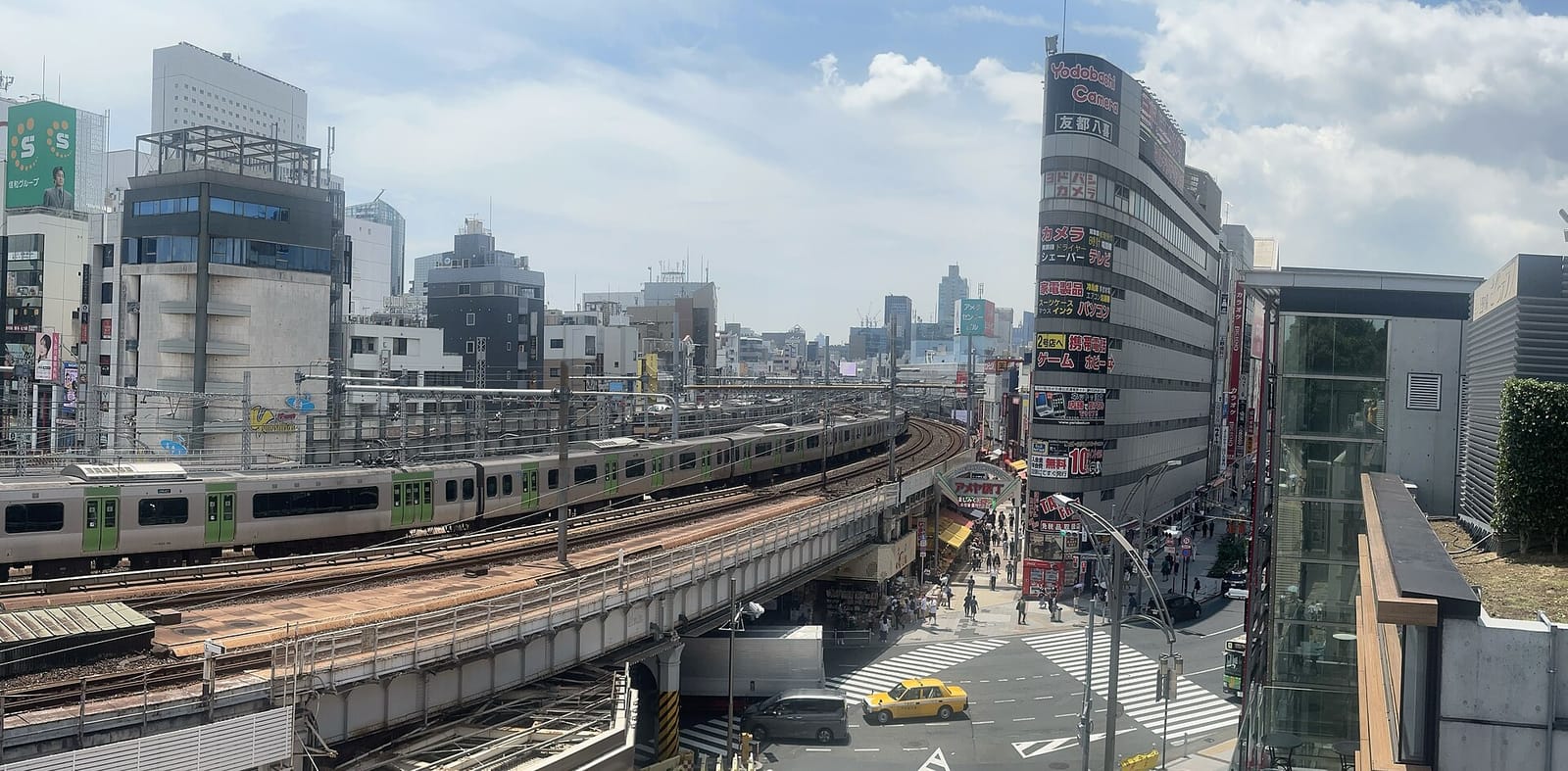
Seafood, fruit, sweets and snacks, and a growing range of international street food. GO TOKYO counts about 500 shops and stalls along roughly 500 meters between Ueno Station and Okachimachi Station, selling fresh seafood, sweets, snacks and food from around the world alongside clothes and cosmetics. The market began after World War II, and many early shops sold goods procured from the US military; most shops still specialize in a single kind of product.
Walk it from the Ueno end. Exit JR Ueno Station by the Shinobazu Exit, and the street runs south along and under the elevated tracks to Okachimachi Station’s North Exit. The stops below are in that order.
Ameyoko Shopping Street
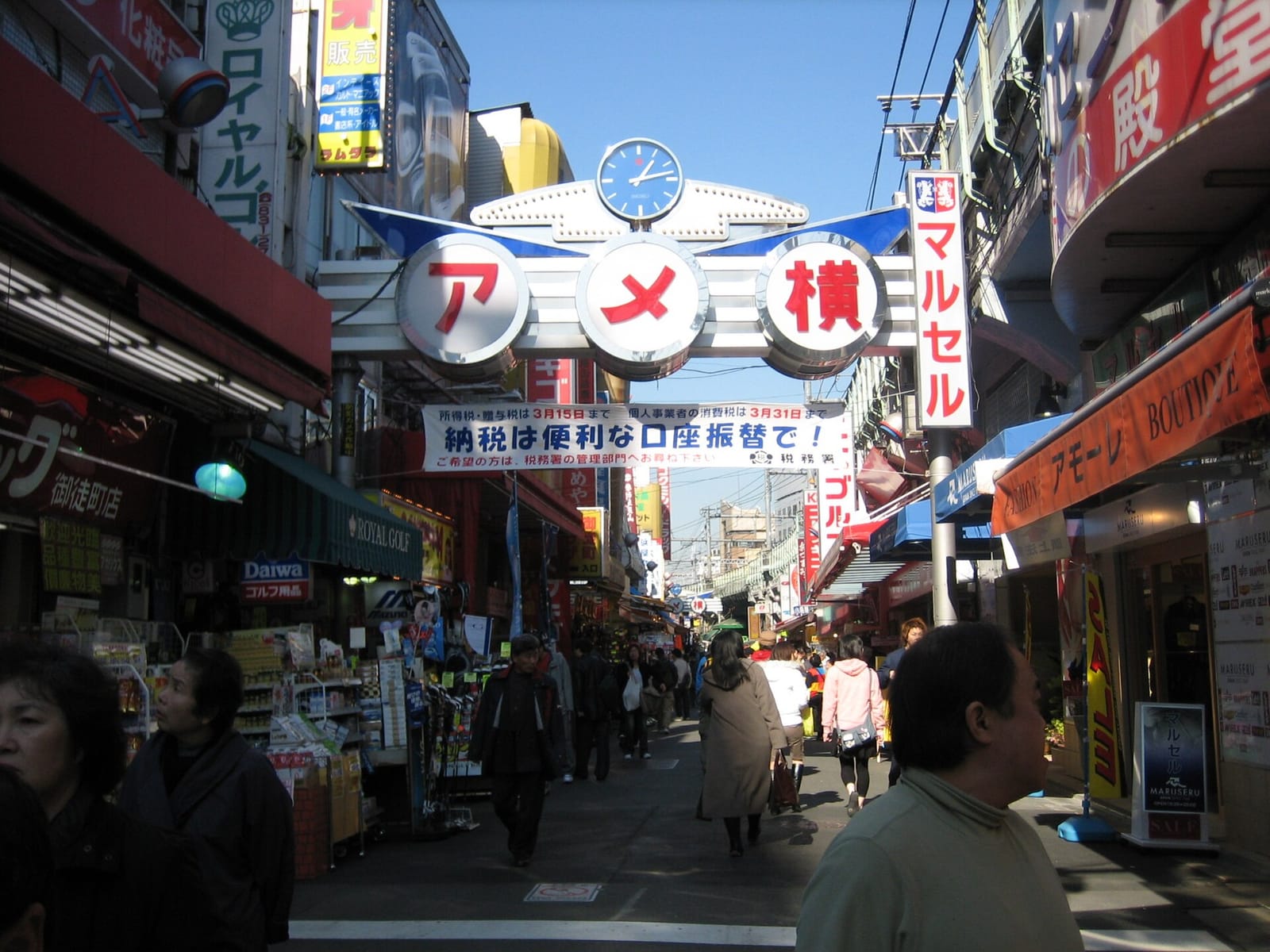
The main street and its side alleys under the tracks. GO TOKYO suggests it as a place to explore on foot between other sights, which is exactly how most visitors use it: a lunch of small plates between Ueno Park and the shops of Okachimachi.
- Hours
- Open daily; hours and days off vary by shop (as of November 2026)
- Access
- JR Ueno Station, Shinobazu Exit, or JR Okachimachi Station, North Exit
- Source
- www.gotokyo.org
Street food: what to eat at the stalls
Eat a little at several stalls rather than a full meal at one. These are the kinds of street food you will see on Ameyoko, by type:
| Type | Why it is here | How to eat it |
|---|---|---|
| Fruit | Fruit is one of the market’s staple goods | Ready-cut fruit at the stand; return the stick or cup |
| Seafood | Fresh seafood is what Ameyoko is best known for | At a counter or stool if the shop has one |
| International food | GO TOKYO lists food from around the world among the stalls | At the stand or a small eat-in counter |
| Sweets and snacks | Candy and snack shops line the street | Take away; most are packed |
| Izakaya and standing bars | GO TOKYO tags the area for izakaya and yokocho alleys | Sit or stand inside with a drink |
Choosing a stall. Look for a posted price, a menu with photos or English, and a counter or stool where you can stand. Ask before you order if you plan to pay by card, since the government description says most shops take cash only. It also says stores compete hard and undercut each other, so compare a few before you buy.
Ameyoko seafood stalls
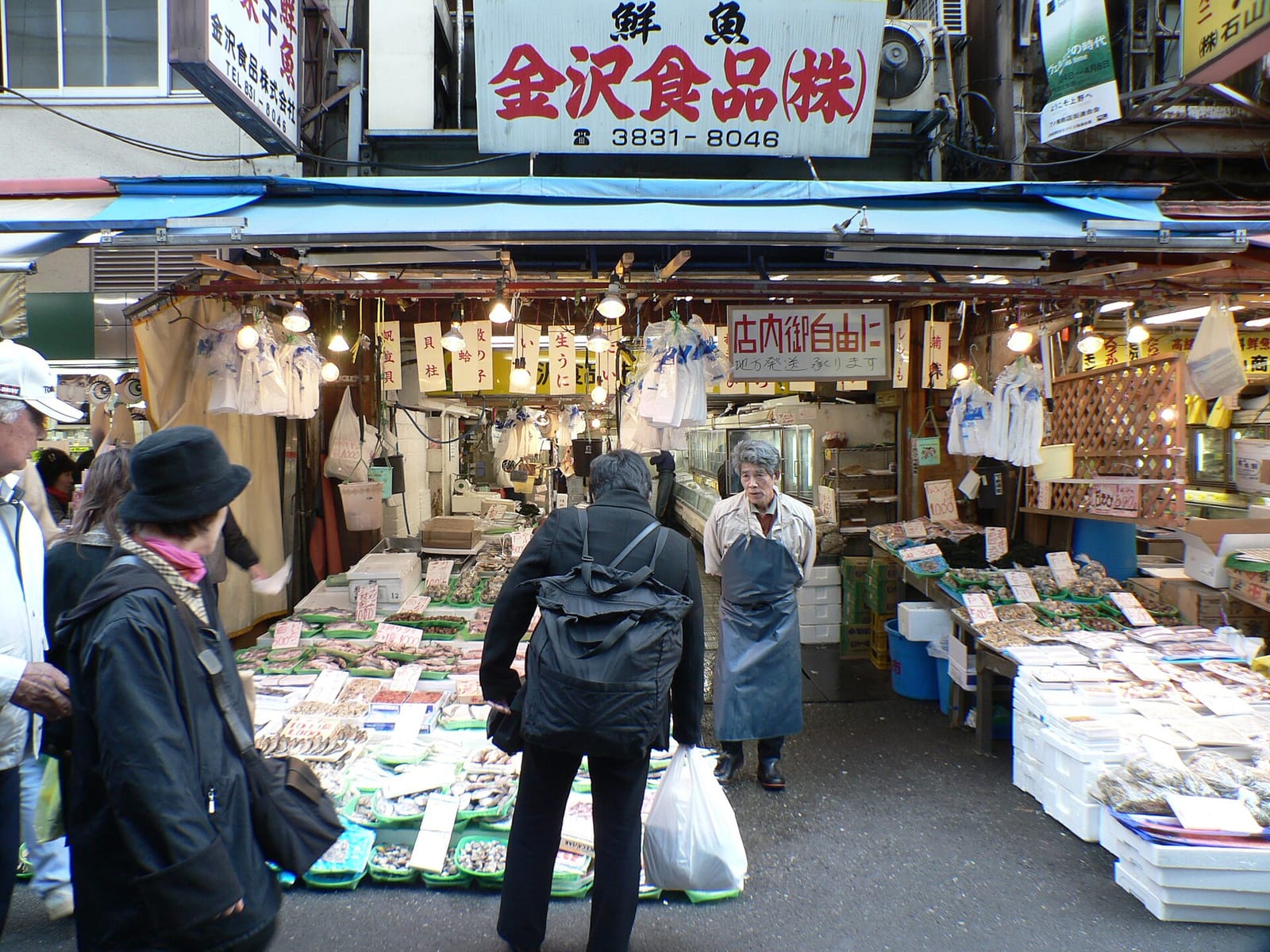
Seafood is the staple that both GO TOKYO and the government description name first. Many fishmongers are selling to take home rather than to eat on the spot, so look for a counter or a posted menu if you want to eat there. In late December, these shops draw the New Year crowds, so come earlier in the month or on a weekday.
Snacks and sweets to take away
The snack wholesalers and a classic sweet shop are the two easiest places to buy something without needing yen coins at a stall.
Anmitsu Mihashi, Ueno main store
A sit-down sweet shop at the Ueno end of the walk, for anmitsu, the cold dessert of agar jelly, red bean paste and fruit, and its warm cousins. In winter, the Ueno main store is the only Mihashi branch that serves oden, oden rice and chestnut or kintoki zenzai, a sweet red bean soup. Start or finish your Ameyoko walk here if you want a table rather than a stall.
- Hours
- 10:30–21:00 (last order 20:30); closed irregularly
- Access
- 3 min on foot from JR Ueno Station, Shinobazu Exit, or Tokyo Metro Ueno Station, Exit 7
- Source
- www.mihashi.co.jp
Niki no Kashi, Dai-ichi Eigyosho
A large discount sweets and snack shop, and a tax-free store for visitors. One corner shows two prices on each card: the second is the lower per-item price when you buy the number of packs listed. It is the easy place to stock up on Japanese sweets and snacks to take home.
- Hours
- 10:00–20:00
- Access
- 4-1-8 Ueno, on Ameyoko
- Source
- www.nikinokashi.co.jp
Seafood you can sit down for
At the Okachimachi end, one fish specialist has a full dining floor, which is the answer if the stalls are too crowded.
Yoshiike and Yoshiike Shokudo
A seafood specialist by Okachimachi Station that markets itself as the shop professionals use too. Its dining floor, Yoshiike Shokudo, serves sushi, Japanese seafood dishes and Western food from three kitchens, and you can order from any of them at shared tables with views toward Tokyo Skytree. There are also tatami seating, private rooms and a standing bar for a drink before or after.
- Access
- Right by JR Okachimachi Station; 1–2 min on foot from Naka-okachimachi, Ueno-hirokoji and Ueno-okachimachi stations
- Source
- www.yoshiike-group.co.jp
Drinks and late supplies
When the stalls start closing, a discount store at the Okachimachi end keeps going.
Takeya
A big discount store founded 78 years ago, selling food, souvenirs, cosmetics, medicine and daily goods. The Summit supermarket in the basement is open until 23:00, so this is where to buy a drink or food once the Ameyoko stalls have closed for the night.
- Hours
- Takeya 1F–3F 9:00–23:00; Summit supermarket B1F–B2F 9:00–23:00; Daiso 4F 9:00–21:00
- Access
- 3 min on foot from JR Okachimachi Station, North Exit; 1 min from Naka-okachimachi Station, Exit 3
- Source
- www.takeya.co.jp
How do you plan a 90-minute Ameyoko food walk?
Start sweet or start savory, then finish at the Okachimachi end where the late options are. This order follows the street from north to south and uses only the places with published hours above:
| Time | Stop | Why then |
|---|---|---|
| 11:00 | Mihashi, Ueno main store | Sit down first while tables are free; open from 10:30 |
| 11:30 | Ameyoko main street stalls | Graze on fruit, seafood and international snacks as you walk south |
| 12:15 | Niki no Kashi, Dai-ichi Eigyosho | Buy snacks to take home; tax-free for visitors |
| 12:45 | Yoshiike Shokudo | A seated seafood meal if you are still hungry |
| 13:30 | Takeya | Drinks, souvenirs and daily goods before you leave |
Doing it in the evening instead? Reverse the order. Takeya and its basement supermarket run until 23:00, Mihashi takes its last order at 20:30, and Niki no Kashi closes at 20:00, so shop for snacks first and leave the sit-down dessert or the supermarket for last.
With luggage or a stroller? The main street is narrow and busy, so use the station end nearest your next stop rather than walking the full length twice, and store bags at the station before you start.
When should you go, and how do you get round the crowds?
Weekdays tend to be easier than weekends, and late December is the hardest time of all. The last days of December bring crowds from all over Tokyo buying food for New Year, a custom the government description dates to the mid-1970s.
- Eat before the lunch rush. Shops set their own hours, so aim for late morning, before the noon crowds.
- Carry small change. ¥1,000 notes and coins make stalls quick, since most shops take cash only.
- Stand to the side. Step out of the flow while you eat, and avoid stopping in the middle of the street.
- Keep your rubbish. There are few bins in Tokyo streets, so hand trays and sticks back to the stall or carry a small bag.
- Check before a Monday. Ameyoko is open, but the Ueno museums and zoo usually are not; see what to do in Ueno on Monday.
For a full day around the market, our Ueno Park museums one-day itinerary builds lunch on Ameyoko into the route, and the two-day Tokyo food itinerary pairs it with other markets. Staying nearby? See the best hotels near Ueno Station.
Each stop above has a map link, so you can add them to your route in walking order from Ueno to Okachimachi.
Travelling with children? Our Ueno Zoo and Ameyoko half-day plan with kids pairs a morning at the zoo with lunch on this street.
If you want to keep going past Okachimachi, our Ueno to Akihabara walking route continues south under the JR tracks to 2k540 and Akihabara.
 Keisei Skyliner From Ueno to Narita With Luggage
 Ueno to Akihabara Walking Route via Okachimachi: Dry and Rainy Days
FAQ
What are the Ameyoko opening hours?
There is no single opening time. GO TOKYO lists Ameyoko as open daily with hours set by each shop. Shops with published hours include Niki no Kashi's Dai-ichi Eigyosho at 10:00–20:00, Mihashi at 10:30–21:00 and Takeya at 9:00–23:00.
Is Ameyoko cash only?
Mostly, yes. Japan's tourism database, run by the transport ministry, says most shops on Ameyoko accept only cash, so carry yen in small notes and coins.
Can you bargain at Ameyoko?
Yes. The same government description says bargaining is allowed, and that merchants often add a free item or two. Shops compete hard, so it pays to walk the street once before you buy.
Can you eat while walking at Ameyoko?
Many stalls sell food to eat on the spot, but the polite way is to eat where you bought it, next to the stall or at its counter, and to take your rubbish back to the shop. The street is narrow and busy, especially on weekends and in late December, so walking with food is hard anyway.
When is Ameyoko most crowded?
In the last days of December. Since the mid-1970s, people have come from across Tokyo to buy New Year food there, and the government description calls the days just before New Year the most energetic of the year. Weekday mornings and early afternoons are calmer.
Sources
This article contains affiliate links. We may earn a commission at no extra cost to you.