Currency Exchange in Shinjuku: How to Find the Best Rate
How to compare currency exchange in Shinjuku: read the buy-sell spread, check what fees are built in, and when an ATM withdrawal in yen is the better option.
Before you hand over your cash at a Shinjuku counter, decide three things. Which currency are you bringing, and in what amount? Is today a weekday, or will you need cash on a Saturday, Sunday or holiday? And would a card withdrawal from an ATM work better than changing banknotes at all? Those answers decide where you should go. This guide shows how to compare counters yourself using the rates operators publish, without trusting a “best rate” sign.
What is the fastest way to get a good rate in Shinjuku?
Check the published rates of two or three operators on the morning you plan to exchange, then go to the one that pays the most yen for your currency. On the west side of Shinjuku Station, Ninja Money Exchange and World Currency Shop both post daily rates on their own websites, so the comparison takes a few minutes on your phone.
Two numbers matter on any rate board:
- The rate at which the shop buys your currency. This is the column you use when you hand over dollars, euros or won and receive yen. Ninja Money Exchange labels it “we buy”. The higher this number, the more yen you get.
- Whether the commission is included. Ninja Money Exchange states on its rate table that all listed prices include fees. If another operator charges a separate commission per transaction, subtract it before you compare.
A “no commission” sign does not tell you the rate is good, only that the cost sits inside the rate. Compare the yen you will actually receive for your exact amount.
How do you read the spread on a rate board?
The spread is the gap between what a shop sells a currency for and what it buys it for. A narrow gap usually means a smaller cut for the shop. Both numbers sit next to each other on every board, so you can work it out in seconds.
Here is how to use it:
- Find your currency’s two rates. One is the price at which the shop sells foreign currency to you. The other is the price at which it buys it from you.
- Subtract one from the other. A smaller difference, relative to the rate, means less is going to the counter.
- Compare spreads across shops on the same morning. Rates move during the day, so a comparison is only fair when both numbers were posted around the same time.
World Currency Shop says the rates on its website are reference values as of the last update, that it does not guarantee to trade at them, and that you must confirm the rate at the counter. It also says the table is not updated on Saturdays, Sundays and public holidays. Ninja Money Exchange says its rates may change without notice during sudden market moves. In both cases, treat the online board as a guide and check the counter before you hand over cash.
Where can you exchange money near Shinjuku Station?
The three places below are all on the west side of the station and publish their details on official pages. They are listed in walking order, from the Omoide Yokocho side to the skyscraper side, so you can tick “Add to my route” and open them as one route in Google Maps at the end of the page. Hours are as of November 2026.
Ninja Money Exchange
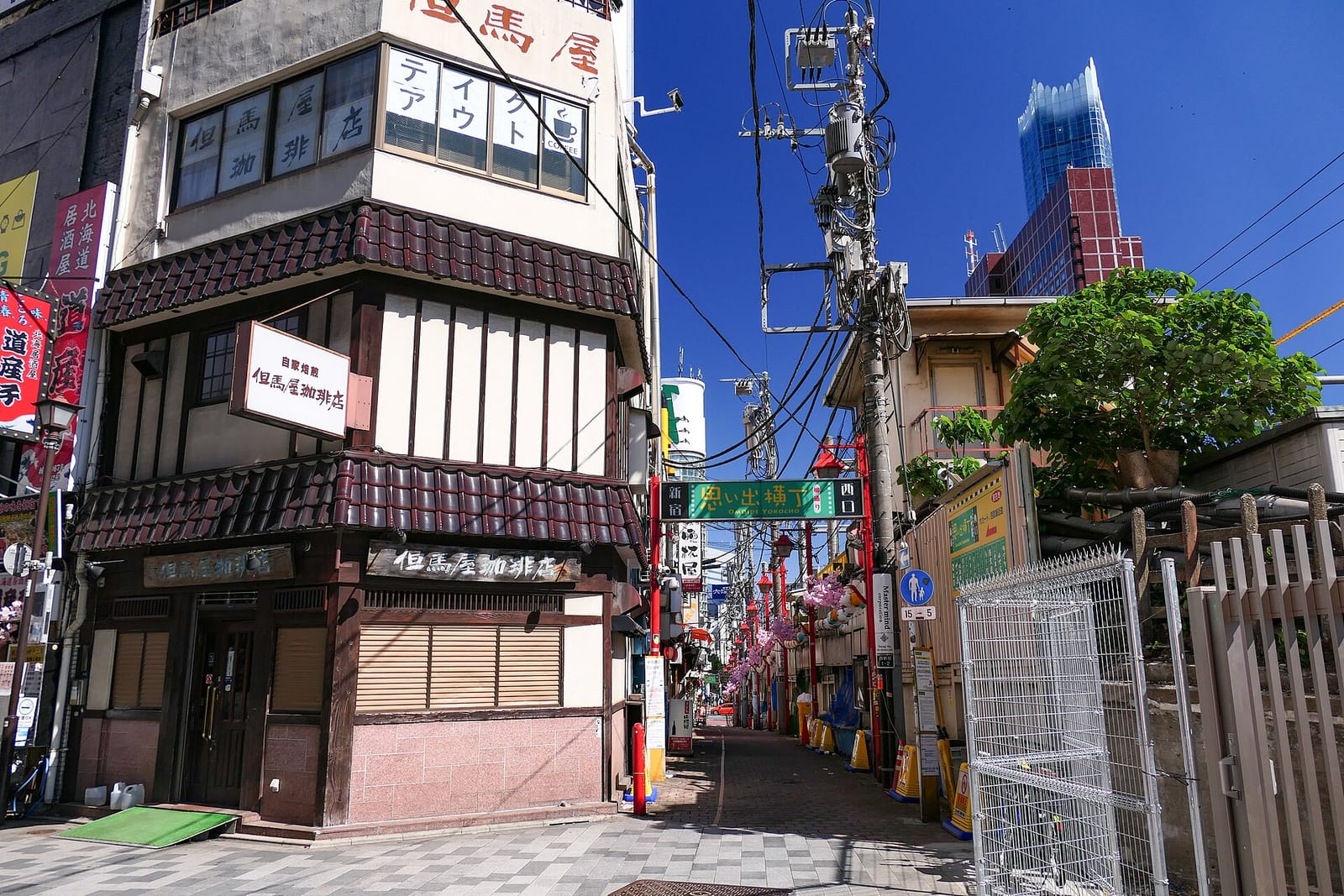
Run by InterBank, this counter sits at 1-2-12 Nishi-Shinjuku, on the Omoide Yokocho side of the West Exit, with a blue sign. Its website posts buying and selling rates for about 17 currencies, updated daily, and states that the listed prices include fees. It says it cannot buy old banknotes or notes and coins in poor condition. You can phone ahead or use its online form with the amount and the time you plan to visit; the page lists no Sunday hours.
- Hours
- Weekdays 11:00–19:00; Saturdays and holidays 12:00–19:00 (as of November 2026)
- Access
- In front of Exit D3 of Shinjuku-nishiguchi Station; 2 min walk from JR Shinjuku West Exit
- Source
- www.interbank.co.jp
Keio Department Store Shinjuku (currency exchange machine)
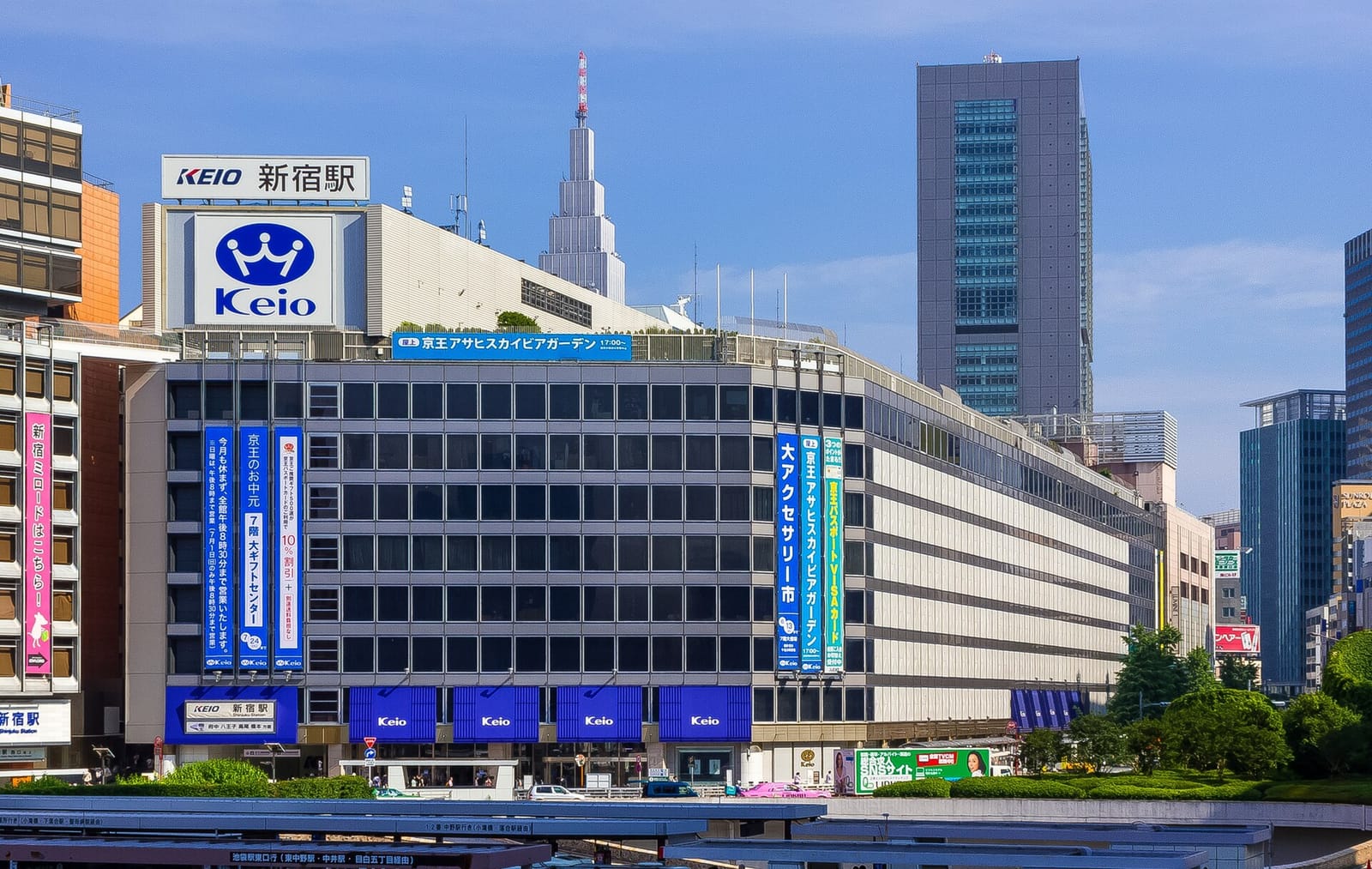
Keio’s page for overseas visitors lists a foreign currency exchange machine at the 2F Foreign Customer Counter. It changes 14 currencies into yen: AUD, CAD, EUR, GBP, HKD, IDR, KRW, MYR, PHP, RMB, SGD, THB, TWD and USD. Coins are not accepted. English and Chinese speaking staff work at the same counter, which helps if the machine rejects a note. The page does not publish the machine’s rate, so check it on the screen before you confirm.
- Hours
- Store 10:00–20:00 (as of November 2026)
- Access
- Directly above Shinjuku Station West Exit; machine at the 2F Foreign Customer Counter
- Source
- www.keionet.com
World Currency Shop Shinjuku Nishiguchi
This branch of World Currency Shop, run by Tokyo Credit Services, is on the second basement floor of the Shinjuku Building. The branch page asks you to arrive at least 30 minutes before closing. Its English rate page lists about 20 currencies, from US dollars and euros to Thai baht and Philippine pesos, with the time of the last update. Plan it for a weekday: the branch is closed on weekends and holidays, when the online rate table is not updated either.
- Hours
- Weekdays 10:00–18:00; closed Saturdays, Sundays and public holidays (as of November 2026)
- Access
- Shinjuku Building B2, 1-8-1 Nishi-Shinjuku; from JR Shinjuku West Exit
- Source
- www.tokyo-card.co.jp
Is an ATM better than a currency exchange counter?
For many visitors, yes. If your bank charges a low foreign withdrawal fee, taking yen out of an ATM saves you the trip to a counter and you only carry what you need. The catch is the fees on both sides and one screen you have to answer correctly.
Seven Bank ATMs (inside 7-Eleven)
Seven Bank ATMs accept Visa (including PLUS), Mastercard (including Maestro and Cirrus), UnionPay, American Express, JCB, Discover and Diners Club cards issued overseas, though Seven Bank notes that some cards with these marks may not work. They run every day of the year; Visa and Mastercard are available around the clock, other brands for slightly shorter hours. The limit for cards issued overseas is ¥100,000 per withdrawal, or ¥30,000 with a magnetic stripe card. Seven Bank says fees for overseas cards vary by card brand, so read the fee on the screen before you confirm.
Japan Post Bank ATMs
Japan Post Bank ATMs accept Visa, PLUS, Mastercard, Maestro, Cirrus, JCB, China UnionPay and Discover cards issued abroad. ATMs at post offices run from 7:00 to 23:00 on weekdays and Saturdays, and 7:00 to 21:00 on Sundays and holidays. Compact ATMs in FamilyMart and similar stores run from 0:05 to 23:55. Japan Post Bank says certain foreign cards may be charged ¥220 (tax included) per use, plus any fee your own card issuer sets, and the single withdrawal limit is ¥50,000 (as of November 2026).
Yen or your home currency?
Choose yen unless you have checked otherwise. At Seven Bank’s step 7, the ATM asks which currency to use for your billing amount. Seven Bank explains that choosing your home currency fixes the amount at the ATM, while choosing yen settles the transaction in yen and leaves the conversion to your card issuer when you are billed. This service applies to Visa and Mastercard only. Compare the rate shown on the screen with your bank’s usual rate if you want to be sure, but the safe default for most cards is yen.
What should you do if the counters are closed?
Use an ATM, or the Keio machine during store hours. Late in the evening and on Sundays, the counters above are either closed or not listed as open, so plan around the clock:
| Situation | What to try | Why |
|---|---|---|
| Weekday daytime | Compare Ninja Money Exchange and World Currency Shop rates online, then go | Both counters are open and post rates that day |
| Saturday or holiday | Ninja Money Exchange (from 12:00) or the Keio 2F machine | World Currency Shop is closed |
| Sunday | Keio 2F machine during store hours, or an ATM | Neither counter lists Sunday hours |
| Late night | Seven Bank ATM with a Visa or Mastercard | Available 24 hours for those brands |
| Coins left over | Spend them | Keio’s machine does not accept coins, and Ninja may refuse coins in poor condition |
If you are arriving at Narita or Haneda late, take enough yen at the airport for the trip into town, then compare rates in Shinjuku the next weekday morning.
How much yen should you change at once?
Change only what you expect to spend in cash, and top up later from an ATM. Every exchange costs you the spread, and changing yen back before you fly home costs you a second spread, so leftover cash is money lost twice.
A few ways to size the amount:
- Count the days you will spend in cash. Payment habits vary from shop to shop, so ask at each place, but a smaller amount topped up from an ATM avoids carrying a large sum.
- Plan for transport separately. If you will use a rechargeable IC card, see how to buy a Suica in Shinjuku for where to buy and charge one.
- Plan your evenings. If you are heading to the small bars of Golden Gai, read our Golden Gai guide first and ask each bar how it takes payment before you sit down.
- Plan your bags. If you need to store luggage between check-out and an evening flight, our Shinjuku Station luggage storage guide lists lockers and counters.
If you are shopping at the department stores, the tax refund now comes back after you leave Japan, and it goes to a card or wallet, not cash in hand. Our guide to tax-free shopping in Shinjuku explains the new system. To find the right exit for each exchange counter, use our Shinjuku Station exits guide, and if you are coming in from the airport, see how to get from Narita Airport to Shinjuku.
What to pack before you go
Maps, train apps and translation drain a phone by mid-afternoon. Keep it in your carry-on: power banks are not allowed in checked luggage.
Japan still runs on coins: there are six of them, from 1 to 500 yen, and you collect a pocketful fast. A holder with a slot for each coin lets you pay the exact amount at ticket machines, shrines and small shops without digging.
 Shinjuku Hotels With Big Rooms for Families: 6 Picks by Group Size
 Shinjuku Hotels Connected to the Station: What 'Direct' Means
FAQ
Where is the best place to exchange money in Shinjuku?
It depends on the day and the currency, so compare before you go. Ninja Money Exchange and World Currency Shop both publish their rates online. Look at the rate at which each one buys your currency, and check whether a commission is added on top.
Is it better to exchange money in Shinjuku or at the airport?
Compare the published buying rate at both, on the same day, for the amount you need. If you only need cash for the train into town, a small amount at the airport or an ATM withdrawal can cover you until you reach a Shinjuku counter.
Can I exchange money in Shinjuku on a Sunday?
World Currency Shop Shinjuku Nishiguchi is closed on Saturdays, Sundays and public holidays. Ninja Money Exchange lists hours for weekdays, Saturdays and holidays, but not Sundays. On a Sunday, the Keio Department Store machine during store hours or an ATM is the practical option.
Should I choose yen or my home currency at a Japanese ATM?
Seven Bank explains that if you choose your home currency, the amount is fixed at the ATM using a conversion offered at the machine, while choosing yen leaves the conversion to your card issuer at billing. Many travelers pick yen so their own bank does the conversion; check your bank's terms.
Do ATMs in Japan accept foreign cards?
Yes, many do. Seven Bank ATMs, found in 7-Eleven stores, accept Visa, Mastercard, UnionPay, American Express, JCB, Discover and Diners Club cards issued overseas. Japan Post Bank ATMs accept Visa, Mastercard, JCB, UnionPay and Discover cards, among others.
Sources
- Ninja Money Exchange (InterBank) — Rates, hours and access
- World Currency Shop — Shinjuku Nishiguchi branch (Japanese)
- World Currency Shop — Today's exchange rates
- Keio Department Store Shinjuku — Information for overseas visitors
- Seven Bank — Overseas cards usable at ATMs
- Seven Bank — How to use ATMs with cards issued overseas
- Japan Post Bank — International ATM Service
This article contains affiliate links. We may earn a commission at no extra cost to you.