Enoshima Island Guide: Shrines, Sea Candle and Caves in Route Order
Walk Enoshima from the bridge to the Iwaya Caves in map order: shrine halls, the up-only Escar, Sea Candle, the Love Bell, and the Benten-maru boat back.
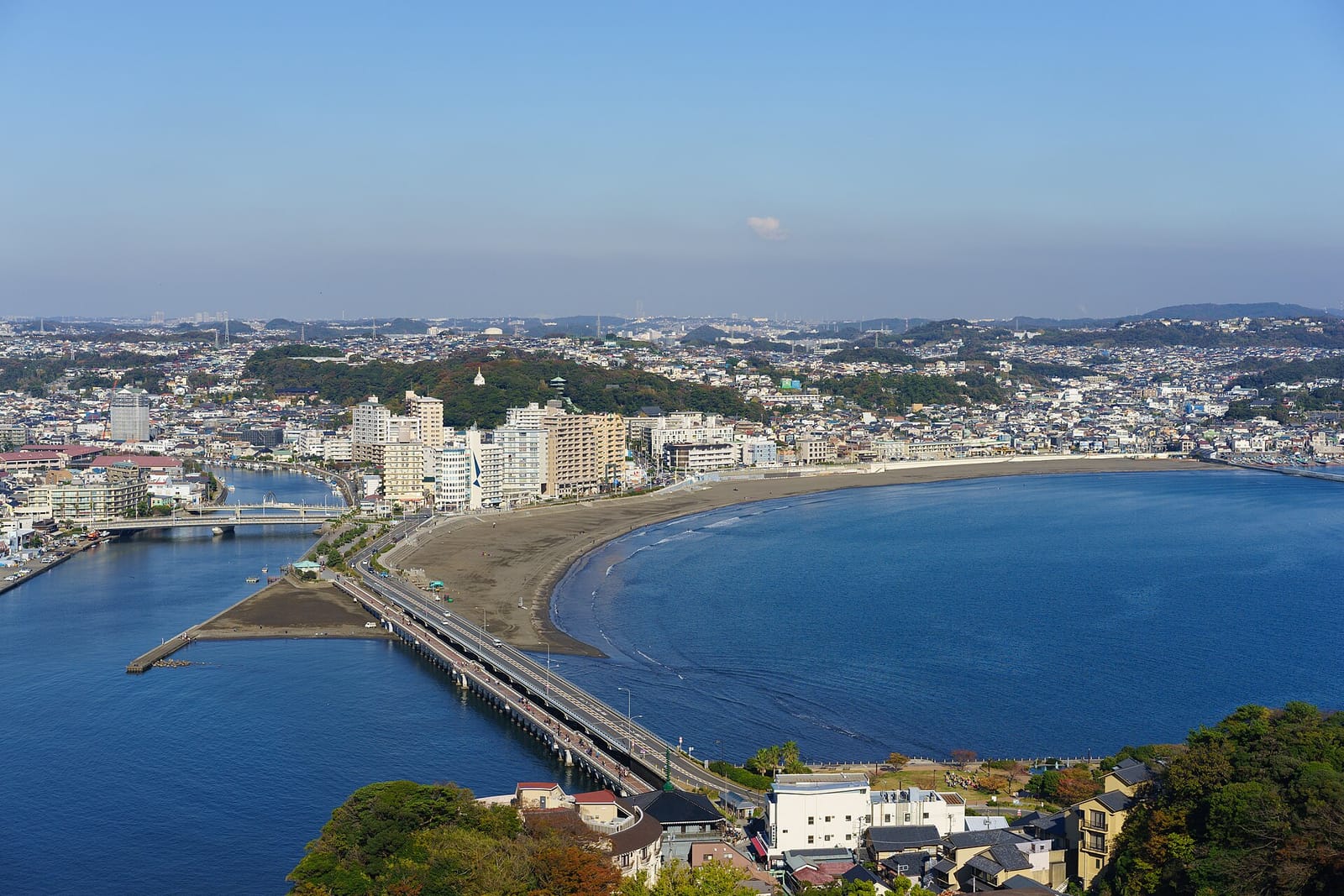
Enoshima has two faces. The side that looks back at the bridge is a slope of souvenir shops, shrine gates and an escalator; the far side, facing open sea, ends in a flat rock shelf and two sea caves lit by candles. The Escar carries you 46 m up the first side in about four minutes, but Fujisawa City’s tourism site is clear that it only goes up. Once you pass the Sea Candle at the top, everything else is on foot, and you have to plan how you will get back.
This guide walks the island in map order, from Benten Bridge to the Iwaya Caves, with hours and prices from the operators and Fujisawa City as of November 2026. Tick “Add to my route” on each stop to open them in Google Maps in the same order. If you want to combine the island with the Great Buddha and the temples of Kamakura on the same day, use our Kamakura and Enoshima one day itinerary for the timings.
Why walk Enoshima in this order?
Walk from the bridge side to the sea side, and decide before you start whether you will come back on foot or by boat. The island is a hill, so the order is about stairs more than distance.
- Up by Escar, down on foot. The Escar climbs from the first shrine to the garden at the top. Fujisawa’s tourism site gives the climb as 46 m over 106 m of escalator. Going down the other side to the caves, and back again, is stairs and slopes.
- Caves before the late afternoon. The Iwaya Caves are open from 9:00 to about 17:00, with hours that vary by season, while the Sea Candle stays open until 20:00. Do the caves first if you want to see the tower lit up on the way back.
- Shrine halls early. Hetsunomiya is open 8:30–17:00 and the Hoanden 8:30–16:30. They are at the start of the walk, so a morning start covers them easily.
The shrine is about 15 to 23 minutes on foot from each of the three nearest stations: Odakyu Katase-Enoshima, Enoden Enoshima and Shonan Monorail Shonan-Enoshima. If you are coming along the coast from Kamakura, our Enoden line guide explains the fares and when the day pass pays off.
Which tickets do you need?
Buy the Enoshima 1day if you will go all the way to the caves; buy the Sea Candle Set Ticket if you will turn back at the top.
| Ticket (as of Nov 2026) | Adult | Child | What it covers |
|---|---|---|---|
| Enoshima 1day | ¥1,550 | ¥700 | Escar, Sea Candle, Iwaya Caves; garden free until 17:00 |
| Sea Candle Set Ticket | ¥1,100 | ¥550 | Escar, Sea Candle, garden |
| Escar, all sections | ¥500 | ¥250 | The escalators up the island |
| Sea Candle only | ¥800 | ¥400 | The observation tower |
| Iwaya Caves | ¥500 | ¥200 | Both caves (junior high and up / elementary) |
| Benten-maru boat, one way | ¥400 | ¥200 | Chigogafuchi to the foot of Benten Bridge (13+ / 6+) |
At single prices, the Escar, the Sea Candle and the caves add up to ¥1,800 for an adult, so the 1day saves ¥250 if you use all three. Discover Fujisawa adds that 1day holders get discounts at some restaurants and souvenir shops on the island. The Sea Candle operator sells the 1day online through Asoview and at the first Escar stop, the Katase-Enoshima Tourist Information Center and the Fujisawa City Tourist Information Center. It accepts cash, credit cards, transport IC cards and PayPay. The operator changed its fees in October 2025, so older guides may show lower prices.
What are the stops, in route order?
Stops 1 to 5 are the bridge side and the top of the island. Stops 6 to 9 are the sea side. Stop 10 is the boat back.
Bronze Torii and Benzaiten Nakamise Street
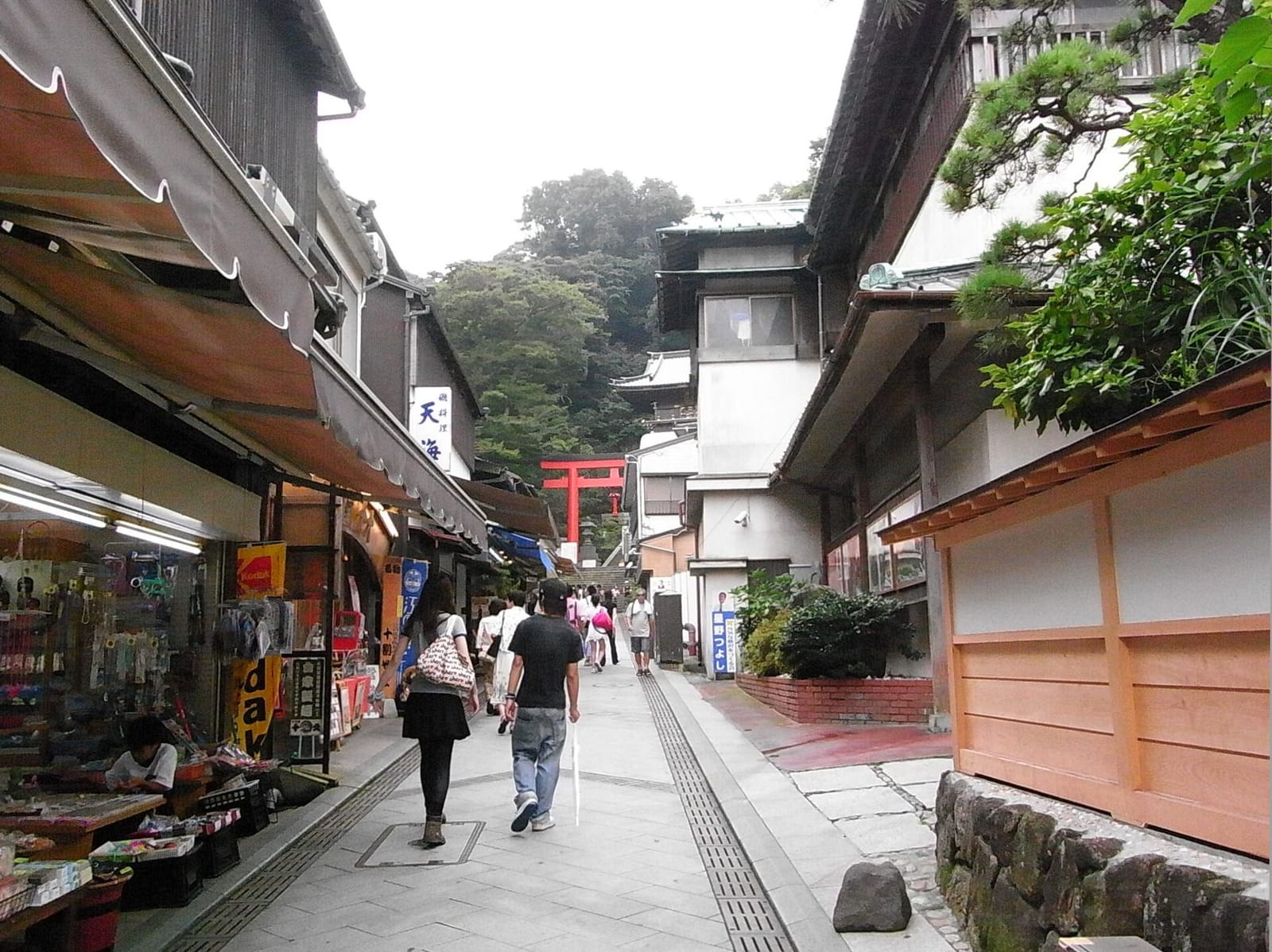
The walk onto the island ends at a bronze torii first built in 1747, according to Fujisawa City. Behind it, Nakamise street climbs toward the shrine, lined with inns, restaurants and souvenir shops. This is the busiest stretch of the island, so it is also where to look for lunch before you start climbing.
- Access
- 12 min walk from Odakyu Katase-Enoshima Station to the Bronze Torii
- Source
- www.fujisawa-kanko.jp
Enoshima Shrine Hetsunomiya and Hoanden
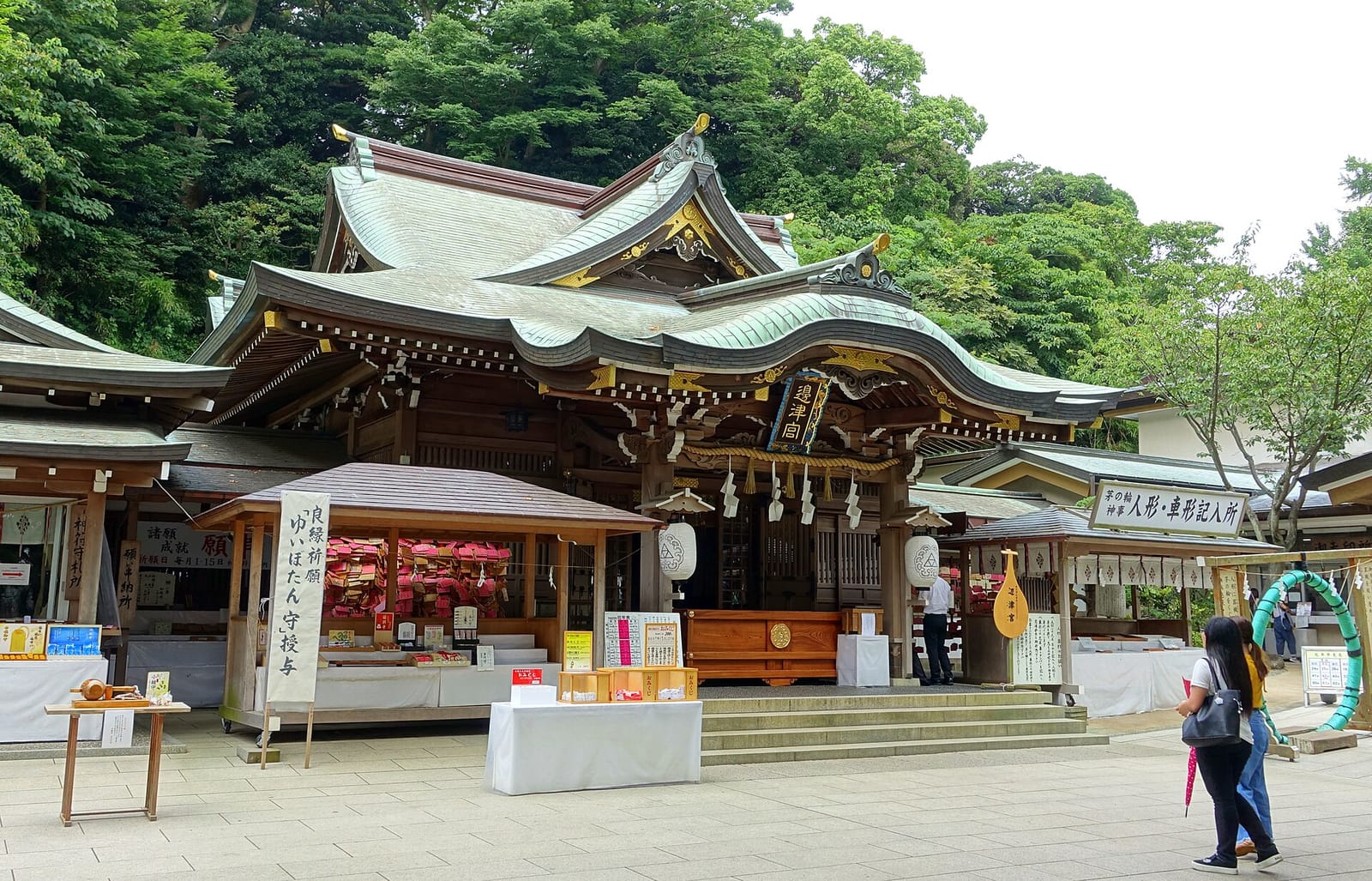
The lowest of the three halls of Enoshima Shrine. Fujisawa City says Minamoto no Sanetomo founded it in 1206 to pray for the Kamakura shogunate. The octagonal Hoanden just south of it holds two statues of Benzaiten, the goddess of the island: the eight-armed Benzaiten, a Kamakura-period prefectural cultural property, and the seated Myoon Benzaiten holding a biwa lute. The Hoanden is the only paid part of the shrine.
- Hours
- Hetsunomiya 8:30–17:00; Hoanden 8:30–16:30 (as of November 2026)
- Price
- Grounds free; Hoanden ¥200 adults, ¥100 junior and senior high, ¥50 elementary, under school age free (as of November 2026)
- Access
- About 15–23 min on foot from Katase-Enoshima, Enoden Enoshima and Shonan-Enoshima stations
- Source
- www.fujisawa-kanko.jp
Enoshima Escar
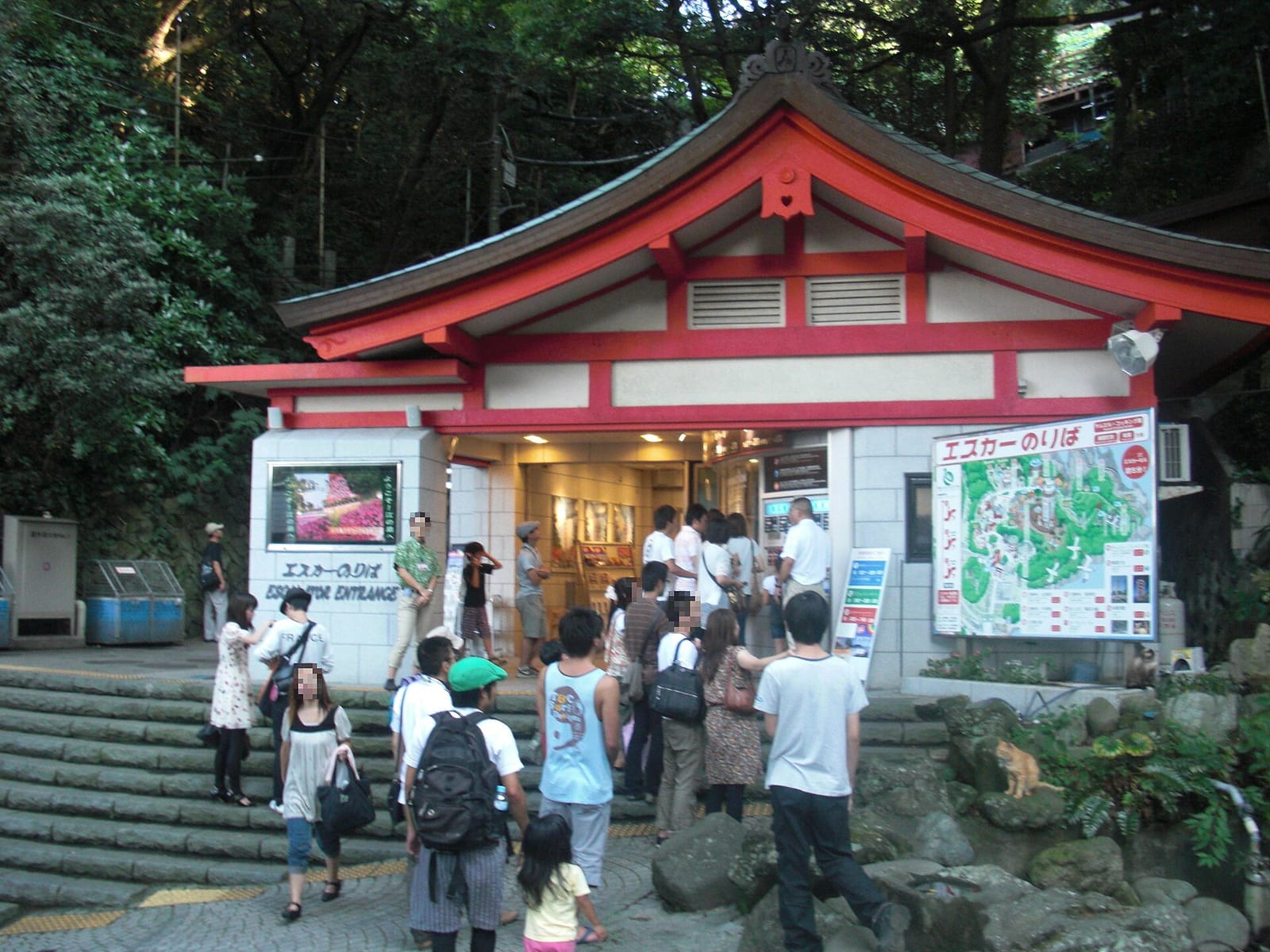
Fujisawa City calls it Japan’s first outdoor escalator, opened in 1959. It climbs 46 m in about four minutes, so you can skip most of the front-side stairs. It is up only: on the way back you walk down. The Enoshima 1day and the Sea Candle Set Ticket both include it.
- Hours
- 8:50–19:05 (as of November 2026)
- Price
- ¥500 adults, ¥250 children for all sections (as of November 2026)
- Access
- 15 min walk from Odakyu Katase-Enoshima Station; up only
- Source
- www.fujisawa-kanko.jp
Enoshima Shrine Nakatsunomiya
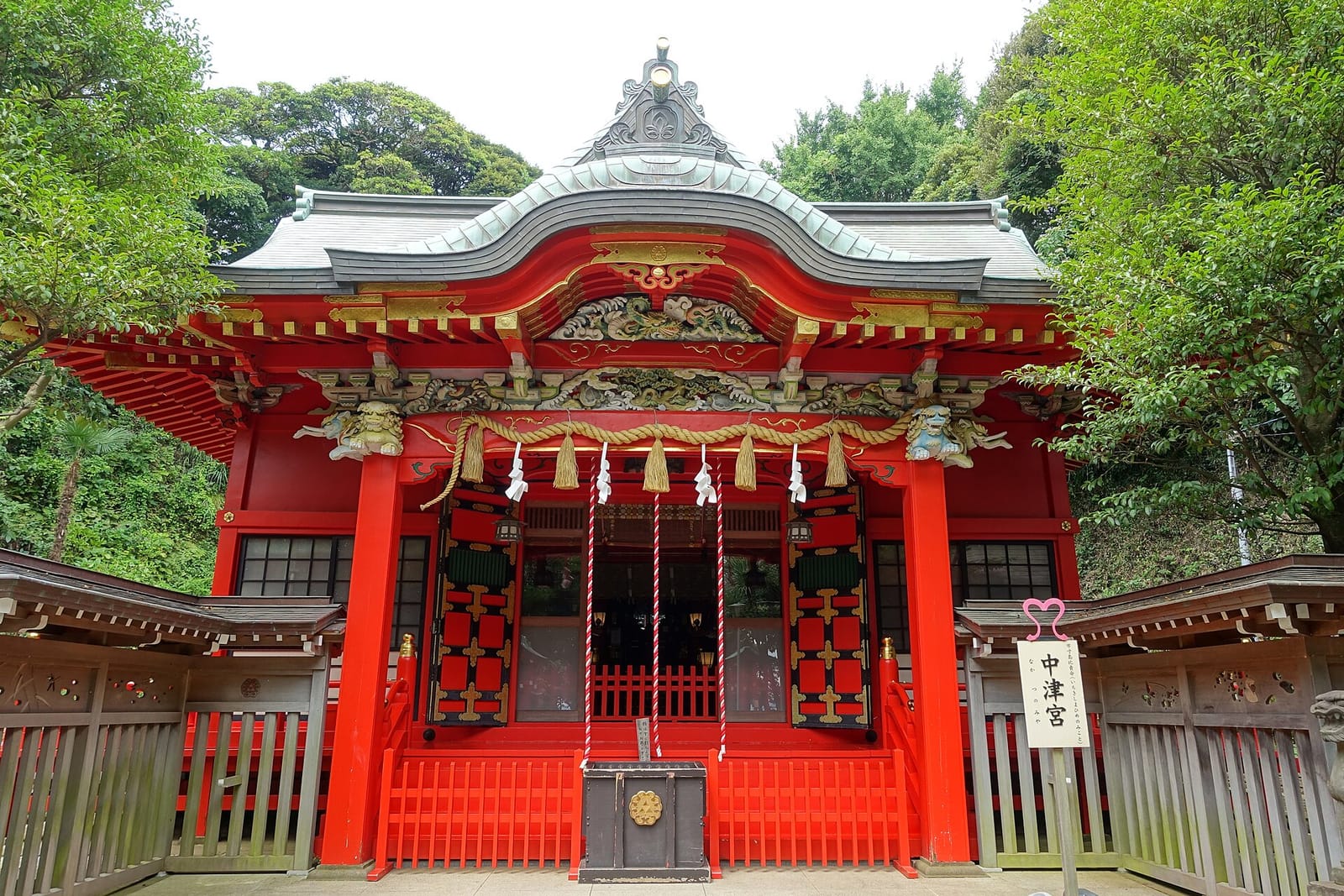
The middle hall, painted vermilion, halfway up the island. Fujisawa City says it is said to have been founded by Jikaku Daishi in 853, and that a major renovation in 1996 made the red paint brighter.
Enoshima Sea Candle and Samuel Cocking Garden
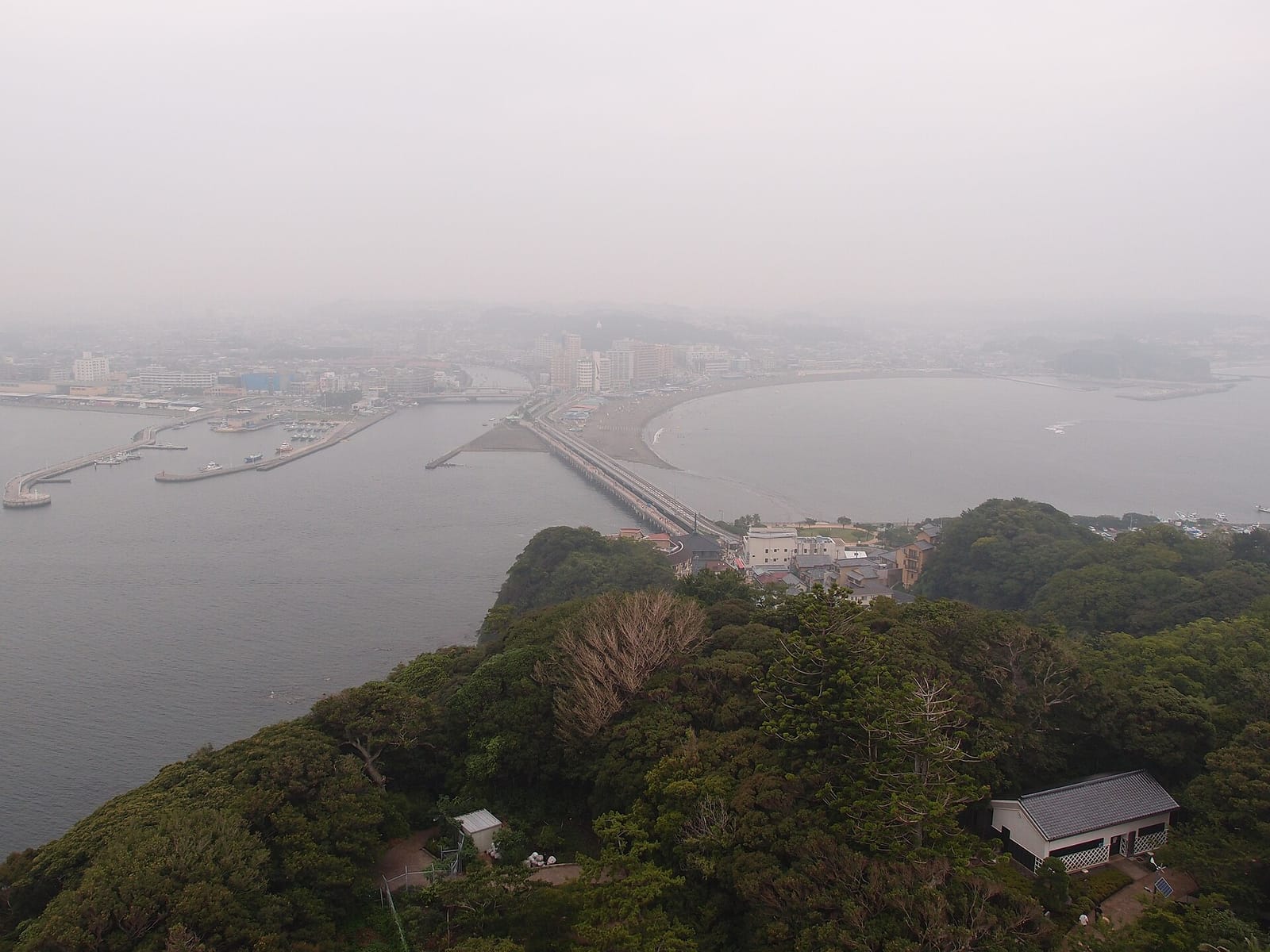
The lighthouse observation tower inside the garden at the top of the island. Fujisawa City gives its height as 59.8 m including the lightning rod, 119.6 m above sea level, with a glass-walled deck at 41.75 m and views that take in Mt. Fuji and the Tanzawa mountains. The garden charges after 17:00 only on event days; the operator lists its winter event starting on December 1.
- Hours
- 9:00–20:00, last entry 19:30 (as of November 2026)
- Price
- Tower ¥800 adults, ¥400 children; garden free 9:00–17:00, ¥500 after 17:00 on event days (as of November 2026)
- Access
- Top of the island, at the last Escar stop
- Source
- enoshima-seacandle.com
Just past the garden, on the way down the far side, is Enoshima Daishi, a Shingon Buddhist temple founded in 1993 as a branch of Saifukuji in Kagoshima, according to Fujisawa City. From here the path, Oiwaya-michi, heads down toward the sea side of the island.
Enoshima Shrine Okutsunomiya
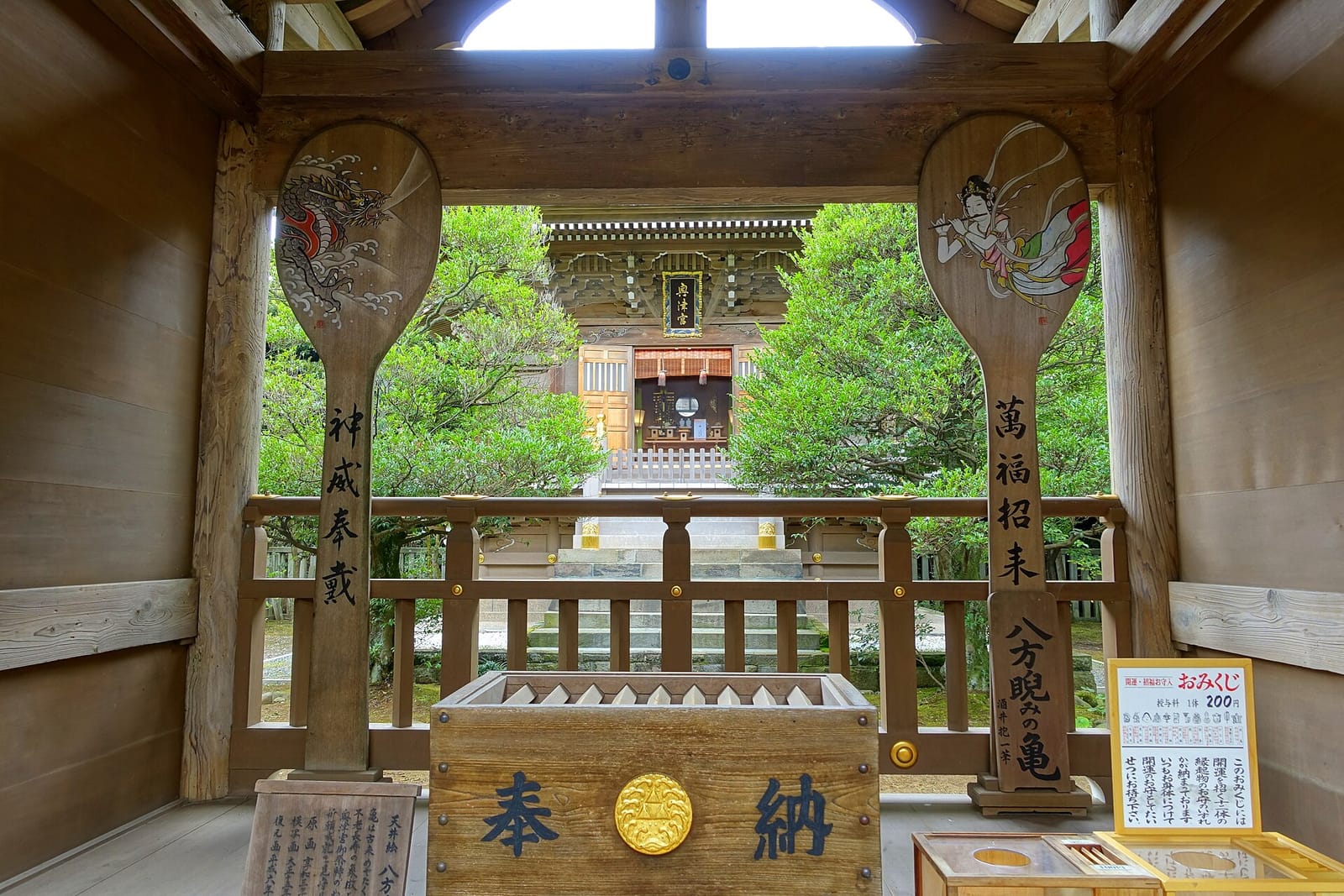
The third and quietest of the shrine halls, on the sea side of the island. Fujisawa City says the hall was rebuilt in 1842. Look up at the worship hall ceiling for the “Happo-nirami no Kame”, a turtle that seems to watch you from every angle. The original by the Edo-period painter Sakai Hoitsu is kept in the shrine treasury; the ceiling has a copy by Kataoka Kayo.
Lovers' Hill and Ryuren no Kane
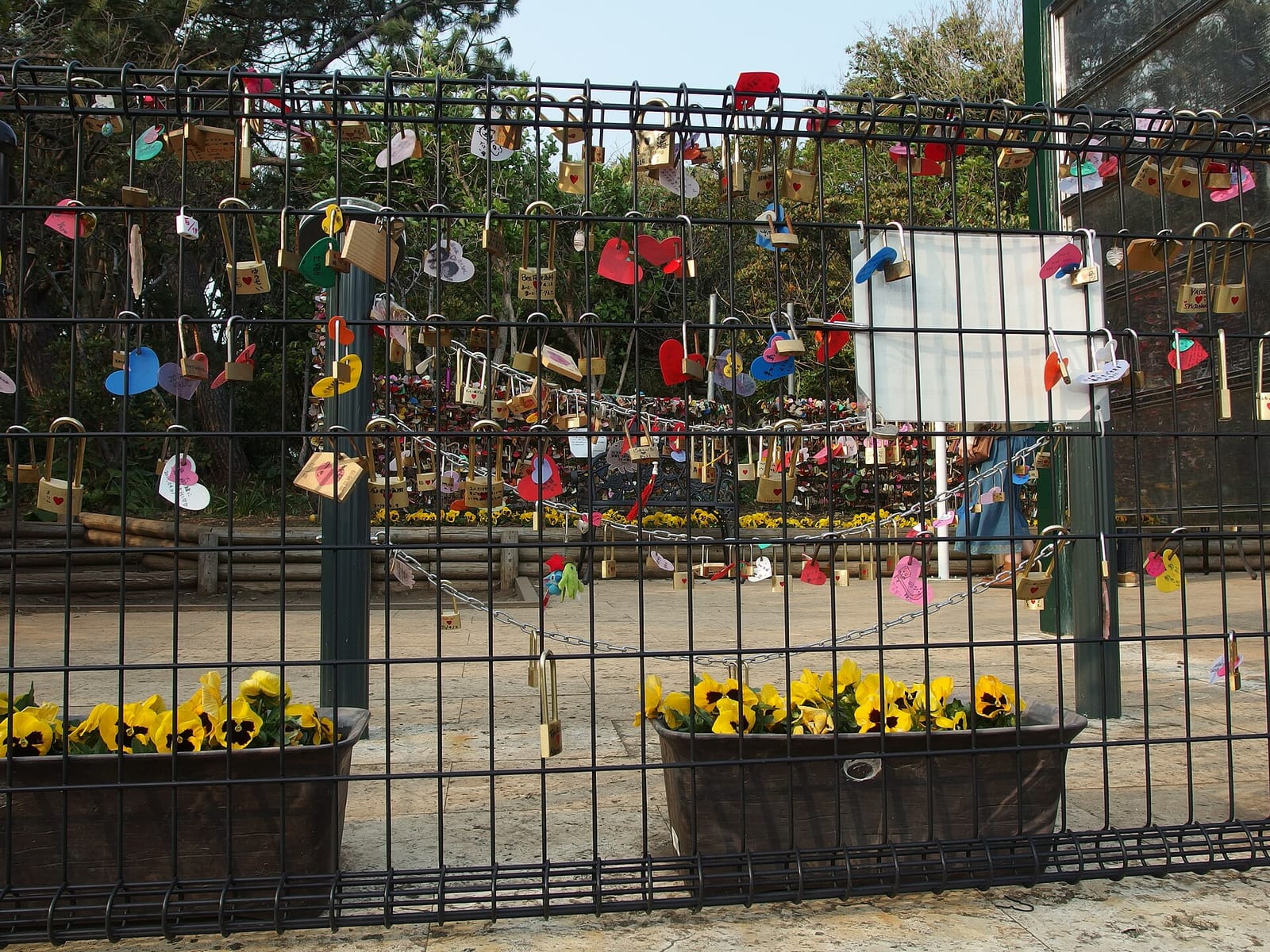
A bell on a lookout just off the path, built in 1996 for the island’s legend of a heavenly maiden and a five-headed dragon. Couples ring it, and the fence below is covered with padlocks with names written on them. It is a short detour on the way from Okutsunomiya toward Chigogafuchi.
Chigogafuchi
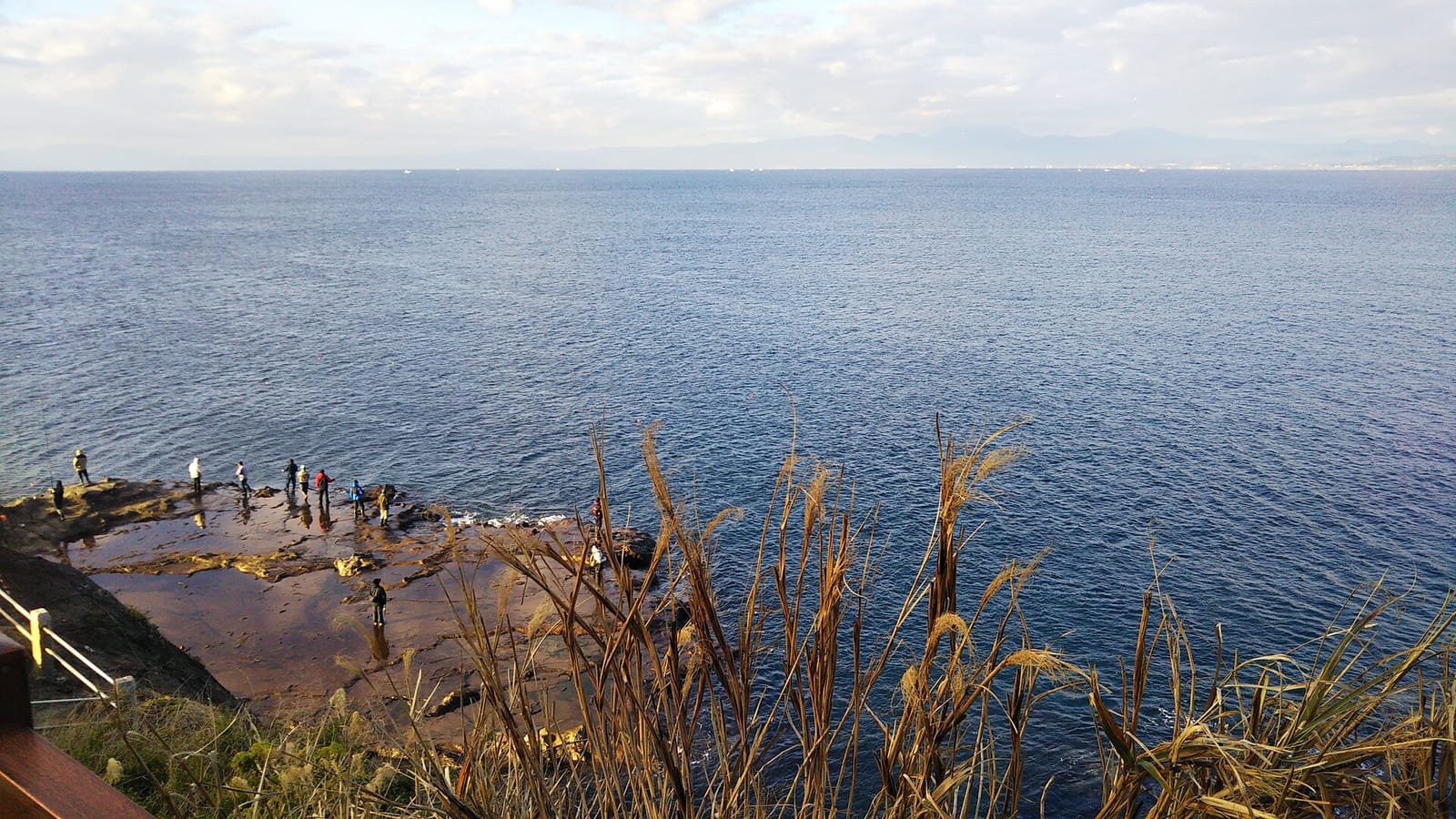
A wave-cut rock platform at the southwest tip of the island, raised out of the sea by uplift. Fujisawa City lists it among Kanagawa’s 50 scenic spots and says it is known for breaking waves and for the sun setting beyond Mt. Fuji; it is also a popular rock-fishing spot on holidays. If you want to stay for the sunset and not face the train afterwards, a night near Katase-Enoshima makes that easy.
- Price
- Free
- Source
- www.fujisawa-kanko.jp
Enoshima Iwaya Caves
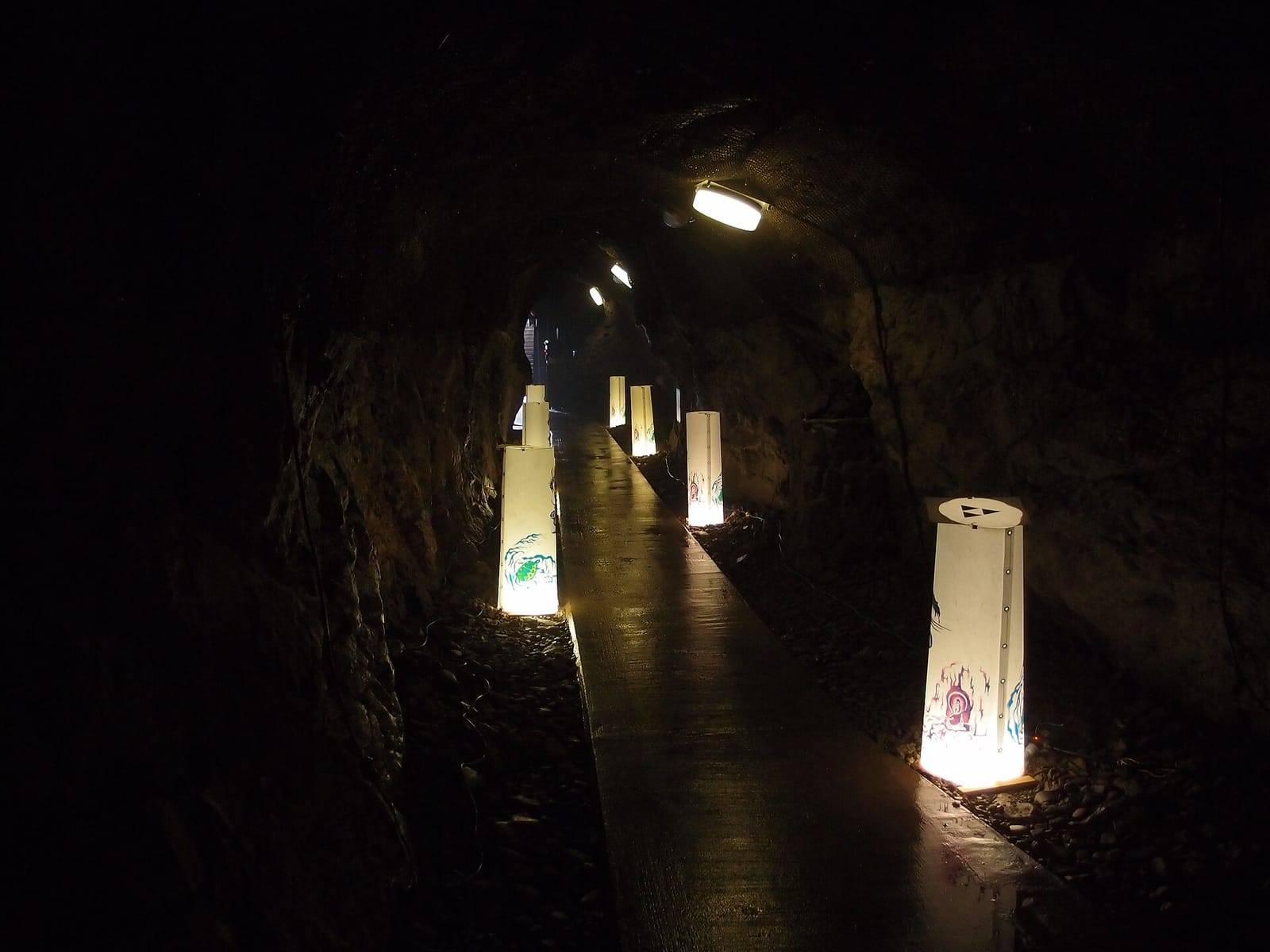
Two sea caves at the end of the walk. Fujisawa City gives the first as 152 m deep, said to connect to the ice caves of Mt. Fuji, and the second as 56 m, tied to the island’s dragon legend. Discover Fujisawa says candles are handed out free in the first cave, so you walk in by candlelight. Check the day’s hours on Fujisawa’s tourism site before you set out; they change with the season.
- Hours
- 9:00–17:00, varies by season (as of November 2026)
- Price
- ¥500 junior high and up, ¥200 elementary; included in the Enoshima 1day (as of November 2026)
- Access
- Southwest tip of the island, beside Chigogafuchi
- Source
- www.fujisawa-kanko.jp
Benten-maru boat
The way back without the stairs. The small boat runs between Chigogafuchi and the foot of Benten Bridge, and on clear days you can see Mt. Fuji from the water. Discover Fujisawa says departures are irregular and asks you to confirm times on the day; Visit Kanagawa says it may be cancelled for rain, wind of 8 m or more, or high waves. If it is not running, walk back over the top of the island the way you came.
- Price
- ¥400 adults (13+), ¥200 children (6+), one way (as of November 2026)
- Access
- From Chigogafuchi to the foot of Benten Bridge, about 10 min
- Source
- discover-fujisawa.jp
How do you get back from the far side of the island?
Take the Benten-maru if it is running; otherwise walk back over the top, which means climbing back up from the caves before you can go down the front.
This is the part most guides leave out. The Escar is the only escalator, and it only runs up the bridge side. From the Iwaya Caves, the walking route back climbs the stairs to Okutsunomiya, crosses the top near the Sea Candle and then drops down past Nakatsunomiya and Hetsunomiya to Nakamise street.
- Clear, calm day: walk out to the caves and ride the Benten-maru back. You see the island’s south coast from the water and land near the bridge, ready for the station.
- Windy or wet day: assume the boat is not running. Either save some energy for the climb back, or skip the caves and turn back at the Sea Candle with the cheaper Sea Candle Set Ticket.
- With small children or anyone who finds stairs hard: ride the Escar up, see Hetsunomiya, Nakatsunomiya and the Sea Candle, and come back down the front. The sea side is mostly steps.
When is the best time to visit Enoshima?
Start in the morning for the shrine halls and the caves, and stay into the late afternoon on a clear day for the view from Chigogafuchi or the Sea Candle.
The Escar starts at 8:50 and the Sea Candle at 9:00, so an early arrival puts you at the top before most day-trippers. The Hoanden closes at 16:30 and the caves around 17:00, while the Sea Candle and the garden stay open until 20:00, so the tower is the one stop you can leave for the evening.
In winter the sun goes down early. Japan’s National Astronomical Observatory gives sunset in Yokohama, the nearest city in its table, as 16:29 on December 1, 16:30 on December 15 and 16:38 on December 31, 2026. On a clear day, Chigogafuchi is the place to watch it, since Fujisawa City describes the sun setting beyond Mt. Fuji there. From December, the Sea Candle operator also lists its winter event in the garden, when the garden charges after 17:00.
Tips for walking the island
Travel light, wear shoes with grip, and keep some cash or a charged IC card for the small shops.
- Shoes. The sea side is stairs and a wet rock platform at Chigogafuchi. Leave sandals for the beach on the mainland.
- Bags. There is no escalator on the far side, so a suitcase is a real burden. Leave big bags in Tokyo or at your hotel. If you are coming from Kamakura, our Kamakura day trip from Tokyo covers the Kamakura end of the coast.
- Payment. The Sea Candle facilities take cash, credit cards, transport IC cards and PayPay. The 1day and Set Ticket are sold at the first Escar stop, so you can decide there once you see the weather.
- Weather. Wind and waves decide whether the boat runs. On a rough day, plan the walk as an out-and-back.
Every stop above has “Add to my route”, so you can open the whole walk in Google Maps from the bridge to the caves in order.
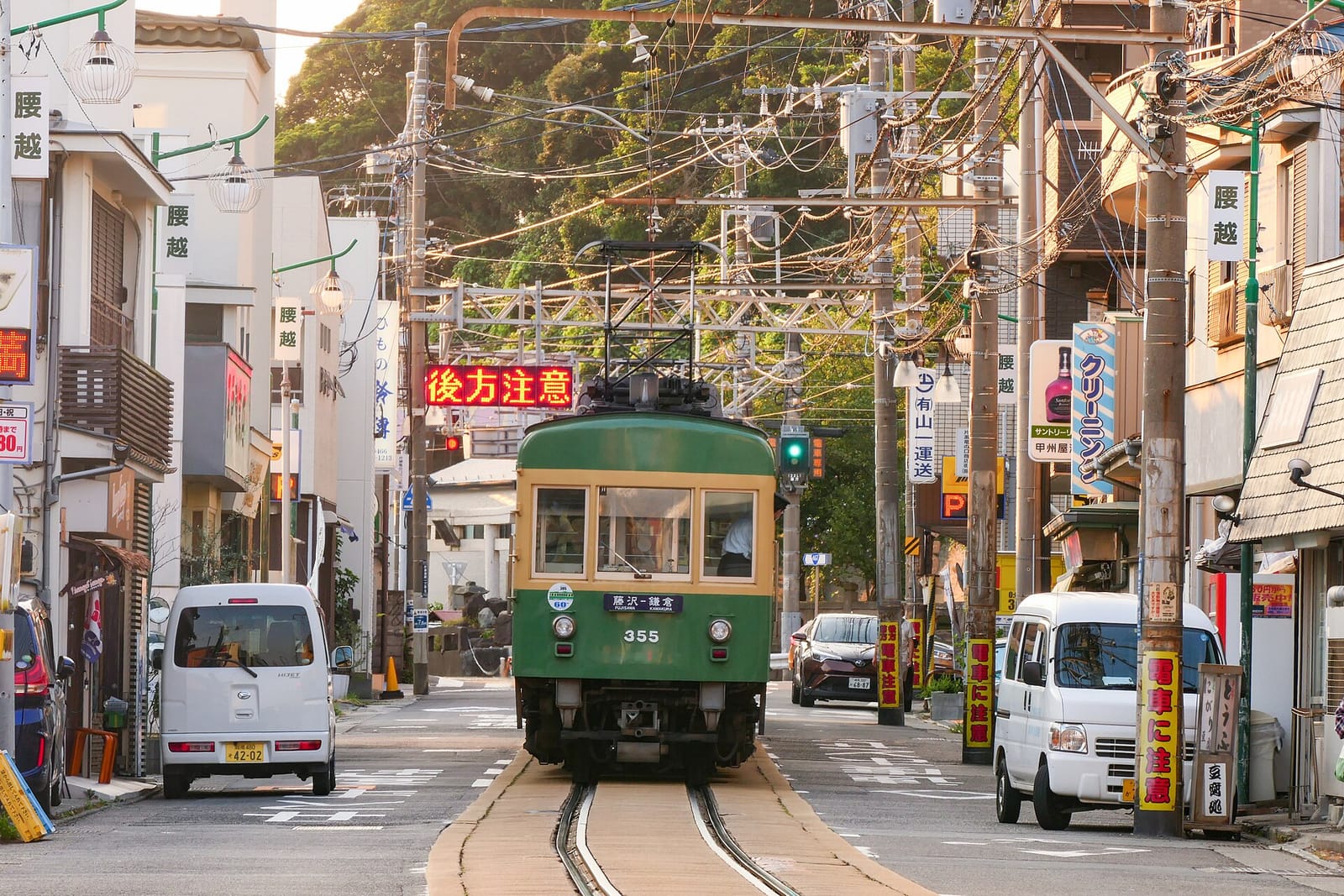 Enoden Line Guide: Fares, the Day Pass Math and How to Ride
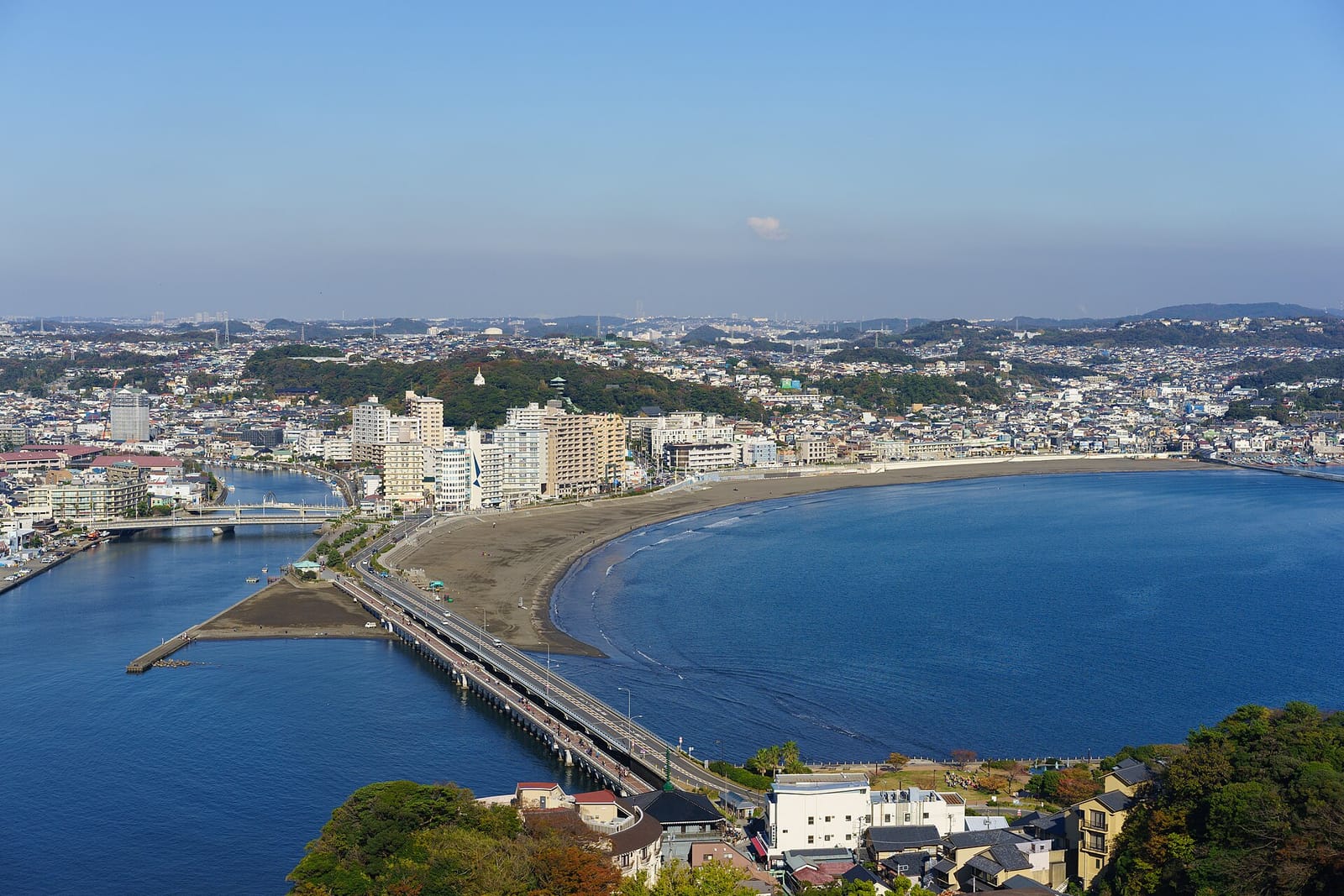 Kamakura and Enoshima One Day Itinerary: Island First, Sunset Last
FAQ
How long do you need on Enoshima?
Plan on half a day for the full walk from the bridge to the Iwaya Caves and back, without rushing. If you skip the caves and turn back at the Sea Candle, two hours is enough for the shrines, the Escar and the tower. Add an hour for lunch on the island.
Does the Enoshima Escar go down?
No. Fujisawa City's tourism site says the Escar is up only. It climbs 46 m in about four minutes; on the way back you walk down the stairs and slopes beside the shrine halls.
How do you get back from the Iwaya Caves?
Either walk back over the top of the island the way you came, or take the Benten-maru boat from Chigogafuchi to the foot of Benten Bridge. Fujisawa's tourism site gives the boat as about 10 minutes and ¥400 for adults, ¥200 for children 6 and over (as of November 2026), with irregular departures. Visit Kanagawa says it may be cancelled in rain, wind of 8 m or more, or high waves.
Is the Enoshima 1day ticket worth it?
Yes if you will visit the Iwaya Caves. As of November 2026 it costs ¥1,550 for adults and covers the Escar (¥500), the Sea Candle (¥800) and the Iwaya Caves (¥500), which add up to ¥1,800 at single prices. Without the caves, the ¥1,100 Sea Candle Set Ticket is cheaper.
Can you see Mt. Fuji from Enoshima?
Yes, on clear days. Fujisawa's tourism site lists Mt. Fuji and the Tanzawa mountains among the views from the Sea Candle, and describes Chigogafuchi as known for the sun setting beyond Mt. Fuji. In December, Japan's national observatory gives sunset in nearby Yokohama between 16:29 and 16:38.
Sources
- Fujisawa City Tourism — Enoshima spots (index)
- Fujisawa City Tourism — Enoshima Benzaiten Nakamise street (Japanese)
- Fujisawa City Tourism — Bronze Torii (Japanese)
- Fujisawa City Tourism — Enoshima Escar (Japanese)
- Fujisawa City Tourism — Enoshima Shrine Hetsunomiya (Japanese)
- Fujisawa City Tourism — Hoanden (Japanese)
- Fujisawa City Tourism — Enoshima Shrine Nakatsunomiya (Japanese)
- Fujisawa City Tourism — Enoshima Sea Candle (Japanese)
- Fujisawa City Tourism — Enoshima Daishi (Japanese)
- Fujisawa City Tourism — Enoshima Shrine Okutsunomiya (Japanese)
- Fujisawa City Tourism — Lovers' Hill, Ryuren no Kane (Japanese)
- Fujisawa City Tourism — Chigogafuchi (Japanese)
- Fujisawa City Tourism — Enoshima Iwaya Caves (Japanese)
- Discover Fujisawa — Iwaya Caves, Ryuren no Kane and Benten Maru
- Discover Fujisawa — Enoshima 1 day
- Visit Kanagawa — Benten Maru
- Enoshima Sea Candle — Prices and tickets
- Enoshima Sea Candle — Business hours (Japanese)
- National Astronomical Observatory of Japan — Sunrise and sunset, Yokohama, December 2026
This article contains affiliate links. We may earn a commission at no extra cost to you.