Fukuoka Food Itinerary: Yatai Rules, Markets and a Timed Day
A timed Fukuoka food day from Hakata: market breakfast, mentaiko, fish market lunch, hot-pot dinner and a yatai crawl, with the city's own yatai rules.
Getting around a full food day in Fukuoka costs ¥640 at most. Every stop on this plan, from a morning market to the riverside yatai (open-air food stalls), is a ¥210 subway hop from Hakata, and the subway’s 1 Day Pass and contactless daily cap both stop at ¥640 per adult. The rest of your budget goes on food, and the city requires every yatai to show its prices, so you can check before you sit down.
This plan is for first-time visitors staying a night or more around Hakata who want to spend a day eating. It comes in two versions: a full food day (Monday to Saturday, because the markets close on Sundays) and a single evening. The city’s yatai rules come first, because they decide the order: no takeout and no raw food at the stalls, so seafood goes in the morning, hot pot at dinner, and the stalls last. Prices and hours are as of November 2026, from the city’s, the operators’ and the markets’ official pages.
What are Fukuoka’s official yatai rules?
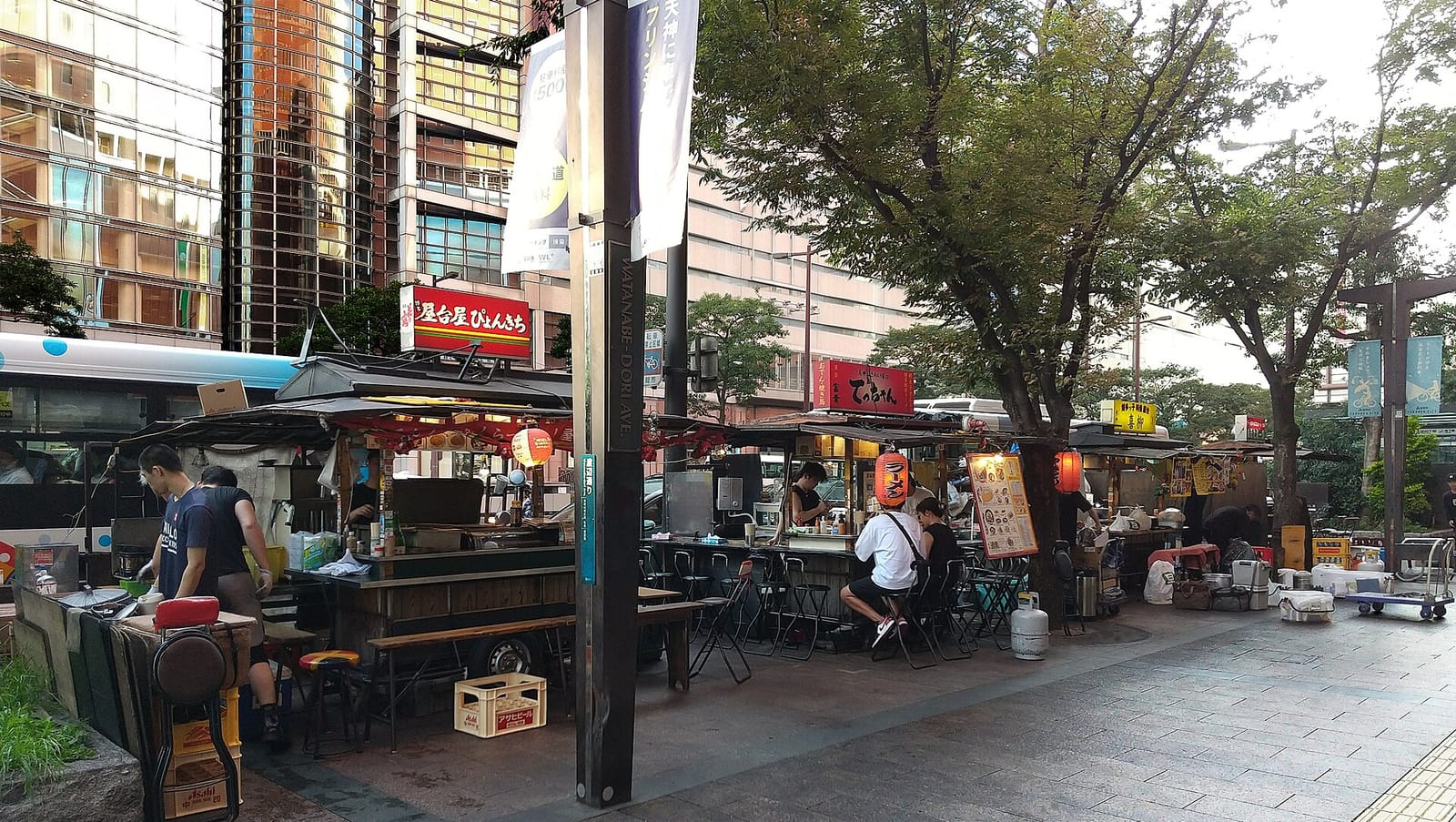
Fukuoka City runs the yatai under a city ordinance, and four rules matter to you: stalls keep night hours, serve only cooked food, sell nothing to take away, and must show their prices. Here is what the city and its official tourist guide, GO FUKUOKA, actually say.
- How many and where. The city’s Q&A says Fukuoka has about 100 yatai. GO FUKUOKA names three main areas: Nakasu (along the Naka River near Canal City), Tenjin (about half of all stalls) and Nagahama (near the fish market). The city’s latest call for new operators covered plots in Nakasu-kita, Seiryu Park, Tenjin-kita, Tenjin-chuo, Tenjin-minami and Nagahama.
- Hours. Stall business, including setup and takedown, must fall between 17:00 and 4:00 the next morning. The city’s sample schedule has a stall setting up at 17:00, opening around 18:30 and starting to close around 1:00. Each stall sets its own hours and days off.
- Closed conditions. GO FUKUOKA says stalls may close in strong wind or heavy rain, sometimes without warning. The city’s FUKUOKA GUIDE account on LINE shows an “open” icon for each stall from around 18:00; no icon in the daytime does not mean the stall is closed that night.
- Food. No raw food: everything is heated just before serving. No takeout and no delivery.
- Prices. Prices must be displayed where you can see them. A dish priced by the day’s catch must show that day’s price; “market price” alone is not allowed. The city suggests checking the price list, any otoshi (cover dish) charge and how ordering works before you order.
- Toilets. Stalls have no toilets of their own. The city asks operators to secure a nearby toilet they can direct you to, so ask the owner.
- Your part. Article 6 of the Yatai Basic Ordinance asks users to consider the living environment of local residents and to cooperate with proper stall operation. In practice: keep the noise down when you leave and do not block the sidewalk.
GO FUKUOKA adds the etiquette: if a stall looks full, look in and gesture to ask about space; in cold weather, peek through the gap in the tarp and ask to come in. Solo diners are welcome. Some stalls now take reservations through Instagram, and more take cards, but many are cash-only. For stall-by-stall hours, closing days and how to choose an area, see our Fukuoka yatai guide.
Which ticket do you need for a food day in Fukuoka?
Buy the subway 1 Day Pass or tap a contactless credit card; either way you pay no more than ¥640. Every ride on this plan is a short hop in the subway’s first fare zone, ¥210 per adult (as of November 2026), and the full day uses four rides.
| Option | Adult price (as of November 2026) | Notes |
|---|---|---|
| Single subway ticket, zone 1 (up to 3 km) | ¥210 | Child ¥110; cash-only ticket machines |
| Subway 1 Day Pass | ¥640 | Child ¥320; sold at any ticket machine; valid on the day bought |
| Contactless credit card or phone (tap-to-pay gates) | Capped at ¥640 a day | Tap in and out with the same card; GO FUKUOKA says charges appear the next day |
| Suica, PASMO, ICOCA or Hayakaken IC card | ¥210 per ride here | No daily cap on IC cards |
GO FUKUOKA says trains run every 4 to 8 minutes. The plan uses three lines: the Airport Line (Hakata, Nakasu-Kawabata, Tenjin, Akasaka), the Nanakuma Line (Hakata to Watanabe-dori) and the walk between. For the evening-only plan, single tickets are enough.
What does a full food day in Fukuoka look like?
Start at a market at 8:30, shop for mentaiko mid-morning, eat lunch at the fish market, rest, then a hot-pot dinner and the yatai. Run it Monday to Saturday, since both markets close on Sundays and Yanagibashi also closes on public holidays.
| Time | Where | Transport | Ride time and fare (adult) |
|---|---|---|---|
| 8:00 | Hakata Station | Nanakuma Line to Watanabe-dori, then 3 min walk | 3 stops; ¥210 |
| 8:30 | Yanagibashi Rengo Market: breakfast and browsing | — | — |
| 10:00 | Fukuya Nakasu Main Store: mentaiko | Walk north across the Naka River to Nakasu | On foot |
| 11:15 | Nakasu-Kawabata Station | Airport Line to Akasaka, then 12 min walk | 2 stops; ¥210 |
| 11:45 | Nagahama Fish Market hall: lunch | — | Lunch queues form at peak time |
| 13:30 | Back to your hotel near Hakata | Akasaka to Hakata, Airport Line | 4 stops; ¥210 |
| 16:30 | Ming at JR Hakata Station: mentaiko and souvenirs | Walk | Open until 21:00 |
| 18:00 | Motsunabe or mizutaki dinner in Hakata or Nakasu (book ahead) | Walk or Airport Line to Nakasu-Kawabata | 2 stops; ¥210 |
| 20:00 | Nakasu yatai along the Naka River | Walk | — |
| 21:30 | Optional: Tenjin yatai | Walk or Airport Line, 1 stop | ¥210 |
Over the day that is four or five rides, so the 1 Day Pass or the contactless cap saves you money from the fourth ride.
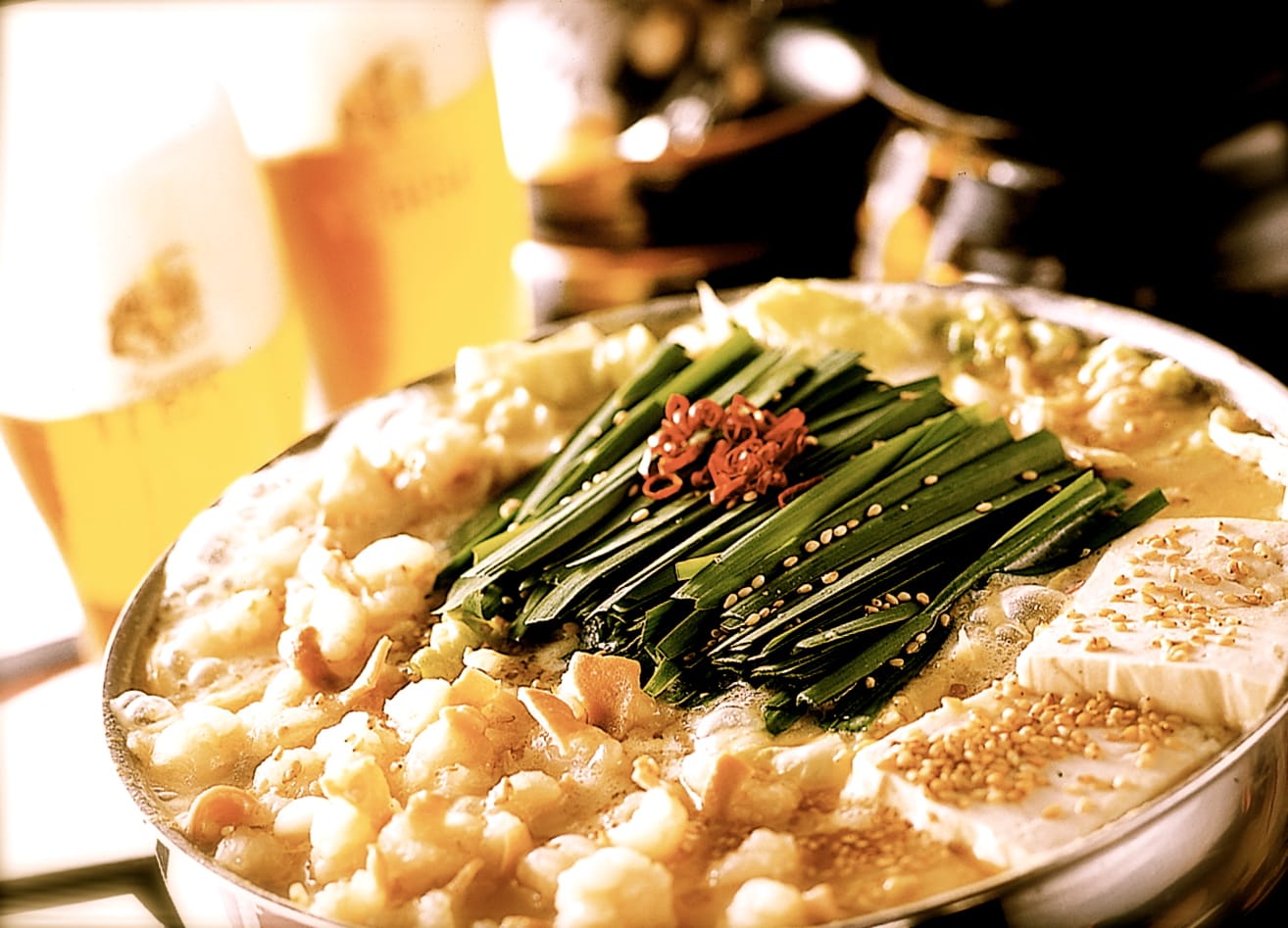
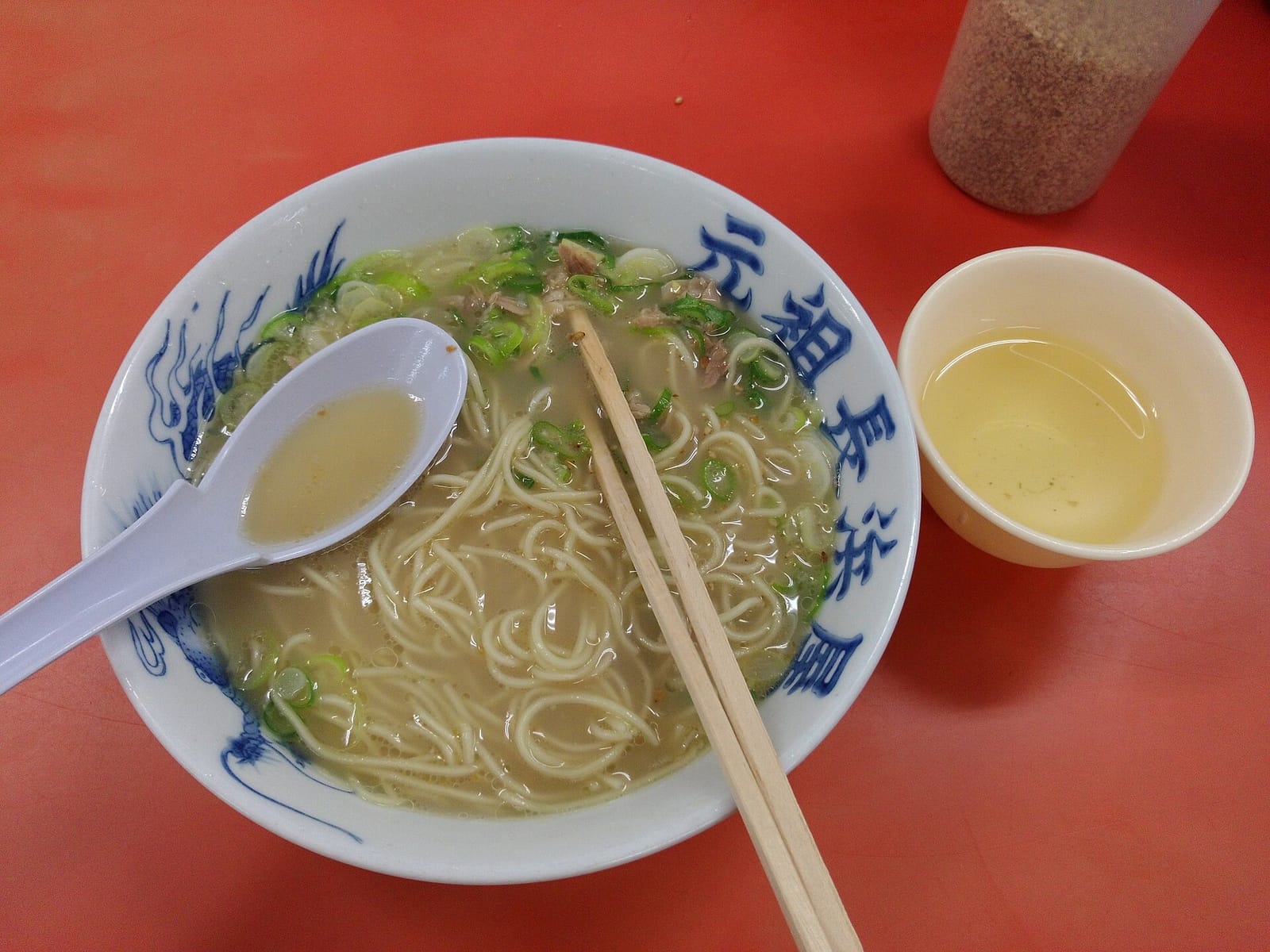
What to eat where. The Fukuoka Prefecture Tourism Association describes mentaiko as pollack roe seasoned with salt and spices, and calls Fukuoka its birthplace. Yanagibashi sells it alongside Genkai Sea fish. For ramen, GO FUKUOKA calls Nagahama the birthplace of Nagahama-style tonkotsu ramen, and notes that a bowl of ramen is the customary finish at the Nagahama stalls; hard noodle firmness (kata) is the tourism association’s suggested starting point. For dinner, GO FUKUOKA describes motsunabe as a Hakata hot pot of beef offal, cabbage and chives, finished with champon noodles, and mizutaki as chicken simmered in a cloudy broth, finished as rice porridge. It names Motsu Nabe Show Raku and Hakata Hanamidori’s Nakasu head branch as examples.
What if you only have one evening?
Eat dinner at the yatai themselves, or do one hot-pot dinner then one or two stalls. This version works any day of the week, weather permitting.
| Time | Where | Transport | Ride time and fare (adult) |
|---|---|---|---|
| 17:30 | Ming at JR Hakata Station: mentaiko to take home | Walk from your hotel | — |
| 18:00 | Check the FUKUOKA GUIDE LINE account for open stalls | — | — |
| 18:15 | Motsunabe or mizutaki dinner near Hakata or Nakasu | Airport Line, Hakata to Nakasu-Kawabata | 2 stops; ¥210 |
| 20:00 | First yatai in Nakasu | Walk | — |
| 21:00 | Second stall in Nakasu or Tenjin, ramen to finish | Walk, or Airport Line 1 stop to Tenjin | ¥210 |
| 22:30 | Back to Hakata | Airport Line from Nakasu-Kawabata or Tenjin | ¥210 |
If you would rather keep dinner at the stalls, arrive by 18:00: GO FUKUOKA recommends that time in Tenjin to get a seat before it fills up.
What are the stops, in order?
Tick “Add to my route” on each stop to open the day in Google Maps in this order.
Yanagibashi Rengo Market
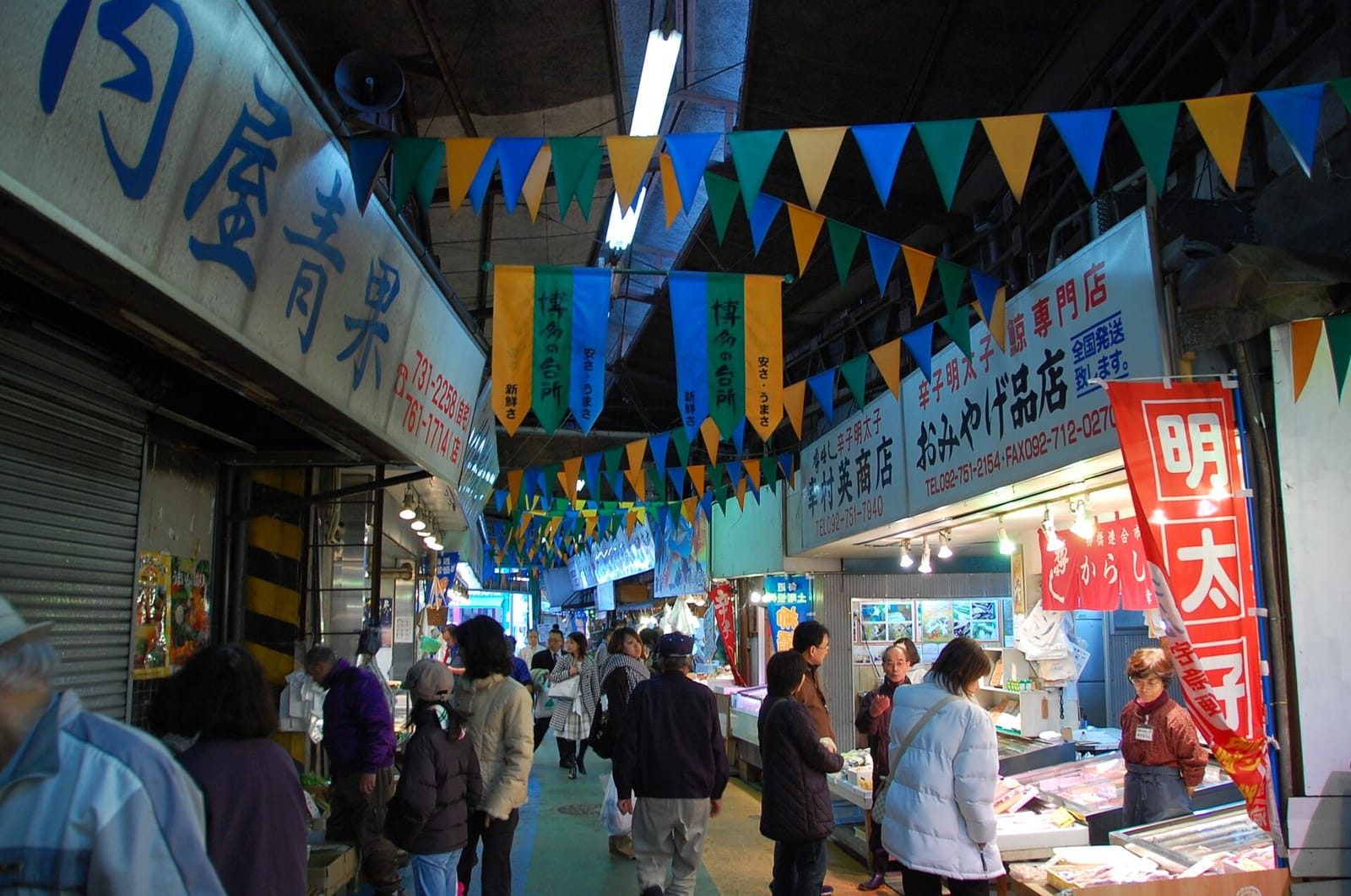
A narrow covered market where, in the market’s own words, everyone from professional chefs to home cooks comes to shop. The tourism association lists Genkai Sea fish, mentaiko, produce, kelp, dried fish and pickles, and notes that fugu and anglerfish draw crowds in winter. The market’s site lists 26 shops, including eateries such as Yanagibashi Shokudo, and some shops have eat-in space, which makes it the breakfast stop.
- Hours
- From 8:00 to evening (varies by shop); closed Sundays and public holidays
- Access
- Subway Watanabe-dori Station (Nanakuma Line), 3 min walk; Nishitetsu bus to Yanagibashi from Hakata Station, about 6 min
- Source
- www.crossroadfukuoka.jp
Fukuya Nakasu Main Store
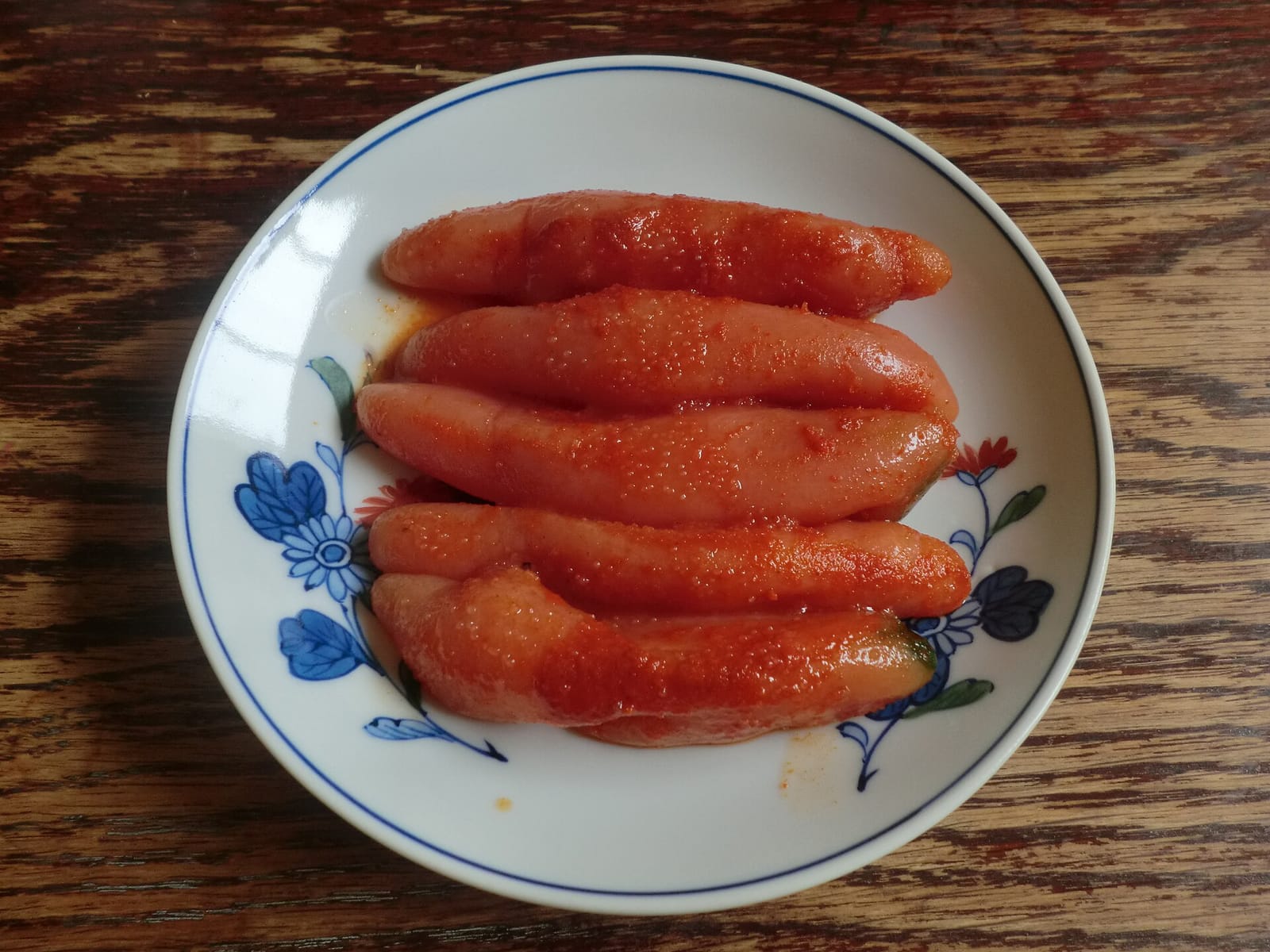
Fukuya’s main store sits on the ground floor of the company’s head office building in Nakasu, near Kushida Shrine and Canal City. It sells mentaiko and related products. If you buy roe to take home, buy it at the end of the day instead, at Fukuya’s Hakata Deitos counter (8:00–21:00) or at Ming, so it is not in your bag all day.
- Hours
- Mon–Fri 9:00–22:00; Sat, Sun and holidays 9:30–18:00; no regular closing day
- Access
- Subway Nakasu-Kawabata Station Exit 1, about 50 m past the police box on Nakasu Chuo-dori
- Source
- www.fukuya.com
Nagahama Fish Market
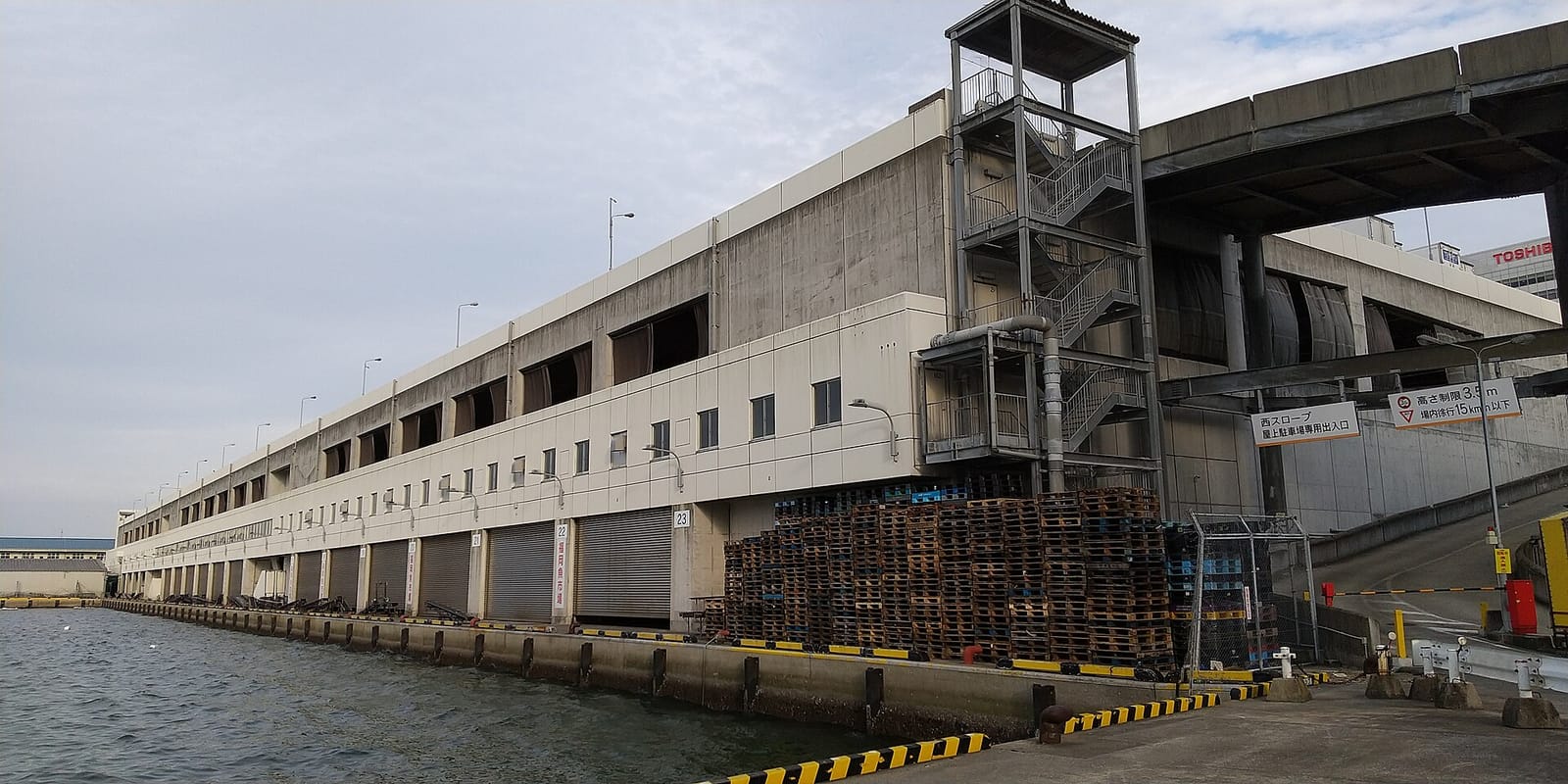
Fukuoka City’s wholesale fish market, which handles about 300 kinds of fish a year. Restaurants open to the public line the first floor of the market hall; some open early for breakfast and the popular ones queue at lunch, according to the tourism association. You can walk a passage that shows part of the market. The public can buy fish only on the monthly Citizens’ Appreciation Day; the next is Saturday, December 12, 2026, 9:00–12:00, with fish sales until 11:00.
- Hours
- Market hall Mon–Sat 8:00–16:30 (varies by store)
- Access
- Subway Akasaka Station (Airport Line), 12 min walk; Nishitetsu bus Nagahama 2-chome, 3 min walk
- Source
- www.crossroadfukuoka.jp
Ming at JR Hakata Station
The souvenir mall inside JR Hakata Station, selling sweets, mentaiko and bento. Open until 21:00, it is the easiest place to buy mentaiko to take home on the evening you leave. Staying near Hakata Station keeps this, the Airport Line and the Shinkansen on your doorstep.
- Hours
- 9:00–21:00 (Ming Yokocho 7:00–23:00); varies by shop
- Access
- Directly connected to JR Hakata Station
- Source
- www.ming.or.jp
Nakasu Yatai
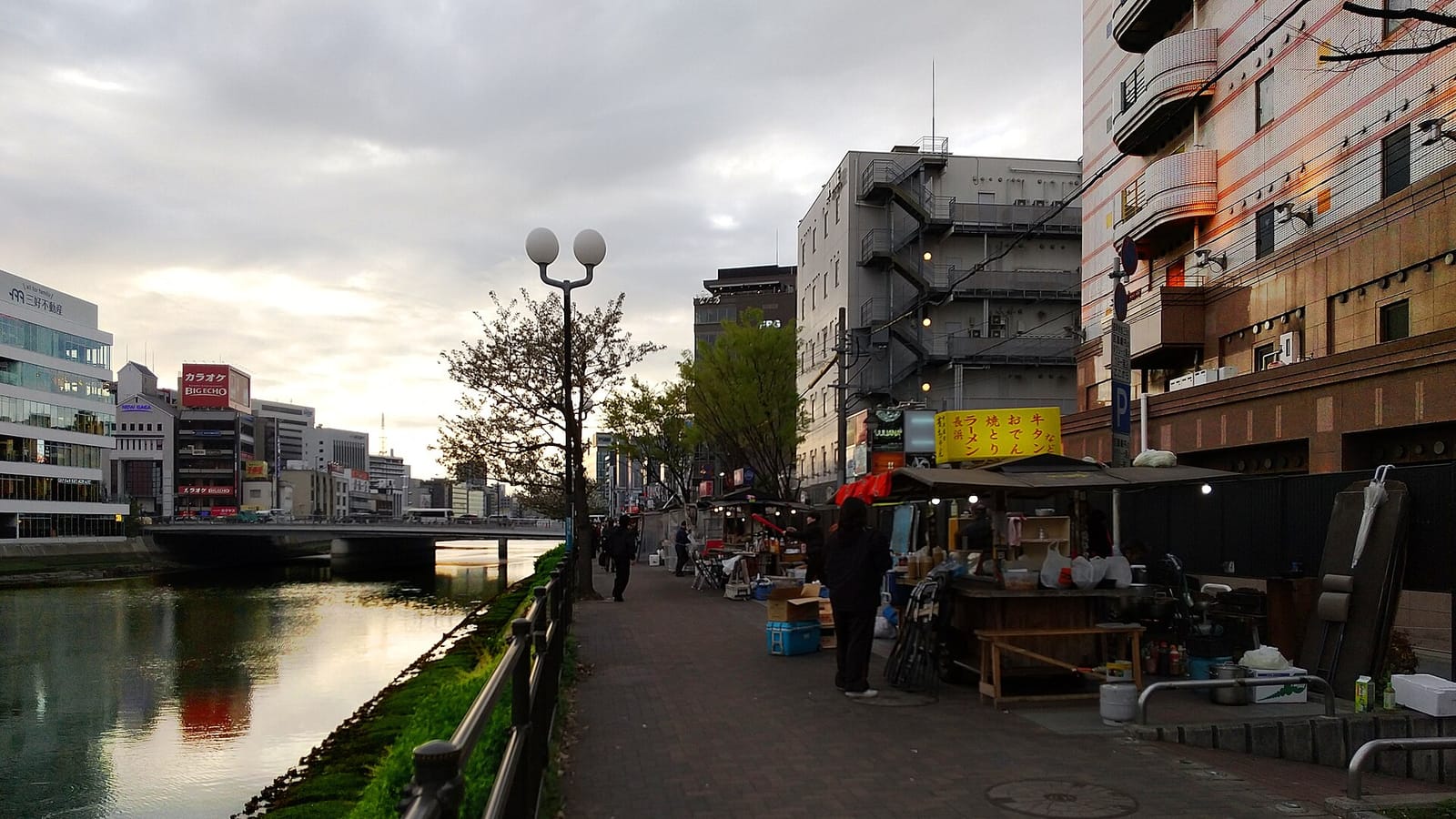
The riverside stalls near Canal City, busy with both locals and visitors. GO FUKUOKA says the Nakasu menus stick to the basics: ramen, yakiramen and oden. North Nakasu has 10 stalls if the main row is full.
- Hours
- Stall hours set by each operator, within 17:00–4:00; many open around 18:00–18:30
- Access
- Subway Nakasu-Kawabata Station
- Source
- gofukuoka.jp
Tenjin Yatai
About half of Fukuoka’s yatai are in Tenjin, according to GO FUKUOKA, including coffee- and bar-themed stalls, some with design awards. Tenjin is one subway stop from Nakasu-Kawabata, so it works as a second round after Nakasu.
- Hours
- Stall hours set by each operator, within 17:00–4:00
- Access
- Subway Tenjin Station or Tenjin-minami Station
- Source
- gofukuoka.jp
How do you get back after the yatai?
Head back before the stalls start packing up. The city’s sample schedule has stalls closing from around 1:00. Hakata and Nakasu-Kawabata are two stops apart on the Airport Line, so if you are staying near Hakata Station the ride is short; check the last train on the Fukuoka City Subway site before your second stall. If you miss it, the yatai areas are close enough to Hakata for a short taxi ride.
To keep the journey home simple, choose a hotel near Hakata Station or in Nakasu: see our guide to the best hotels near Hakata Station by exit.
What if it rains, it is windy or it is Sunday?
Keep the markets and the hot pot, and treat the yatai as optional.
- Strong wind or heavy rain: stalls may close without notice. Check the FUKUOKA GUIDE LINE account from about 18:00, and if your stalls show no open icon, stay at the hot-pot restaurant and finish with ramen indoors.
- Sunday or a public holiday: Yanagibashi Rengo Market is closed, and the Nagahama market hall is listed as Monday to Saturday. Use the one-evening plan, and shop for mentaiko at Fukuya Nakasu (9:30–18:00 on weekends and holidays) or Ming.
- Cold nights: yatai keep their tarps down in winter. GO FUKUOKA says to peek through the gap and ask to come in; the owner will help you in and out.
- Want sights as well as food: our Fukuoka 2-day itinerary pairs one yatai night with Kushida Shrine, Canal City and Dazaifu. For a similar food day in another city, see the Osaka food itinerary for Dotonbori and Shinsekai.
What to pack before you go
Maps, train apps and translation drain a phone by mid-afternoon. Keep it in your carry-on: power banks are not allowed in checked luggage.
Japan still runs on coins: there are six of them, from 1 to 500 yen, and you collect a pocketful fast. A holder with a slot for each coin lets you pay the exact amount at ticket machines, shrines and small shops without digging.
 Where to Stay in Fukuoka: Hakata or Tenjin (or Nakasu Between)?
 Best Hakata Ramen Shops by Style: Foam, Nagahama and Chains
FAQ
What time do Fukuoka yatai open?
Each stall sets its own hours. Fukuoka City allows stall business, including setup and takedown, between 17:00 and 4:00 the next morning, and the city's sample schedule has a stall opening around 18:30. GO FUKUOKA suggests arriving in Tenjin around 18:00 to get a seat.
Can you take yatai food away?
No. Fukuoka City's conditions for yatai operators prohibit takeout and delivery, and GO FUKUOKA lists the no-takeout rule as one of the main rules of running a stall. You eat at the counter.
Do Fukuoka yatai take reservations or cards?
Some do. GO FUKUOKA says a growing number of stalls accept reservations through Instagram or other social accounts, and that more now take cards or mobile payments, though many are still cash-only. Carry cash to be safe.
Are Fukuoka's food markets open on Sunday?
Plan for no. Yanagibashi Rengo Market is closed on Sundays and public holidays, and the Fukuoka Prefecture Tourism Association lists the Nagahama Fish Market hall as Monday to Saturday, 8:00–16:30. On a Sunday, use the one-evening plan.
Where should you stay for a Fukuoka food trip?
Near Hakata Station or Nakasu. Both are on the Airport Line, one or two stops from the Nakasu yatai, and Hakata Station has Ming for mentaiko shopping until 21:00. Our hotel guide covers the station exits.
Sources
- Fukuoka City — Yatai operator recruitment (business hours 17:00–4:00, no raw food, no takeout or delivery; Japanese)
- Fukuoka City — Yatai Q&A (about 100 stalls, price display, toilets; Japanese)
- Fukuoka City — Yatai Basic Ordinance, Article 6 (users' responsibilities; Japanese)
- Fukuoka City — Yatai policy index (Japanese)
- GO FUKUOKA (Fukuoka City Official Tourist Guide) — The Ins-and-Outs of Yatai
- GO FUKUOKA — A Beginner's Guide to Fukuoka's Public Transportation
- GO FUKUOKA — Motsu nabe and mizutaki
- Fukuoka Prefecture Tourism Association (Crossroad Fukuoka) — 10 Recommended Dishes in Fukuoka
- Crossroad Fukuoka — Yanagibashi Rengo Market
- Yanagibashi Rengo Market — Official site (access; Japanese)
- Crossroad Fukuoka — Nagahama Fish Market
- Nagahama Fresh Fish Market — Official site (Citizens' Appreciation Day; Japanese)
- Fukuya — Nakasu Main Store (hours, access; Japanese)
- Fukuya — Store list (Hakata Deitos counter hours; Japanese)
- Ming (JR Hakata Station) — Official site (hours; Japanese)
- Fukuoka City Subway — Regular fares (Japanese)
- Fukuoka City Subway — Fare chart (PDF; Japanese)
- Fukuoka City Subway — 1 Day Pass
This article contains affiliate links. We may earn a commission at no extra cost to you.