Fukuoka Yatai Guide: Rules, Areas, Payment and What to Do in Rain
How Fukuoka's yatai food stalls work: the etiquette, three areas compared, card or cash, closed days, rain checks, and how to pick a stall.
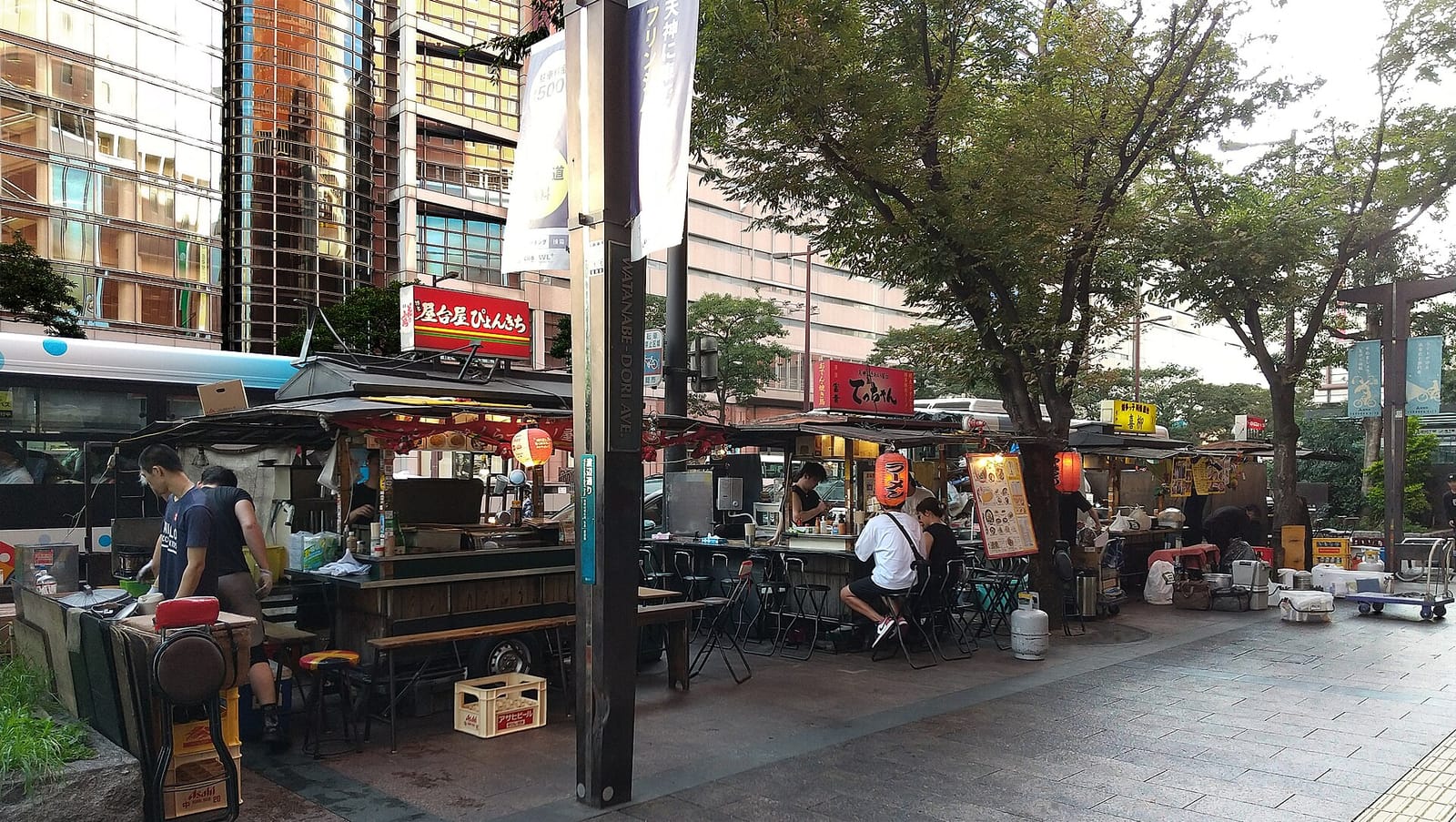
At a Fukuoka yatai, the unwritten rule is the one that keeps the stall running: order at least one drink and one dish each, eat, chat, and give up your seat when you are done. A yatai is a counter with a handful of stools that gets built on the sidewalk every evening and taken away every night. Linger over one beer and nobody will scold you, but someone is standing behind you.
This guide explains how the stalls work, not which route to walk. It covers etiquette, the three areas, cards and cash, closing days, rain, and how to choose, with opening hours for seven stalls from the city’s own tourism site. For a timed day of markets, hot pot and stalls, use our Fukuoka food itinerary.
What is a yatai, and what do they serve?
A yatai is a licensed mobile food stall that sets up on a sidewalk or in a park after dark. Fukuoka City counted 100 of them on April 1, 2026, 43 of which came through its public recruitment scheme. The city says there were over 400 at the peak, between 1965 and 1974, and it runs the scheme so that the stalls do not disappear.
Expect cooked food, fast. GO FUKUOKA, the city’s official guide, lists tonkotsu ramen, yakitori and oden as favorites at any stall, with yakiramen (stir-fried ramen noodles) growing popular. Drinks usually mean beer, sake, shochu, oolong tea and soft drinks. Newer stalls add coffee, bar drinks, French and Italian dishes.
Four city rules shape what you see:
- No raw food. Operators must heat everything thoroughly just before serving, so there is no sashimi or salad.
- No takeout. GO FUKUOKA calls this one of the major rules of running a yatai.
- Hours. Business must fall between 17:00 and 4:00 the next morning, including setup and takedown. GO FUKUOKA says some stalls open at 18:00, most between 18:30 and 19:00, and most close around midnight.
- Prices on display. They must be where customers can see them. “Market price” alone is not allowed; the day’s price has to be shown.
More stalls are coming. The city is choosing operators for 23 spaces in Nakasu, Tenjin and Nagahama, to be decided in early December 2026 and to open between April 1 and May 31, 2027.
What are the rules and etiquette at a yatai?
Eat first, talk quietly, move on. The prefecture’s tourism site and GO FUKUOKA between them give a short list:
| Before | During | After |
|---|---|---|
| Use a toilet; stalls have none | Order one drink and one dish each, at least | Ask for the bill and pay as you leave |
| Leave luggage at your hotel or in a locker | Keep your bag on you or on your lap | Do not linger after you finish |
| Go in twos or threes, or alone | Share seats and squeeze up when asked | Do not stand outside drinking |
| Dress for the cold in winter | Keep your voice down; people live nearby | Try another stall; three a night is the suggestion |
To get a seat, look in and ask “Two people. OK?” If there is a queue, join the end. Even a stall that looks full may have space, because customers often shuffle up. In cold weather the stall is wrapped in a plastic tarp: put your head through the gap and ask.
Before you order, the city suggests checking the posted prices, whether there is an otoshi (a small compulsory appetizer), and how ordering works. GO FUKUOKA says most yatai have neither an appetizer nor a cover charge, though some bar-type stalls do.
Toilets are the practical problem. The city’s yatai map marks public toilets near each cluster, and underground mall toilets in Tenjin that stay open until 0:30. If you cannot find one, ask the staff; operators are required to have a toilet they can direct you to.
Can you pay by card at Fukuoka’s yatai?
At some, but bring cash. GO FUKUOKA’s how-to page says most stalls accept only cash and about 10% take credit cards. The city’s newer map, dated July 1, 2026, shows more. Stall names in yellow accept some form of cashless payment, and a CARD icon marks credit cards. By our count, around 20 stalls carry the CARD icon.
Read the small print too. Yokanavi, the city’s Japanese tourism site, lists one Nakasu stall that takes cards only for bills of ¥10,000 or more. Cash in ¥1,000 notes settles every case.
Japan has six coins, from 1 to 500 yen. A holder with a slot for each one lets you pay at a narrow counter without emptying your pockets.
The same map marks stalls that issue receipts with a pink icon, which is useful if you are on a business trip.
Nakasu, Tenjin or Nagahama: which yatai area should you choose?
Choose by crowd and menu. The three areas are close enough that you can change your mind: Nakasu-Kawabata, Tenjin and Akasaka stations are all on the Airport Line.
| Nakasu | Tenjin | Nagahama | |
|---|---|---|---|
| Setting | Along the Naka River near Canal City | Sidewalks beside department stores and offices | Near the fish market |
| Who goes | Visitors and locals, often with queues | People after work or shopping | Local regulars, welcoming to visitors |
| Typical menu | Ramen, yakiramen, oden | Widest choice, with coffee and bar stalls | Nagahama ramen, mentaiko, Chinese dishes |
| How many | Main row plus 10 in north Nakasu | About half of all stalls | Six on the July 2026 map |
| Nearest station | Nakasu-Kawabata | Tenjin or Tenjin-minami | Akasaka |
| Best for | The classic photo and first look | Choosing between many stalls | Ramen, and a first-timer who wants to talk |
Nakasu
- Setting
- Along the Naka River near Canal City
- Who goes
- Visitors and locals, often with queues
- Typical menu
- Ramen, yakiramen, oden
- How many
- Main row plus 10 in north Nakasu
- Nearest station
- Nakasu-Kawabata
- Best for
- The classic photo and first look
Tenjin
- Setting
- Sidewalks beside department stores and offices
- Who goes
- People after work or shopping
- Typical menu
- Widest choice, with coffee and bar stalls
- How many
- About half of all stalls
- Nearest station
- Tenjin or Tenjin-minami
- Best for
- Choosing between many stalls
Nagahama
- Setting
- Near the fish market
- Who goes
- Local regulars, welcoming to visitors
- Typical menu
- Nagahama ramen, mentaiko, Chinese dishes
- How many
- Six on the July 2026 map
- Nearest station
- Akasaka
- Best for
- Ramen, and a first-timer who wants to talk
GO FUKUOKA’s advice for Tenjin is to arrive around 18:00, before the stalls fill. It calls north Nakasu a respite from the bustle of the main row, and says Nagahama could be the perfect place for a yatai first-timer.
Nakasu: which stalls to look for?
The river row is the picture of Fukuoka most people arrive with. Both stalls here are about 5 minutes on foot from Nakasu-Kawabata Station. Tick “Add to my route” on the stalls you like and open them together in Google Maps.
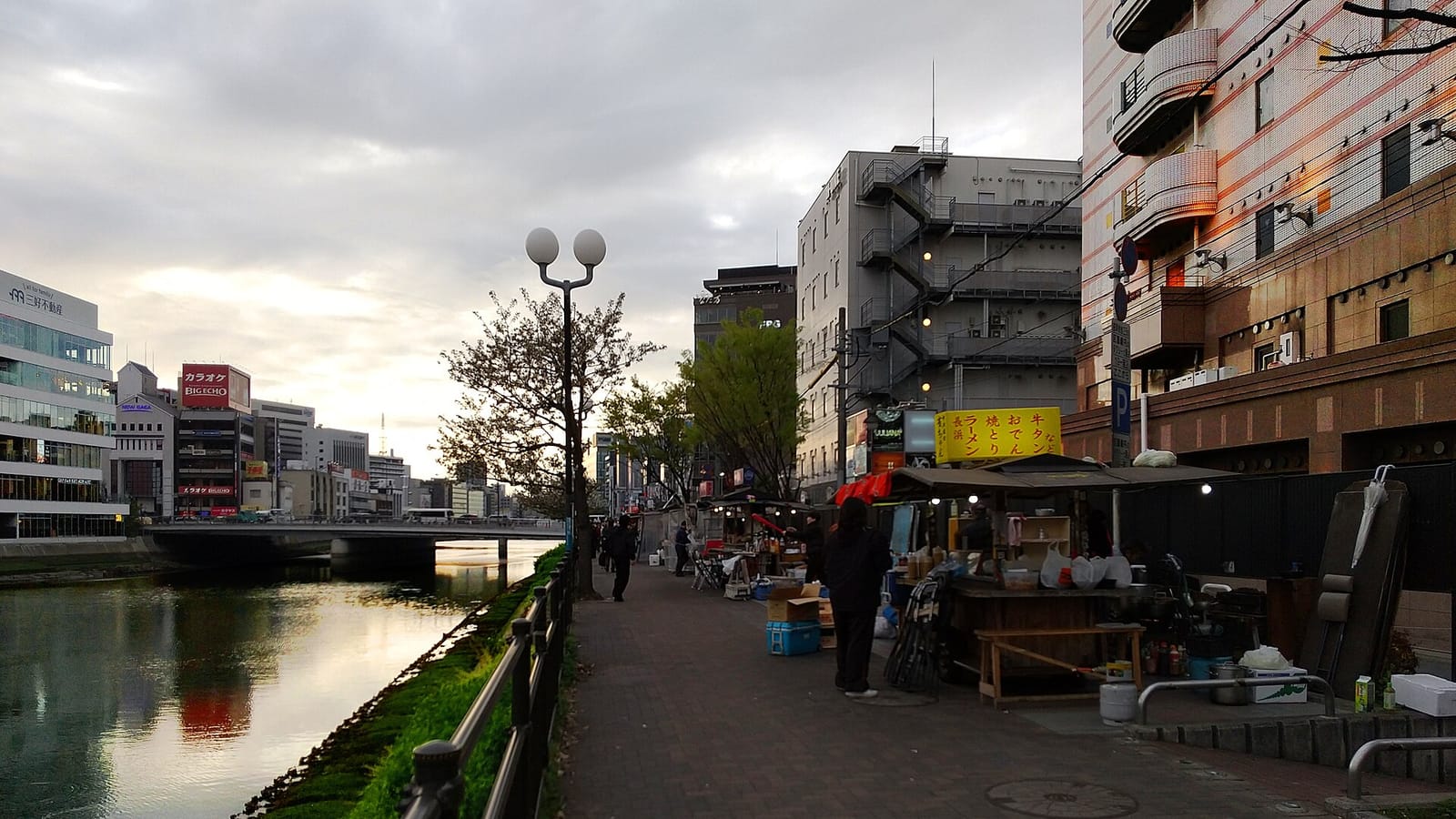
Takechan fr Tsukasa
The stall introduces itself on the city guide as a beginner-friendly yatai, for the start or the end of the night. On the July 2026 map it has both the CARD icon and the receipt icon, which is unusual in the main Nakasu row.
- Hours
- 18:00–0:30; irregular closing days (as of November 2026)
- Price
- Average budget ¥1,000–¥2,000
- Access
- Subway Nakasu-Kawabata Station, 5 min walk
- Source
- yokanavi.com
Okei
A stall in the north Nakasu group, away from the main row. It describes its style as standard dishes without fuss. The map shows its name in yellow, meaning some cashless payment, but the city guide lists credit cards as not accepted.
- Hours
- Mon–Sat 19:30–2:00; closed Sundays and holidays (as of November 2026)
- Price
- Average budget ¥3,000; no credit cards
- Access
- Subway Nakasu-Kawabata Station, 5 min walk
- Source
- yokanavi.com
Tenjin: where are the stalls near the station?
They line several streets, so pick a cluster first. The map shows groups on Showa-dori north of Tenjin Station, around the Nishitetsu station on Watanabe-dori, and farther south toward Watanabe-dori Station.
Kokin-chan
In business since 1968 and introduced on the city guide as the originator of yakiramen. It is on the Tenjin-nishi side, a short walk from the subway. Two closing days a week makes it one to check before you go.
- Hours
- Mon–Wed 18:30–1:00; Fri–Sat 18:30–2:00; closed Thursdays and Sundays (as of November 2026)
- Price
- Average budget ¥1,500
- Access
- Subway Tenjin Station Exit 1, 2 min walk
- Source
- yokanavi.com
Mami-chan
One of the earlier openers in this list, so it suits a first stop before the 18:00 rush. The map does not show its name in yellow, so plan on cash.
- Hours
- Mon–Sat 17:30–24:00; closed Sundays (as of November 2026)
- Price
- Average budget ¥2,500
- Access
- Nishitetsu Fukuoka (Tenjin) Station Exit 4, 3 min walk
- Source
- yokanavi.com
Zono-chan
In front of BiVi Fukuoka in the south Tenjin group, with mentaiko dishes and offal from Kyushu wagyu. Choose this end of Tenjin if you are staying toward Watanabe-dori.
- Hours
- 18:15–24:00; closed Wednesdays (as of November 2026)
- Price
- Average budget ¥2,000; no credit cards
- Access
- Nishitetsu Fukuoka (Tenjin) Station South Exit or Watanabe-dori Station, 5 min walk
- Source
- yokanavi.com
Nagahama: is it worth going beyond Tenjin?
Yes, for ramen and a smaller crowd. Nagahama is the birthplace of Nagahama-style tonkotsu ramen, and the prefecture credits it with thin noodles and kaedama (a second helping of noodles). It is about 10 minutes on foot from Akasaka Station.
Gabugabu
One of the newest stalls, from the recruitment round that opened in 2025. Its main item is creative tsukune (chicken meatballs) made with Kyushu chicken and eggs from Itoshima. It opens only Thursday to Sunday.
- Hours
- 18:00–24:00; closed Mondays, Tuesdays and Wednesdays (as of November 2026)
- Price
- Average budget ¥2,000; credit cards accepted
- Access
- Subway Akasaka Station, 10 min walk
- Source
- yokanavi.com
Yatai no Tama-chan Annex
The stall’s theme is food from Hakata and the rest of Kyushu. Because closing days are irregular, confirm it is open the same evening before you make the walk from Akasaka.
- Hours
- 18:00–24:00; irregular closing days (as of November 2026)
- Price
- Average budget ¥2,000; no credit cards
- Access
- Subway Akasaka Station, 10 min walk
- Source
- yokanavi.com
When are yatai busy, and how do you queue?
Arrive at opening time if you want to choose your seat. The prefecture’s guide says the atmosphere peaks around 20:00, and that more people come for a last bite after drinks from 21:00. So there are two easy windows:
- 18:00 to 18:45: the first seats, before the after-work crowd.
- Late evening: a last bowl after dinner, as long as you start well before midnight, when GO FUKUOKA says most stalls close.
If you queue, queue as a small group, at the end, and out of the way of people walking past. Do not drink in the line: standing and drinking outside a yatai is prohibited. A growing number of stalls take reservations through Instagram or other accounts, so check the stall’s page if you have a fixed plan.
How do you check whether a yatai is open tonight?
Use FUKUOKA GUIDE, the city’s account on the LINE app. Stalls have a connected light bulb, and when it is on, an “open” icon appears on the stall’s page. GO FUKUOKA says the icons only show from about 18:00, so a missing icon in the afternoon means nothing. You can search by food or area, see each stall’s hours and holidays, and switch to English.
You will need data on the street to do it.
A Japan data eSIM you set up from a QR code, with no SIM card to collect. It covers the stall check, maps and translation while you walk between clusters.
Our travel essentials page lists the other things worth packing before you fly.
What if it rains, or it is Sunday or Monday?
Have an indoor plan ready, because stalls close for weather without notice.
- Heavy rain or strong wind: assume many are closed. Check LINE at 18:00, and if your area shows few icons, eat indoors. The hot-pot dinner in our Fukuoka food itinerary is the easy swap.
- Light rain: GO FUKUOKA says some stalls do not open in rainy conditions, so check each one.
- Sunday: of the seven above, Okei, Kokin-chan and Mami-chan are closed.
- Monday to Wednesday: Gabugabu is closed, and Zono-chan closes on Wednesday.
- Typhoon or snow warnings: skip the stalls.
How do you choose a good stall?
Read four signs before you sit: posted prices, an open seat count that fits your group, a payment mark that matches your wallet, and a menu you can point to. The city also publishes rule compliance: inspectors patrol the stalls, and in fiscal 2025 it issued 24 written warnings, 11 about road or park use and 13 about food hygiene. Stalls that show prices and keep their counter tidy are following the rules that are checked.
Then think about how you get home. Staying in Tenjin or Nakasu means you walk back; from Hakata Station, Nakasu-Kawabata and Tenjin are two and three subway stops away. Our best hotels near Hakata Station guide and the Fukuoka 2-day itinerary help you choose the base.
 Where to Stay in Fukuoka: Hakata or Tenjin (or Nakasu Between)?
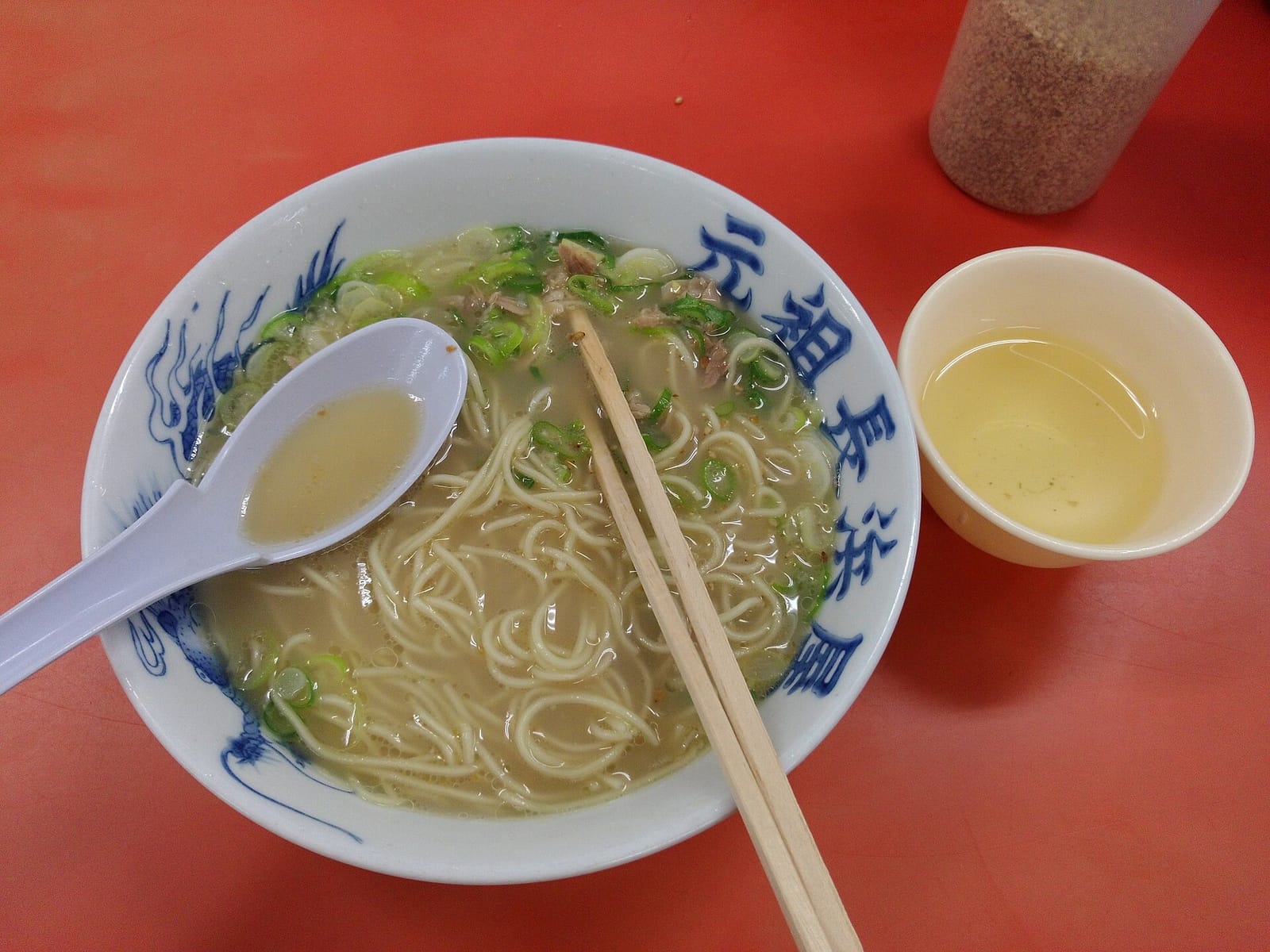 Best Hakata Ramen Shops by Style: Foam, Nagahama and Chains
FAQ
Are Fukuoka yatai open every day?
The city has no common closing day; each stall sets its own. Many close irregularly, several take Sunday or a midweek day off, and heavy rain or strong wind can close any of them without warning. Check the FUKUOKA GUIDE account on LINE from about 18:00.
Is it better to go to Nakasu, Tenjin or Nagahama?
Choose Nakasu for the river view and classic dishes, Tenjin for choice and a local after-work crowd, and Nagahama for ramen and a smaller row that includes newer stalls. If it is your first time and you dislike queues, start in Nagahama or the north end of Nakasu.
Do yatai have English menus and prices?
Prices must be displayed where customers can see them under city rules, and a dish priced by the day's catch must show that day's price. English varies by stall. To get a seat, GO FUKUOKA suggests simply asking 'Two people. OK?'
Can you go to a yatai alone?
Yes. GO FUKUOKA says going alone is probably the best way to enjoy yatai because it makes conversation easier. Counters have few seats, so one or two people also get in more easily than a group.
How much does a yatai cost?
Plan on ¥1,000 to ¥3,000 a person per stall. That is the range of average budgets on the city guide's pages for the stalls in this article. Most stalls have no cover charge, but some bar-style ones do, so check the menu before you sit (as of November 2026).
Sources
- GO FUKUOKA (Fukuoka City Official Tourist Guide) — How to Enjoy Yatai
- GO FUKUOKA — The Ins-and-Outs of Yatai
- VISIT FUKUOKA (Fukuoka Prefecture) — Yatai rules and etiquette
- Fukuoka City — Yatai Q&A (Japanese)
- Fukuoka City — Yatai operator recruitment, hours and food rules (Japanese)
- Fukuoka City — 6th recruitment, number of stalls on April 1, 2026 (PDF, Japanese)
- Fukuoka City — 6th recruitment, applications and schedule (PDF, Japanese)
- Fukuoka City — Yatai rule compliance, FY2025 (Japanese)
- Yokanavi (Fukuoka City tourism site) — Yatai page with the Fukuoka Hakata Yatai Map, July 1, 2026 (Japanese)
- Yokanavi — Takechan fr Tsukasa (Japanese)
- Yokanavi — Hakata Nakasu Yatai 交龍, card minimum (Japanese)
- Yokanavi — Okei (Japanese)
- Yokanavi — Kokin-chan (Japanese)
- Yokanavi — Mami-chan (Japanese)
- Yokanavi — Zono-chan (Japanese)
- Yokanavi — Gabugabu (Japanese)
- Yokanavi — Gabugabu, a stall from the 5th recruitment round (Japanese)
- Yokanavi — Yatai no Tama-chan Annex (Japanese)
This article contains affiliate links. We may earn a commission at no extra cost to you.