Hiroshima Peace Memorial Museum Tips: Quiet Slots, Route and Park Walk
Beat the 11:00–15:00 crowds at the Hiroshima Peace Memorial Museum: when to book the online-only slots, the museum's 30-minute route, and a park walk in order.
The most common mistake at the Hiroshima Peace Memorial Museum is turning up at midday without a ticket. The museum’s own crowd chart marks 11:00 a.m. to 3:00 p.m. as its most crowded hours, and it warns that the line to buy tickets can be long. The fix is to book online and come in the first hour of the morning or the last hour of the evening, the two reserved slots the museum itself recommends. This guide covers those slots, the museum’s own route through the exhibits, and a park walk in a set order that ends at the Atomic Bomb Dome.
When should you visit, and why this order?
Visit at 7:30 a.m. or in the evening reserved slot, see the museum first, then walk north through the park to the Atomic Bomb Dome. The early slot gets you through the exhibits before the 11:00 a.m. peak, and the park walk ends at the Genbaku Dome-mae streetcar stop, so you never double back.
The museum publishes a one-page “Things to know before you visit” chart with the times it recommends. Here is what it says, with hours from the museum’s hours page (as of November 2026):
| Season | Opening hours | Reserved slots (online only) | Most crowded |
|---|---|---|---|
| March to July, September to November | 7:30 a.m. to 7:00 p.m. | 7:30 to 8:30 a.m., 5:30 to 6:30 p.m. | 11:00 a.m. to 3:00 p.m. |
| August | 7:30 a.m. to 8:00 p.m. (9:00 p.m. on August 5 and 6) | 7:30 to 8:30 a.m., 6:30 to 7:30 p.m. | 11:00 a.m. to 3:00 p.m. |
| December to February | 7:30 a.m. to 6:00 p.m. | 7:30 to 8:30 a.m., 4:30 to 5:30 p.m. | 11:00 a.m. to 3:00 p.m. |
Last entry is 30 minutes before closing. The museum is closed on December 30 and 31, and for a few days in mid-February while exhibits change; the next closure listed is February 15 to 20, 2027.
A few things the chart makes clear:
- The reserved slots are online only. During those hours there is no ticket machine or counter sale for entry to the permanent exhibition. The museum calls them less crowded and says it “highly” recommends visiting then.
- In the middle of the day you can buy on the spot, from ticket machines or the counter, but you may wait. The museum’s website links two online sellers (Klook and a separate booking page) from its home page.
- Some seasons are busier than others. The chart marks cherry blossom season, the May holidays, the school trip seasons in May to June and October to November, and the August 6 and Obon period as busy. January is marked as the quietest month.
- You can check the queue live. The museum’s “State of Congestion” page streams cameras outside the entrance, in the East Building lobby and in the 3rd-floor corridor.
Admission is ¥200 for adults, ¥100 for high school students and free for junior high students and younger (as of November 2026). Visitors aged 65 and over pay ¥100 when they show a passport.
If you want the 7:30 a.m. slot, it helps to sleep nearby. Our guide to the best hotels near Hiroshima Peace Park compares hotels by their streetcar stop and walking time to the park.
How do you see the museum in about an hour?
Follow the museum’s own route: East Building escalator to the 3rd floor, through the corridor to the Main Building, then back. The museum’s printed route guide estimates about 30 minutes for its suggested Main Building course and about 30 minutes for the East Building exhibits.
- Start on the 1st floor of the East Building. Ride the escalator to the 3rd floor, where the introductory exhibit “The Devastated City” uses a projection-mapped model of the city (about 2 minutes).
- Cross the corridor to the Main Building. This is “The Reality of the Atomic Bombing”: the museum says it displays about 500 items, including victims’ belongings and photographs of the devastation.
- Return through the corridor. If you are short on time, take the elevator from the East Building’s 3rd floor straight down to the 1st floor.
- If time allows, see the East Building exhibits: “The Dangers of Nuclear Weapons” on the 3rd floor and “Hiroshima History” on the 2nd floor.
The route guide picks ten items in the Main Building that the museum “strongly” recommends, in route order: photographs of survivors suffering from burns, children killed in the bombing, drawings and photographs of the injured, a human shadow etched in stone, a soldier with “spots of death,” a sister and brother who lost their hair, a tricycle, a lunch box, paper cranes folded by Sadako Sasaki, and a photograph titled “New life.” Each has an audio guide number, and most of the commentary tracks are 1 to 3 minutes long.
Is the audio guide worth renting?
Rent it if you want context in your own language. It costs ¥500 (as of November 2026), runs about 70 minutes in total, and you can skip or repeat tracks. It comes in 15 languages, including English, Chinese, Korean, French, Spanish, German, Thai, Arabic and Ukrainian. Pick it up at the rental counter on the East Building’s 1st floor.
What should you know about the content?
The Main Building shows victims’ belongings, burned clothing and photographs of injured people, including children. The museum asks visitors to keep quiet in the exhibition rooms and not to talk on the phone anywhere in them. If you need a break, the Aogiri Visitor’s Lounge on the East Building’s 1st floor is the one place inside where you may eat and drink.
What are the stops, in walking order?
Six stops take you from the museum north to the Atomic Bomb Dome. Tick “Add to my route” on each one, and the box at the end of the page opens them as one walking route in Google Maps.
Hiroshima Peace Memorial Museum
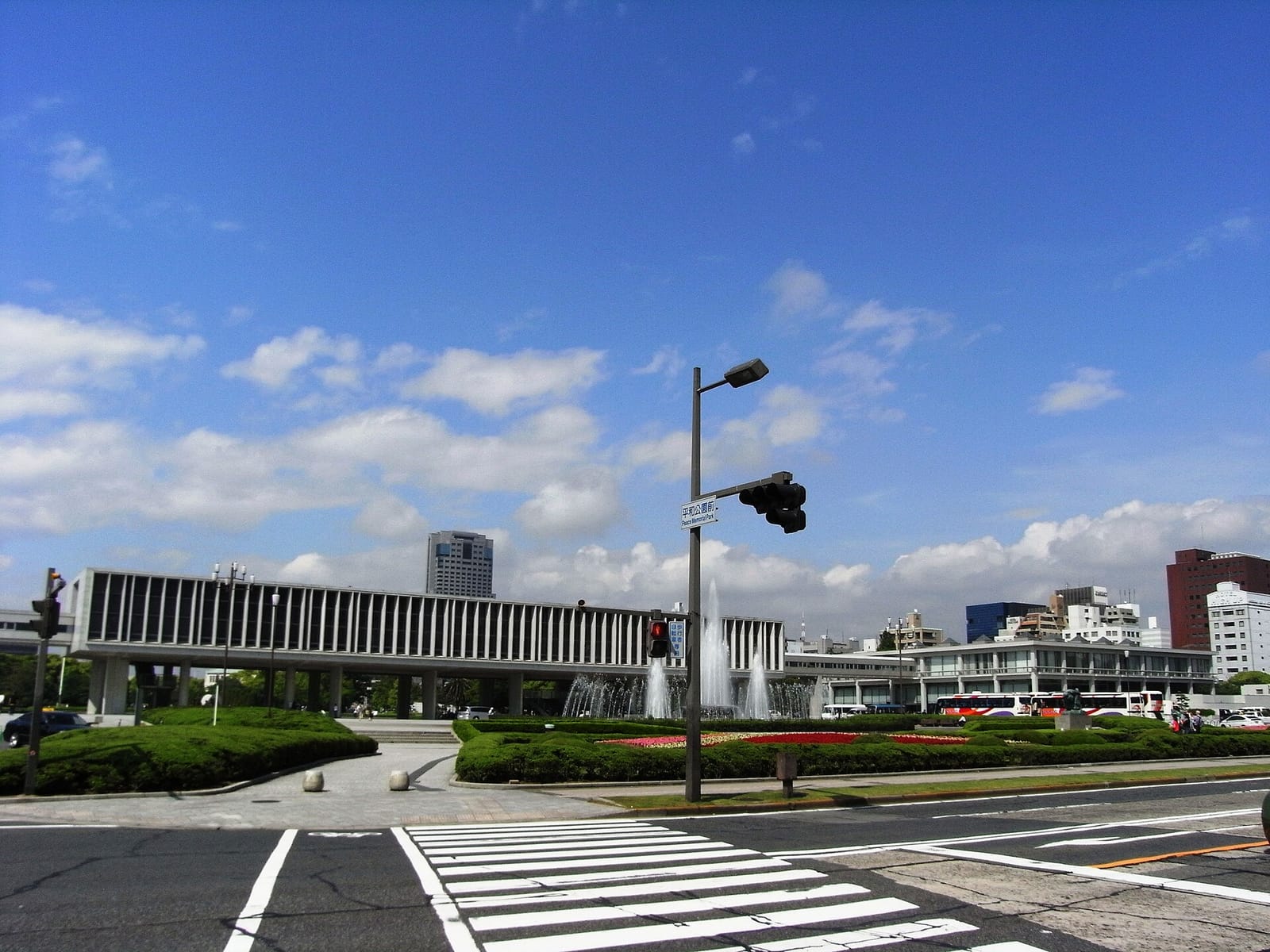
The museum sits on the south side of the park. From Hiroshima Station, the No. 24 bus for Yoshijima (south exit) and both the orange and green routes of the Meipuru-pu loop bus (Shinkansen exit) stop at Heiwa kinen koen. By streetcar it takes about 25 minutes: Line 1 to Fukuro-machi, or Line 2 or 6 to Genbaku Dome-mae. In the East Building lobby you can also see the gold crane bell that once hung inside the Children’s Peace Monument.
- Hours
- 7:30–19:00 Mar–Jul and Sep–Nov; 7:30–20:00 Aug; 7:30–18:00 Dec–Feb; last entry 30 min before closing; closed Dec 30–31 and mid-Feb (as of November 2026)
- Price
- Adults ¥200, high school ¥100, junior high and younger free; 65+ ¥100 with a passport (as of November 2026)
- Access
- Bus No. 24 from JR Hiroshima Station south exit to Heiwa kinen koen, about 20 min; Meipuru-pu loop bus, about 17 min
- Source
- hpmmuseum.jp
Hiroshima National Peace Memorial Hall for the Atomic Bomb Victims
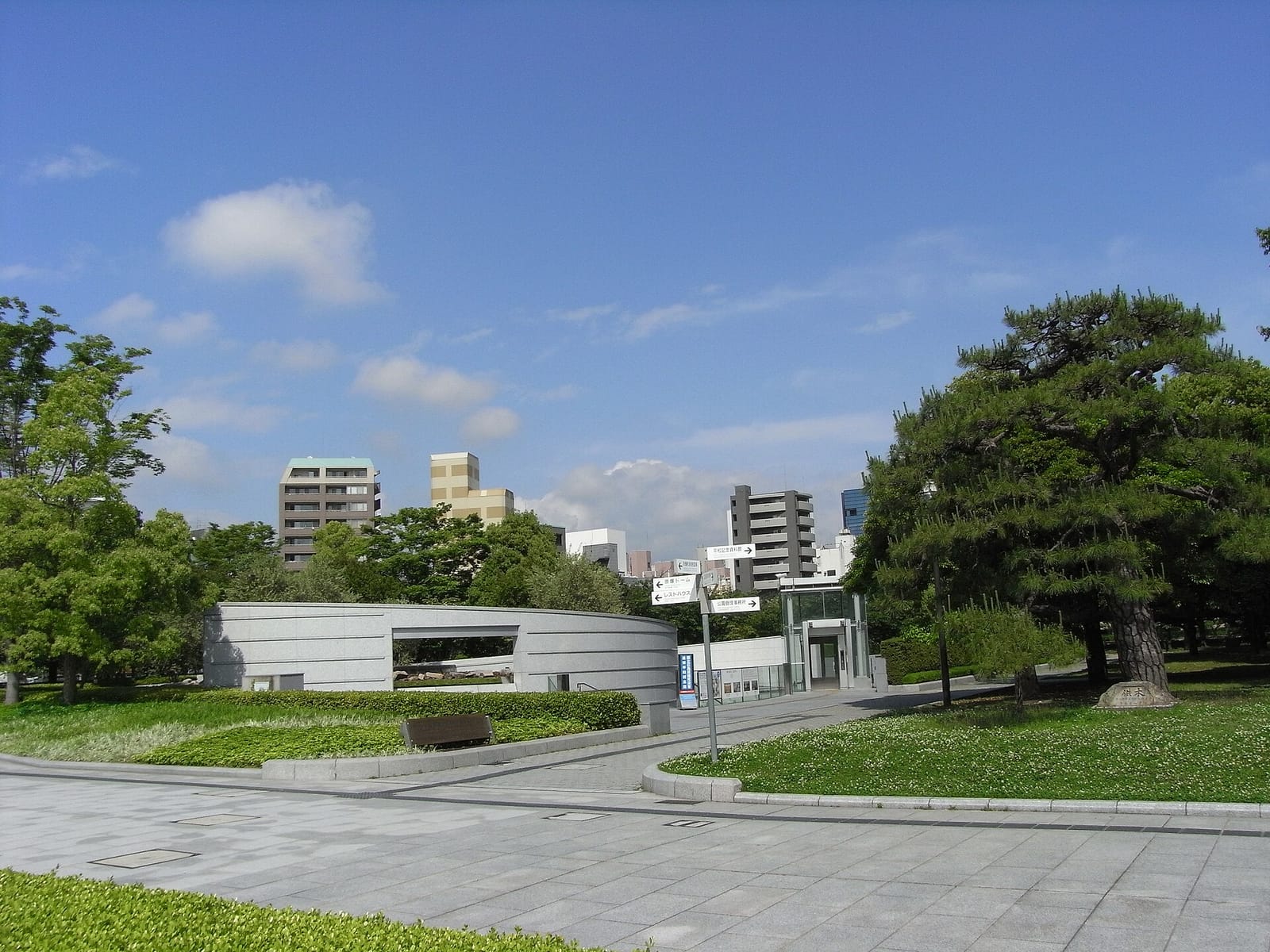
A national memorial hall where the names and photographs of people who died are displayed and survivors’ memoirs and testimony videos are available to read and watch. Entry is free. It opens at 8:30 a.m., which lines up with the end of the museum’s early reserved slot, so it is a natural second stop on a morning visit.
- Hours
- 8:30–18:00 Mar–Jul and Sep–Nov; 8:30–19:00 Aug; 8:30–17:00 Dec–Feb; closed Dec 30–31 (as of November 2026)
- Price
- Free
- Access
- About 5 min walk from Hon-dori or Genbaku Dome-mae stops
- Source
- www.hiro-tsuitokinenkan.go.jp
Cenotaph for the A-bomb Victims
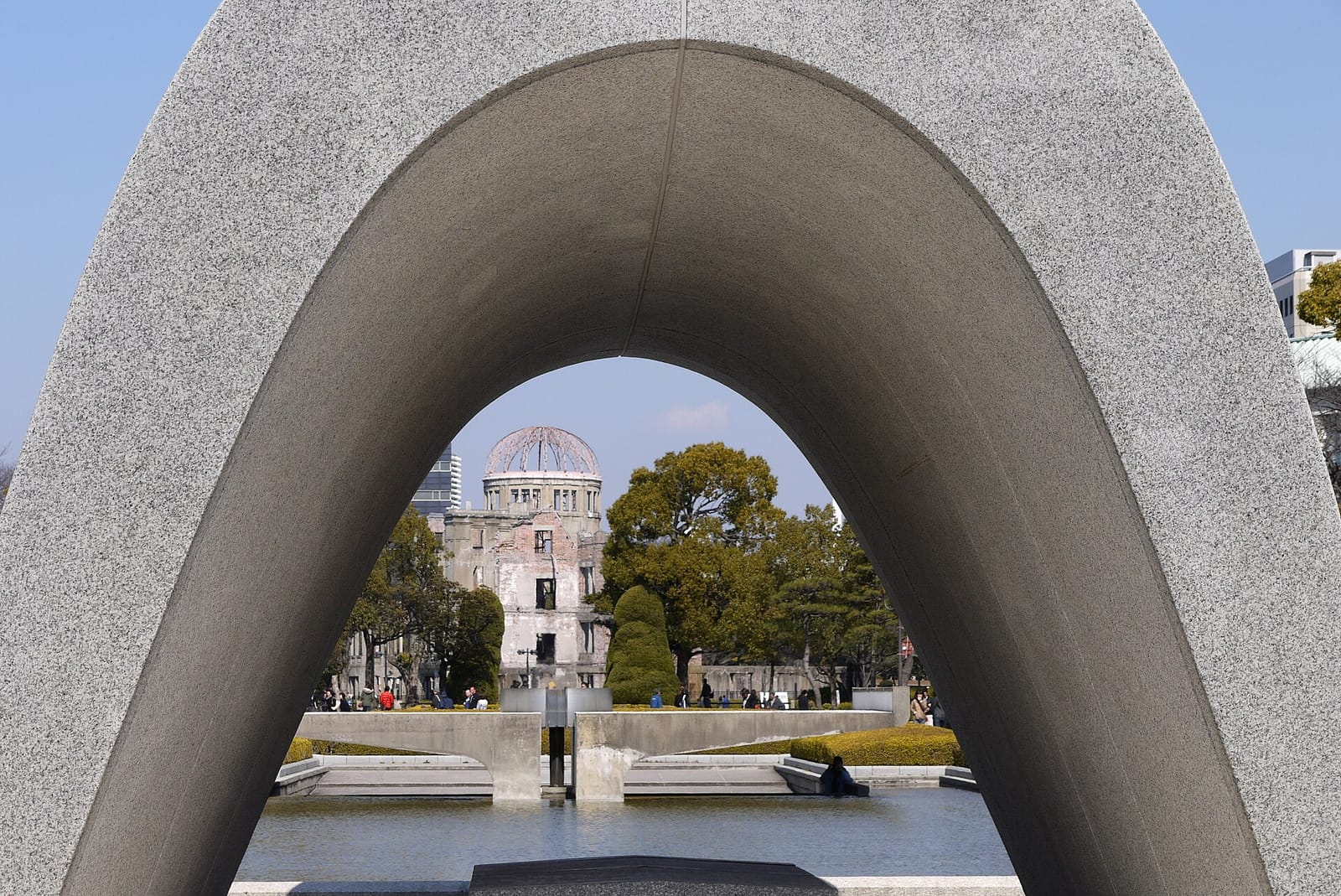
The arched cenotaph at the center of the park was designed by Kenzo Tange and unveiled on August 6, 1952. Its stone chest holds the registry of names of people who died from the bombing, regardless of nationality. The inscription reads: “Let all the souls here rest in peace; For we shall not repeat the evil.”
Children's Peace Monument
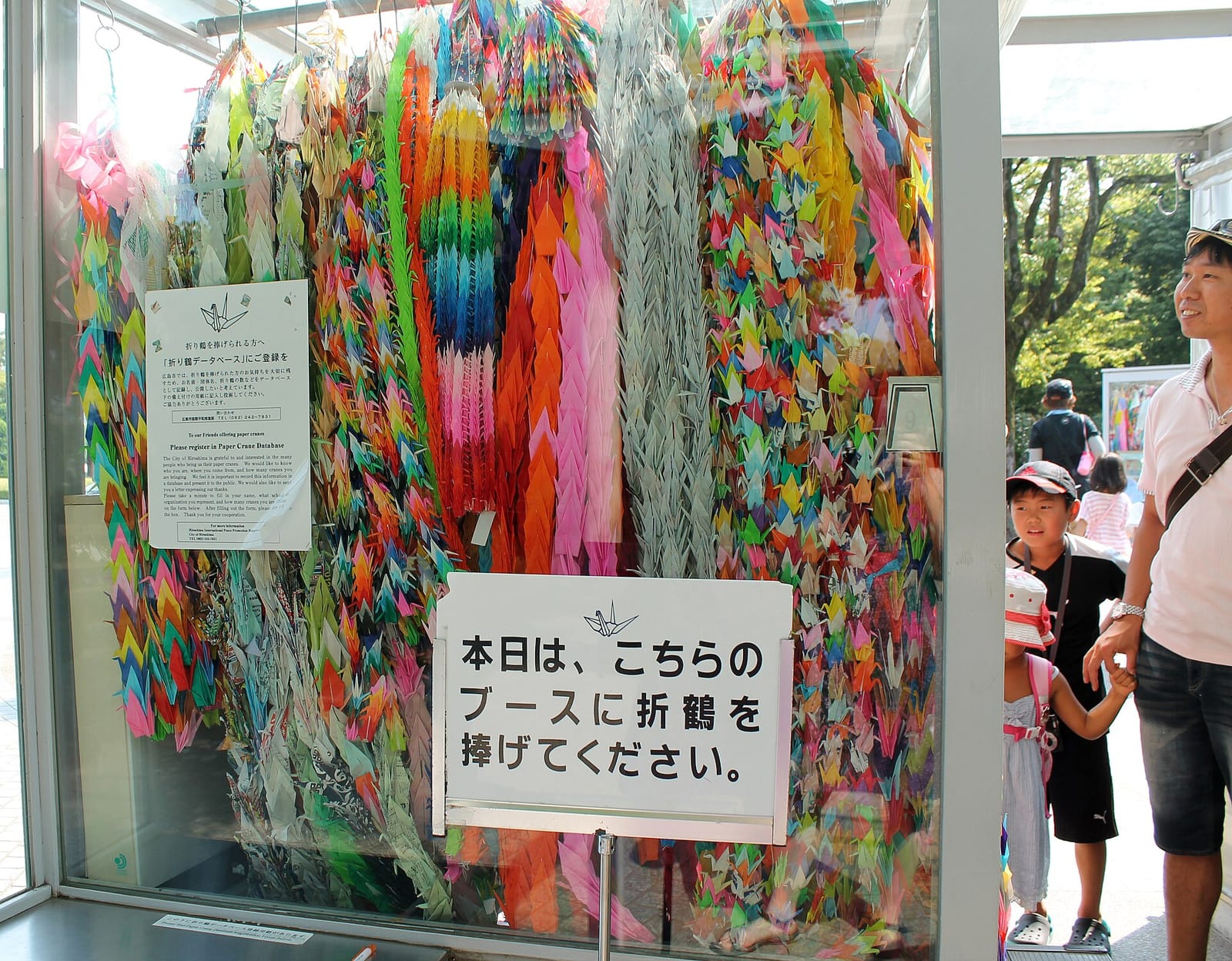
Completed on May 5, 1958, after Sadako Sasaki’s classmates started a nationwide appeal for a monument to all the children who died from the bomb. Sadako was exposed at age two and died of leukemia about ten years later. A bronze girl on top holds up a gold folded crane. If you saw her paper cranes in the museum’s Main Building, this stop completes the story.
Rest House (Hiroshima City Tourist Information Center)
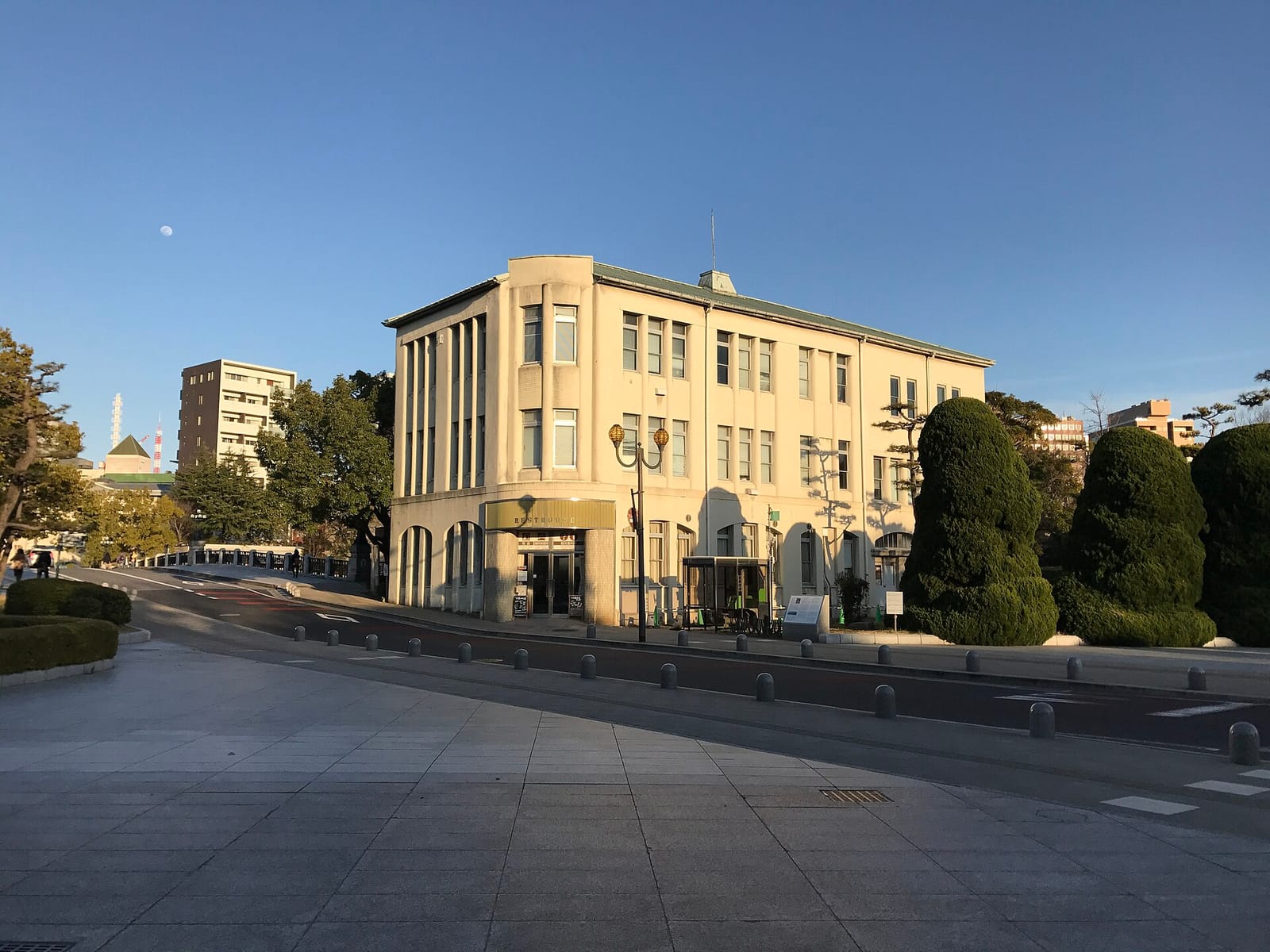
Built in 1929 as the Taishoya Kimono Shop, this building stood about 170 meters from the hypocenter, and the Peace Culture Foundation says its basement is preserved as it was just after the bombing. Today the 1st floor is the city’s tourist information center, with English-speaking staff, free “Hiroshima Free Wi-Fi” and wheelchairs to borrow for the park and the Dome area (no reservations).
- Hours
- 8:30–18:00 Mar 1–Nov 30; 8:30–17:00 Dec–Feb; open all year (as of November 2026)
- Price
- Free
- Access
- Just west of Motoyasu Bridge; about 5 min walk from Genbaku Dome-mae streetcar stop
- Source
- dive-hiroshima.com
Atomic Bomb Dome
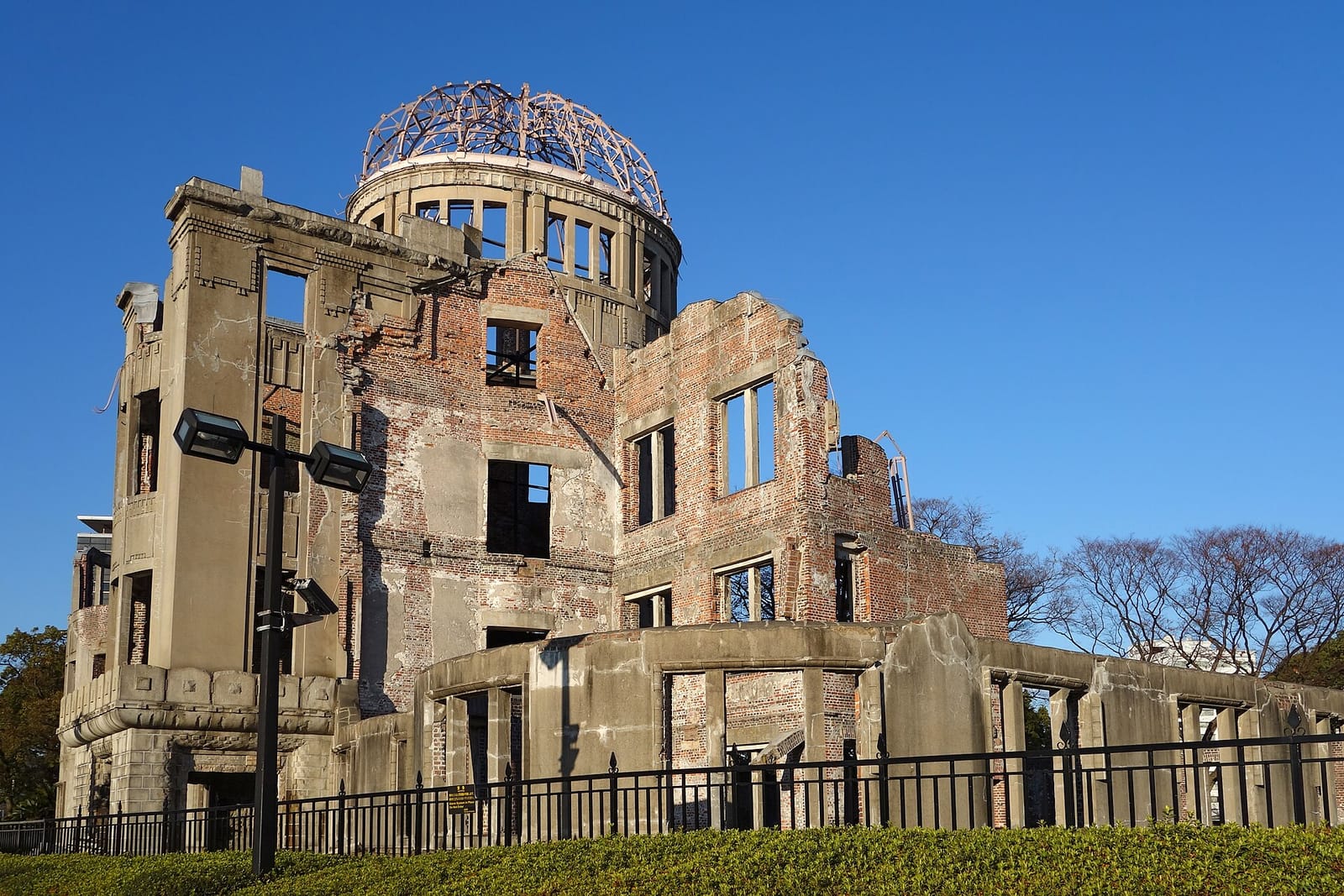
The ruin of the Hiroshima Prefectural Commercial Exhibition Hall, completed in 1915 to a design by Czech architect Jan Letzel, and a UNESCO World Heritage Site since December 1996. You cannot go inside; you view it from the paths around it. The Genbaku Dome-mae stop is right beside it, so this is where the walk ends and your next streetcar ride begins.
- Price
- Free (viewed from outside)
- Access
- Next to Genbaku Dome-mae streetcar stop; Line 2 or 6 from Hiroshima Station, about 20 min
- Source
- dive-hiroshima.com
What are the practical tips for the day?
Travel light, know the rules on photos and food, and time your visit around the free English programs. Most of what you need is on the East Building’s 1st floor.
Where do you leave your bags?
Large bags are not allowed in the museum. Coin lockers are on the 1st floor of the East Building. If you are arriving with a suitcase on a travel day, it is easier to send it ahead; our guide to luggage forwarding in Japan explains how.
What are the photo and phone rules?
Photos and video without flash are fine for personal use, and you do not need to apply. Tripods and selfie sticks are not allowed. Flash photography or photos for publication need an application in advance. Do not take phone calls in the exhibition rooms, and do not touch the exhibits or display cases, except the hands-on exhibits.
Can you eat at the museum?
Only in the Aogiri Visitor’s Lounge on the East Building’s 1st floor. It sells drinks, light meals, gelato, boxed lunches and local souvenirs, and is open 9:00 a.m. to 6:00 p.m. from September to November and 9:00 a.m. to 5:00 p.m. from December to February (as of November 2026). Smoking is not allowed anywhere in the park or the museum.
Are there free English programs?
Yes, two, and neither needs a reservation:
| Program | When (as of November 2026) | Where | Notes |
|---|---|---|---|
| Talk by an A-bomb Legacy Successor (English) | Daily, 1:00 to 2:00 p.m. | East Building B1F, Temporary Exhibition Room | Free; other sessions are in Japanese |
| Peace Memorial Park guided tour (Hiroshima Peace Volunteers) | 10:45 a.m. to 12:15 p.m. and 2:00 to 3:30 p.m. | Check in at the Peace Volunteers’ desk, East Building 1F, from 15 minutes before | Free; up to 10 people; first come, first served |
The volunteer tours cover the monuments in the park, not the inside of the museum, and you can join one without a museum ticket. They do not run from July to September, on January 1 to 3, August 6 or December 29, or on days with a heat stroke alert for Hiroshima.
Which plan fits your day?
| Your situation | What to do |
|---|---|
| Staying near the park | Book 7:30 a.m., museum until about 9:00, then the Memorial Hall (opens 8:30) and the park walk |
| Arriving mid-morning | Join the 10:45 a.m. park tour first, then the 1:00 p.m. English talk, and enter the museum after 3:00 p.m. |
| Only the evening free | Book the evening slot (5:30 p.m. in autumn, 4:30 p.m. in winter); walk the park beforehand while it is light |
| Traveling in August | The chart marks August 5 and 6 and the Obon period as busy; book a reserved slot (6:30 p.m. in the evening) |
How does the museum fit into a Hiroshima trip?
Give the museum and park a morning, then use the rest of the day for the castle, Shukkeien or Miyajima. From the Genbaku Dome-mae stop, Line 2 streetcars continue west toward Miyajimaguchi.
Our Hiroshima 2-day itinerary puts the museum on the morning of a city day and explains which transit pass to buy. If you have one day for both the Peace Park and Miyajima, the Hiroshima and Miyajima in one day plan shows how to fit the two together.
 Where to Stay in Hiroshima: Station, Peace Park or Miyajima?
 Best Okonomiyaki in Hiroshima: 6 Known Shops, Peace Park to Station
FAQ
How long do you need at the Hiroshima Peace Memorial Museum?
Plan on 1 to 1.5 hours inside. The museum's route guide estimates about 30 minutes for its suggested Main Building course and about 30 minutes for the East Building exhibits, and the rental audio guide runs about 70 minutes. Add an hour or more if you also walk the Peace Memorial Park.
Do you need to book tickets for the Hiroshima Peace Memorial Museum?
Only for the extended-hours slots: 7:30 to 8:30 a.m. and the last hour of the evening, which need an advance online reservation. At other times you can buy at the ticket machines or the counter, but the museum warns of long ticket lines and recommends buying online in advance.
What time is the Hiroshima Peace Memorial Museum least crowded?
The museum's own crowd chart marks 7:30 to 8:30 a.m. and the evening reserved slot as the less crowded, recommended times, and 11:00 a.m. to 3:00 p.m. as the most crowded. By season, it marks cherry blossom time, the May holidays, the May to June and October to November school trip seasons, and August as busy.
Can you take photos inside the Hiroshima Peace Memorial Museum?
Yes, for personal use and without flash; no application is needed. Tripods and selfie sticks are not allowed, and the museum asks visitors to keep shutter sounds from disturbing others. Flash photography or photos for publication need an advance application.
Is there an English tour of the Hiroshima Peace Memorial Museum?
There is no guided tour inside the museum, but Hiroshima Peace Volunteers lead free English tours of the Peace Memorial Park at 10:45 a.m. and 2:00 p.m., with no reservation. Inside, the rental audio guide (¥500, as of November 2026) covers English and 14 other languages, and a free English talk by an A-bomb Legacy Successor runs at 1:00 p.m.
Sources
- Hiroshima Peace Memorial Museum — Hours, Admission and Visitor Guidelines
- Hiroshima Peace Memorial Museum — Home (current notices and closures)
- Hiroshima Peace Memorial Museum — Things to know before you visit (crowd levels, PDF)
- Hiroshima Peace Memorial Museum — Visitor Guide for the Main Building (route, PDF)
- Hiroshima Peace Memorial Museum — Guide Services (audio guide)
- Hiroshima Peace Memorial Museum — Guided Tours by Hiroshima Peace Volunteers
- Hiroshima Peace Memorial Museum — Talks by A-bomb Legacy Successors
- Hiroshima Peace Memorial Museum — Access
- Hiroshima Peace Memorial Museum — Visitor's Lounge and cafe
- Hiroshima Peace Memorial Museum — State of Congestion (live cameras)
- Hiroshima National Peace Memorial Hall for the Atomic Bomb Victims — Visit
- Hiroshima Peace Culture Foundation — Cenotaph for the A-bomb Victims
- Hiroshima Peace Culture Foundation — Children's Peace Monument
- Hiroshima Peace Culture Foundation — Rest House (formerly the Taishoya Kimono Shop)
- Hiroshima Peace Culture Foundation — A-Bomb Dome
- Dive! Hiroshima — Hiroshima City Tourist Information Center (Rest House)
- Dive! Hiroshima — Access to the Atomic Bomb Dome
This article contains affiliate links. We may earn a commission at no extra cost to you.