Hiroshima and Miyajima in One Day: Tickets, Timed Route and Tides
Peace Memorial Park and Miyajima in one day: which ticket to buy, a timed route by boat or tram, the ¥100 visitor tax, and how to read the official tide table.
You have one day in Hiroshima and two places to see: the Peace Memorial Park in the city center and Itsukushima Shrine on Miyajima, an island about an hour away. Both fit in a single day, but only if you plan around three fixed limits. The museum opens at 7:30 a.m. The shrine closes at 5:30 p.m. in late autumn. And the sea, not the clock, decides whether you can walk out to the Great Torii. This plan is for first-time visitors with one full day and a budget of roughly ¥1,500 to ¥3,700 per adult for transport and entry, before food (as of November 2026). It starts with the ticket choice, because that choice sets the route.
Which ticket should you buy for Hiroshima and Miyajima in one day?
Buy the Hiroden 1 Day Streetcar and Ferry Pass if you want the cheapest day, or pay as you go and take the World Heritage Route boat if you want the fastest one. If you hold a JR Pass, use JR and the JR ferry.
| Option | Adult price (as of November 2026) | Covers | Best for |
|---|---|---|---|
| Hiroden 1 Day Streetcar and Ferry Pass | ¥1,000 (child ¥550), visitor tax included | All Hiroden streetcar lines + Miyajima Matsudai Kisen ferry | Budget; no JR Pass |
| Hiroden 1 Day Streetcar Pass | ¥700 (child ¥350) | Streetcar only | Using the boat one way |
| Pay as you go: streetcar | ¥240 per ride (child ¥120) | Any Hiroden ride, flat fare | One or two rides |
| World Heritage Route boat, Peace Park to Miyajima | ¥2,400 one way, ¥4,400 return (child ¥1,200 / ¥2,200) | Boat only | Saving time |
| JR Miyajima Ferry | ¥180 one way (child ¥90) + ¥100 visitor tax | Miyajimaguchi to Miyajima | JR Pass holders |
A few rules sit behind the table:
- The streetcar fare is flat. Hiroden says the adult fare is ¥240 and gives Genbaku Dome-mae to Hiroden-miyajima-guchi as an example at that price. You pay as you get off; Hiroden does not sell tickets for single rides.
- The pass covers one ferry company only. Hiroden says the Streetcar and Ferry Pass is valid on the Miyajima Matsudai Kisen boat, not on the JR Miyajima Ferry. Both cross in about 10 minutes from the same Miyajimaguchi area.
- JR Pass holders ride the JR ferry. The JR Miyajima Ferry says it accepts the Japan Rail Pass and the JR-WEST Rail Pass, and IC cards. It also says the visitor tax is charged separately when you enter the island.
What is the Miyajima visitor tax?
Every visitor who arrives by boat pays ¥100 per visit. Hatsukaichi City, which includes Miyajima, began the tax on October 1, 2023. You can instead pay ¥500 once for a full year, at City Hall or a branch office, before the 10th of the month before your first visit. Ferry operators add the tax to the fare and collect it, so on a normal day trip you pay it at the boat without doing anything extra. Preschool children, students on school trips and their leaders, and holders of certain disability handbooks are exempt.
How do the two budgets compare?
These totals are per adult for the transport and entry fees in this plan (as of November 2026):
- Pass route: 1 Day Streetcar and Ferry Pass ¥1,000 + Peace Memorial Museum ¥200 + Itsukushima Shrine ¥300 = ¥1,500.
- Boat route: streetcar to the Dome ¥240 + museum ¥200 + World Heritage Route ¥2,400 + visitor tax ¥100 + shrine ¥300 + JR ferry back ¥180 + streetcar back ¥240 = about ¥3,660. The boat saves you the 66-minute streetcar ride out to Miyajimaguchi.
If you are coming from Tokyo or Kyoto by shinkansen for the day, our Shinjuku to Kyoto shinkansen guide explains seat booking and luggage rules for the same line.
To work out when the Great Torii floats or when you can walk to it on your date, see our guide to Miyajima floating torii tide times.
What does the one-day route look like, hour by hour?
Plan A is the boat route on a dry day. Plan B is the streetcar route, which suits the pass, a JR Pass, or a morning when the tide table favors Miyajima first.
Plan A: Peace Park in the morning, boat to Miyajima
| Time | Where | How, and how long |
|---|---|---|
| 7:45 | Hiroshima Station | Hiroden Line 2 (for Hiroden-miyajima-guchi or Hiroden-nishi-hiroshima) or Line 6, about 20 min to Genbaku Dome-mae, ¥240 |
| 8:10 | Atomic Bomb Dome | Next to the stop; walk on into the park |
| 8:30 | Peace Memorial Museum | Open from 7:30 a.m.; allow about 2 hours |
| Late morning | Motoyasu River Pier | World Heritage Route boat, about 45 min, ¥2,400 + ¥100 tax |
| Around midday | Miyajima | Lunch near the pier (about 45 min after you sail) |
| 13:00 | Itsukushima Shrine | Allow 1 hour; shrine ¥300 |
| 14:30 | Great Torii | View from the shore, or walk out if the tide is below 100 cm |
| 16:00 | Miyajima pier | Ferry to Miyajimaguchi, about 10 min |
| 16:15 | Miyajimaguchi | JR Sanyo Line to Hiroshima, about 30 min, or Hiroden Line 2, about 66 min |
Check the boat’s sailing times on the operator’s website (Aqua Net Hiroshima) the day before, and pick the late-morning sailing that fits; this plan does not fix an exact departure time. Dive! Hiroshima, the city’s official tourism site, says boats back to the Peace Park leave from Pier 3 at Miyajima.
Plan B: Streetcar and ferry, with the pass
| Time | Where | How, and how long |
|---|---|---|
| 7:30 | Hiroshima Station | Hiroden Line 2 to Hiroden-miyajima-guchi, every 10 min, about 66 min |
| 8:45 | Miyajimaguchi | Miyajima Matsudai Kisen ferry, about 10 min, covered by the pass |
| 9:00 | Itsukushima Shrine | Shrine opens at 6:30 a.m., so it is already open |
| 11:30 | Miyajima pier | Ferry back, then Hiroden Line 2 toward Hiroshima Station |
| 13:00 | Genbaku Dome-mae | Get off here; Atomic Bomb Dome, then lunch |
| 14:30 | Peace Memorial Museum | Open until 7:00 p.m. from September to November |
| 17:00 | Hiroshima Station | Hiroden, about 20 min |
Plan B is the better order on a rainy day, because the museum, the longest indoor stop, comes in the afternoon when you are already wet and tired. It is also the order to choose if the tide table shows a level below 100 cm in the morning. In December to February, the museum closes at 6:00 p.m., so leave the island by about 1:00 p.m.
What are the stops, in route order?
The stops below follow Plan A. Tick “Add to my route” on each one to open the whole day in Google Maps. On Plan B, ride them in reverse from stop 4.
Atomic Bomb Dome
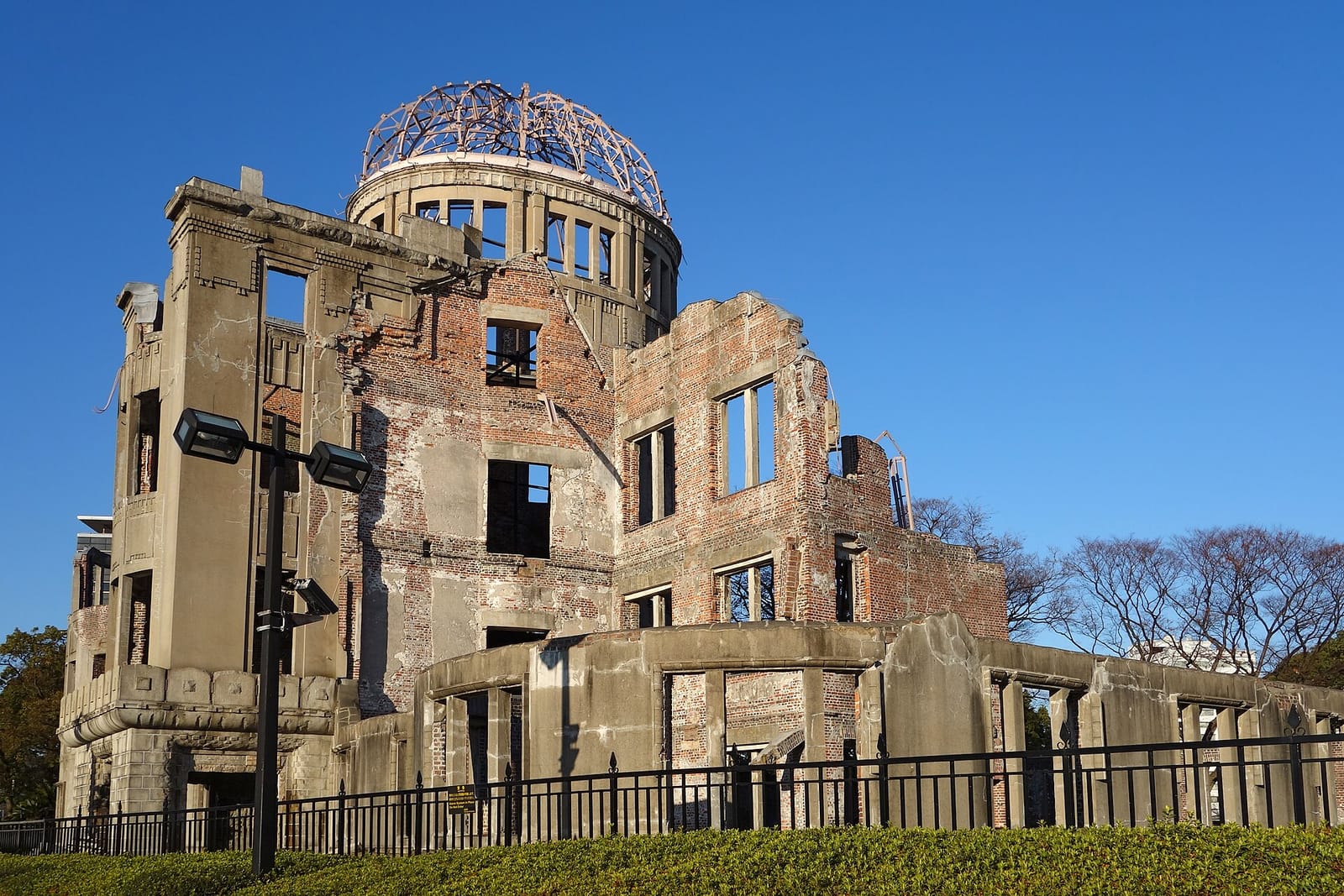
The first stop of the day, by the Genbaku Dome-mae streetcar stop. Dive! Hiroshima lists three ways in from Hiroshima Station: the streetcar (about 20 minutes), the Meipuru-pass loop bus on the Orange Route (about 15 minutes), or the JR line to Shin-Hakushima and the Astram Line to Kencho-mae, then a 5-minute walk. The streetcar is the simplest if you will use the pass later.
- Access
- Hiroden Line 2 or 6 to Genbaku Dome-mae, about 20 min from Hiroshima Station
- Source
- dive-hiroshima.com
Hiroshima Peace Memorial Museum
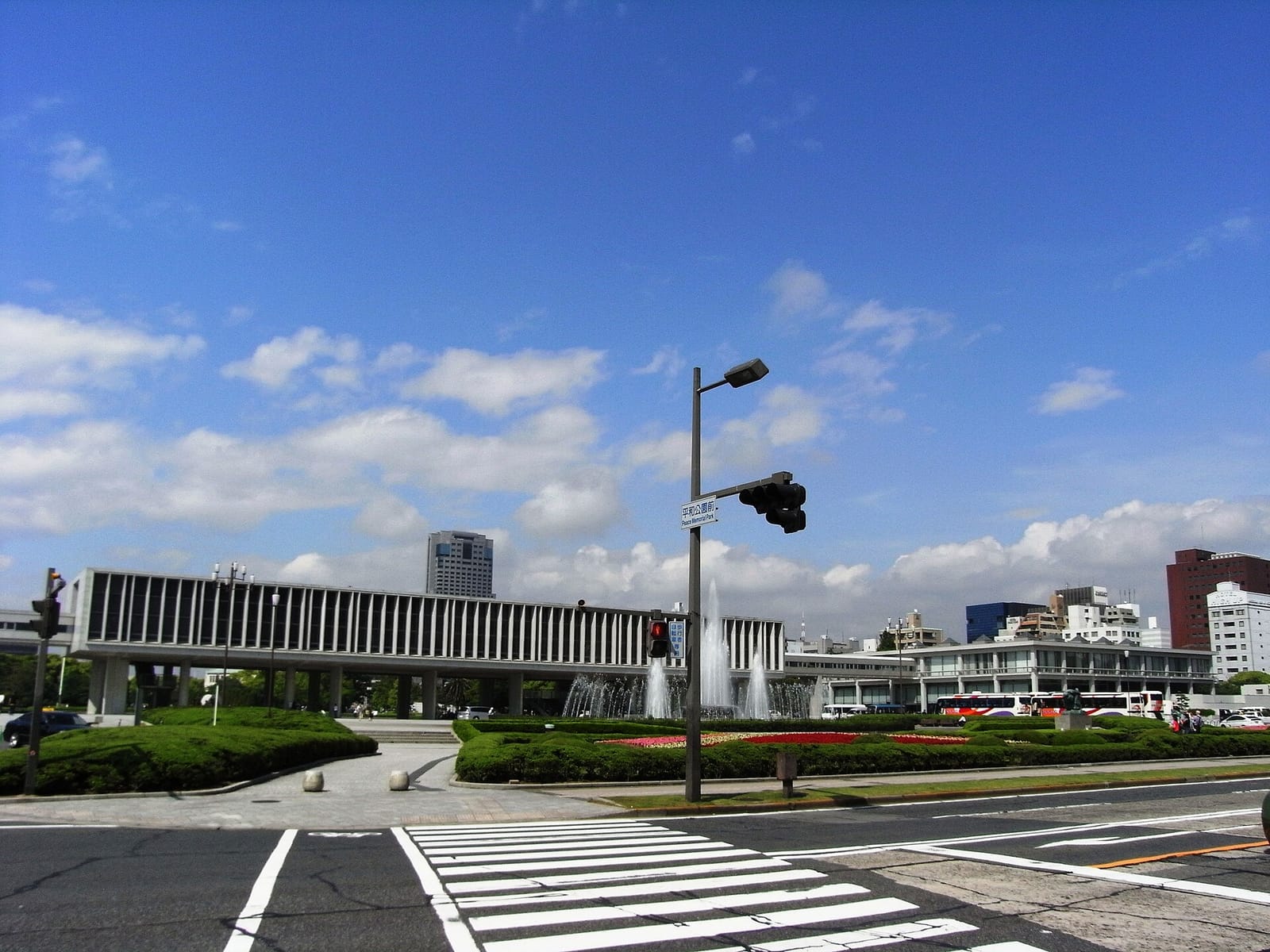
The museum is the anchor of the Hiroshima half of the day. Visitors aged 65 and over pay ¥100 by showing a passport. Entry from 7:30 to 8:30 a.m., and in an evening slot (5:30 to 6:30 p.m. from September to November), needs an online reservation made in advance, so book the early slot if you want to start at opening time. The museum also lists a closure in mid-February. If you would rather stay the night before and walk in at 7:30 a.m., our guide to hotels near Hiroshima Peace Park compares five options by tram stop.
- Hours
- 7:30–19:00 Mar–Jul and Sep–Nov; 7:30–20:00 Aug; 7:30–18:00 Dec–Feb; closed Dec 30–31 (as of November 2026)
- Price
- Adults ¥200, high school ¥100, junior high and younger free (as of November 2026)
- Access
- Inside Peace Memorial Park, south of the Atomic Bomb Dome
- Source
- hpmmuseum.jp
Motoyasu River Pier (World Heritage Route)
The World Heritage Route boat leaves from this pier on the river beside the park and runs all year, according to Dive! Hiroshima. It reaches Miyajima in about 45 minutes, which is quicker than going back to the station for the train. It is the most expensive leg of the day, so it makes sense when you are short of time rather than money.
- Price
- Adults ¥2,400 one way, ¥4,400 return; children ¥1,200 / ¥2,200 (as of November 2026)
- Access
- 1-9 Otemachi, beside the Peace Memorial Park; about 45 min to Miyajima
- Source
- dive-hiroshima.com
Miyajimaguchi Ferry Pier
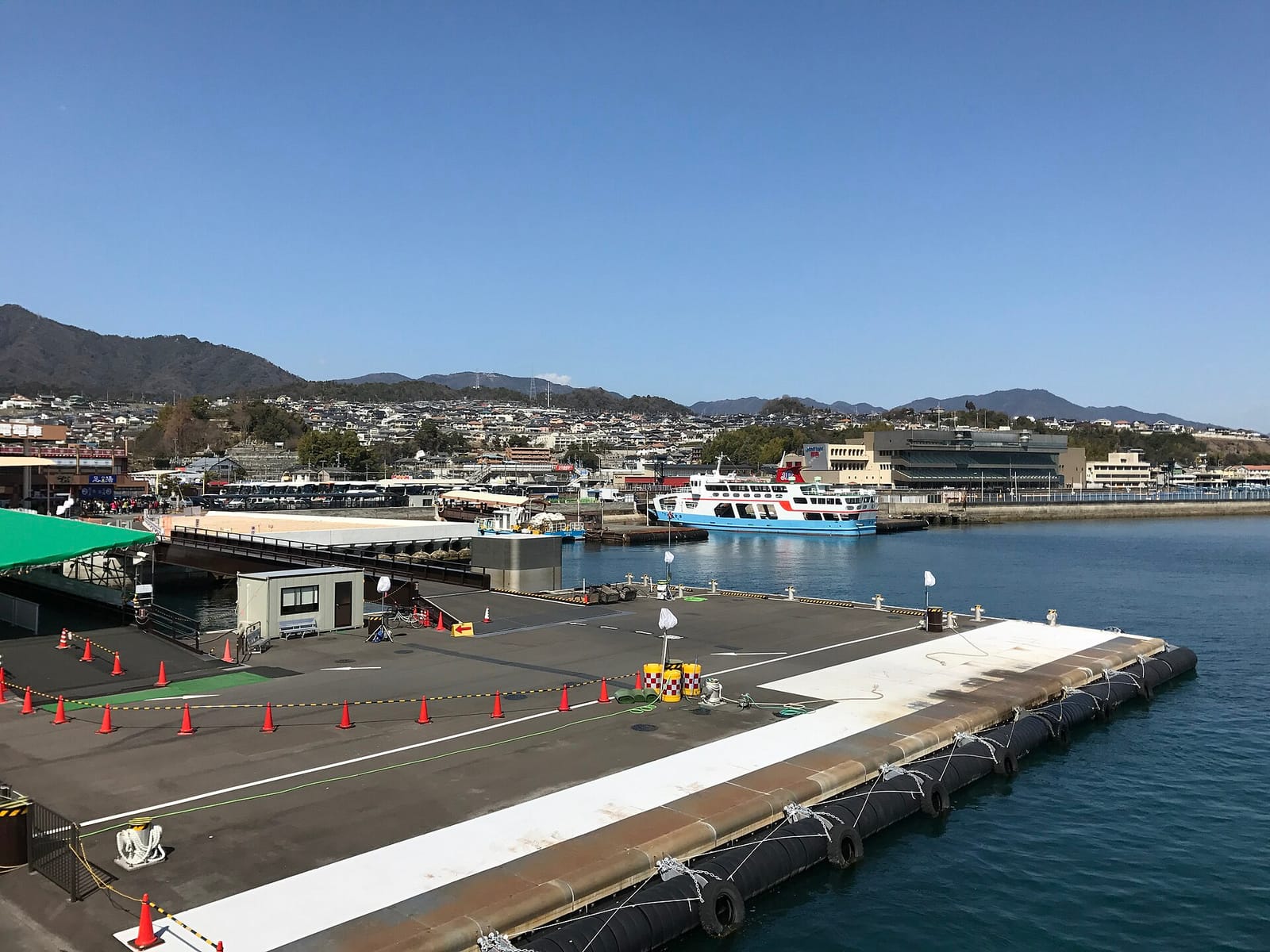
The mainland side of the short crossing, used on the way back in Plan A and both ways in Plan B. Two companies sail from here, JR Miyajima Ferry and Miyajima Matsudai Kisen, and both take about 10 minutes. Dive! Hiroshima says the ferries leave about every 15 minutes. Some JR sailings take a route close to the Great Torii; the operator says these run from Miyajimaguchi between 9:10 a.m. and 4:10 p.m. Ride one in the morning on Plan B for a view of the shrine through the gate from the water.
- Price
- JR Miyajima Ferry ¥180 one way, children ¥90, plus ¥100 visitor tax (as of November 2026)
- Access
- About 5 min walk from JR Miyajimaguchi Station; about 10 min crossing
- Source
- jr-miyajimaferry.co.jp
Itsukushima Shrine
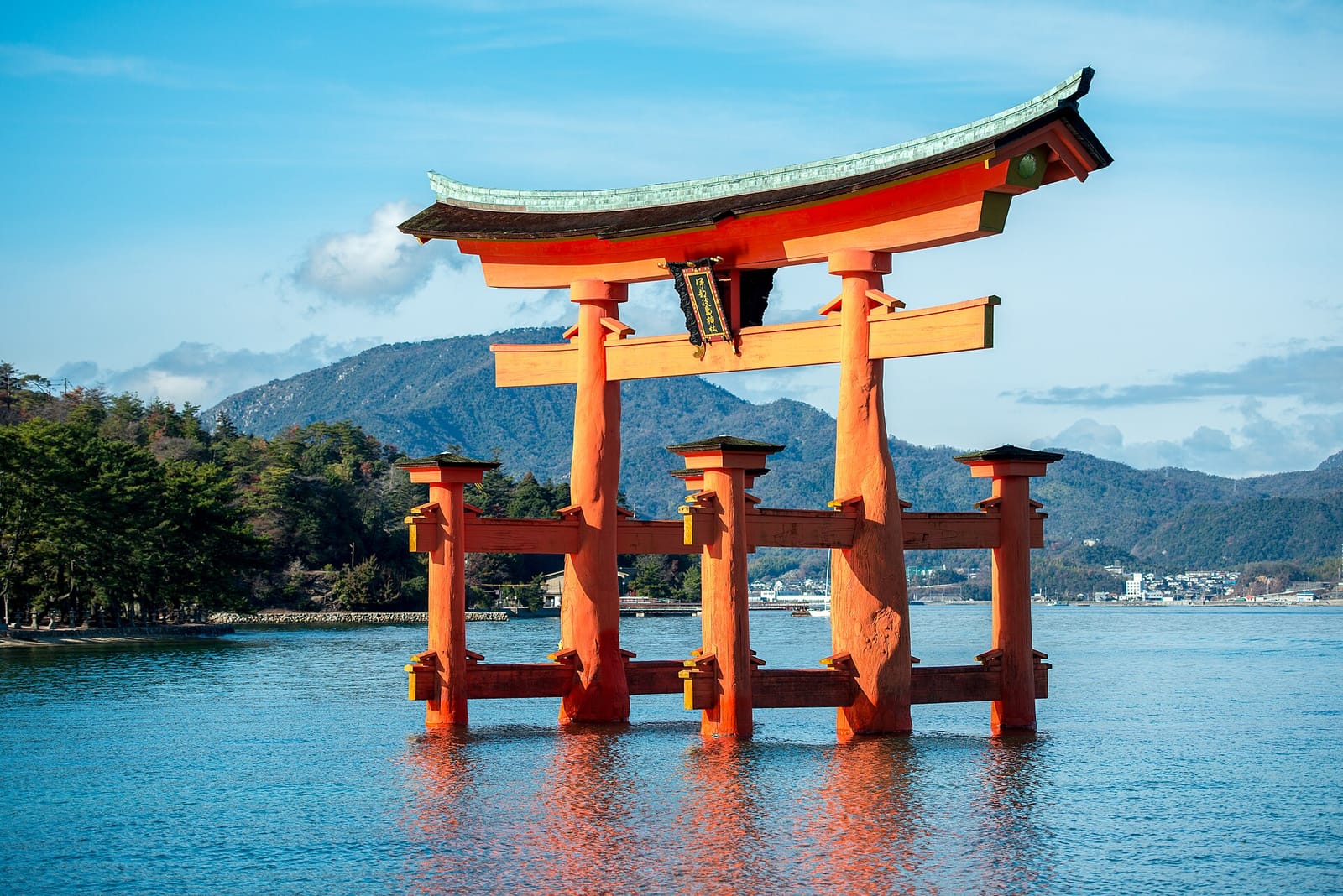
The shrine notes small gaps between the floorboards that relieve pressure from the sea at high tide, and it asks visitors to wear comfortable shoes because high heels can catch in them. The Treasure Hall is open 8:00 a.m. to 5:00 p.m., and the combined ticket is sold only at the shrine entrance. If you want the shrine at 6:30 a.m., before the day-trip crowds arrive, a night on or near the island is the only way to be there at opening.
- Hours
- 6:30–17:30 Oct 15–Nov 30; 6:30–17:00 Dec; 6:30–17:30 Jan 4–end Feb; 6:30–18:00 Mar 1–Oct 14 (as of November 2026)
- Price
- Adults ¥300, high school ¥200, elementary and junior high ¥100; with Treasure Hall ¥500 (as of November 2026)
- Access
- Ferry from Miyajimaguchi, about 10 min; no parking at the shrine
- Source
- www.itsukushimajinja.jp
Great Torii of Itsukushima
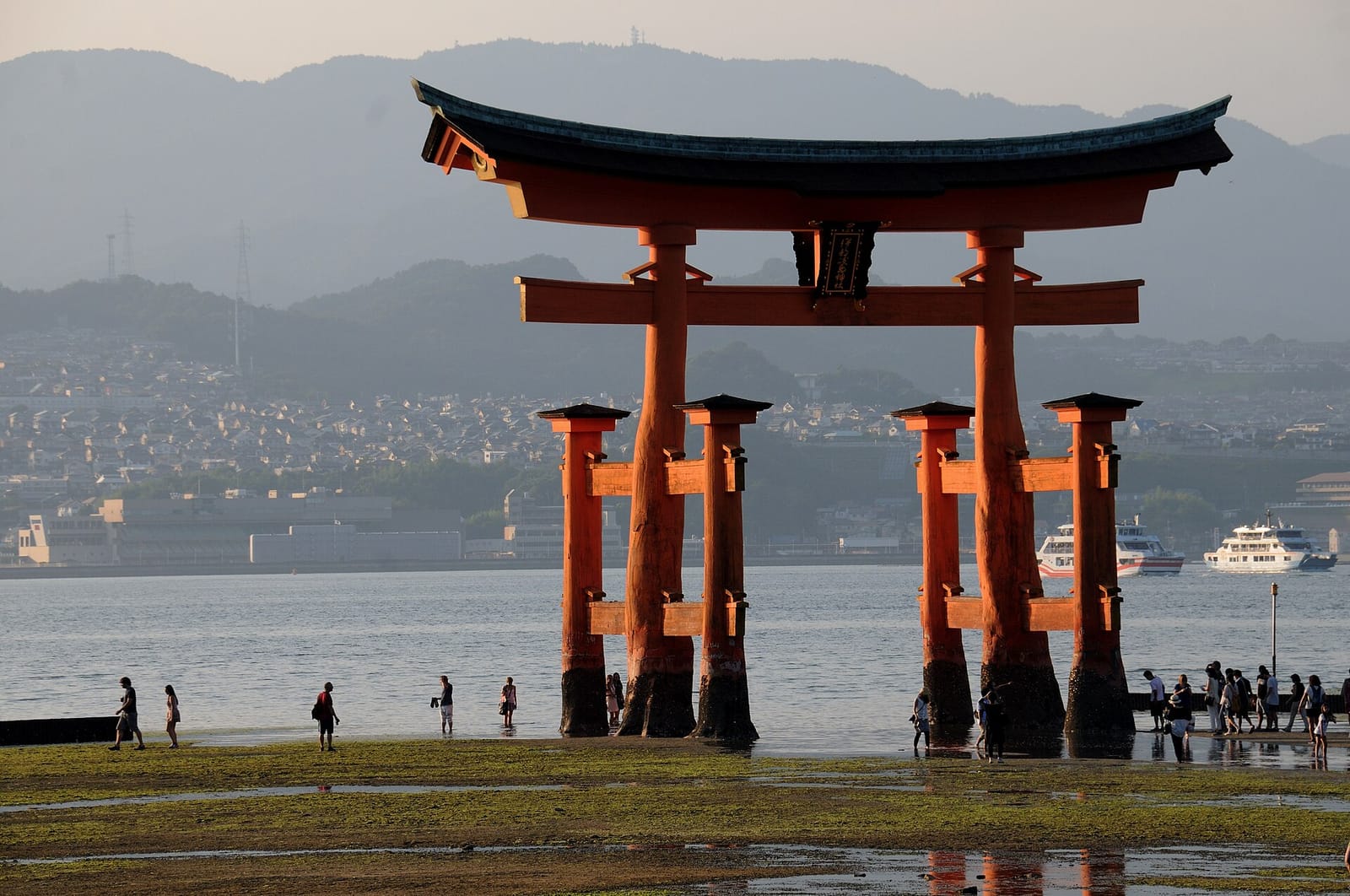
The gate stands in the sea in front of the shrine. What you see depends on the tide level, so open the tide table before you choose Plan A or Plan B (see the next section).
How do the tides change the plan?
Read the tide level in centimeters, not just “high” or “low.” The Miyajima Tourist Association publishes the official tide table for the island, based on Hiroshima Port, and gives two thresholds:
- Below 100 cm: you can walk out to the Great Torii across the flat.
- Above 250 cm: the shrine appears to float on the water.
The association states plainly that high tide alone does not make the shrine look like it floats; the level has to pass 250 cm. On a small tide, the water may never get there. Likewise, not every low tide drops below 100 cm. The table also lists times for each day and warns that times at Itsukushima Port may be a little earlier than the Hiroshima Port figures.
Use it like this:
- Open the table for your date and find the hours when the level is below 100 cm or above 250 cm.
- If the walking window is in the morning, use Plan B and go to Miyajima first.
- If the walking window is at night or before 6:30 a.m., you will not walk out on a day trip. Use Plan A and see the gate from the shore or from the JR ferry’s Great Torii route.
- If the floating window is in the early afternoon, Plan A puts you at the shrine at the right time.
Use the association’s table or another official tide source, and check which port the figures are for.
What should you watch for on the way back?
Leave Miyajima at least 90 minutes before anything you cannot miss in Hiroshima, such as a shinkansen or a dinner booking. The trip back has three choke points:
- The ferry. The crossing is 10 minutes and ferries run about every 15 minutes, so allow for missing one.
- Which ferry you board. If you hold the Hiroden pass, board the Matsudai Kisen boat; the pass is not valid on the JR ferry. If you hold a JR Pass, board the JR ferry.
- The train or the tram from Miyajimaguchi. JR to Hiroshima Station takes about 30 minutes. Hiroden Line 2 takes about 66 minutes and runs every 10 minutes, so it only makes sense if you are on the pass or going to a stop in the city center, such as Kamiyacho or Genbaku Dome-mae.
If you took the World Heritage Route boat out, a return ticket (¥4,400) takes you straight back to the Peace Park in about 45 minutes, which is useful if your hotel is near the park. Check the last sailing on the operator’s website before you buy the return.
Traveling with large suitcases makes every transfer slower. Our guide to luggage forwarding in Japan explains how to send bags to your next hotel, so you can do the day with a small bag.
Should you stay a night instead?
Stay one night if you want the shrine at opening time or the torii walk on a day when the low-tide window is early in the morning. With a night near the Peace Park, the museum’s 7:30 a.m. start is a short walk away; with a night on Miyajima, you are at the shrine when the gates open at 6:30 a.m. If you choose a ryokan on the island, our guide to booking a ryokan in Japan covers meal times and check-in rules.
What to pack before you go
Maps, train apps and translation drain a phone by mid-afternoon. Keep it in your carry-on: power banks are not allowed in checked luggage.
Japan still runs on coins: there are six of them, from 1 to 500 yen, and you collect a pocketful fast. A holder with a slot for each coin lets you pay the exact amount at ticket machines, shrines and small shops without digging.
 Where to Stay in Hiroshima: Station, Peace Park or Miyajima?
 Best Okonomiyaki in Hiroshima: 6 Known Shops, Peace Park to Station
FAQ
Can you do Hiroshima and Miyajima in one day?
Yes. The Peace Memorial Museum opens at 7:30 a.m., so you can finish the museum and the Atomic Bomb Dome by about 10:30 a.m., take the 45-minute World Heritage Route boat or the train and ferry, and have the afternoon on Miyajima. The limit is the shrine's closing time: 5:30 p.m. from October 15 to November 30.
Should you visit Miyajima or the Peace Park first?
Peace Park first suits most people, because the museum opens early and the World Heritage Route boat leaves from the edge of the park. Go to Miyajima first if the tide table shows a level below 100 cm in the morning and you want to walk to the Great Torii, or if it is raining and you want the museum in the afternoon; it stays open until 7:00 p.m. from March to November.
How much is the Miyajima visitor tax?
It is ¥100 per person each time you enter Miyajima, or ¥500 for a full year paid in advance, according to Hatsukaichi City. Ferry operators collect it with your fare. Preschool children and students on school trips are exempt.
Does the JR Pass cover the ferry to Miyajima?
The JR Miyajima Ferry accepts the Japan Rail Pass and the JR-WEST Rail Pass, according to the operator. The ¥100 visitor tax is charged separately. The Hiroden 1 Day Streetcar and Ferry Pass is valid on the Miyajima Matsudai Kisen ferry, not on the JR ferry.
How do you know when you can walk to the Great Torii?
Check the Miyajima Tourist Association's tide table for your date. It says you can walk out when the tide level is below 100 cm, which is not the same as every low tide. It also notes that times at Itsukushima Port may be a little earlier than the Hiroshima Port times it lists.
Sources
- Hiroshima Peace Memorial Museum — Hours and Admission
- Itsukushima Shrine — Admission and hours
- Itsukushima Shrine — Access
- Hatsukaichi City — Miyajima Visitor Tax overview (Japanese)
- JR Miyajima Ferry — Fares
- JR Miyajima Ferry — Route and Great Torii service
- Hiroden — Streetcar fares
- Hiroden — Streetcar schedules (Line 2 interval and time)
- Hiroden — 1 Day Streetcar and Ferry Pass
- Dive! Hiroshima (official Hiroshima tourism site) — Motoyasu River Pier, World Heritage Route
- Dive! Hiroshima — From Peace Memorial Park to Miyajima
- Dive! Hiroshima — From Hiroshima Station to Miyajima
- Dive! Hiroshima — Access to the Atomic Bomb Dome
- Miyajima Tourist Association — Tide table (Japanese)
- Miyajima Tourist Association — Access (Japanese)
This article contains affiliate links. We may earn a commission at no extra cost to you.