Best Views of Mt. Fuji at Kawaguchiko: 6 Viewpoints by Time of Day
Where to see Mt. Fuji around Lake Kawaguchi: the ropeway deck, dawn reflections, north-shore parks and the autumn light-up, with bus stops and winter dates.
Late November is the turn of the season at Lake Kawaguchi. The Fuji Kawaguchiko Autumn Leaves Festival lights up the maples on the north shore until November 29, 2026, and then the sunniest months of the year begin. The Japan Meteorological Agency’s 30-year normals for the Kawaguchiko station give about 200 hours of sunshine in December and 212 in January, the two highest figures of the year. Winter also brings one date to plan around: the Mt. Fuji Panorama Ropeway closes from December 7 to 18, 2026.
This guide sorts the viewpoints around the lake by what they give you and when they work: the view from above, the dawn reflection, the classic north-shore view, and the short options near Kawaguchiko Station. For getting there, see our Tokyo to Kawaguchiko by bus or train guide. For a timed day plan that strings several of these together, see the Kawaguchiko day trip itinerary. The pagoda view one station away has its own Chureito Pagoda guide.
Which side of Lake Kawaguchi has the best view of Mt. Fuji?
The north shore. Mt. Fuji stands south of the lake, so from the north shore you look across the full width of the water to the whole mountain. The Kanto Regional Development Bureau’s list of Fuji views from Lake Kawaguchi describes Nagasaki, on the north shore, as a cape that faces the lake across about 270 degrees, with Fuji’s ridgeline visible down to its base.
The east and south shores, near Kawaguchiko Station, are closer to town. The mountain sits more to the side, and buildings and the lower hills of Fujiyoshida are in the frame. They are quicker to reach, though, and the ropeway on the east shore lifts you above all of it.
| Viewpoint | Shore | Cost | Opening hours | Best for |
|---|---|---|---|---|
| Ropeway deck, Mt. Tenjo | East, above the lake | ¥1,200 round trip | Ropeway hours only | Lake and Fuji from above |
| Ubuyagasaki | East | Free | Open-air | Reflections at dawn |
| Nagasaki Park | North | Free | Open-air | Wide view to the base |
| Oishi Park | North | Free | Open-air; center 9:00–17:15 in winter | Flowers, a warm indoor view |
| Momiji Corridor | North | Free | Light-up to 21:00 during the festival | Autumn leaves |
| Yagisaki Park | South | Free | Open-air | Short stop near the station |
Prices as of November 2026.
How do you check whether Mt. Fuji will be visible?
Look at a live camera on the morning you go, and check the forecast for the mountain, not for Tokyo. The ropeway’s official site streams a 4K live camera from its summit, which shows you in seconds whether the peak is out.
The seasonal pattern is clear in the JMA normals for the Kawaguchiko station (1991–2020):
| Month | Average sunshine | Average rainfall |
|---|---|---|
| December | 199.9 hours | 49.8 mm |
| January | 212.3 hours | 60.9 mm |
| February | 190.7 hours | 55.4 mm |
| June | 122.8 hours | 157.1 mm |
| September | 122.5 hours | 264.7 mm |
| November | 165.8 hours | 76.0 mm |
Sunshine is not the same as a clear summit, since cloud can sit on the mountain on a bright day. But the gap is large: winter at Kawaguchiko has 60% to 70% more sunshine than June or September, and much less rain. For events, museums and this winter’s closing dates, see things to do in Kawaguchiko in winter.
View from above: where do you see Fuji and the lake together?
From the observation deck on Mt. Tenjo, at the top of the ropeway on the east shore. It is the only viewpoint here that puts Mt. Fuji and the whole lake in one view.
~Kawaguchiko~ Mt. Fuji Panorama Ropeway
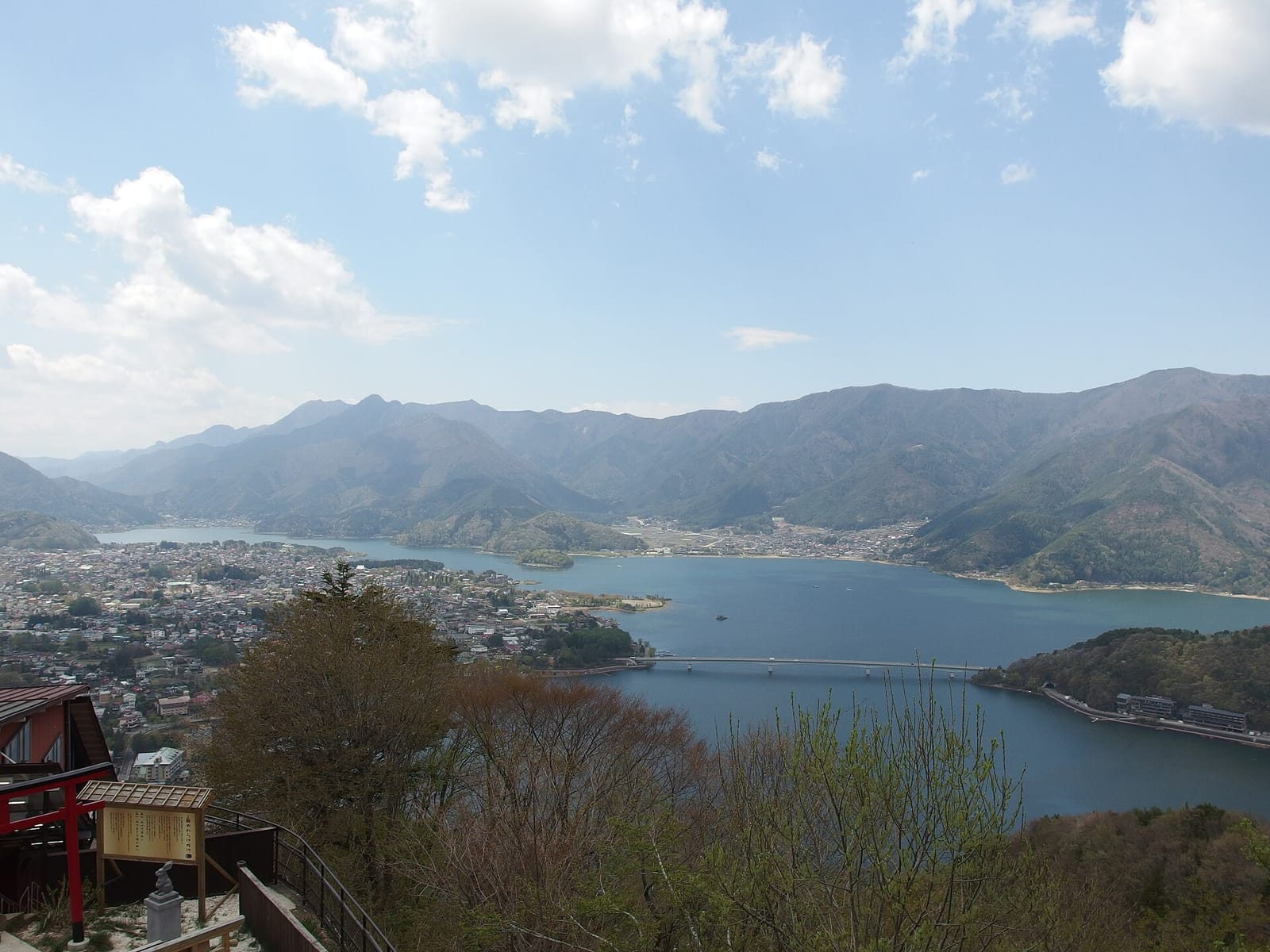
The Kanto Regional Development Bureau puts the base about 15 minutes on foot from Kawaguchiko Station. The ropeway climbs to the 1,075 m deck in about 3 minutes. The operator describes a 360-degree panorama of Mt. Fuji and all of Lake Kawaguchi, and on clear days the Southern Alps, including Mt. Akaishi and Mt. Arakawa, far to the west. Hours change by season and are posted on the top page. It closes December 7–18, 2026, runs short hours on November 25 and 26 (last ascent 15:00), and can stop in snow, ice, lightning or strong wind. The summit shop and the swing and lookout tower keep 9:30–16:00 and close in bad weather.
- Price
- Round trip ¥1,200, one way ¥800, adults; children half (as of November 2026)
- Source
- www.mtfujiropeway.jp
The Kanto Regional Development Bureau describes the Tenjozan view as Fuji’s lower slopes in front, the lake to the right and the Southern Alps in the distance. If the summit is in cloud when you arrive, start at the parks below and check the live camera again before you buy a ticket.
Dawn and reflections: where can you see an upside-down Fuji?
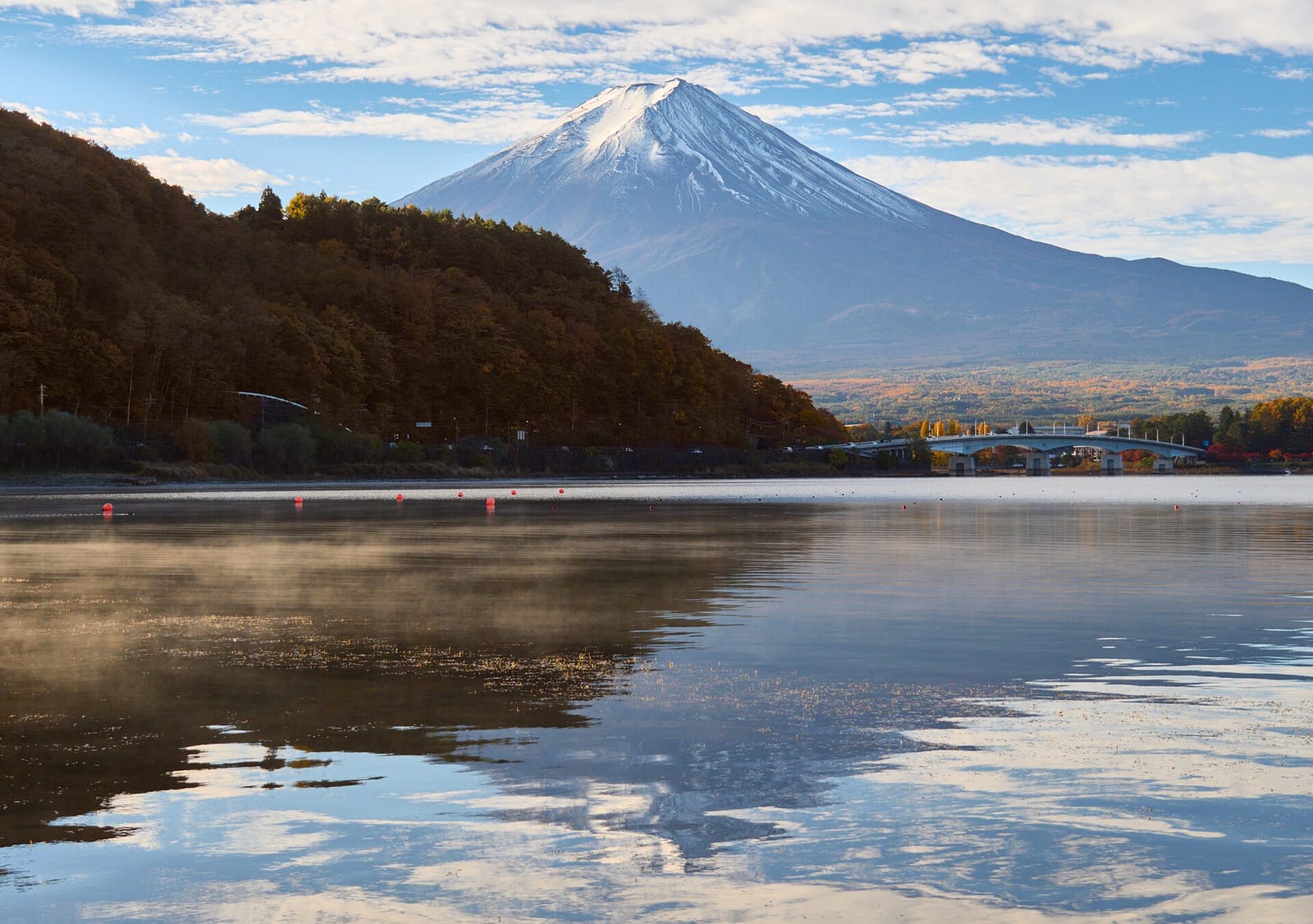
At Ubuyagasaki, a small cape on the east shore. The Yamanashi Tourism Organization says the calm surface of the lake there lets you photograph the reflected “sakasa Fuji” when the weather is good. That needs clear sky and still water. The cape has no gate, so you can be there at first light.
Ubuyagasaki
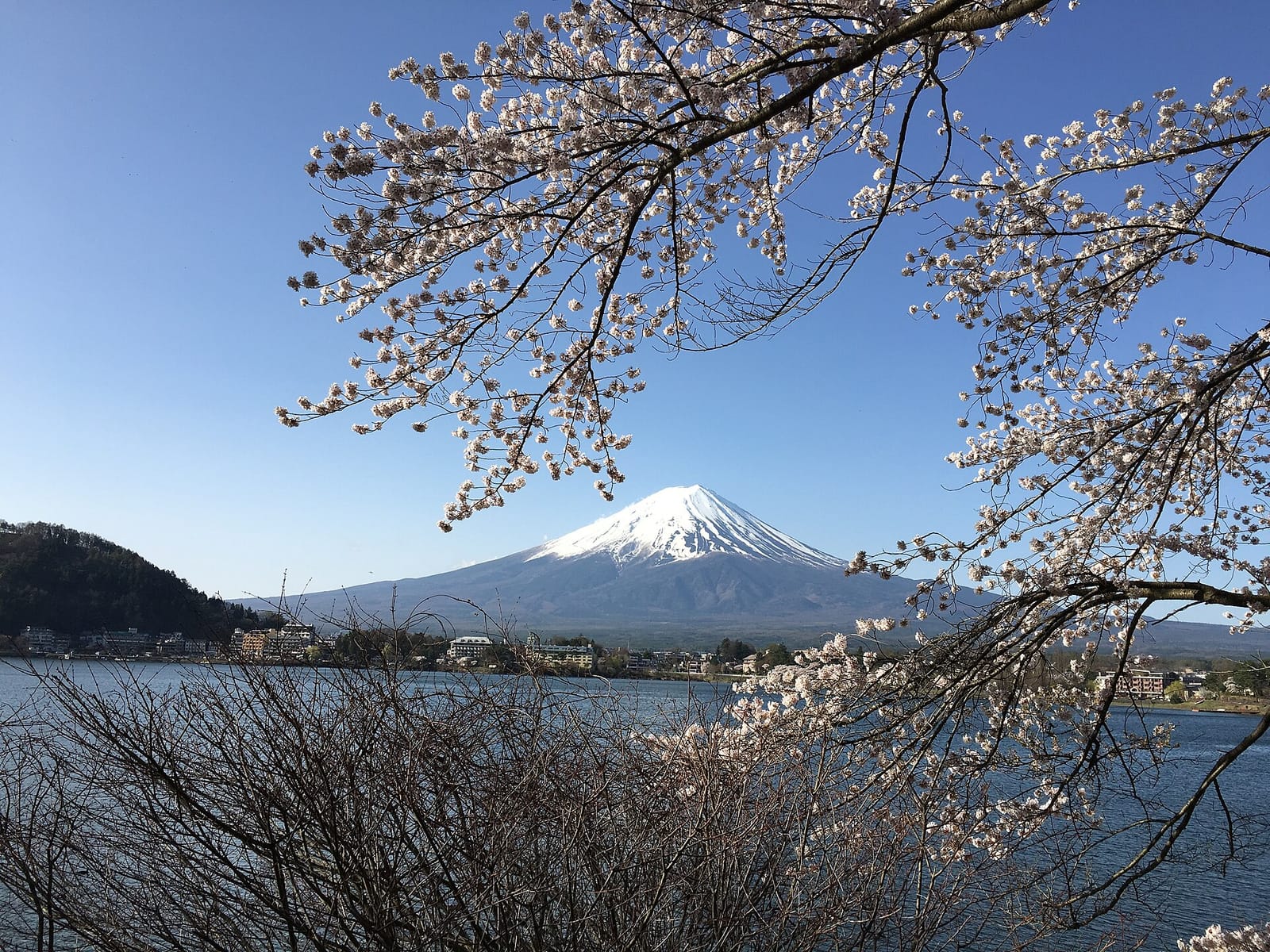
A headland that you can climb to the top of, or walk down from to the water’s edge. It is also listed as a cherry blossom spot. There is no ticket or gate, so it works at any hour, but the bus will not get you here at dawn: for a sunrise attempt, stay the night by the lake and walk or take a taxi. The town tourism division (0555-72-3168) is the contact.
- Access
- About 11 min by the Kawaguchiko sightseeing bus to Kozantei Ubuya-mae
- Source
- www.yamanashi-kankou.jp
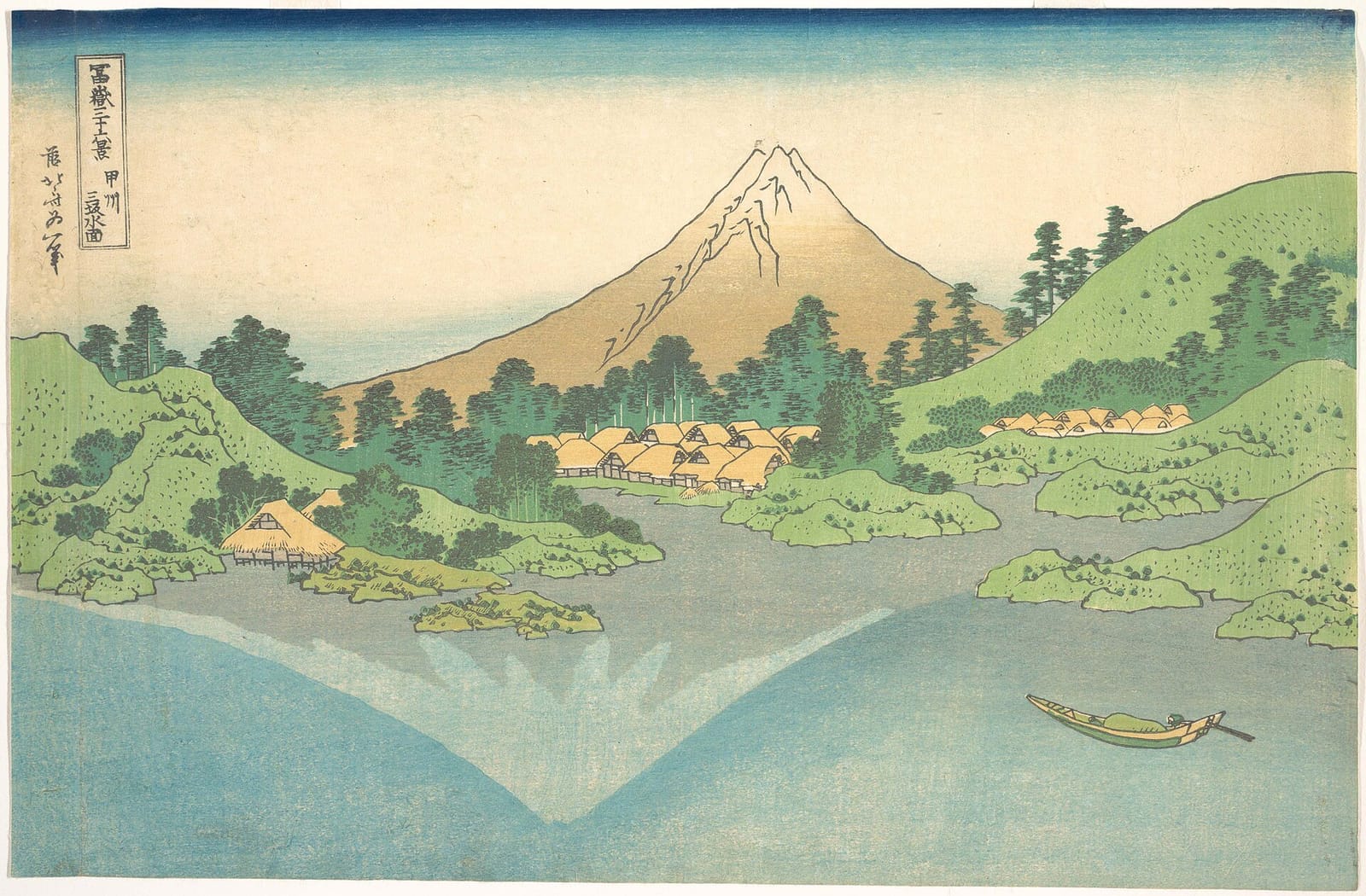
The reflection has a long history here. Hokusai’s Thirty-six Views of Mount Fuji includes a print titled Reflection in Lake at Misaka in Kai Province, Kai being the old name for Yamanashi.
The classic view: where on the north shore should you go?
Nagasaki Park and Oishi Park, a short walk apart on the Red Line sightseeing bus. Both face Mt. Fuji straight across the lake, and both are free. In autumn, add the Momiji Corridor at the west end of the same shore.
Nagasaki Park
A small lakeside cape on the north shore. The Kanto Regional Development Bureau gives it a view of about 270 degrees over the lake, with Fuji’s ridgeline down to the base. The Yamanashi Tourism Organization lists it as a place to photograph Fuji’s wide lower slopes with cherry blossoms, which peak in early to mid-April. It has no facilities listed, so plan toilets and a warm drink at Oishi Park.
- Access
- About 30 min by bus from Kawaguchiko Station; 1 min on foot from the Sunny-de Nagasaki Park Entrance stop
- Source
- www.ktr.mlit.go.jp
Oishi Park
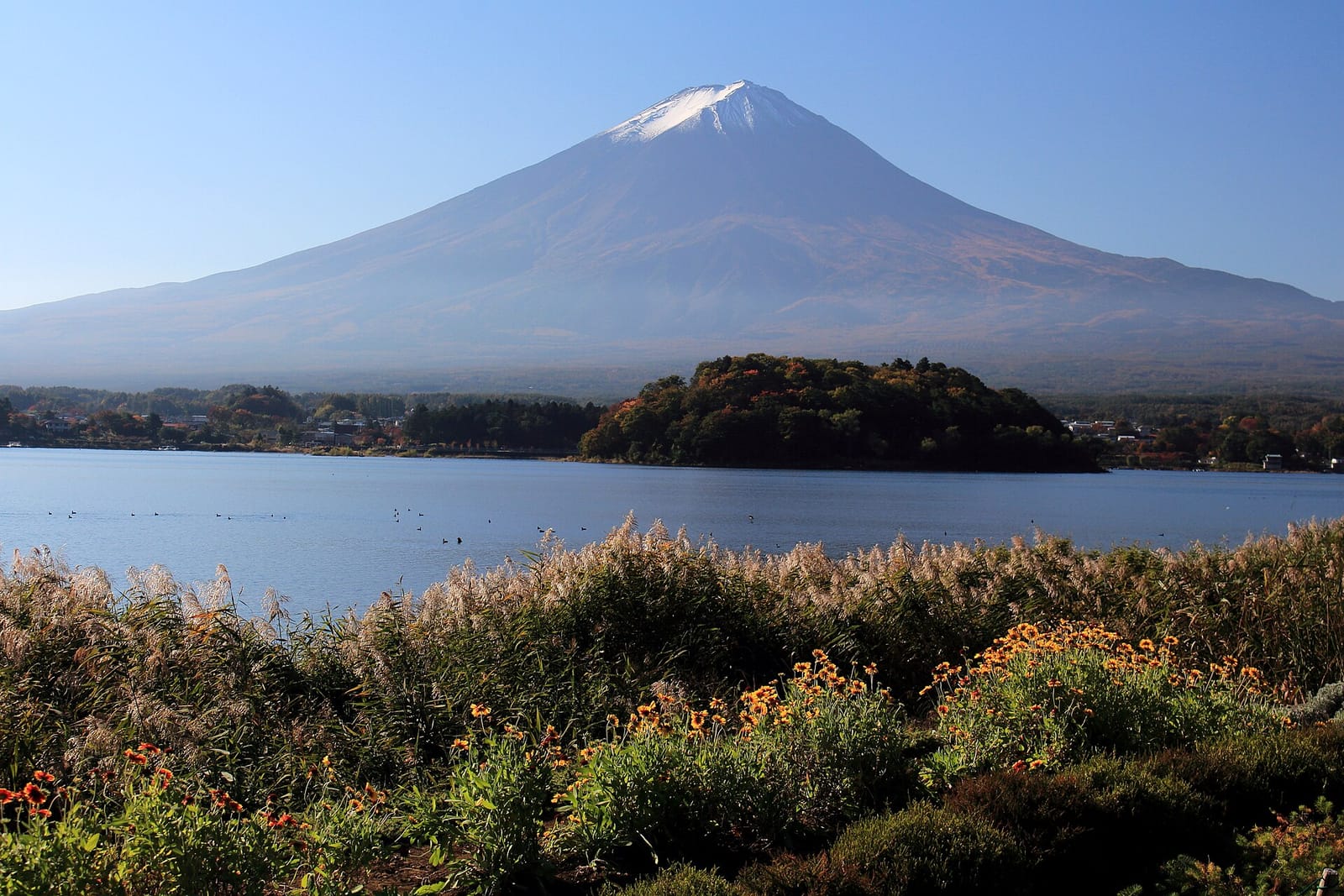
A flower park with Mt. Fuji across the water and benches facing it. The Kawaguchiko Natural Living Center inside the park has a Fuji-view cafe and a second-floor kitchen with a panoramic view of the mountain and the lake, so on a cold winter day you can watch from indoors. The flower calendar runs from nemophila in late April to red kochia in October; the lavender season is late June to mid-July. The Yamanashi Tourism Organization lists toilets and step-free access.
- Hours
- Natural Living Center: shop 9:00–17:15; cafe 9:15–16:15 (November–February); open every day
- Price
- Free; free parking
- Access
- About 30 min from Kawaguchiko Station by bus to the Kawaguchiko Nature Life Center stop
- Source
- www.fkchannel.jp
Momiji Corridor
A maple-lined path by a stream at the west end of the north shore, and the main venue of the Fuji Kawaguchiko Autumn Leaves Festival. The Kanto Regional Development Bureau describes it for the maples rather than for Fuji, so treat it as an autumn stop next to the lake views, not instead of them. During the festival, the No. 1 car park charges ¥1,000 per car, cashless only, so the bus is simpler.
- Hours
- Autumn Leaves Festival November 7–29, 2026; light-up from sunset to 21:00
- Access
- 1 min on foot from the Kubota Itchiku Museum bus stop
- Source
- fujisan.ne.jp
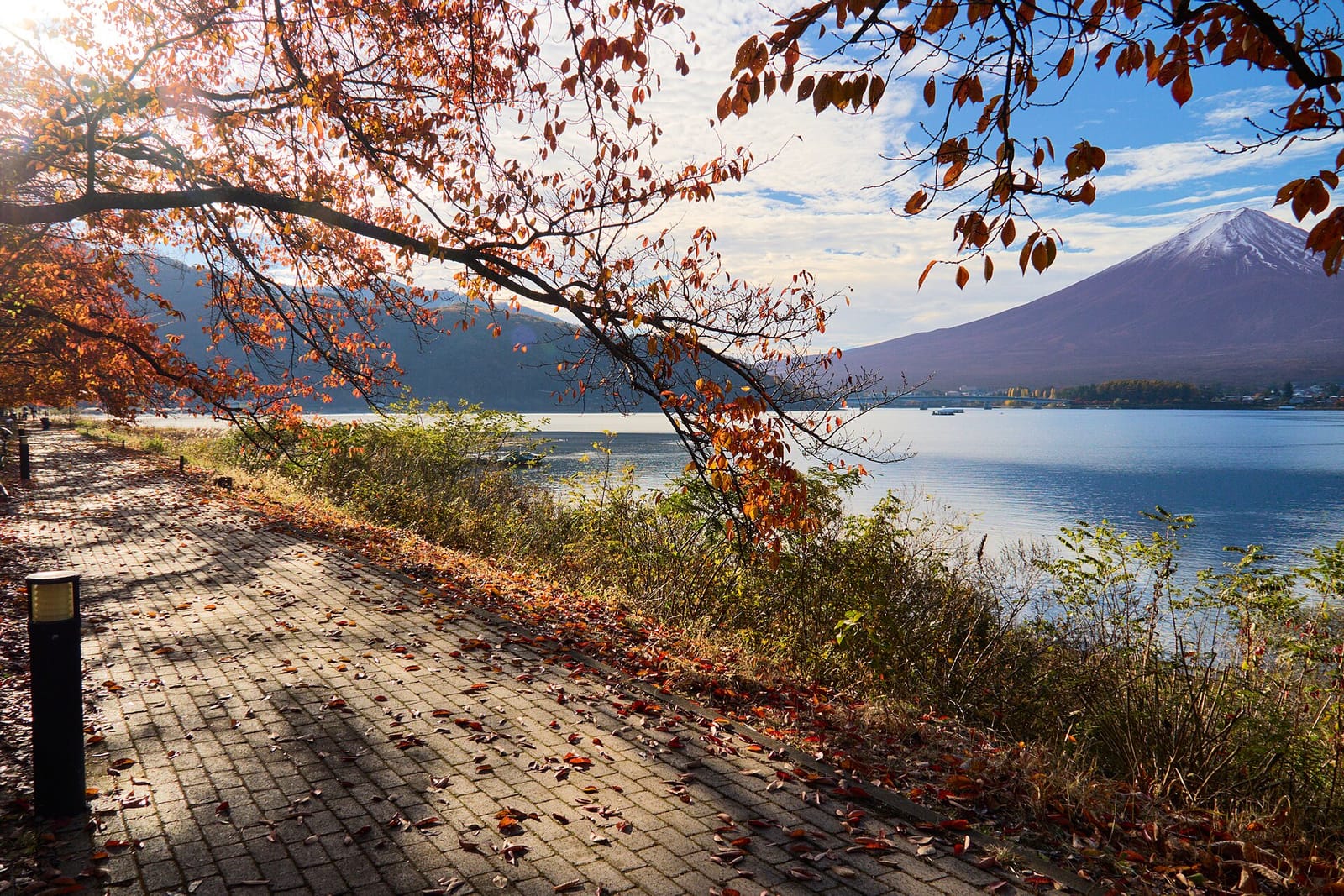
The Kanto list also names the Momiji Tunnel, a maple-lined stretch of Route 137 along the lakeshore about 5.5 km from the Kawaguchiko Museum entrance intersection, with Fuji, the lake and the mountain’s base in view. It is a road, so it suits a car or a bike more than the bus.
Short on time: what is the closest viewpoint to the station?
Yagisaki Park on the south shore, about 15 minutes by bus. The Yamanashi Tourism Organization says the high ground in the park gives a clear view of Mt. Fuji. It is the easiest free viewpoint to fit in before a train or bus back to Tokyo.
Yagisaki Park
A lawn park on the lakeshore in Kodachi, and the venue of the Kawaguchiko Herb Festival when lavender blooms, mid-June to mid-July. It is also a cherry blossom spot. The Kawaguchiko Muse-kan doll museum stands inside the park: from December to February it opens 10:30–15:30 (last entry 15:00), with entry at ¥600 for adults, as of November 2026.
- Access
- About 15 min by bus from Kawaguchiko Station
- Source
- www.yamanashi-kankou.jp
How do you get around the viewpoints?
By the Kawaguchiko sightseeing bus (Red Line) from Kawaguchiko Station, which stops at Oishi Park and the lakeside museums; the Kanto Regional Development Bureau gives it as the way to Nagasaki Park, Oishi Park and the Momiji Corridor. Fujikyu Bus sells a 1-day pass for ¥1,500 (children ¥750) and a 2-day pass for ¥2,000 (children ¥1,000); single rides start at ¥180, as of November 2026. The route map and timetables are on the Fujikyu Bus page, and the pass pays off after a few stops.
A simple order on a clear day: ropeway first while you are next to the station, then the bus round to Ubuyagasaki, Nagasaki Park and Oishi Park, and Yagisaki Park on the way back if time allows. In late November, stay for the Momiji Corridor light-up after dark, but check the last bus back before you go. Tick “Add to my route” on the spots you want, and the box at the end of the page opens them in order in Google Maps.
What should you plan for in winter?
Cold mornings, short opening hours and a few closures. The ropeway closes December 7–18, 2026, the Natural Living Center cafe closes at 16:15 from November to February, and the Muse-kan shortens its hours to 10:30–15:30. The open-air parks have no hours, which makes them the safer bet early and late in the day.
If you want to try for the dawn reflection, stay overnight by the lake: the first Fuji Excursion from Shinjuku, the 7:30, does not reach Kawaguchiko until 9:28. Our winter packing list for Japan covers layers for standing outside at dawn, and if the mountain stays hidden all day, the cloudy-day plan in our Kawaguchiko itinerary moves you indoors.
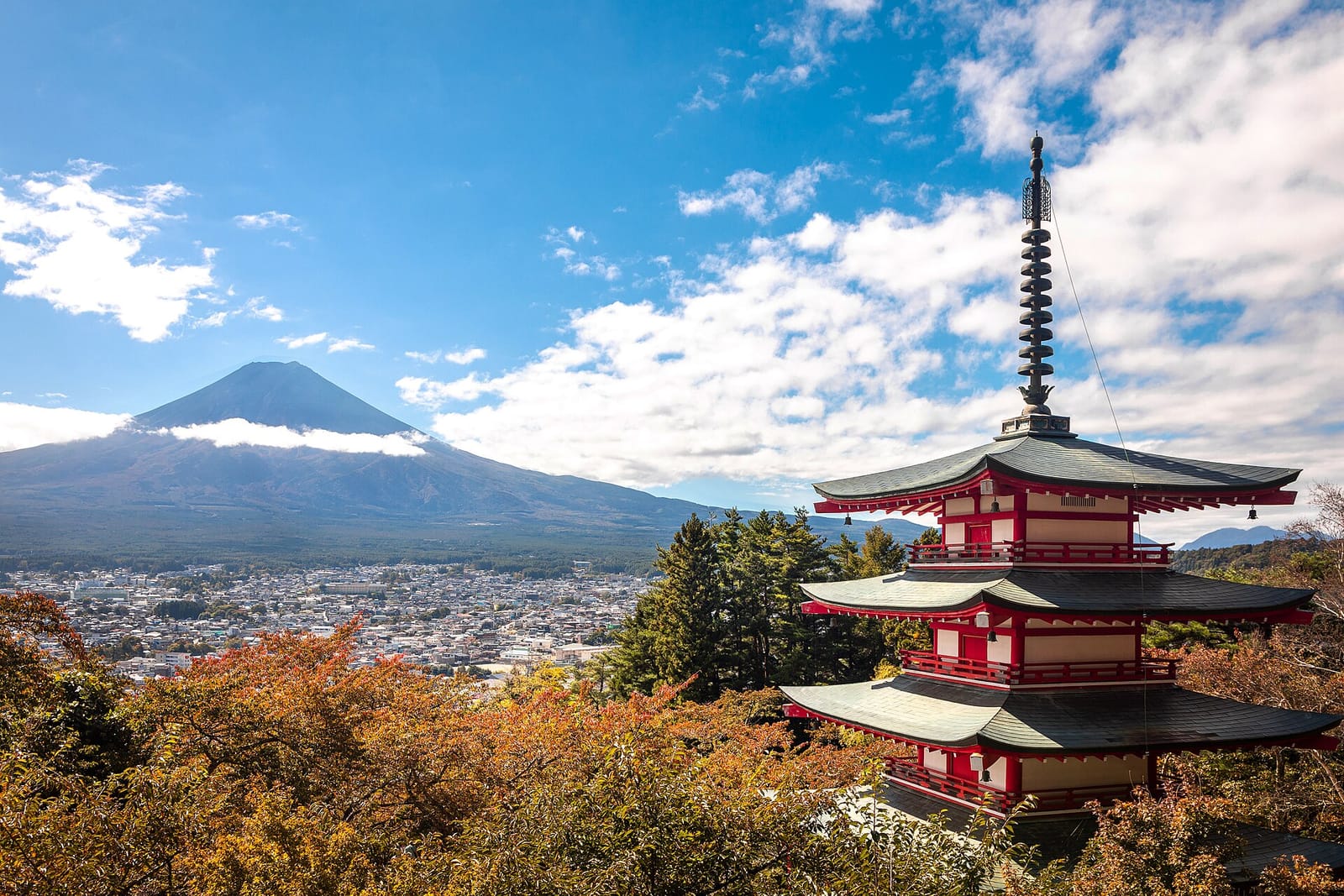 Chureito Pagoda Visiting Guide: Steps, Deck Queues and Best Light
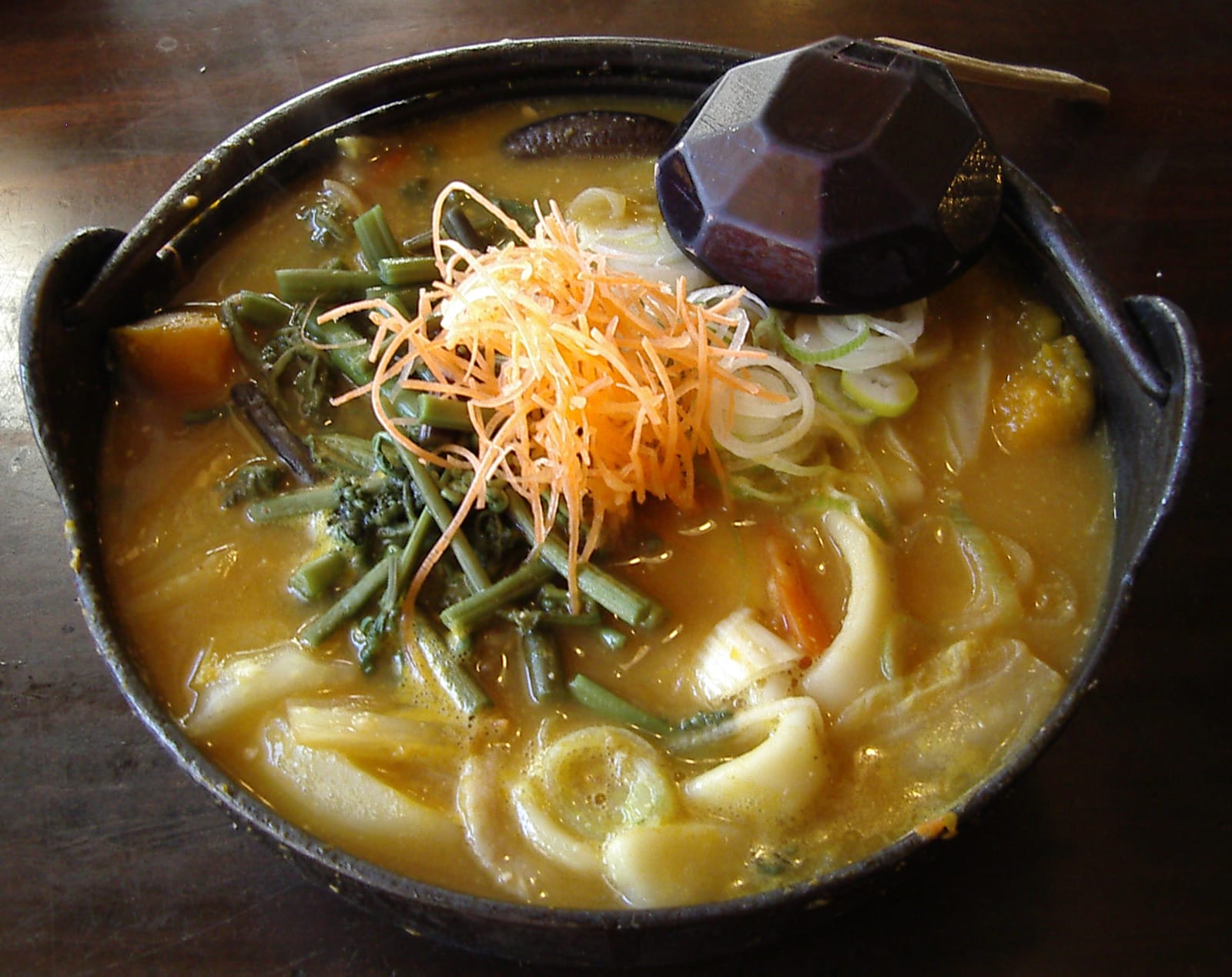 Kawaguchiko Hoto Noodles: Where to Eat, With Hours and Prices
FAQ
Where is the best place to see Mt. Fuji at Lake Kawaguchi?
The north shore. From Nagasaki Park and Oishi Park you look straight south across the lake to the whole mountain, down to its lower slopes. Both are free and on the Red Line sightseeing bus from Kawaguchiko Station.
What time of day is best to see Mt. Fuji at Kawaguchiko?
Go as early as you can, because the open-air parks have no opening hours and you can try again later if the summit is in cloud. Reflections on the water need calm, clear weather, which is why photographers aim for Ubuyagasaki at dawn. The ropeway and the Natural Living Center at Oishi Park open later and close around 16:00 to 17:00 in winter.
Which month has the clearest views of Mt. Fuji from Kawaguchiko?
Winter. The Japan Meteorological Agency's normals for the Kawaguchiko station give about 212 hours of sunshine in January and 200 in December, the two highest of the year, and under 50 mm of rain in December. June and September have the least sunshine, about 123 hours each.
How can you check if Mt. Fuji is visible before going to Kawaguchiko?
Look at a live camera on the morning you travel. The Mt. Fuji Panorama Ropeway streams a 4K live camera from its summit on its official site. Check the mountain itself, not the weather in Tokyo.
Is the Kachi Kachi Ropeway open in winter?
Mostly. In 2026 it closes from December 7 to 18 for its annual inspection and equipment renewal, and it can stop for snow, ice, lightning or strong wind. On November 25 and 26, 2026, the last ascent is at 15:00.
Sources
- ~Kawaguchiko~ Mt. Fuji Panorama Ropeway — Official site (notices, live camera, fares)
- ~Kawaguchiko~ Mt. Fuji Panorama Ropeway — Guide
- Yamanashi Tourism Organization — Ubuyagasaki (Japanese)
- Yamanashi Tourism Organization — Nagasaki Park (Japanese)
- Yamanashi Tourism Organization — Oishi Park flower road (Japanese)
- Yamanashi Tourism Organization — Yagisaki Park (Japanese)
- MLIT Kanto Regional Bureau — Fuji views from Lake Kawaguchi, Kanto's 100 Fuji views no. 120 (Japanese)
- Fujikawaguchiko Furusato Promotion Foundation — Kawaguchiko Natural Living Center (Japanese)
- Fujikawaguchiko Furusato Promotion Foundation — Kawaguchiko Muse-kan (Japanese)
- Fujikawaguchiko Town tourism — Fuji Kawaguchiko Autumn Leaves Festival 2026 (Japanese)
- Japan Meteorological Agency — Climate normals, Kawaguchiko (Japanese)
- Fujikyu Railway — Fuji Excursion timetable
- Fujikyu Bus — Kawaguchiko sightseeing bus (Red Line) and passes
This article contains affiliate links. We may earn a commission at no extra cost to you.