Ginza and Tsukiji Half-Day Itinerary: Market, Garden, Ginza Streets
Two timed Ginza and Tsukiji half days: the Outer Market after 9 a.m., Hamarikyu Gardens and Ginza, or an afternoon plan into evening. Closed days and fees.
Apart from food, a half day in Tsukiji and Ginza costs about ¥660: two short subway rides at ¥180 each and ¥300 for Hamarikyu Gardens (as of November 2026). Everything else on this route is free to walk into, from Tsukiji Hongwanji to the Ginza pedestrian zone. What you need to plan is the timing. The Tsukiji Outer Market gives professional buyers priority until 9:00 a.m. and keeps flexible hours after 2:00 p.m., while Ginza’s shops open at about 10:30 a.m., so do the market first and Ginza second. Hamarikyu Gardens sits between the two, a short walk from the market. This guide gives two timed plans: a morning plan that ends with lunch in Ginza, and an afternoon plan that ends in Ginza after dark.
How long does a Ginza and Tsukiji half day take, and what does it cost?
Plan on 5 to 6 hours and about ¥660 per adult before food (as of November 2026). The plan is for first-timers staying in central Tokyo who want the market, one traditional garden and a walk through Ginza without a long day.
| Item | Adult price (as of November 2026) |
|---|---|
| Subway ride to Tsukiji (shortest distance band) | ¥180 |
| Hamarikyu Gardens entry | ¥300 (65 and over ¥150) |
| Subway ride home from Ginza (shortest distance band) | ¥180 |
| Total before food | ¥660 |
GO TOKYO, the Tokyo government’s official travel site, says Tokyo Metro fares run from ¥180 to ¥330 and Toei fares from ¥180 to ¥430, by distance, so a longer ride from your hotel costs more. Suica and PASMO cards cost a ¥500 refundable deposit at station ticket machines. Hamarikyu’s fee comes from the Tokyo Metropolitan Park Association. Food is the main cost of the day, and it depends on what you choose at the market and in Ginza.
The day has three fixed times to plan around:
- Tsukiji Outer Market: professional buyers’ hours 6:00–9:00, public buyers’ hours 9:00–14:00, flexible opening hours after 14:00.
- Hamarikyu Gardens: 9:00–17:00, last entry 16:30.
- GINZA SIX: shops 10:30–20:30, restaurants 11:00–23:00, rooftop garden 7:00–23:00.
Which days is the Tsukiji Outer Market closed?
Avoid Sundays, national holidays and the Wednesdays marked as closing days. The Tsukiji Outer Market publishes the Tokyo Central Wholesale Market calendar, and in November 2026 it marks these as regular closing days:
| Closed (November 2026) | Days |
|---|---|
| Sundays | Nov 1, 8, 15, 22, 29 |
| National holidays | Nov 3, 23 |
| Wednesdays | Nov 11, 18 |
Wednesdays Nov 4 and 25 are open on the same calendar. The outer market notes that the calendar shows the wholesale market’s business days, and that each shop in the outer market has its own schedule. So some shops may open on a closing day, but the market is at its fullest on open days. Our guide to Tsukiji Outer Market on a Wednesday or Sunday lists the closing dates through February 2027 and the restaurants that stay open. Check the calendar for your own month before you fix the day. If your only free day is a closing day, use the afternoon plan’s Ginza half and swap the market for Tsukiji Hongwanji and Hamarikyu.
What is the timed morning plan?
Start at Tsukiji Hongwanji at about 8:15, enter the market at 9:00, and finish in Ginza by about 2:00 p.m.
| Time | Where | How you get there | Ride time and fare |
|---|---|---|---|
| 8:15 | Tsukiji Hongwanji | Hibiya Line to Tsukiji Station | from ¥180 |
| 9:00 | Tsukiji Outer Market | On foot | 1 min from Tsukiji Station |
| 10:45 | Hamarikyu Gardens | On foot | 7 min from Tsukijishijo Station |
| 12:15 | Shimbashi Station | On foot | 10 min from the garden |
| 12:30 | GINZA SIX (lunch, rooftop garden) | On foot along Chuo-dori, or Ginza Line one stop to Ginza | Ginza Line from ¥180 |
| 13:30 | Ginza Chuo-dori and Wako corner | On foot | Pedestrian zone from noon on weekends and holidays |
| 14:00 | Ginza Station | Done | from ¥180 home |
Clock times are a plan, not a timetable. Walking times are the market’s and the park association’s own figures.
Why this order. The market asks visitors to give professional buyers priority until 9:00 a.m. and recommends eating lunch slightly early, so a 9:00 start with an early meal at the market fits its own advice. Hamarikyu opens at 9:00, so it is open by the time you leave the market. Ginza’s shops open at 10:30 and its restaurants at 11:00, so Ginza is ready when you arrive.
What are the stops, in order?
Tick “Add to my route” on each stop to open the morning in Google Maps, in this order.
Tsukiji Hongwanji
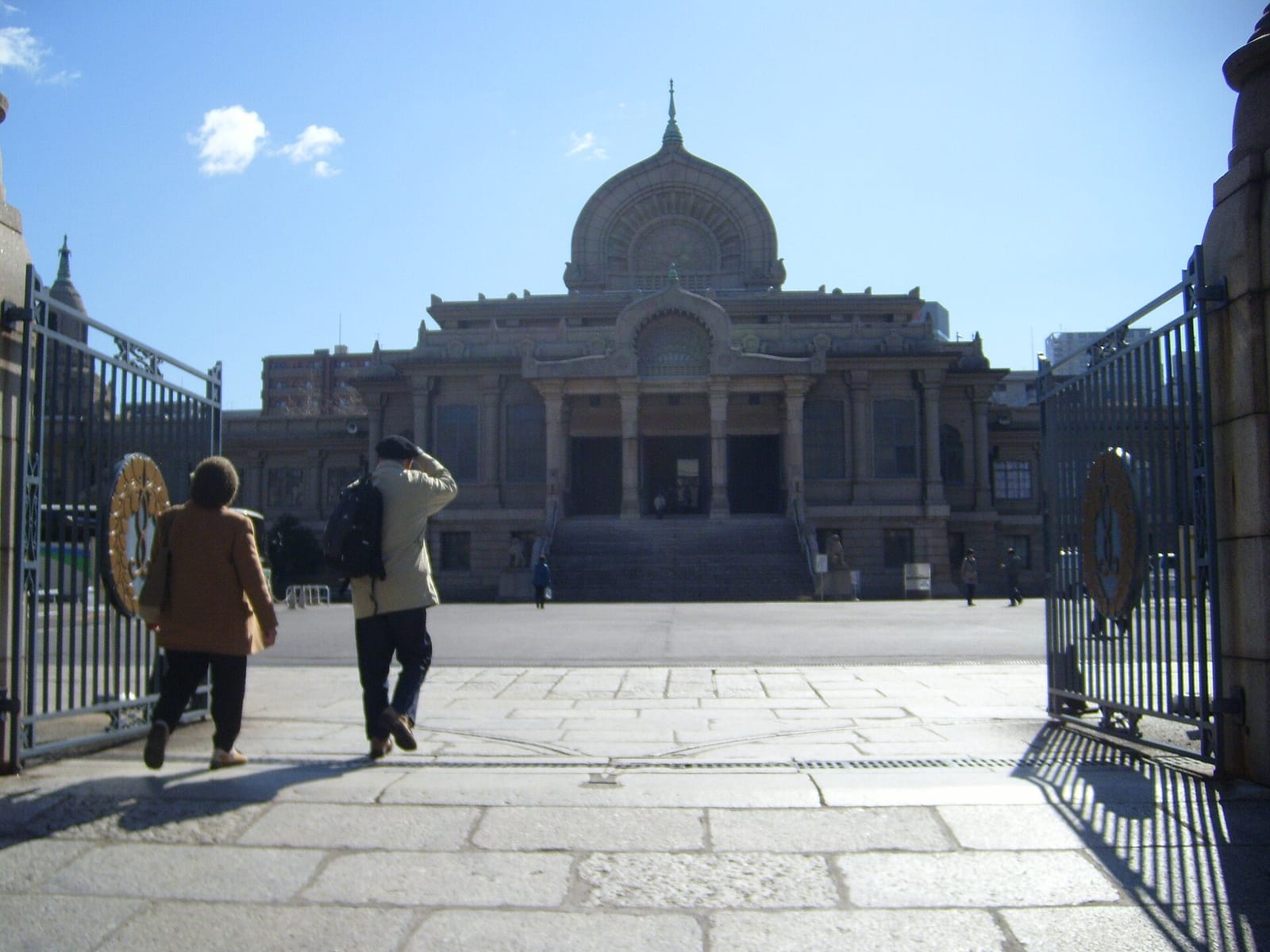
A Jodo Shinshu Buddhist temple next to Tsukiji Station, and the one stop on this plan that is open before the market’s public hours. GO TOKYO describes its 1930s building as a blend of Asian and European architecture, and it is a national Important Cultural Property. Entry is free, which makes it a natural first stop while professional buyers have the market to themselves.
- Hours
- 6:00–16:00, open every day (as of November 2026)
- Price
- Free
- Access
- Tsukiji Sta. (Hibiya Line), connected to Exit 1
- Source
- www.gotokyo.org
Tsukiji Outer Market
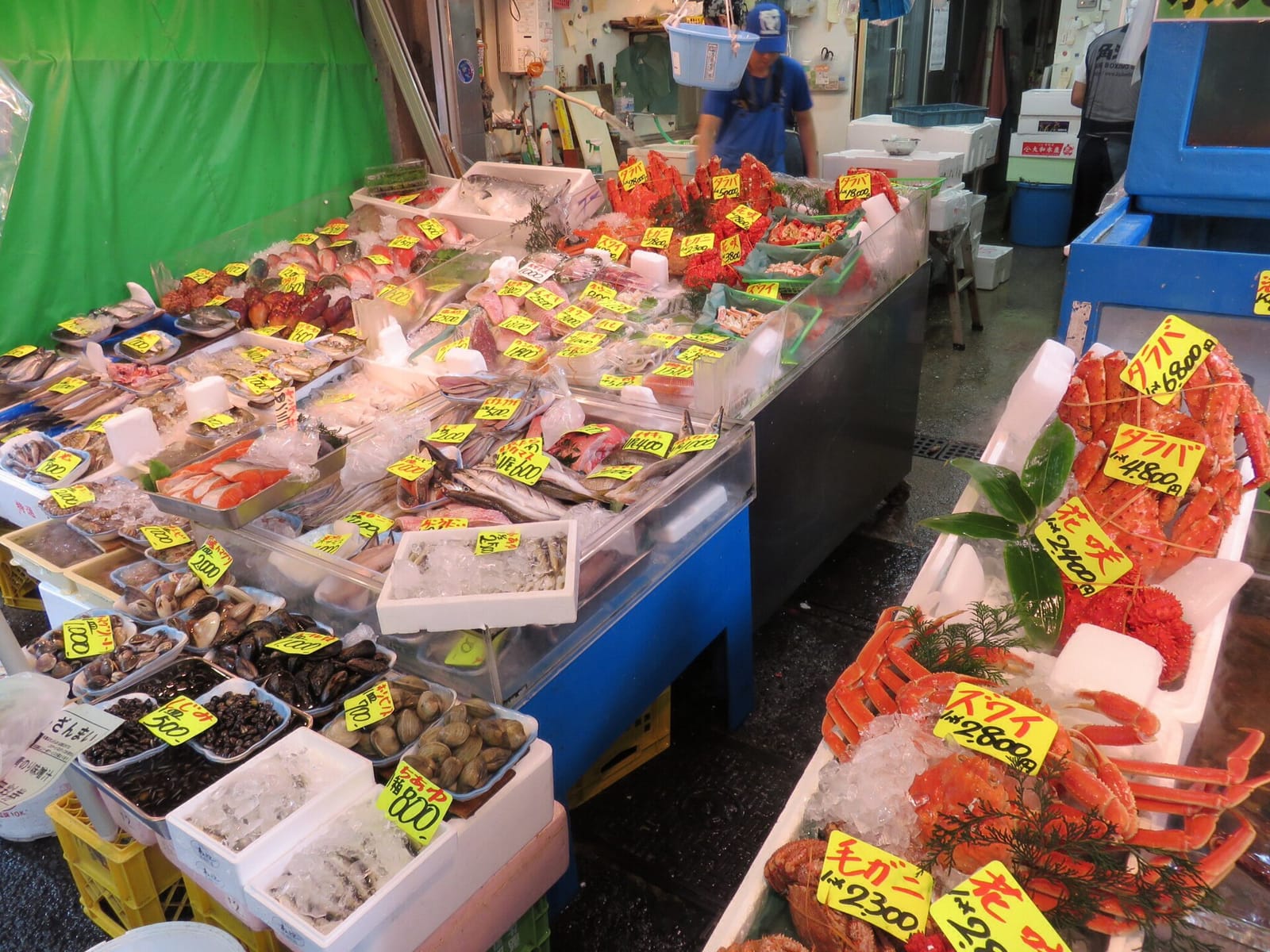
Narrow lanes of seafood shops, knife and kitchen shops, and small eateries. The market’s own manners guide asks you to eat inside the shop or in a space set aside for eating, not while walking, and to ask before taking photos of a shop. Do not touch the food, especially raw fish. Large bags block the lanes, so leave them in a coin locker; strollers can be left at the Plat Tsukiji information center for ¥500 each.
- Hours
- Public buyers' hours 9:00–14:00; flexible after 14:00; closed Sundays, national holidays and some Wednesdays (as of November 2026)
- Access
- Tsukiji Sta. (Hibiya Line) or Tsukijishijo Sta. (Oedo Line), 1 min walk; Higashi-ginza Sta., 3 min walk
- Source
- www.tsukiji.or.jp
Hamarikyu Gardens
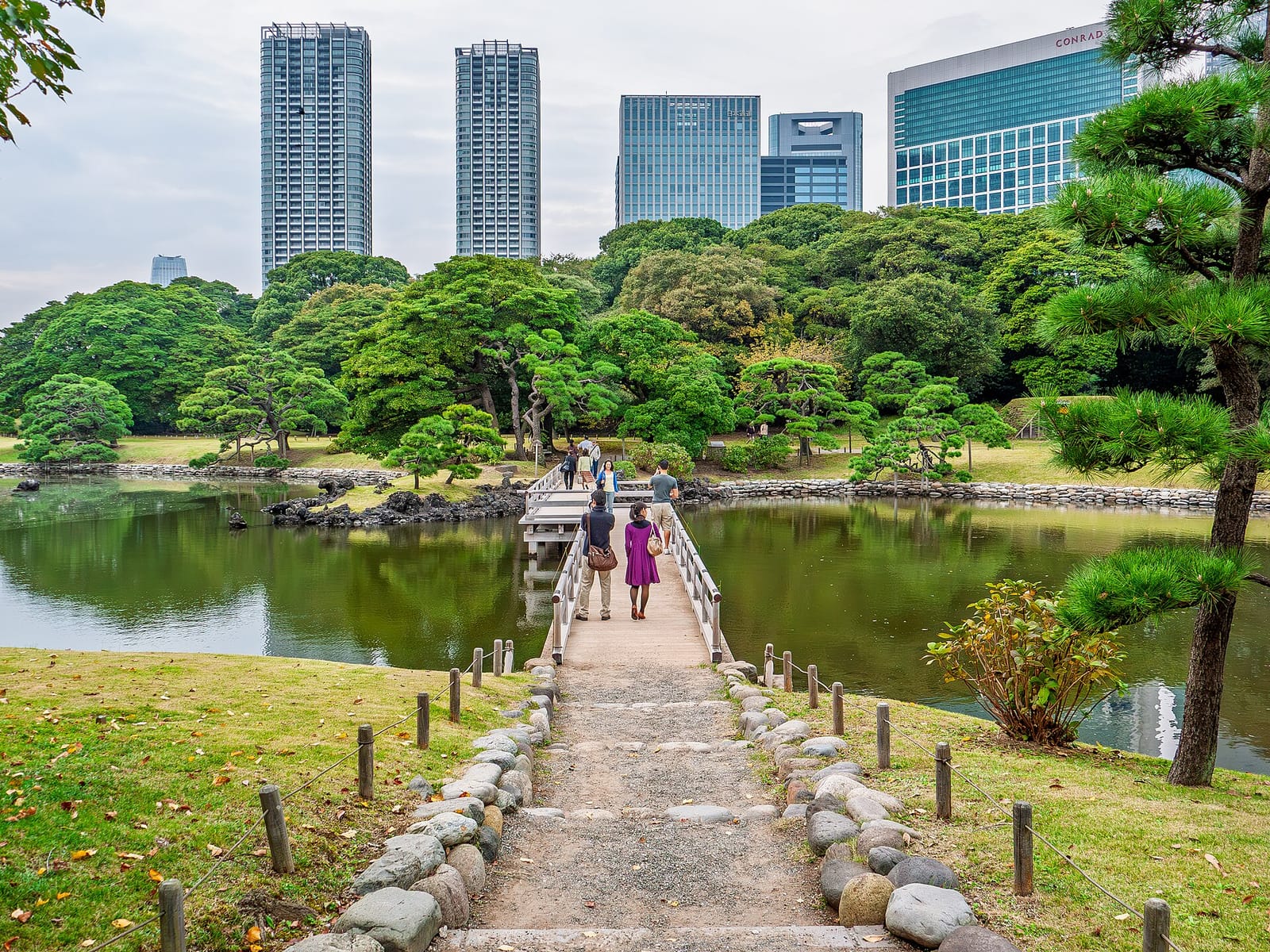
An Edo-period garden built around a tidal pond that once drew seawater from Edo Bay, with two former duck-hunting sites. It began as a residence of a Tokugawa family branch in 1654, later became a detached palace of the Imperial family, and opened to the public in 1946. The garden’s facilities include the Nakajima-no-ochaya teahouse. Allow about an hour, then leave toward Shimbashi Station for Ginza.
- Hours
- 9:00–17:00, last entry 16:30; closed Dec 29–Jan 1 (as of November 2026)
- Price
- ¥300; 65 and over ¥150; free for primary school children and younger (as of November 2026)
- Access
- Tsukijishijo Sta. or Shiodome Sta. (Oedo Line), 7 min walk; Shimbashi Sta., 10 min walk
- Source
- www.tokyo-park.or.jp
GINZA SIX
A large shopping complex in Ginza 6-chome with shops, restaurants and a rooftop garden open from 7:00 a.m.. GINZA SIX notes that the garden may close without notice in bad weather and that parts of it may be closed for events. Hours can differ by shop, so check the shop’s own page if you are going for one place in particular.
- Hours
- Shops 10:30–20:30; restaurants 11:00–23:00; rooftop garden 7:00–23:00 (as of November 2026)
- Source
- ginza6.tokyo
Ginza Pedestrian Zone, Chuo-dori
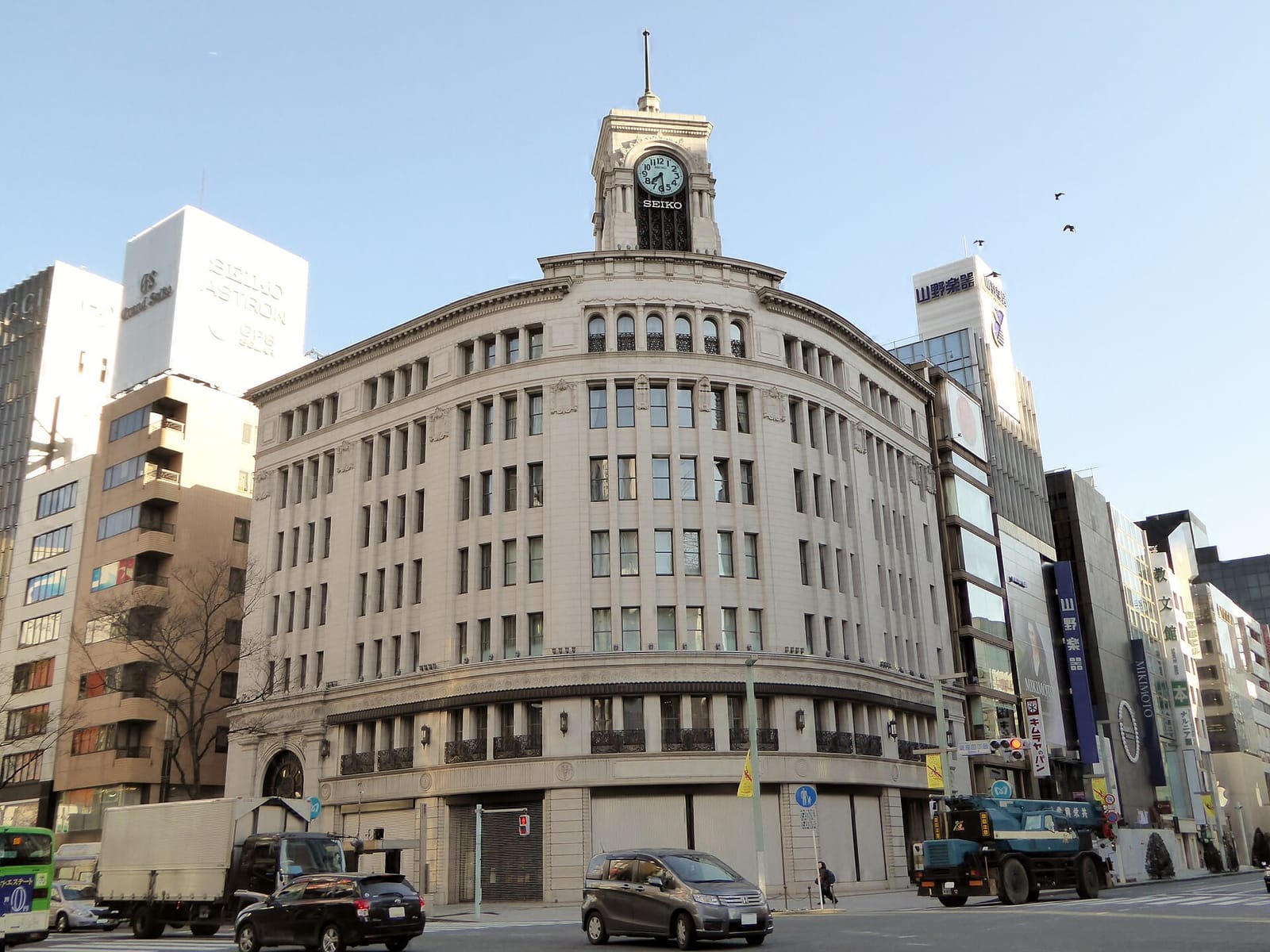
On weekends and holidays, Chuo-dori from 1-chome to 8-chome closes to cars and becomes a walking street. The Ginza Street Association says cycling is not allowed in the zone, and the police decide cancellations for weather and the New Year break. On weekdays, walk the same street on the sidewalks. The Wako building with its clock tower marks the 4-chome crossing.
- Hours
- Saturdays, Sundays and national holidays: noon–17:00 Oct–Mar, noon–18:00 Apr–Sep (as of November 2026)
- Source
- ginza.jp
Kabukiza Theatre
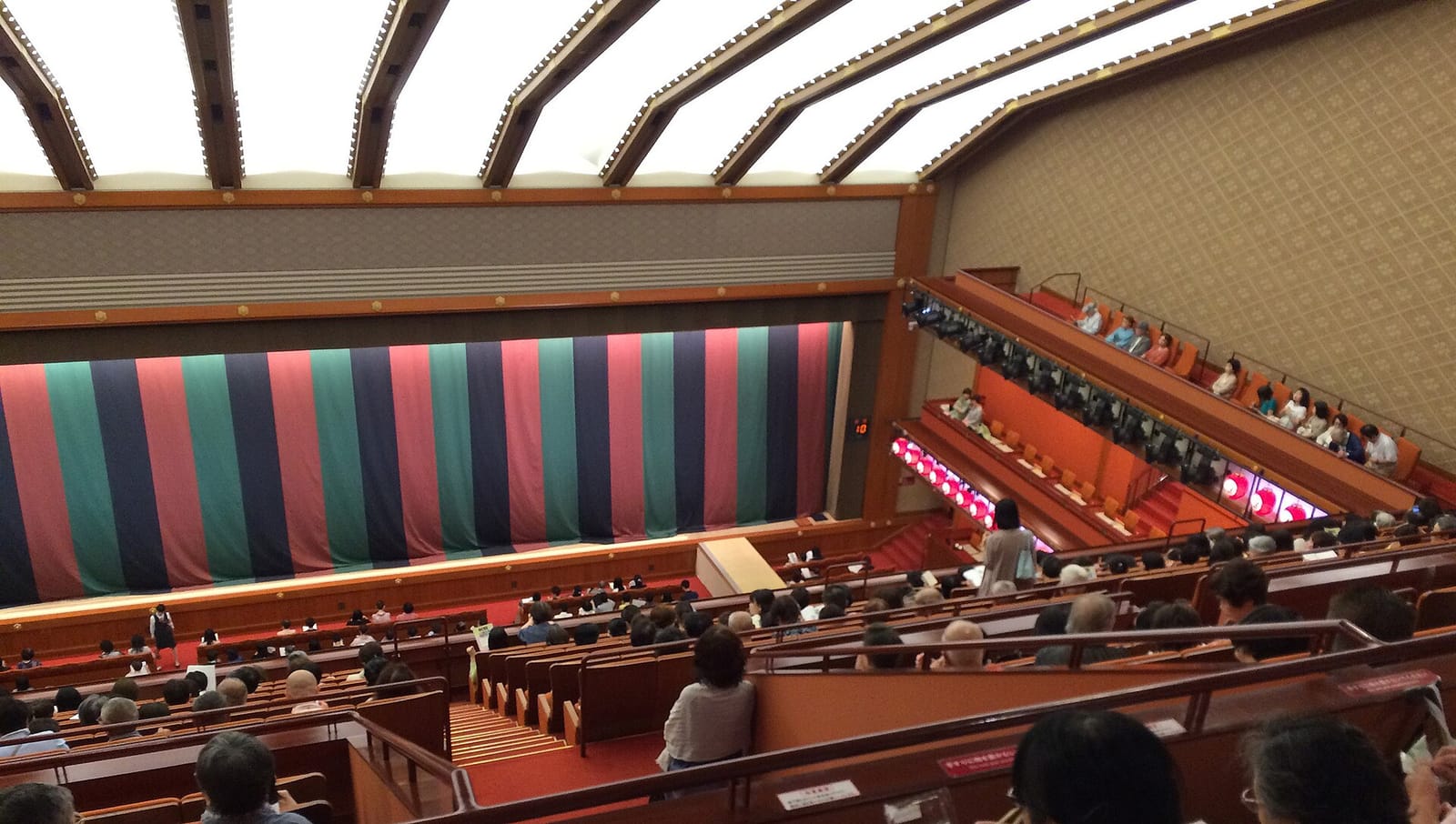
Tokyo’s main kabuki theatre, on the east side of Ginza between the 4-chome crossing and the market. Kabukiweb says the Single Act ticket box office is on Level 1, to the left of the main entrance. Single Act tickets let you see one act of a programme instead of a whole show. Prices and times change with each programme, so check the current month before you go.
- Access
- Higashi-ginza Sta. (Hibiya and Asakusa lines), Exit 3, connected to the theatre
- Source
- www.kabukiweb.net
What is the afternoon-into-evening plan?
Start at the market at about noon for a late lunch, see Hamarikyu in the afternoon light, and reach Ginza at about 4:00 p.m. as the lights come on. This plan suits a late riser or a day that starts with something else.
| Time | Where | How you get there | Notes |
|---|---|---|---|
| 12:00 | Tsukiji Outer Market | Hibiya Line to Tsukiji Station, from ¥180 | Lunch before the flexible hours start at 14:00 |
| 13:15 | Tsukiji Hongwanji | On foot, next to Tsukiji Station | Open until 16:00 |
| 13:45 | Hamarikyu Gardens | On foot, 7 min from Tsukijishijo Station | Last entry 16:30, closes 17:00 |
| 15:30 | Shimbashi Station | On foot, 10 min | Walk north into Ginza 8-chome |
| 15:45 | Chuo-dori, 8-chome to 4-chome | On foot | Weekend and holiday pedestrian zone ends at 17:00 (Oct–Mar) |
| 16:45 | Kabukiza | On foot, east from the 4-chome crossing | Check that day’s Single Act tickets |
| 17:30 | GINZA SIX rooftop garden and dinner | On foot | Garden until 23:00, restaurants until 23:00 |
The tradeoff is the market. After 2:00 p.m. its hours are flexible, so some shops will already be closed by the time you leave. If the market matters most to you, take the morning plan.
What if it rains or the plan changes?
Keep the market and Ginza, and shorten the garden. Hamarikyu and the Chuo-dori pedestrian zone are outdoors, but the market lanes, the temple and GINZA SIX are all quick to reach on foot.
- Rain: shorten Hamarikyu or skip it, and spend the time in GINZA SIX or at Kabukiza. GINZA SIX says its rooftop garden may close without notice in bad weather.
- Market closing day: do Tsukiji Hongwanji and Hamarikyu, then Ginza. The pedestrian zone runs on Sundays and holidays, the same days the market calendar is closed.
- Starting from Asakusa: Tokyo Cruise runs a water bus from Asakusa to Hamarikyu, about 35 minutes for ¥1,180 (children ¥470), and the fare includes garden entry (as of November 2026). Departures listed from Asakusa are 11:40 and 14:20, and the operator says cruises can be cancelled without notice in bad weather. Check the day’s status, then run the afternoon plan in reverse: Hamarikyu, the market, then Ginza.
- With children: the market asks you to hold children’s hands in its narrow lanes and to avoid moving in large groups. Hamarikyu is free for primary school children and younger.
How does this fit into a longer Tokyo trip?
Use it as the central-Tokyo half of a day, then add a second area. Our 3-day Tokyo itinerary for first-timers puts Tsukiji and Ginza on the same day as the Imperial Palace East Gardens. If you are coming from the west side of the city, our Shinjuku to Tokyo Station guide covers the trains toward this part of town.
If you want to be on the market lanes at 9:00 without a long subway ride, stay nearby. Our affordable hotels in Ginza guide lists options within walking distance of Higashi-ginza, and our best hotels near Tokyo Station guide covers the area around Tokyo Station, a short subway ride north of Ginza.
Want to stretch the budget further? Our guide to free things to do in Ginza groups ten free stops into 1-hour, half-day and full-day routes.
What to pack before you go
Maps, train apps and translation drain a phone by mid-afternoon. Keep it in your carry-on: power banks are not allowed in checked luggage.
Japan still runs on coins: there are six of them, from 1 to 500 yen, and you collect a pocketful fast. A holder with a slot for each coin lets you pay the exact amount at ticket machines, shrines and small shops without digging.
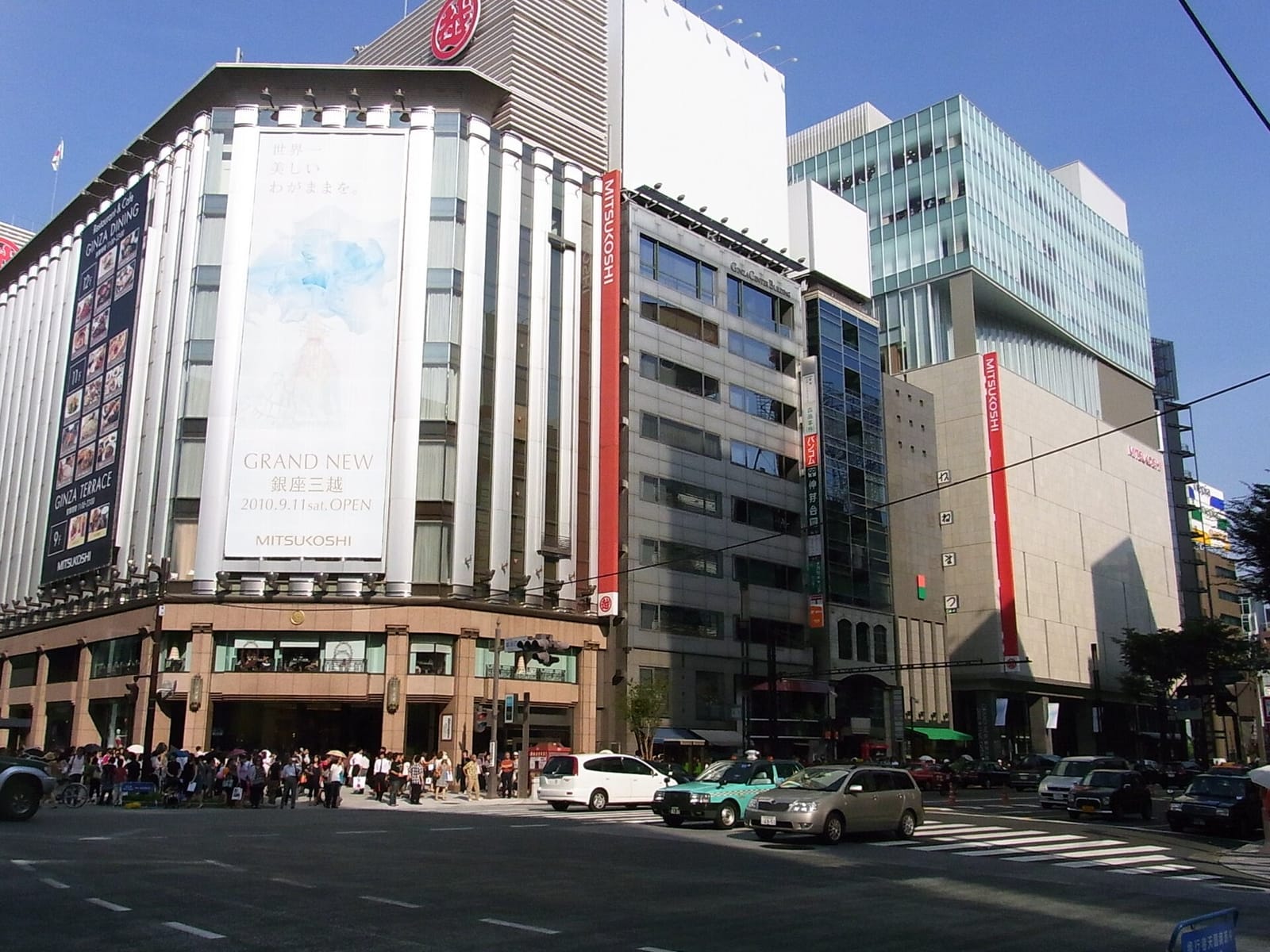 Ginza Depachika Sweets to Take Home: What Keeps and Travels
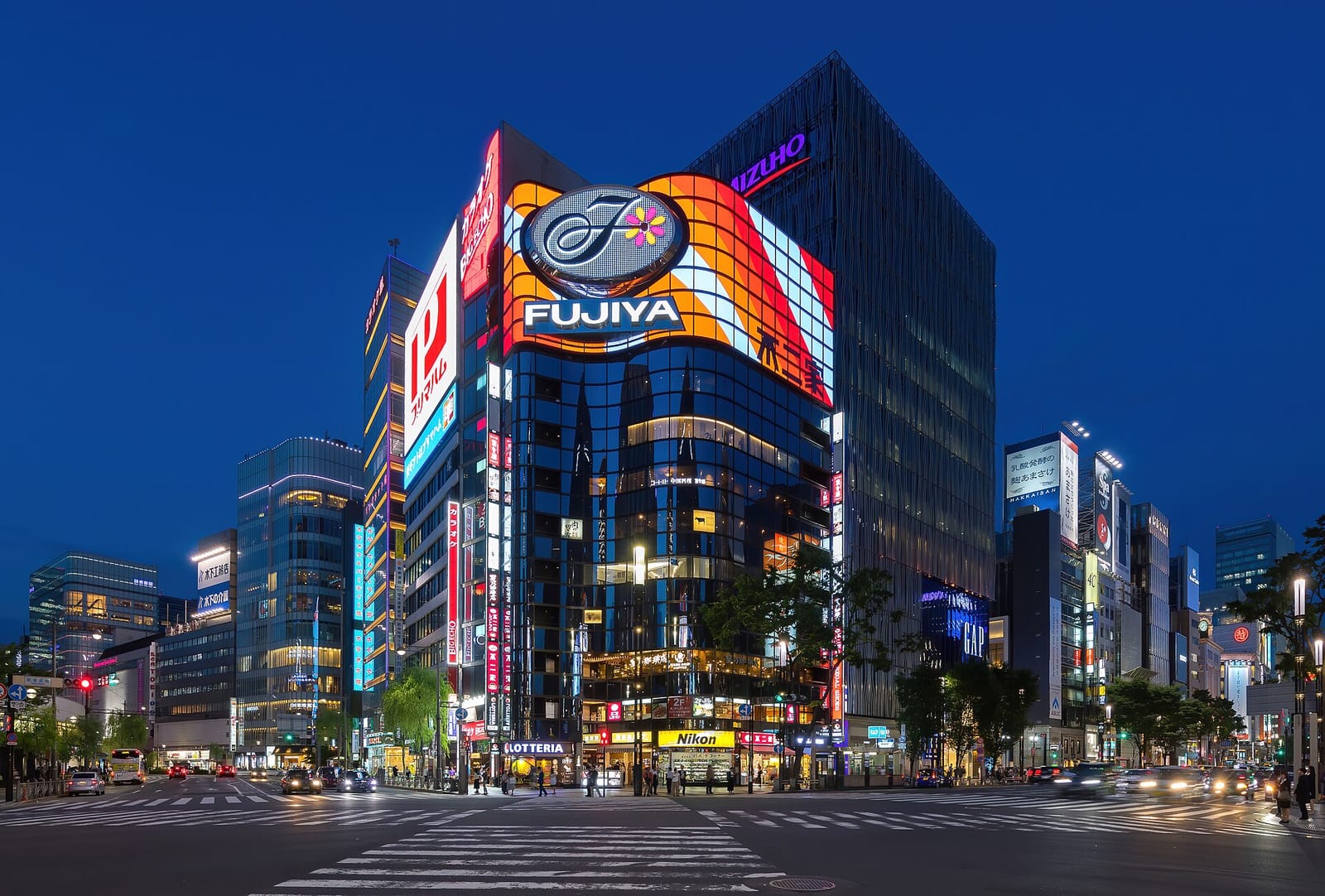 Ginza Sushi Lunch Under ¥5,000: Sets, Hours and Booking
FAQ
Is the Tsukiji Outer Market open on Sundays?
Sundays are marked as regular closing days on the Tokyo Central Wholesale Market calendar that the Tsukiji Outer Market publishes, and so are national holidays and some Wednesdays. The outer market says each shop sets its own schedule, so some shops may open, but plan your visit for a day the calendar shows as open.
What time should you go to the Tsukiji Outer Market?
Arrive at about 9:00 a.m. The market says professional buyers have priority from 6:00 to 9:00, the public buyers' hours run from 9:00 to 14:00, and opening hours are flexible after 14:00. It also recommends an early lunch.
How do you get from Tsukiji to Ginza?
Walk. The Tsukiji Outer Market lists Higashi-ginza Station, on the eastern edge of Ginza, as a 3-minute walk. If you prefer the subway, Tsukiji Station on the Hibiya Line is a 1-minute walk from the market and the Hibiya Line runs on to Higashi-ginza and Ginza.
How much is Hamarikyu Gardens?
Entry is ¥300, or ¥150 for visitors aged 65 and over, and free for primary school children and younger (as of November 2026). The garden is open 9:00 to 17:00 with last entry at 16:30, and closes from December 29 to January 1.
Can you eat while walking at Tsukiji?
The market asks you not to. Its manners guide says wandering while eating bothers other people, so eat inside the shop, in front of the stall, or in a space set aside for eating.
Sources
- Tsukiji Outer Market — Calendar and business hours
- Tsukiji Outer Market — Access Map
- Tsukiji Outer Market — How to enjoy (manners, best time)
- GO TOKYO — Tsukiji Hongwanji
- Tokyo Metropolitan Park Association — Hama-rikyu Gardens outline (hours, fees)
- Tokyo Metropolitan Park Association — Hama-rikyu Gardens access
- Tokyo Cruise (Suijo Bus) — Timetable and fares
- GO TOKYO — Subways (fares)
- GINZA SIX — Business hours (Japanese)
- Ginza Street Association — Pedestrian Zone
- Kabukiweb — Kabukiza theatre information
This article contains affiliate links. We may earn a commission at no extra cost to you.