Shinjuku to Tokyo Station: The Fastest Way, in 14 Minutes
The fastest way from Shinjuku to Tokyo Station is the JR Chuo Line (Rapid): 14 minutes, no change. Which trains to board, which to skip, and the subway backup.
On a Tokyo platform, you wait in line at the markings by each door and let everyone off before you step on. Follow that one unwritten rule at Shinjuku and the rest of this trip is simple. The fastest way to Tokyo Station is the JR Chuo Line (Rapid) bound for Tokyo: one train, no change, and 14 minutes on JR East’s weekday timetable. GO TOKYO, the city’s official tourism site, rounds it to 15 minutes. This guide covers which trains to board and which to skip, how to pay, what to do if the Chuo Line stops, and the last train back. Times are as of November 2026.
What is the fastest way from Shinjuku to Tokyo Station?
Take the JR Chuo Line (Rapid) “for Tokyo (Inbound)” and stay on to the end of the line. JR East’s stop lists for two weekday trains show the same 14-minute ride:
| Train | Leaves Shinjuku | Stops on the way | Arrives Tokyo |
|---|---|---|---|
| Rapid | 10:08, track 8 | Yotsuya, Ochanomizu, Kanda | 10:22, track 1 |
| Chuo Special Rapid | 10:03, track 8 | Yotsuya, Ochanomizu, Kanda | 10:17, track 2 |
Tokyo is the last stop for these trains, so you cannot ride past it. When the doors open and everyone gets off, you are there.
The steps:
- At JR Shinjuku Station, follow the signs for the Chuo Line (Rapid). JR East’s stop lists show both trains above leaving from track 8.
- Check the board says “for Tokyo” and the train type is Rapid, Chuo Special Rapid or Ome Special Rapid.
- Ride to the end. The three stops in between are Yotsuya, Ochanomizu and Kanda.
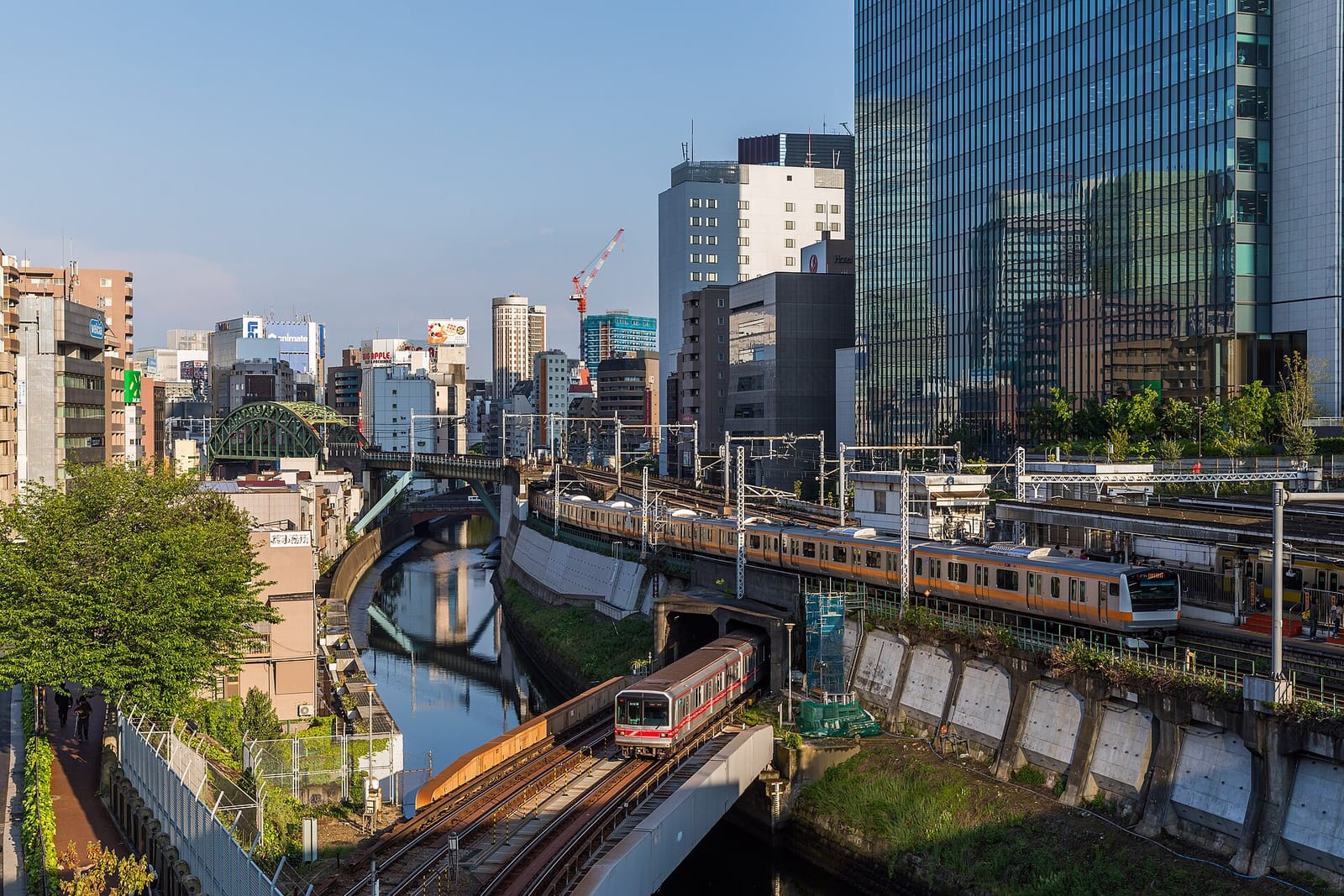
If you are not sure where the Chuo Line platforms are in Shinjuku’s maze of gates, our Shinjuku Station exits guide shows which JR gates sit closest to each part of the station.
Which trains should you board, and which should you skip?
Board any Tokyo-bound Rapid or Special Rapid. Skip limited expresses and the local line with a similar name. JR East’s weekday timetable for the Chuo Line (Rapid) for Tokyo at Shinjuku lists 14 departures in the 10:00 hour:
| Train type on the board | Take it to Tokyo Station? |
|---|---|
| Rapid (9 departures, 10:00 hour) | Yes |
| Chuo Special Rapid (3 departures) | Yes |
| Ome Special Rapid (1 departure) | Yes |
| Limited Express Kaiji (1 departure) | No, it needs an extra limited express ticket |
The Special Rapids are not faster on this stretch. They skip stations further west, but between Shinjuku and Tokyo they stop at the same three stations as the ordinary Rapid. Take whatever leaves first.
The common mix-up: the Chuo-Sobu Line (Local). Shinjuku has a second “Chuo” line. JR East lists the Chuo-Sobu Line (Local) eastbound as running “for Ochanomizu / Chiba”. It does not go to Tokyo Station. If the sign does not say “Chuo Line (Rapid)” and “for Tokyo”, you are on the wrong platform.
How do you pay?
Tap an IC card such as Suica or PASMO at the gate in Shinjuku, and tap again at the gate in Tokyo. The whole trip is on JR East, so there is one fare and no gate in between. If you do not have a card yet, see how to buy a Suica in Shinjuku.
A paper ticket works too. Buy a JR ticket to Tokyo at the machines and check the fare chart above them.
Only the limited express needs anything extra. You never need it for this trip, because the ordinary trains are just as quick.
What if the Chuo Line is stopped or delayed?
Switch to the Tokyo Metro Marunouchi Line. It is the only non-JR route with no change: GO TOKYO lists the line as giving direct access from Tokyo Station to Ginza, Shinjuku and Ikebukuro. It makes more stops than the Chuo Line (Rapid), so expect a longer ride.
| Route | Change? | Stops | Weekday example |
|---|---|---|---|
| JR Chuo Line (Rapid) | No | 3 in between | 14 min (10:08 to 10:22) |
| Tokyo Metro Marunouchi Line | No | More than the Chuo Line | Slower than the Chuo Line |
| JR Yamanote Line (clockwise) | No | 15 in between | Leaves 10:01, departs Tokyo 10:33 |
Things to know about each backup:
- Marunouchi Line. It uses Tokyo Metro’s own Shinjuku station and its own gates. A Suica or PASMO card works the same way. Ginza is on the same line, which is handy if your goal is shopping rather than a train.
- Yamanote Line. JR East’s timetable shows a clockwise train leaving Shinjuku at 10:01 and leaving Tokyo at 10:33, with 15 stations in between. That is roughly twice as long, but it stays inside JR gates, which helps if you already hold a JR ticket or pass.
- Taxi. Door to door with no stairs, but the fare is metered and rises in traffic. The train is usually quicker across central Tokyo.
Is the trip harder with a suitcase or at rush hour?
Yes, at times. The ride is short, but weekday mornings are commuter peak on the Chuo Line, and trains fill up. With a large suitcase, aim for after 10:00, when JR East still shows 14 Tokyo-bound departures an hour.
Two ways to make it easier:
- Store your bags first. If you are spending the day around Tokyo Station and returning to Shinjuku, leave luggage behind. Our Shinjuku Station luggage storage guide lists coin lockers and counters by gate.
- Allow time at Tokyo Station. The ride is 14 minutes, but Tokyo Station is large. If you are connecting to a Shinkansen, add time to walk from the Chuo Line platform to the Shinkansen gates. Our guide to Shinjuku to Kyoto by Shinkansen explains the tickets and the transfer gate.
Where do you arrive at Tokyo Station?
On tracks 1 or 2, where the Chuo Line (Rapid) ends. JR East’s stop lists show the 10:08 Rapid arriving on track 1 and the 10:03 Chuo Special Rapid on track 2. Follow the signs from the platform to the exit you need, or to the Shinkansen if you are connecting.
Tokyo Station
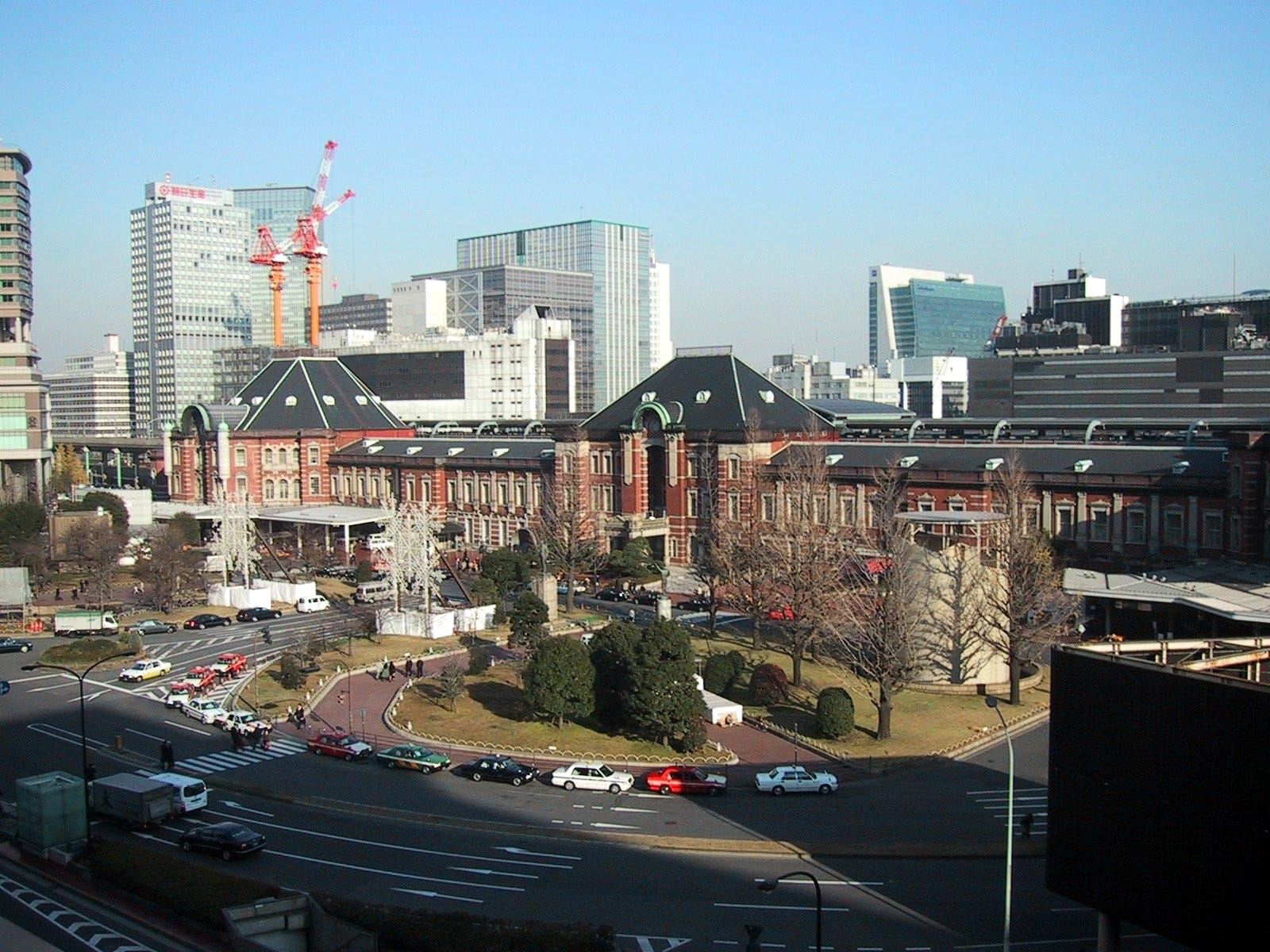
- Access
- JR Chuo Line (Rapid) from Shinjuku, 14 min on weekdays; arrives on track 1 or 2
- Source
- timetables.jreast.co.jp
What time is the last train back to Shinjuku?
On weekdays, the last outbound Chuo Line (Rapid) from Tokyo leaves at 0:06, bound for Musashi-Koganei, according to JR East. It passes through Shinjuku. The last few departures that night are:
| Leaves Tokyo | Type | Bound for |
|---|---|---|
| 23:40 | Rapid | Toyoda |
| 23:45 | Rapid | Takao |
| 23:50 | Rapid | Toyoda |
| 23:56 | Rapid | Toyoda |
| 0:06 | Rapid | Musashi-Koganei |
All are ordinary Rapid trains heading west toward Shinjuku, so take the first one you see. In the other direction, JR East’s weekday timetable lists the first Tokyo-bound Chuo Line (Rapid) from Shinjuku at 4:57 and the last at 0:15. Saturday and holiday timetables are published separately, and JR East asks travellers to check the operating date on each timetable, so confirm the day before a late night.
Which option should you choose?
For almost everyone, the answer is the Chuo Line (Rapid):
| If you | Do this |
|---|---|
| Start at JR Shinjuku Station | Chuo Line (Rapid) for Tokyo, 14 minutes, no change |
| See a Kaiji on the board | Let it go and take the next Rapid or Special Rapid |
| Find yourself on a “Chuo-Sobu Line (Local)” platform | Go back; that line runs to Ochanomizu and Chiba |
| Find the Chuo Line stopped | Tokyo Metro Marunouchi Line, direct to Tokyo Station |
| Want to stay inside JR gates when the Chuo Line is stopped | Yamanote Line clockwise, about half an hour |
| Carry a big suitcase | Travel after 10:00, or store bags in Shinjuku first |
Heading somewhere else from Shinjuku? Our Shinjuku to Asakusa guide uses the same Chuo Line as far as Kanda, and our Shinjuku to Shibuya guide covers the short hop south. Catching a shinkansen after you arrive? See things to do near Tokyo Station before your shinkansen.
What to pack before you go
Maps, train apps and translation drain a phone by mid-afternoon. Keep it in your carry-on: power banks are not allowed in checked luggage.
Japan still runs on coins: there are six of them, from 1 to 500 yen, and you collect a pocketful fast. A holder with a slot for each coin lets you pay the exact amount at ticket machines, shrines and small shops without digging.
 Shinjuku Hotels With Big Rooms for Families: 6 Picks by Group Size
 Shinjuku Hotels Connected to the Station: What 'Direct' Means
FAQ
What is the fastest way from Shinjuku to Tokyo Station?
The JR Chuo Line (Rapid) bound for Tokyo. JR East's weekday timetable shows a Rapid leaving Shinjuku at 10:08 and reaching Tokyo at 10:22, and a Chuo Special Rapid leaving at 10:03 and arriving at 10:17. Both take 14 minutes with no change.
Is the Chuo Special Rapid faster than the regular Rapid to Tokyo Station?
Not between Shinjuku and Tokyo. Both stop at Yotsuya, Ochanomizu and Kanda, and JR East's timetable shows both taking 14 minutes. Take whichever leaves first.
Can I take the Yamanote Line from Shinjuku to Tokyo Station?
Yes, but it is slower. JR East's timetable shows a clockwise Yamanote Line train leaving Shinjuku at 10:01 and leaving Tokyo at 10:33, with 15 stations in between. The Chuo Line (Rapid) covers the same trip in 14 minutes.
Is there a subway from Shinjuku to Tokyo Station?
Yes. The Tokyo Metro Marunouchi Line links Tokyo Station directly with Ginza and Shinjuku, according to GO TOKYO, the city's official tourism site. It stops at more stations than the JR Chuo Line (Rapid), so it is slower, but it is a useful backup if the JR Chuo Line is disrupted.
What time is the last train from Tokyo Station back to Shinjuku?
On weekdays, JR East lists the last outbound Chuo Line (Rapid) train from Tokyo at 0:06, bound for Musashi-Koganei, which passes through Shinjuku. Weekend and holiday timetables are published separately, so check the day you travel.
Sources
- JR East — Shinjuku Station timetables
- JR East — Shinjuku, Chuo Line (Rapid) for Tokyo (weekdays)
- JR East — Rapid train stops, Shinjuku 10:08 to Tokyo 10:22
- JR East — Chuo Special Rapid stops, Shinjuku 10:03 to Tokyo 10:17
- JR East — Shinjuku, Yamanote Line for Ikebukuro and Ueno (weekdays)
- JR East — Yamanote Line train stops, Shinjuku 10:01
- JR East — Tokyo Station timetables
- JR East — Tokyo, Chuo Line (Rapid) outbound (weekdays)
- GO TOKYO — Tokyo Station and Marunouchi
This article contains affiliate links. We may earn a commission at no extra cost to you.