How to Book a Ryokan in Japan as a Foreigner: Steps and Pitfalls
How to book a ryokan in Japan from abroad: which booking channel suits you, the meal plan, payment and cancellation rules to check, and what changes in Gion.
A ryokan booking runs on a short timeline, and most problems come from missing one step. Weeks before: you pick a plan, and the plan decides your meals. A few days before: you send dietary needs and your arrival time. On the day: check-in usually opens at 15:00 or 16:00, dinner is served in a set window, and many inns lock the door at night. You do not need to speak Japanese for any of it. This guide covers which booking channel to use, what to check before you pay, and how the steps change with your situation.
What is the fastest way to book a ryokan as a foreigner?
Book on an English booking site, or on the ryokan’s own English page if it has one. Pick a plan with dinner and breakfast, enter the exact number of guests, and read the cancellation policy before you pay.
That covers most stays. The Japan Tourism Agency (JTA) says ryokan pricing is commonly per person, and the fee often includes dinner, breakfast and shared facilities such as the bath. It also says you reserve your meals at the same time you reserve your room. So the plan you click is the meal you get.
If you have not decided which English site to start with, our Agoda vs Booking.com comparison goes through fees, currency and price matching in detail. This guide focuses on what is different about a ryokan.
Which booking channel should you use?
Use an English booking site if you want a fast booking in your own currency and one account for the whole trip. Use the ryokan’s own site if it has an English booking form and you want to talk to the inn directly. Use Jalan’s English site if you want to see more Japanese-market plans.
| Ryokan's own website | Agoda | Booking.com | Jalan (English site) | |
|---|---|---|---|---|
| Best for | Small inns, special requests, direct contact | Comparing many Kyoto and Hakone ryokan in one place | Travelers who already use it for hotels | Seeing plans aimed at Japanese travelers |
| English | Varies; some inns are Japanese only | Yes | Yes | Yes, describes itself as one of the largest hotel and ryokan booking sites in Japan |
| Meal plans | Usually listed in detail | Shown per room type; check the plan name | Shown per room type; check the plan name | Often several plans per room |
| Payment | Varies: card online, or pay at the ryokan | Shown on each listing | Shown on each listing | Shown on each plan |
| Link on this page | — | Area searches below | None (compare on their site) | None (compare on their site) |
Ryokan's own website
- Best for
- Small inns, special requests, direct contact
- English
- Varies; some inns are Japanese only
- Meal plans
- Usually listed in detail
- Payment
- Varies: card online, or pay at the ryokan
- Link on this page
- —
Agoda
- Best for
- Comparing many Kyoto and Hakone ryokan in one place
- English
- Yes
- Meal plans
- Shown per room type; check the plan name
- Payment
- Shown on each listing
- Link on this page
- Area searches below
Booking.com
- Best for
- Travelers who already use it for hotels
- English
- Yes
- Meal plans
- Shown per room type; check the plan name
- Payment
- Shown on each listing
- Link on this page
- None (compare on their site)
Jalan (English site)
- Best for
- Seeing plans aimed at Japanese travelers
- English
- Yes, describes itself as one of the largest hotel and ryokan booking sites in Japan
- Meal plans
- Often several plans per room
- Payment
- Shown on each plan
- Link on this page
- None (compare on their site)
The JTA says payment can be due in advance, at the ryokan on check-out, or either, depending on the ryokan or booking site. Booking sites that require advance payment generally ask for a credit card. If you pay in advance, the JTA says you will not be asked to pay at the ryokan.
Rakuten Travel is another large Japanese platform. Check whether a plan you find there is open to international bookings before you rely on it.
What should you check before you pay?
Check five things on the listing: the meal plan, the price basis, the guest count, the room type and the cancellation rules. Each one comes from the JTA’s official ryokan FAQ.
- Meal plan. Many rates are “one night, two meals” (dinner and breakfast). Some ryokan also sell breakfast-only or “simple stay” plans with fewer or no meals. JNTO notes that dinner at a ryokan is typically a formal multi-course kaiseki meal, so a room-only plan skips a large part of the stay.
- Per person or per room. It is common to pay per person. Some ryokan charge per room, then add a fee for guests beyond the room’s capacity. Compare the total for your whole group, not the headline number.
- Children. The JTA says it is common for ryokan to charge the full fee for children 12 and over. Some offer family plans or a flat per-child facility fee. Enter the number and ages of children accurately when you book.
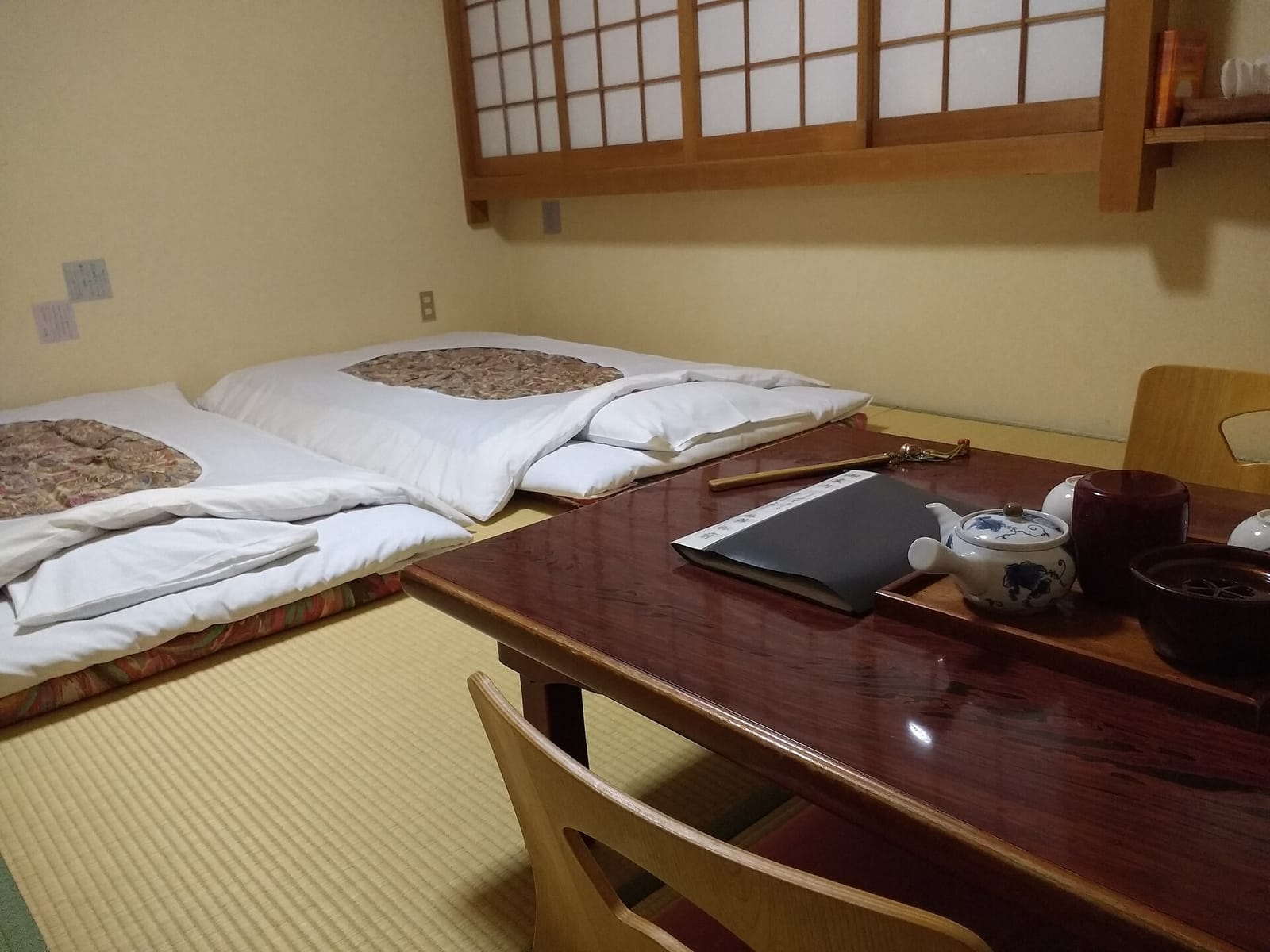
- Room type. Traditionally you sleep on a futon on tatami, not on a bed. Some ryokan now offer rooms with beds, chairs and tables. If you need a bed, pick a room type that says so, or ask the ryokan.
- Cancellation. The JTA says ryokan cancellation fees work much like hotel ones: the closer to your date, the higher the fee, and a no-show typically pays 100%. Read the exact percentages on your listing.
How does booking change with your situation?
The basic steps stay the same, but a few situations need one extra message to the ryokan. Here is what to do in each.
You have dietary needs or allergies
Book a plan with meals, then message the ryokan straight away. The JTA says dietary restrictions should be requested in advance, ideally a few days before arrival, and that not every request can be met. Meals are made from seasonal ingredients prepared ahead, so a request on the day is hard to fit in. On a booking site, use the “special requests” box or the site’s message tool, and keep the reply.
You will arrive late
Tell the ryokan your arrival time when you book. The JTA says check-in usually starts at 15:00 or 16:00, and dinner is served in a set window, so a late arrival can mean no dinner. If your train gets in after the check-in time, let the ryokan know. If you are coming from Tokyo, our Shinjuku to Kyoto by Shinkansen guide helps you estimate when you will reach Kyoto.
You want to go out at night in Gion
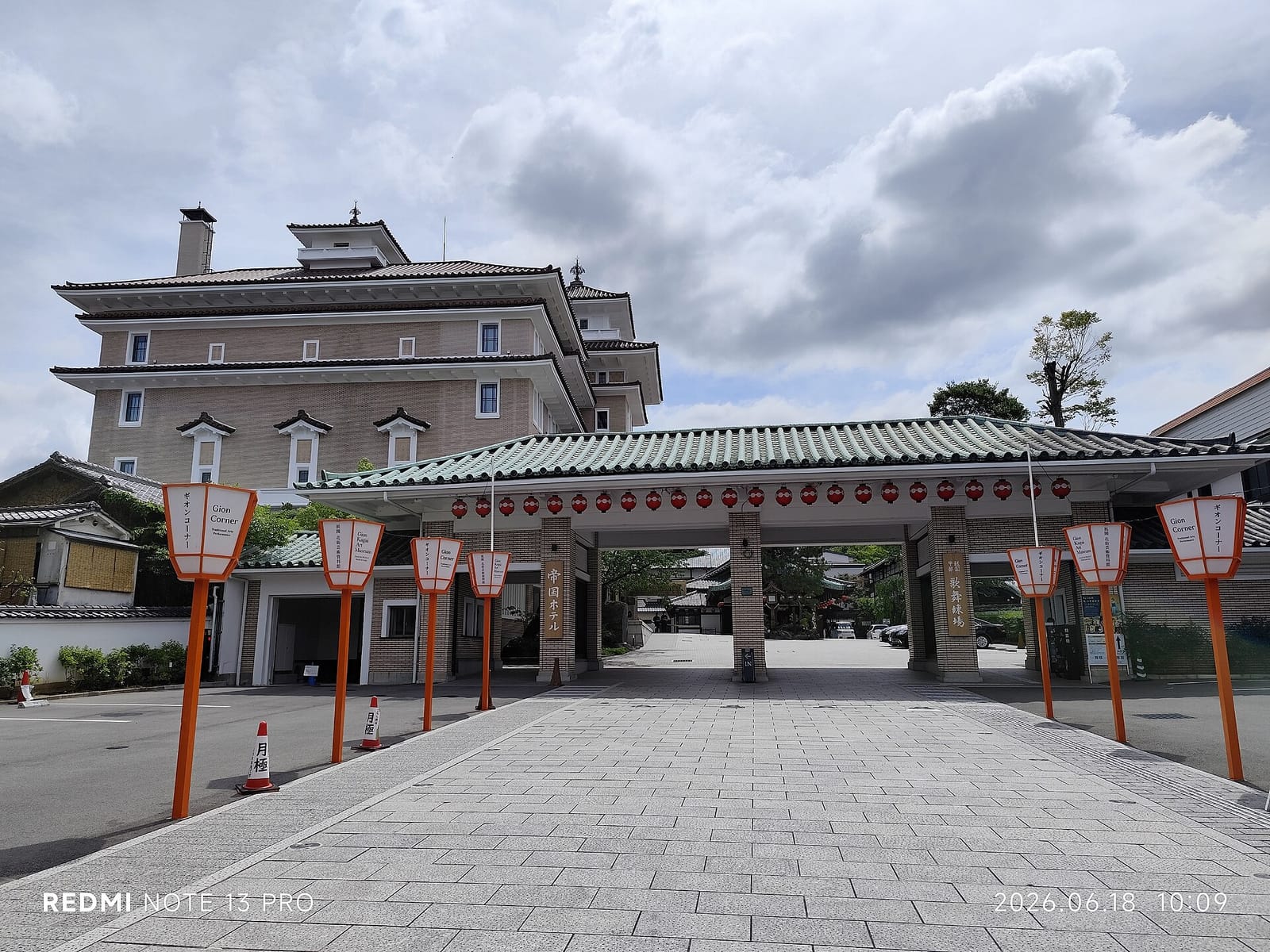
Ask about a curfew before you book. The JTA says most ryokan have a curfew, after which you cannot enter or leave the building. Some have no curfew, some keep staff at the front desk overnight, and some give guests a key. Gion is at its liveliest in the evening, so this matters if you plan dinner or drinks out.
You are arriving by train in the countryside
Ask about pick-up when you book. The JTA says some ryokan offer pick-up from the nearest station, but you almost always have to arrange it in advance. This rarely applies in central Gion, but it often does in onsen towns. Our Arashiyama ryokan guide notes which inns pick up guests at the station.
You want to book at the last minute
Search booking sites rather than emailing inns. The JTA notes that ryokan meals need advance preparation, so plans with dinner may not be open for very short notice. Filter for breakfast-only or room-only plans if the dinner plans are gone.
What happens at check-in?
Have your passport ready. The Ministry of Health, Labour and Welfare says foreign nationals who do not have an address in Japan must give their nationality and passport number for the guest register, and that presenting and photocopying the passport is required by the Government of Japan. Every guest in your group should have their passport with them.
A few more points from the JTA FAQ:
- If you arrive before check-in, the ryokan will usually keep your luggage at the front desk.
- Most rooms have a shower and bathtub, but the communal bath is a central part of the stay.
- Check-out is usually between 10:00 and 12:00.
How much does a ryokan in Kyoto cost, including tax?
JNTO puts the average ryokan stay at around ¥15,000 per night, with high-end inns costing far more. Compare the total for your dates on the booking site, since rates change by season and day of the week.
In Kyoto, also budget for the city’s accommodation tax. From March 1, 2026, it is charged per person per night, as of November 2026:
| Accommodation fee per person per night | Kyoto City tax |
|---|---|
| Under ¥6,000 | ¥200 |
| ¥6,000 to ¥19,999 | ¥400 |
| ¥20,000 to ¥49,999 | ¥1,000 |
| ¥50,000 to ¥99,999 | ¥4,000 |
| ¥100,000 or more | ¥10,000 |
Check whether your booking total says the tax is included or will be collected at the ryokan. On a two-night stay for two people at a ¥30,000 per-person rate, the tax alone is ¥4,000.
Where should you start searching?
Start with the area, then filter for ryokan or Japanese-style rooms. These three areas have the most ryokan choice for a first trip.
Gion, Kyoto
Small inns in old townhouses sit side by side with modern hotels. Ask about a curfew if you plan to stay out late. For hotel picks in the same streets, see our best hotels in Gion guide, and if you are still choosing a base, Gion or Kyoto Station.
Arashiyama, Kyoto
Kyoto’s riverside onsen area, west of the city center. Several inns have private baths you can reserve. Our Arashiyama ryokan guide checks which room baths use hot spring water.
Hakone Yumoto
A popular onsen ryokan area for trips from Tokyo. Our Hakone Yumoto ryokan guide lists inns with private baths.
You can add any of these areas to your route on the map and compare stays for your exact dates.
What to pack before you go
Maps, train apps and translation drain a phone by mid-afternoon. Keep it in your carry-on: power banks are not allowed in checked luggage.
Japan still runs on coins: there are six of them, from 1 to 500 yen, and you collect a pocketful fast. A holder with a slot for each coin lets you pay the exact amount at ticket machines, shrines and small shops without digging.
 Gion and Higashiyama Walking Itinerary: Morning and Evening Routes
 Best Ryokan in Kyoto Under $300: Five Picks by Budget for Two
FAQ
Can foreigners book a ryokan in Japan?
Yes. There is no rule against it, and many ryokan are listed on English booking sites. At check-in, guests who do not have an address in Japan must show their passport, and the ryokan will photocopy it, as required by the Government of Japan.
Are ryokan prices per person or per room?
Usually per person. The Japan Tourism Agency says it is common to pay per person, and the fee often covers dinner, breakfast and shared facilities such as the bath. Some ryokan now charge per room and add a fee for each extra guest, so check how the listing is priced.
What happens if I arrive late at a ryokan?
Dinner is served in a set window, so you may miss it. The Japan Tourism Agency says to let the ryokan know if you will arrive significantly later than the check-in time, which is usually from 15:00 or 16:00.
Do ryokan have a curfew?
Many do. The Japan Tourism Agency says most ryokan have a curfew after which you cannot enter or leave, though some have staff on duty or give you a key. Ask before you book if you plan to be out late.
How far in advance should I book a ryokan in Kyoto?
There is no official rule. Book as soon as your dates are fixed for cherry blossom season, autumn leaves and New Year, because small ryokan have few rooms. Same-day bookings are hard, since many ryokan prepare dinner in advance.
Sources
- Japan Tourism Agency — Ryokan FAQ: pricing, cancellation and payment
- Japan Tourism Agency — Ryokan FAQ: pricing and payment (Q1 to Q3)
- Japan Tourism Agency — Ryokan FAQ: arrival, check-in and pick-up
- Japan Tourism Agency — Ryokan FAQ: rooms, baths and check-out
- Japan Tourism Agency — Ryokan FAQ: communal baths and curfew
- Ministry of Health, Labour and Welfare — Passport presentation and copies for foreign guests
- JNTO — Japanese ryokan guide
- Kyoto City Tourism Association — Accommodation tax change
- Jalan — English site
This article contains affiliate links. We may earn a commission at no extra cost to you.