Kimono Rental in Gion, Kyoto: 3 Shops and a Late-Autumn Photo Route
Three kimono rental shops near Gion-Shijo Station with return deadlines and prices, plus a walking route to Shirakawa, Kennin-ji and Kodai-ji in late autumn.
Late November is the busiest time of year to rent a kimono in Gion, and the calendar works against you in one specific way. Kodai-ji’s autumn night viewing runs from October 23 to December 13, 2026, and the lights come on at 17:00, according to the temple. Yet the three Gion rental shops in this guide all close their return counters between 17:30 and 17:50. So the plan for this season is simple: start early, put the outdoor photo spots in the middle of the day, and choose a next-day return if you want to stay in kimono after dark. This guide gives you the shops, the deadlines, and a walking route in map order.
Why rent in the morning and walk in this order?
Rent as early as the shop allows, because every return deadline below is before 18:00. Waraku’s last dressing slot is 16:00 and Rikawafuku’s is 15:30, but a late slot leaves you less than two hours in kimono.
The route below starts at Gion-Shijo Station on the Keihan Line, where two of the three shops are within a couple of minutes’ walk. From there it goes north to the Shirakawa canal, south down Hanamikoji to Kennin-ji, east to the Yasaka Pagoda, then north to Kodai-ji and Yasaka Shrine. The last stop is close to Okamoto’s Gion shop, so the loop ends near the shops.
| Shop | Distance from station | Last dressing | Return by |
|---|---|---|---|
| Waraku Gion | 1 min from Gion-Shijo (Keihan) | 16:00 | 17:30 (or next day, 9:30–12:00, +¥1,100) |
| Rikawafuku Gion | 2 min from Gion-Shijo, Exit 6 | 15:30 | 17:30 |
| Okamoto Gion | 5 min from the Gion city bus stop | Not stated | 17:50 |
Coming from Tokyo first? Our Shinjuku to Kyoto by Shinkansen guide walks through the smartEX booking and the transfer gates at Kyoto Station.
Which kimono rental shop in Gion should you choose?
Pick by what you need most: Waraku if you want to keep the kimono overnight, Rikawafuku if you want clear tax-included prices, and Okamoto if you want to dress in a traditional townhouse near Yasaka Shrine. All three are open every day.
Kimono Rental Waraku Kyoto Gion Store
The closest of the three shops to Gion-Shijo Station. Every plan includes baggage storage, and you get a large bag for your belongings at check-in. Suitcases can be stored for ¥550, so you can come straight from Kyoto Station. The next-day return option, from 9:30 to 12:00, is the one to choose if you want to see Kodai-ji’s night lighting in kimono. The plan page lists a higher price from October 1 without naming the year, so check the total when you book.
- Hours
- 9:30–18:00, open every day; last dressing 16:00, last return 17:30 (as of November 2026)
- Price
- All-Inclusive Plan with hair styling ¥4,048 including tax per person; overcoat or stole option ¥550; next-day return ¥1,100 (as of November 2026)
- Access
- Keihan Gion-Shijo Station, 1 min walk; Hankyu Kyoto-Kawaramachi Station, 4 min walk
- Source
- waraku-kimono.jp
Kyoto Kimono Rental Rikawafuku Gion Store
On the 3rd floor of the Gion Moriya Building, on the east side of the Kamo River. The plans include dressing, baggage storage and a free choice of kimono; the Basic Plan leaves out hair styling. The store also lists hakama, homongi and furisode plans for more formal photos, and notes that prices may change in peak periods.
- Hours
- 9:00–18:00, open all year; last dressing 15:30, last return 17:30 (as of November 2026)
- Price
- Basic Plan ¥4,500; Hair Set Plan ¥6,500; Couple Plan ¥11,000 for two, tax included (as of November 2026)
- Access
- Keihan Gion-Shijo Station Exit 6, about 2 min walk; Shijo Keihan bus stop, about 1 min
- Source
- ewha-yifu.com
Rental Kimono Okamoto Gion Shop
Set inside a large Kyoto machiya townhouse with a garden, close to Yasaka Shrine. It keeps the latest return time of the three, 17:50, which buys you a little more light. Cancellations are free until 13:00 the day before, and the shop gives tabi socks as a free gift. It has no parking lot.
- Hours
- 9:00–18:00, open year round; returns until 17:50 (as of November 2026)
- Price
- Set Plan from ¥2,980, Select Plan ¥3,980, Full Outfit Plan ¥4,980, before tax (Okamoto plan list, as of November 2026)
- Access
- Gion city bus stop, about 5 min walk (Route 206 from Kyoto Station stop D2)
- Source
- www.okamoto-kimono-en.com
What is included in a kimono rental set?
A standard set covers everything you wear, plus dressing by staff. Okamoto’s plan list says all kimono plans include the kimono, obi belt, a drawstring bag, tabi socks and sandals, with an undergarment and a towel in the set. Waraku’s All-Inclusive Plan adds hair styling and hair accessories, and Rikawafuku’s Hair Set Plan includes women’s hair styling.
Planning a tea ceremony in kimono? Our Kyoto tea ceremony price and booking comparison lists which venues include kimono and how late you can cancel.
Three things usually cost extra:
- Hair styling on the cheapest plans. Rikawafuku’s Basic Plan leaves it out, and Okamoto lists hair styling from ¥500.
- Formal kimono, such as furisode, homongi or hakama. Rikawafuku’s Furisode Plan is ¥36,500 tax included (as of November 2026).
- Optional extras, such as Waraku’s overcoat or stole and its next-day return.
Where should you walk in a kimono around Gion?
Six stops make a loop of about two to three hours with photo breaks. They are numbered in walking order from the north end of Gion to the east.
Shirakawa and Tatsumi Bridge
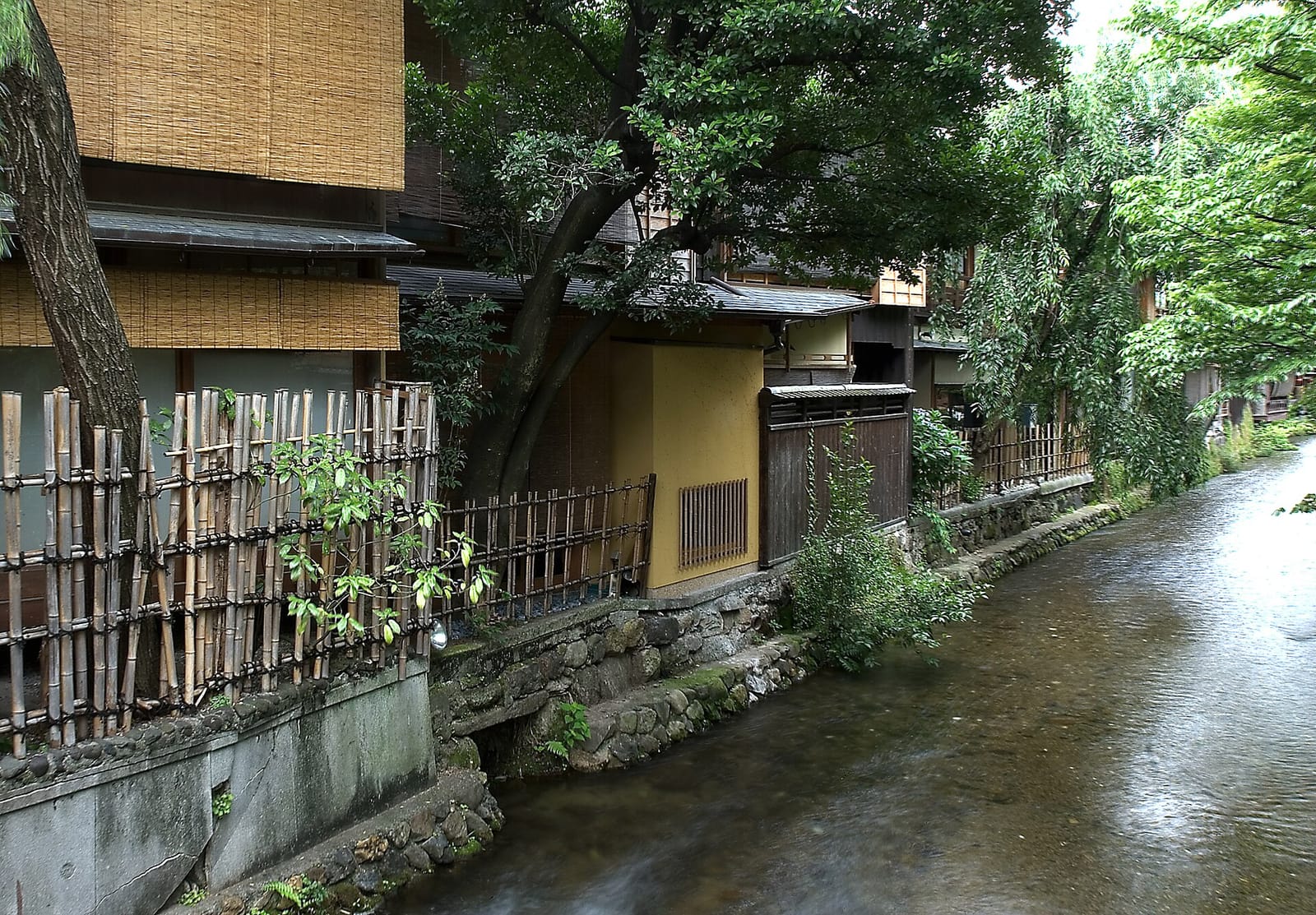
North of Shijo-dori, the small Shirakawa canal runs past willows and wooden teahouses, with the stone Tatsumi Bridge at its center. It is a public street, so there is no entry fee or closing time. Go here first, in the morning, before the tour groups arrive.
Hanamikoji Street
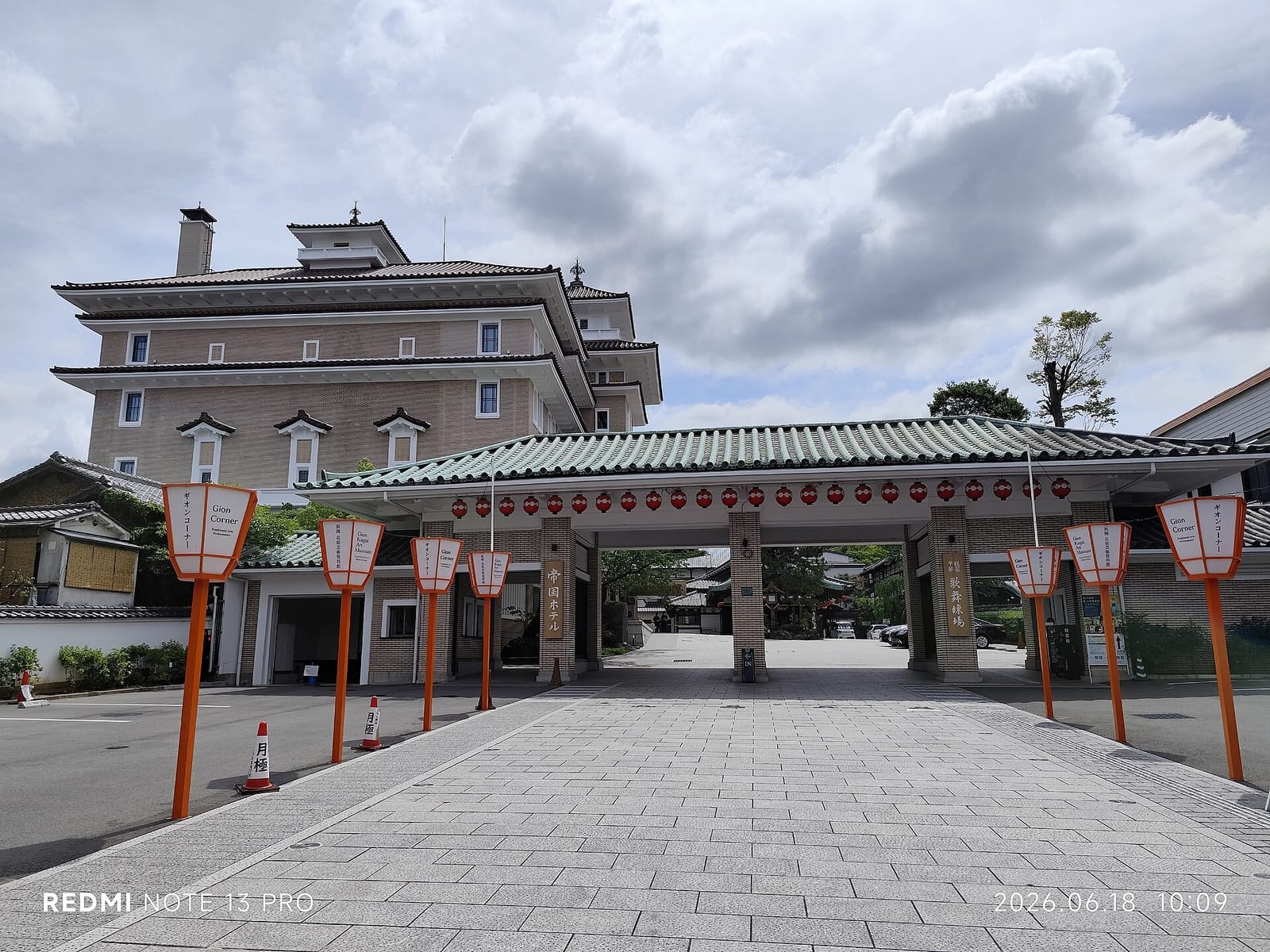
Cross Shijo-dori and walk south down Hanamikoji, the main street of the teahouse district. Stay on the main street for photos, follow any posted signs about side lanes, and never block a doorway or follow a maiko for a picture. At the south end, the street leads to the gate of Kennin-ji.
Kennin-ji
A Zen temple at the south end of Hanamikoji. Its covered halls and gardens make it the best stop on this route if it rains. Note the fee change: the temple has announced that general admission rises to ¥1,000 on January 1, 2027.
- Hours
- 10:00–17:00, last entry 16:30
- Price
- ¥800 for adults (as of November 2026); ¥1,000 from January 1, 2027
- Access
- Keihan Gion-Shijo Station, 7 min walk; Hankyu Kyoto-Kawaramachi Station, 10 min walk
- Source
- www.kenninji.jp
Yasaka Pagoda (Hokan-ji)
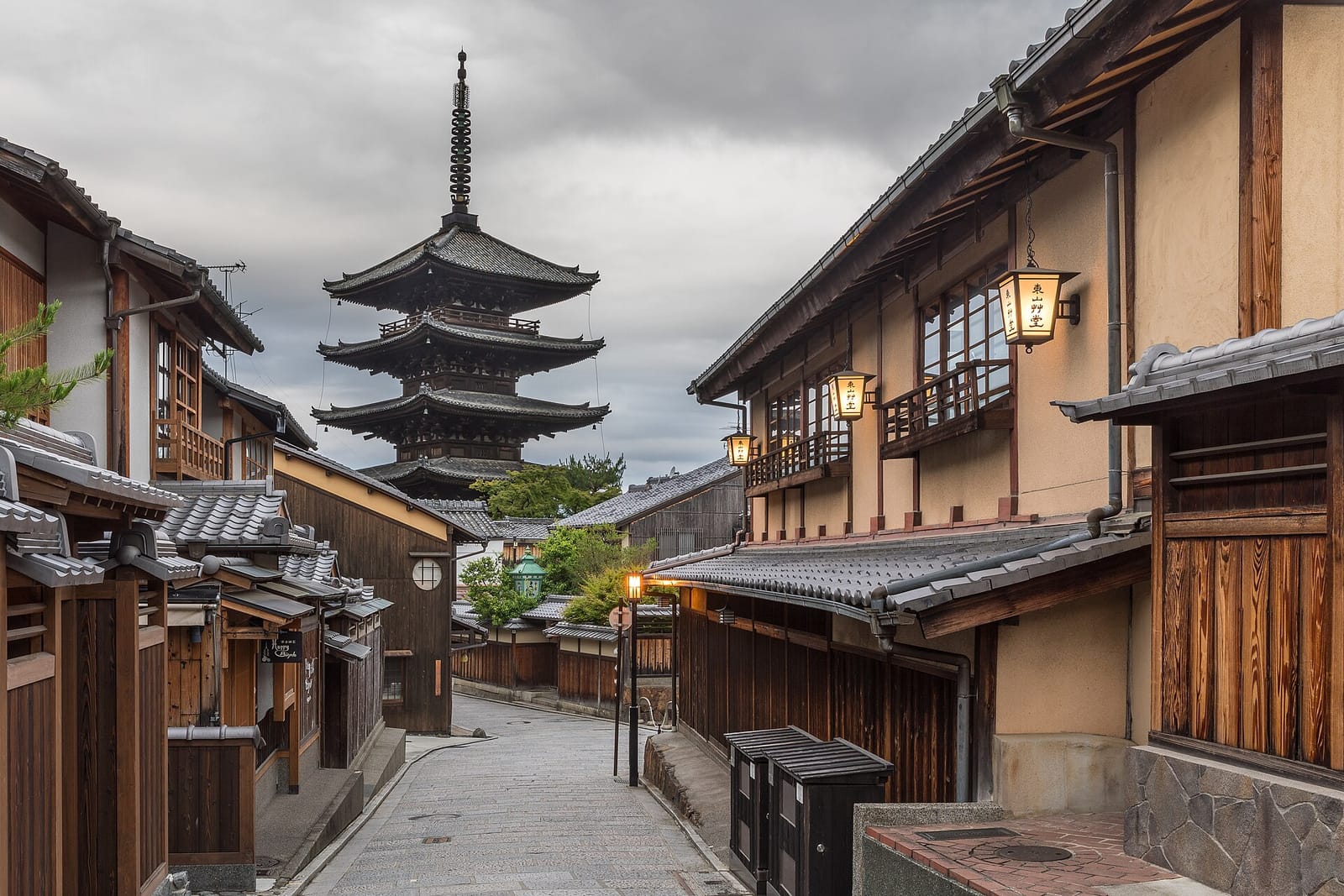
Walk east and uphill from Kennin-ji to the five-story pagoda framed by the old houses of Yasaka-dori. The stone slopes here are steep in places. Take small steps in zori sandals and hold the hem of your kimono when you climb.
Kodai-ji
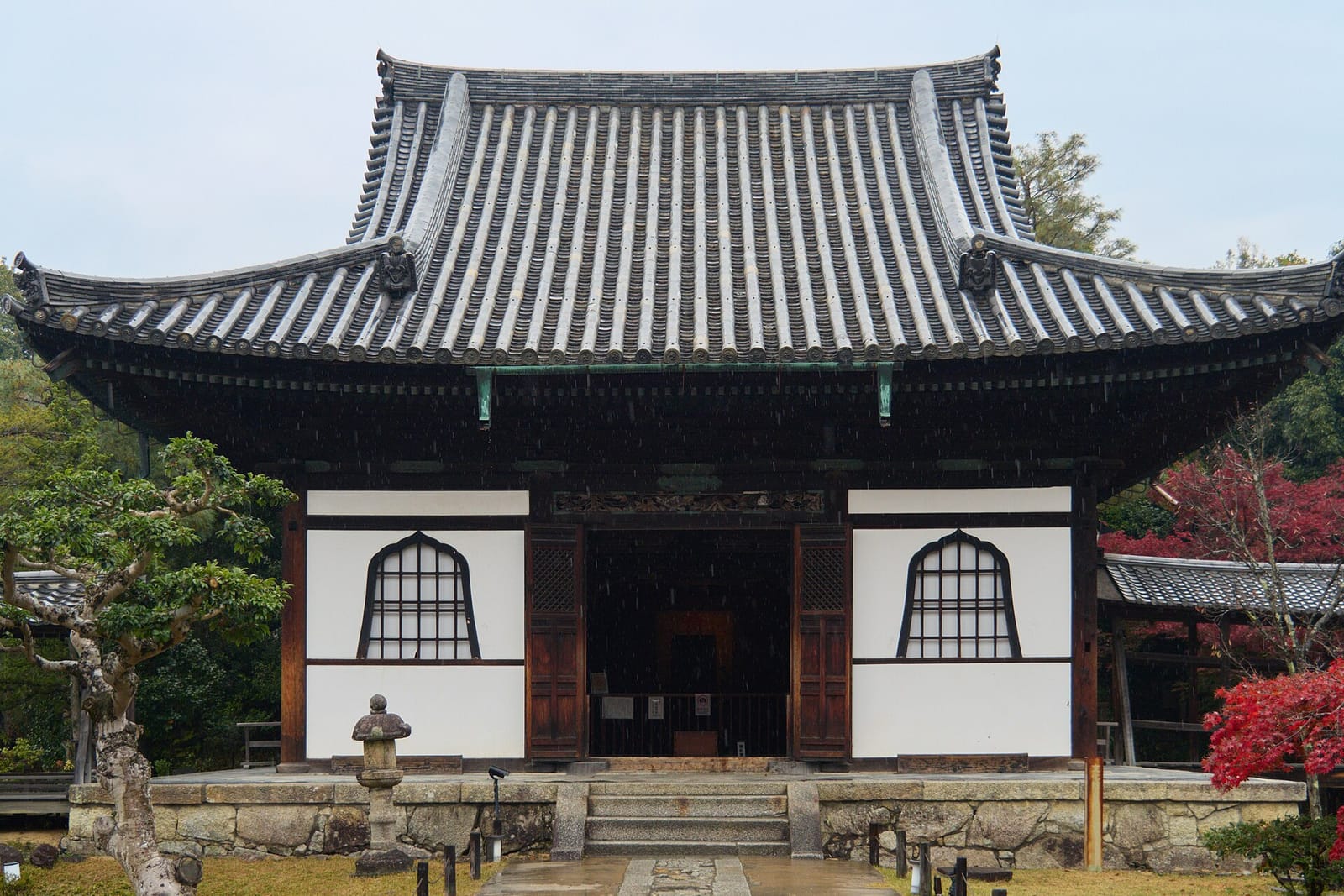
The seasonal highlight of this route. In daytime, visit before the 17:00 last entry. If you booked a next-day return, come back after 17:00 when the night viewing begins, then return the kimono the next morning.
- Hours
- 9:00–17:30, last entry 17:00. Autumn night viewing October 23–December 13, 2026: lit 17:00–22:00, last entry 21:30
- Price
- ¥800 for adults
- Access
- Keihan Gion-Shijo Station, about 10 min walk; Higashiyama Yasui bus stop, 7 min walk east
- Source
- www.kodaiji.com
Yasaka Shrine
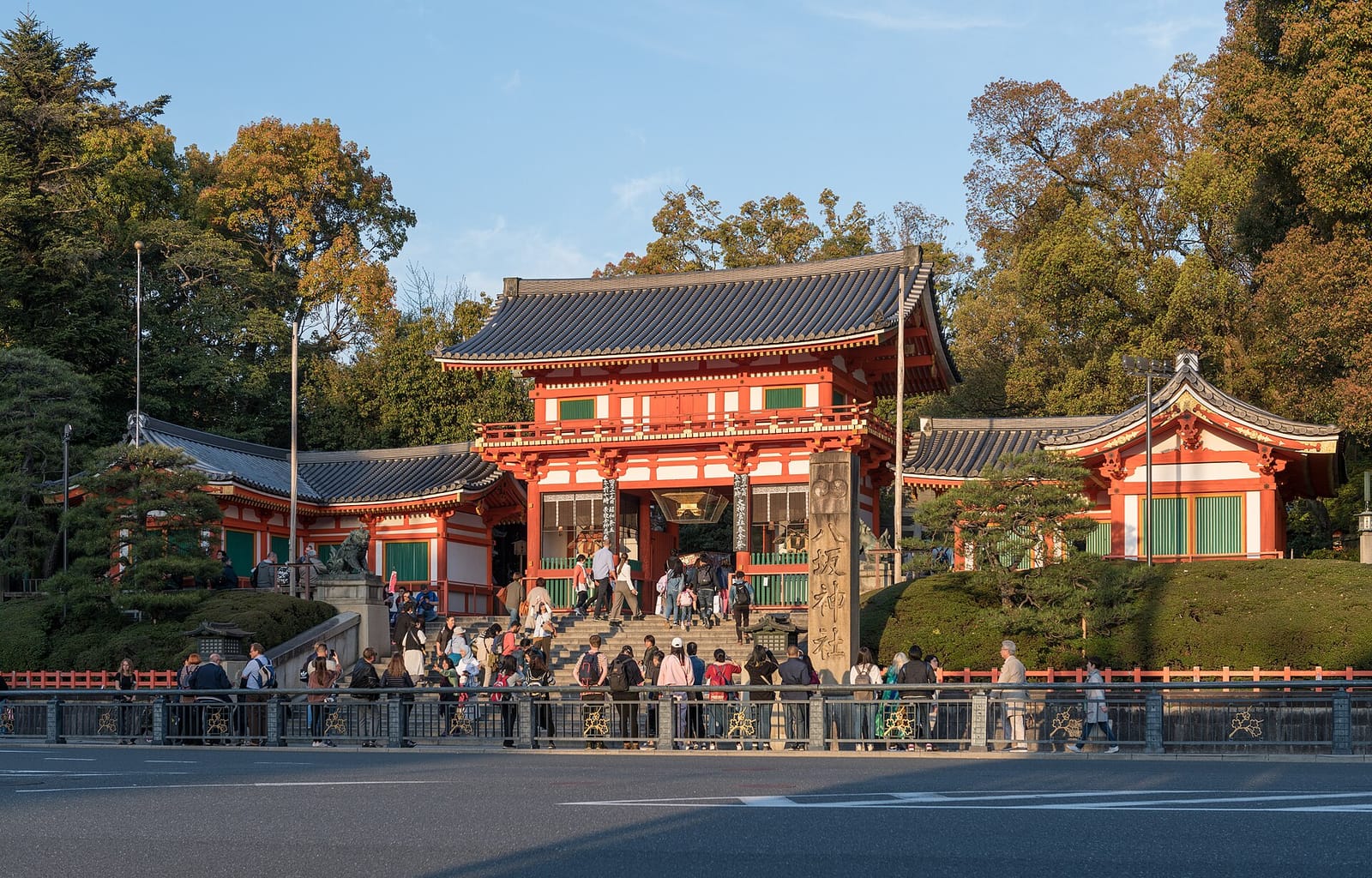
The vermilion west gate at the east end of Shijo-dori closes the loop. From here, Okamoto’s Gion shop is a short walk away, and Shijo-dori leads straight back to Gion-Shijo Station for Waraku and Rikawafuku.
- Access
- Keihan Gion-Shijo Station, about 5 min walk; Gion city bus stop (Route 206)
- Source
- www.yasaka-jinja.or.jp
Tick “Add to my route” on the stops you want, and the box at the end of the page opens them as one route in Google Maps.
How do you make the most of a kimono day in late autumn?
Book a morning slot, plan for the cold, and travel light. These are the points that matter most in late November and December.
- Book early in the day. The shops’ last dressing slots are mid-afternoon, and returns close by 17:30 or 17:50. A 9:00 or 9:30 start gives you the most daylight.
- Dress for the cold. Waraku suggests wearing your own thin innerwear under the kimono and says you may bring your own scarf or stole. It also rents an overcoat or stole for ¥550.
- Use the luggage storage. Waraku and Rikawafuku include baggage storage in their plans, so you can walk with only the small bag that comes with the set.
- Pick your return plan before you book. If Kodai-ji’s night viewing is on your list, choose Waraku’s next-day return. Otherwise, plan to be back at the shop by 17:00.
- Check prices at booking. Rikawafuku says its prices may change in peak periods, and Waraku’s plan page shows a price change from October 1. The total on your booking is the one that counts.
If you still have a day in Tokyo before Kyoto, our guide to buying a Suica in Shinjuku covers the IC card setup for your phone or a physical card.
Where can you stay near Gion?
Staying in Gion makes an early rental slot easy, because two of the three shops are within two minutes of Gion-Shijo Station. The hotel search at the end of this page lists places in the area.
 Gion and Higashiyama Walking Itinerary: Morning and Evening Routes
 Best Ryokan in Kyoto Under $300: Five Picks by Budget for Two
FAQ
How much does kimono rental cost in Gion?
As of November 2026, Rikawafuku's Gion store lists its Basic Plan at ¥4,500 and its Hair Set Plan at ¥6,500, tax included, and says prices may change in peak periods. Okamoto's plan list starts at ¥2,980 before tax for the Set Plan. Hair styling, formal kimono and hakama cost more.
What time do you have to return a rented kimono in Gion?
Waraku's Gion store and Rikawafuku's Gion store both take returns until 17:30, and Okamoto's Gion shop until 17:50. Waraku also offers a next-day return between 9:30 and 12:00 for ¥1,100 extra.
Do I need to book kimono rental in advance?
Booking ahead is the safe choice in late November, when Kyoto is busy with autumn leaves. Rikawafuku says it takes online bookings up to 30 minutes before you arrive, and Okamoto allows free cancellation until 13:00 the day before.
Can I wear a kimono in Kyoto in winter?
Yes. Rental sets include an undergarment, and Waraku rents an overcoat or stole as an option for ¥550. Waraku also suggests wearing your own thin innerwear, and says you may bring your own scarf or stole.
Can I leave my luggage at the kimono rental shop?
Yes. Waraku and Rikawafuku include baggage storage in their plans. Waraku stores suitcases for a ¥550 fee, so you can come straight from Kyoto Station.
Sources
- Kimono Rental Waraku — Kyoto Gion Store (official site)
- Kimono Rental Waraku — All-Inclusive Plan, Kyoto (official site)
- Kimono Rental Waraku — About Kyoto Gion Kimono Rental (official site)
- Kyoto Kimono Rental Rikawafuku — Gion Store (official site)
- Kyoto Kimono Rental Rikawafuku — Kyoto area stores (official site)
- Rental Kimono Okamoto — Gion Shop (official site)
- Rental Kimono Okamoto — Kimono plans (official site)
- Kennin-ji (official site, Japanese) — Access and visiting hours
- Kennin-ji (official site, Japanese) — Admission fee revision notice
- Kodai-ji (official site, Japanese)
- Kodai-ji (official site, Japanese) — Visiting hours and fees
- Kodai-ji (official site, Japanese) — Access
- Yasaka Shrine (official site) — Access
This article contains affiliate links. We may earn a commission at no extra cost to you.