Gion and Higashiyama Walking Itinerary: Morning and Evening Routes
A timed walk from Kiyomizu-dera via Sannenzaka, Kodai-ji and Yasaka Shrine to Hanamikoji and Shirakawa: morning and evening versions, plus Gion etiquette.
At 7:00 a.m., Kiyomizu-dera has already been open for an hour, and the stone steps of Sannenzaka and Ninenzaka below it are still quiet. By noon the same lanes are full, and Hanamikoji in Gion has cars, taxis and walkers sharing one narrow street. This walk uses that gap. It starts at the top of the hill early and follows gravity down to Gion: Kiyomizu-dera, the two slopes, Kodai-ji, Yasaka Shrine, Hanamikoji and the Shirakawa canal. A second, evening version runs the same stops uphill for the late-autumn night openings.
Who it suits: first-time visitors who want half a day on foot in eastern Kyoto, without crossing the city. How long: about 5 hours on foot, almost all downhill in the morning version. Budget: one fare to the start (¥230 by regular city bus), Kodai-ji admission (¥800 for adults), Kiyomizu-dera admission, plus coffee and lunch. Prices and hours are as of November 2026.
This is a walking route only. For a full day that adds Fushimi Inari and Nishiki Market, see our Kyoto one-day itinerary.
What do you need before you start walking?
An IC card and the two temple admissions. That is all. No day pass pays off, because you ride once to the start and once home.
Getting to the start. Kiyomizu-dera sits at the top of the route. The temple gives three ways up:
- Regular city bus from Kyoto Station to the Gojozaka stop, then a 10-minute walk east. The flat fare is ¥230 for adults.
- Sightseeing Limited Express EX100 or EX101 from Kyoto Station to Gojozaka, about 10 minutes, ¥500 for adults. On these buses you board at the front and pay as you get on. Check the bureau’s calendar for operating days.
- Keihan Main Line to Kiyomizu-Gojo Station, then about 25 minutes on foot, all uphill.
How to pay. Kyoto City buses take cash, IC cards such as ICOCA, Suica, PASMO and PiTaPa, and the Subway & Bus 1-Day Pass. They do not take credit or debit cards, and the Japan Rail Pass is not valid on them. The day pass costs ¥1,100 for adults, so for two rides it is more expensive than paying as you go. Our Kyoto bus one-day pass guide covers the days when it does pay off.
Leave the suitcase behind. On Saturdays and holidays from October 31 to November 29, 2026, Kyoto City Bus runs autumn crowd measures, with November 21–23, 28 and 29 as priority days. The city asks riders not to bring large bags such as rolling suitcases on board, and to use their hotel’s storage or same-day delivery instead. The slopes below Kiyomizu-dera are stepped, so this matters on foot too.
Tickets at the temples. Kodai-ji charges ¥800 for adults and ¥400 for junior high and high school students, and a joint ticket with Entoku-in costs ¥1,200, according to the temple. Kiyomizu-dera charges its admission at the gate; check the temple’s site for the current fee.
What is the morning route, stop by stop?
Start at Kiyomizu-dera around 7:00 a.m. and walk downhill to Gion by noon. Kyoto City’s official guide recommends an early start because the slopes are quieter before the crowds arrive.
| Time | Where | How you get there | Walk time |
|---|---|---|---|
| 6:45 | Gojozaka bus stop (or Keihan Kiyomizu-Gojo) | Bus from Kyoto Station, ¥230 | 10 min (25 min from Kiyomizu-Gojo) |
| 7:00–8:00 | Kiyomizu-dera | Opens at 6:00 | — |
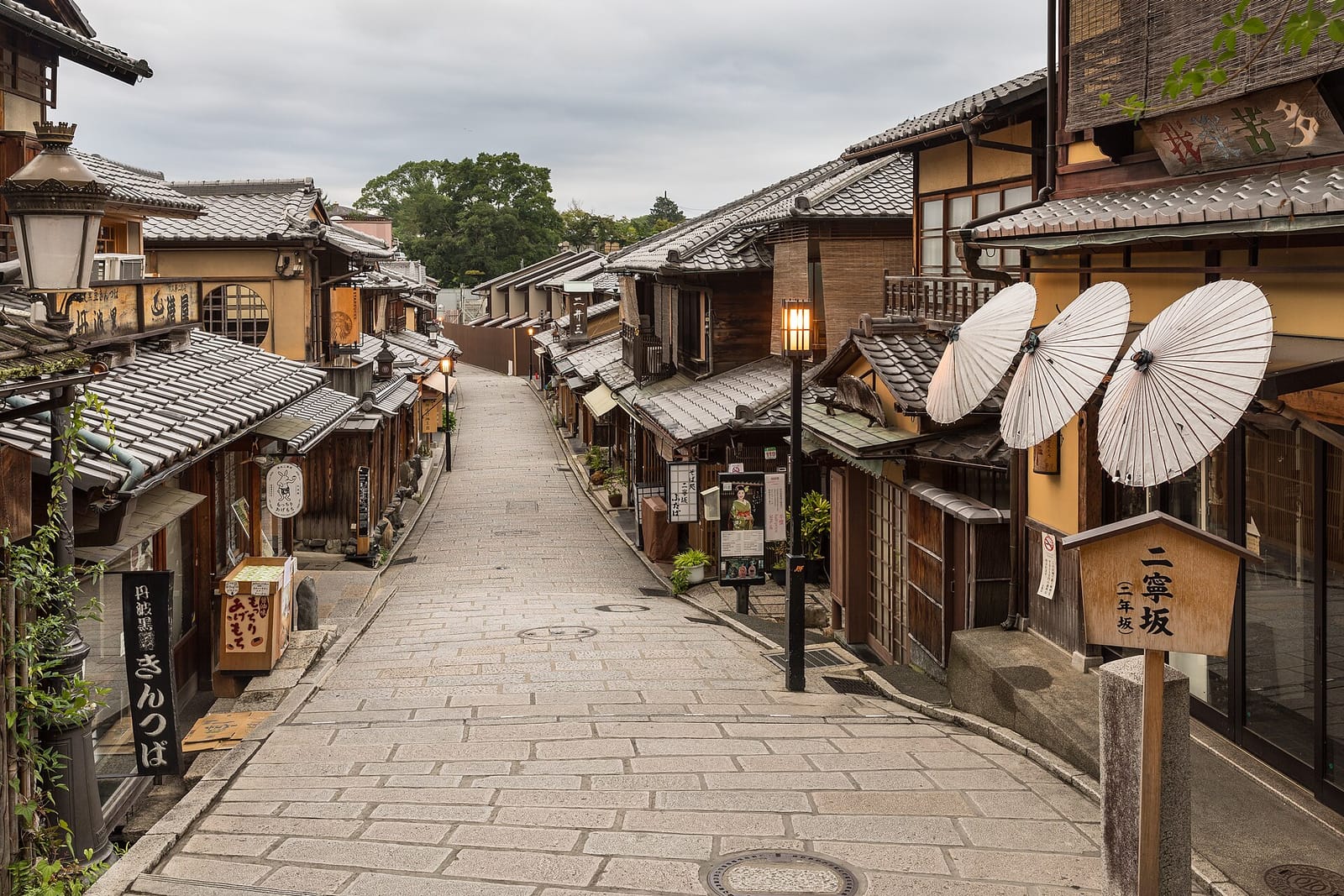
| 8:10–8:50 | Sannenzaka and Ninenzaka | Walk down from the temple | About 10 min |
| 9:00–10:00 | Kodai-ji | Walk north | About 7 min |
| 10:10–10:40 | Yasaka Shrine | Walk north | About 5 min |
| 10:50–11:30 | Hanamikoji | Walk west across Higashioji-dori | Short walk |
| 11:40–12:00 | Shirakawa and Tatsumi Bridge | Walk north across Shijo-dori | Short walk |
| 12:00 | Keihan Gion-Shijo Station or the Gion bus stop | Train or bus home | About 5 min |
Walking times are from Kyoto City’s official “Higashiyama at Dawn” route and the temples’ own access pages. Kodai-ji opens at 9:00, which is why the slopes come first: Sannenzaka and Ninenzaka fill the hour between the temple and the Kodai-ji gate. Kyoto City’s dawn route includes the Kodai-ji shop of Maeda Coffee, which opens at 7:00 and is closed on Mondays, if you want breakfast on the way.
What is the evening route?
Run the same stops in reverse, uphill, and finish at Kiyomizu-dera after dark. This version works in full only from November 21 to 30, 2026, when Kiyomizu-dera holds its special night viewing. Kodai-ji’s autumn night visit runs longer, from October 23 to December 13, 2026.
| Time | Where | How you get there | Notes |
|---|---|---|---|
| 15:30 | Keihan Gion-Shijo Station | Train or bus to Gion | — |
| 15:40–16:00 | Shirakawa and Tatsumi Bridge | Walk north of Shijo-dori | Daylight is fading by now in late autumn |
| 16:10–16:50 | Hanamikoji | Walk south across Shijo-dori | Stay on the stone strips |
| 17:00 | Yasaka Shrine | Walk east | Grounds open at all times |
| 17:15–18:30 | Kodai-ji night visit | About 5 min south | Lit from 17:00, entry until 21:30 |
| 18:40–19:20 | Ninenzaka and Sannenzaka | Walk south and uphill | About 7 min, then steps |
| 19:30–20:45 | Kiyomizu-dera night viewing | Walk up to the Nio-mon gate | Last entry 21:00, closes 21:30 |
| 21:00 | Gojozaka bus stop or Keihan Kiyomizu-Gojo | Bus, or walk downhill | 10 min, or about 25 min |
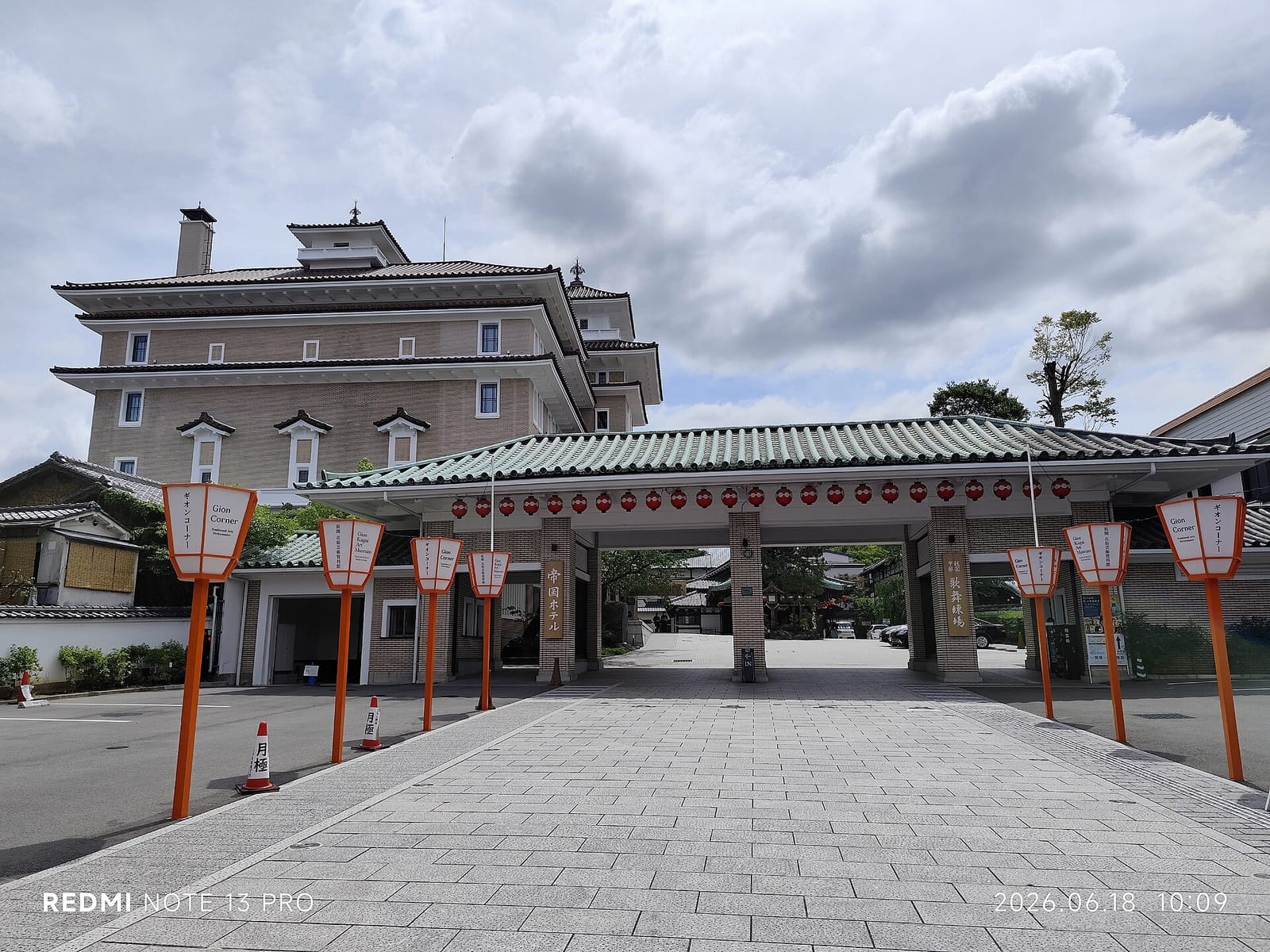
From December 1 to 13, 2026, cut the last two rows. Finish at Kodai-ji, then walk back down to Gion for dinner. The Southern Gionmachi message also points visitors to Gion Corner, which holds dance performances at 6:00 or 7:00 p.m., as a way to see geiko and maiko arts without stopping anyone on the street.
Mind the map app on the way up. Kiyomizu-dera warns that there are only two routes into the grounds: from the Nio-mon gate at the top of Kiyomizu-zaka, and from the emergency road entrance at the top of Chawan-zaka. Some map apps show paths that do not reach the temple. At night, follow the slopes, not the shortest line on your phone.
Which rules apply in Gion and on the Higashiyama slopes?
Treat Gion as a neighborhood, not a set. The rules below come from the Southern Gionmachi residents’ message, signed by the Gion Kobu teahouse and geiko associations, Kenninji Temple and the local council, and from Kyoto City’s official travel guide.
With geiko and maiko:
- Do not stop, touch or follow them, and do not take photos or videos of them without permission.
- If one is dressed for work, she is on her way to an engagement. Do not ask for a photo.
- Do not post photos of identifiable people online without their permission.
On the street:
- On Hanamikoji, walk on the stone strips at the sides.
- Do not block the road or sidewalk, and do not set up a tripod for streetscape photos.
- Do not touch the lanterns outside teahouses or lean on their fences.
- Do not enter temples, shrines or private property without permission. If a lane is signed as private, stay out.
- Take your rubbish with you, keep your voice down, and do not smoke while walking.
On Sannenzaka and Ninenzaka: this is a residential area. Kyoto City’s guide asks you to be considerate when taking photos, skip the tripod, keep moving rather than block the lane, and not throw away food you have bought.
What happens if you ignore them. The Southern Gionmachi message lists the penalties under Japanese law and local ordinances. Trespassing can bring up to three years in prison or a fine of up to ¥100,000. Obstructing traffic can bring a fine of up to ¥50,000. Pulling someone’s hand or clothes can bring up to six months in prison or a fine of up to ¥500,000.
What are the stops, in walking order?
The stops follow the morning route. Tick “Add to my route” on each one to open the walk in Google Maps. For the evening route, start at the bottom of the list.
Kiyomizu-dera
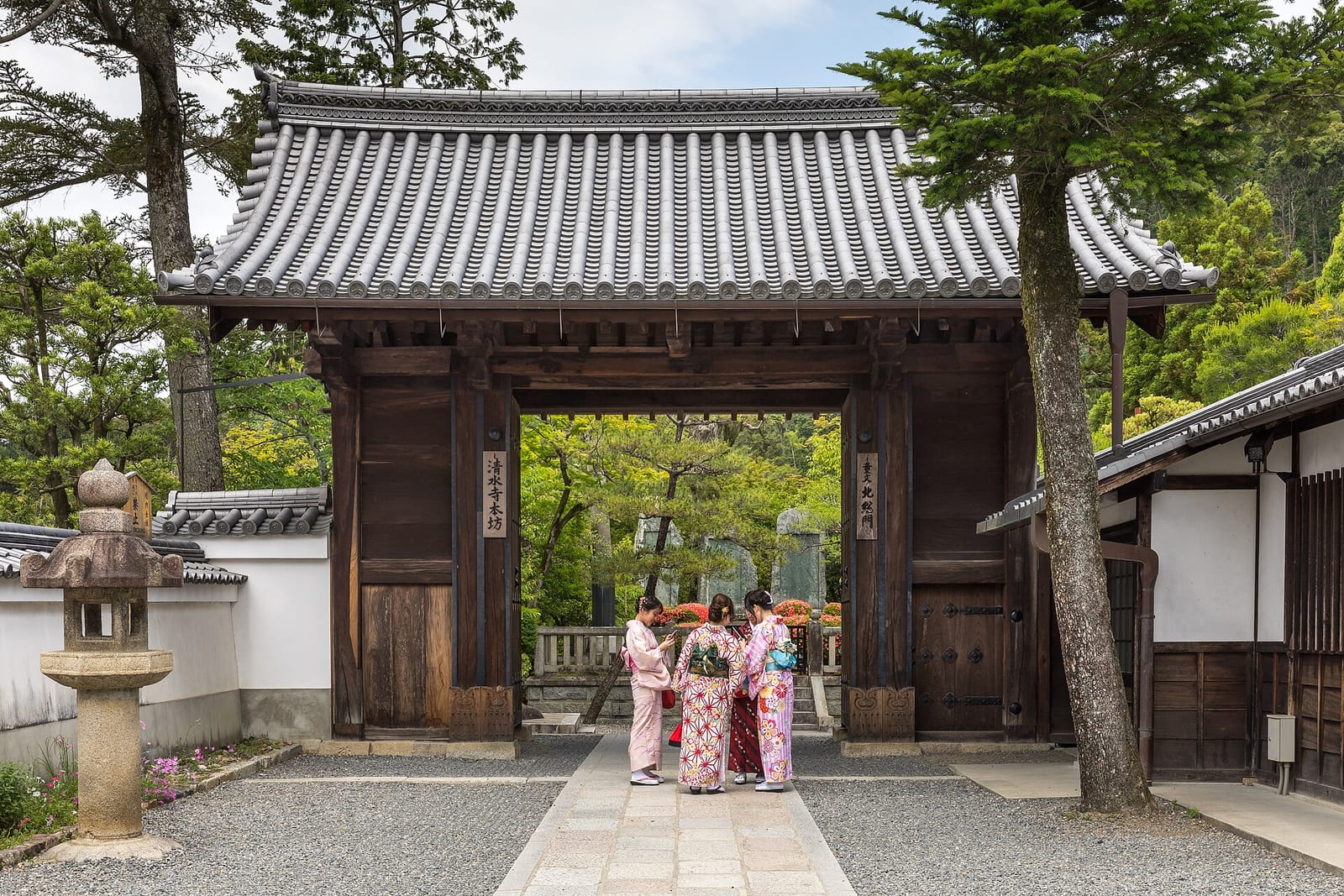
The temple at the top of the route, with its wooden stage over the hillside. It opens at 6:00 a.m. all year. From November 21 to 30, 2026, the Jojuin garden also has an evening viewing from 6:00 to 8:30 p.m. (last entry). The temple has two ways into the grounds only, so enter from the Nio-mon gate at the top of Kiyomizu-zaka.
- Hours
- Opens 6:00; closing time varies by season. Night viewing Nov 21–30, 2026, until 21:30 (last entry 21:00)
- Access
- About 10 min walk from the Gojozaka bus stop; about 25 min from Keihan Kiyomizu-Gojo
- Source
- www.kiyomizudera.or.jp
Sannenzaka and Ninenzaka
Two stepped, stone-paved lanes of wooden shops that drop from the temple toward Kodai-ji. People live here, so keep to one side when you stop for a photo. Many visitors walk this stretch in kimono; our Gion kimono rental guide lists shops, prices and return times, so you can plan the walk around the rental hours.
- Access
- About 10 min walk down from Kiyomizu-dera
- Source
- kyoto.travel
Kodai-ji
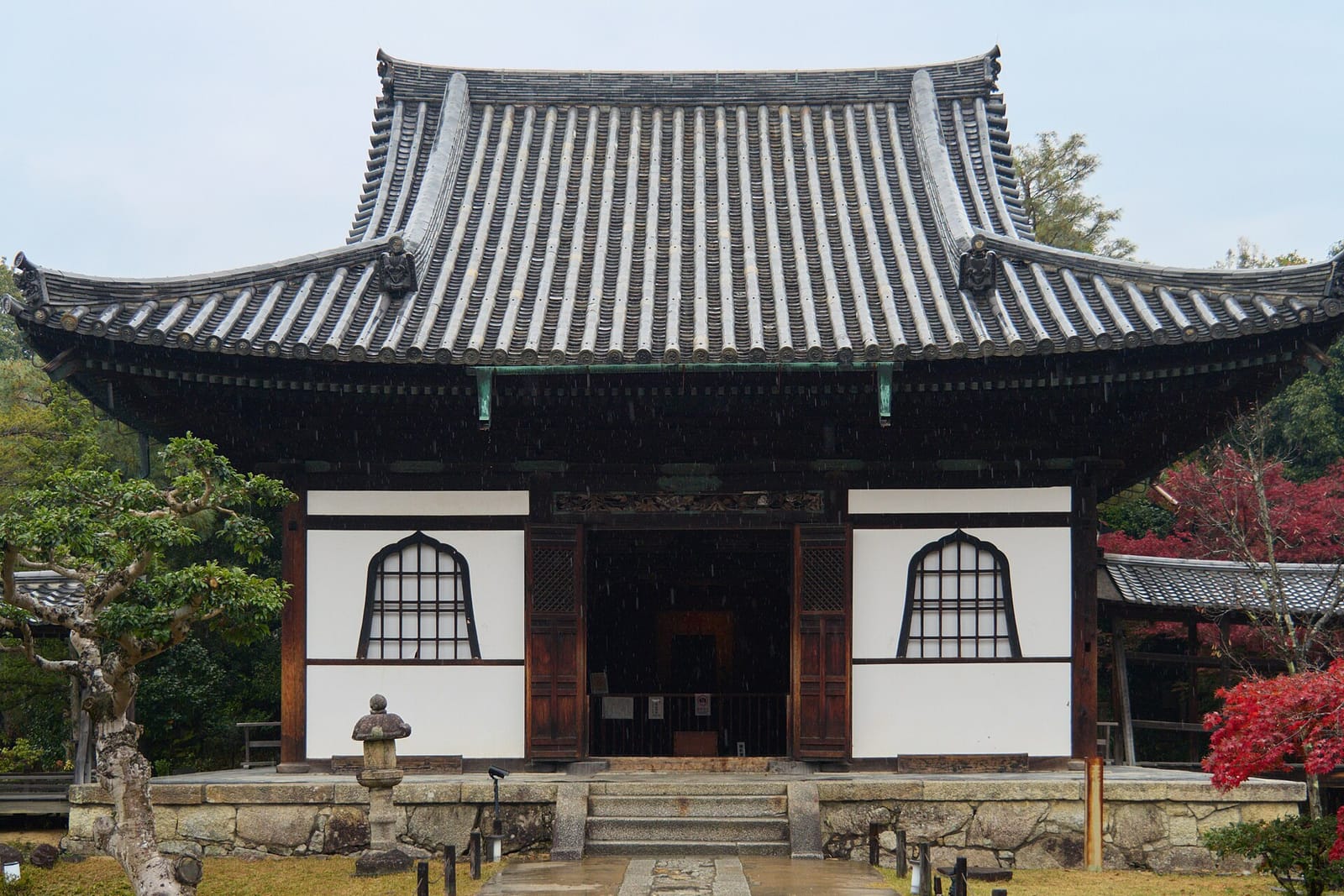
A temple at the foot of the Higashiyama hills, with gardens and a bamboo grove. The bamboo grove is inside the temple garden, so it needs the Kodai-ji ticket. Children of elementary school age and younger enter free with a paying adult. A joint ticket with Entoku-in costs ¥1,200.
- Hours
- 9:00–17:30 (entry until 17:00). Autumn night visit Oct 23–Dec 13, 2026: lit from 17:00, entry until 21:30
- Price
- Adults ¥800; junior high and high school ¥400 (as of November 2026)
- Access
- About 7 min walk from Ninenzaka; about 5 min to Yasaka Shrine
- Source
- www.kodaiji.com
Yasaka Shrine
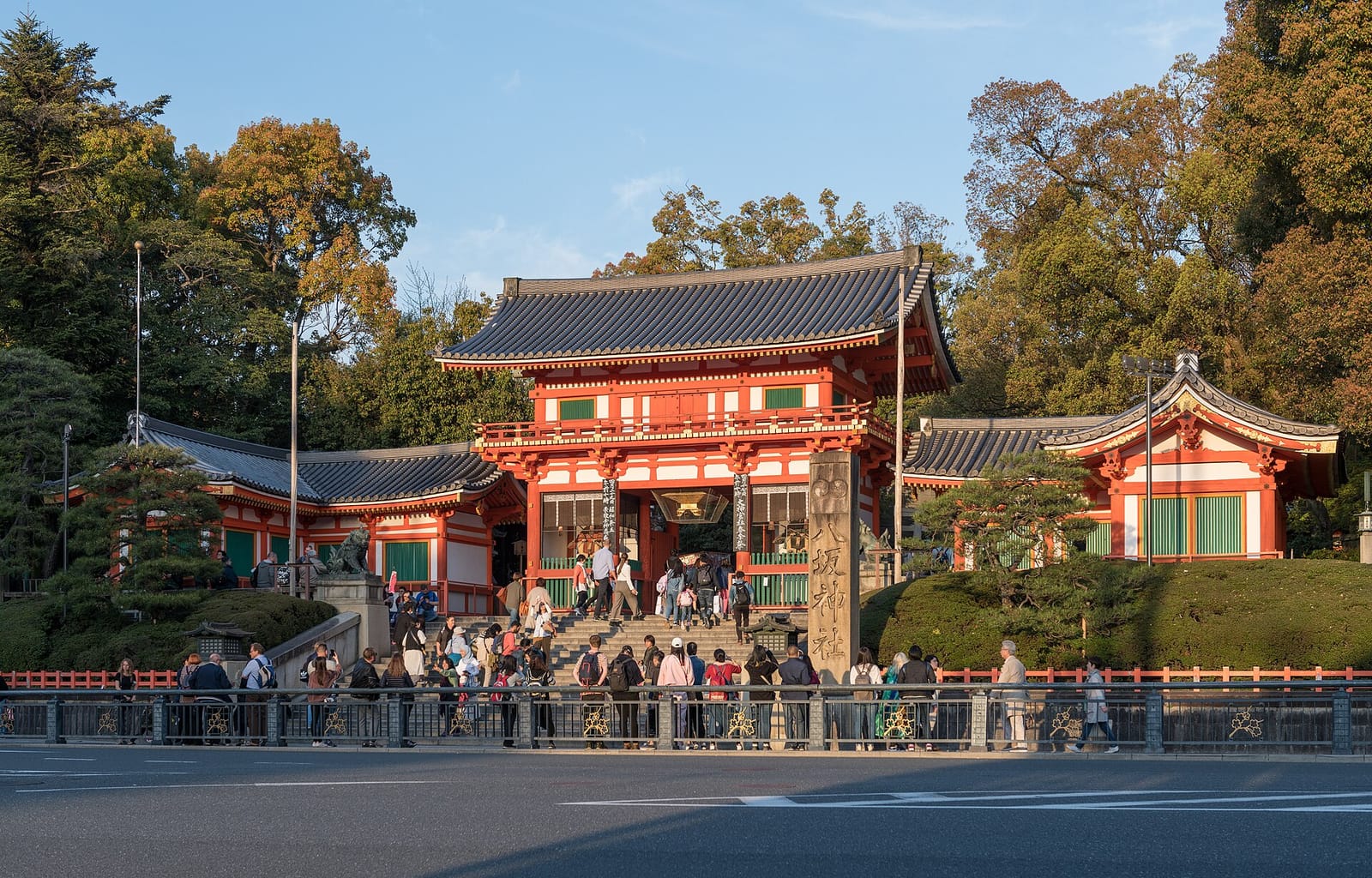
The shrine at the east end of Shijo-dori, where Higashiyama meets Gion. Its grounds are open at all times, so it works at either end of the day. Leave by the west gate to reach Gion. The shrine office, for goshuin stamps, is open 9:00 to 17:00.
- Hours
- Grounds open at all times; shrine office 9:00–17:00
- Access
- About 5 min walk from Keihan Gion-Shijo; about 8 min from Hankyu Kyoto-Kawaramachi
- Source
- www.yasaka-jinja.or.jp
Hanamikoji
The stone-paved street of teahouses running south from Shijo-dori. Walk on the stone strips at the sides, since cars use the street too, and leave the lanterns and fences alone. If you want to sit inside a Kyoto tea room rather than look at teahouses from the street, our tea ceremony in Kyoto guide compares prices and how to book.
Shirakawa and Tatsumi Bridge
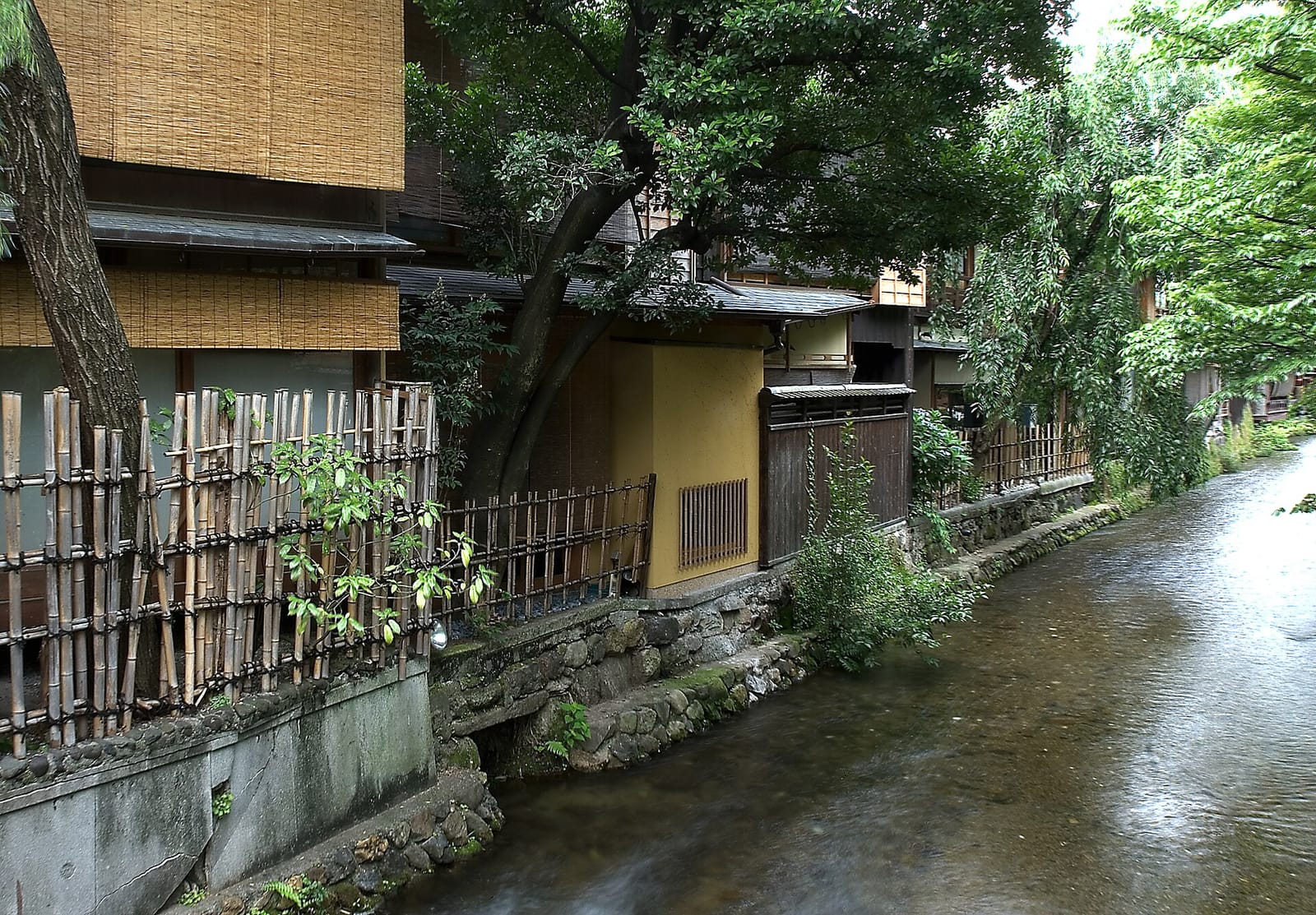
A canal lined with wooden teahouses, just north of Shijo-dori, with the small Tatsumi Bridge at its center. It is the end of the morning walk and the start of the evening one. Staying in Gion puts this street a few minutes from your door at both ends of the day; see our best hotels in Gion.
How do you get back, and what should you watch for?
Walk to Keihan Gion-Shijo Station or the Gion bus stop. Yasaka Shrine gives about 5 minutes on foot from Keihan Gion-Shijo, and the same short walk covers Hanamikoji and Shirakawa.
- To Kyoto Station by bus. The EX100 stops at Gion on its way back to Kyoto Station, ¥500 for adults; in the other direction the bureau gives about 17 minutes from Kyoto Station to Gion. A regular city bus is ¥230 in the flat-fare zone. On a regular bus you board at the rear and pay at the front as you get off.
- After the evening route. You finish at the top of the hill. The Gojozaka bus stop is about 10 minutes down from Kiyomizu-dera, and Keihan Kiyomizu-Gojo is about 25 minutes on foot.
- Where to stay for an early start. A hotel in Gion lets you start the morning route on foot instead of by bus. Our guide to Gion or Kyoto Station compares the two bases.
If it rains. The stone slopes on Sannenzaka and Ninenzaka get slippery, so keep the morning order and take the steps slowly. Kodai-ji and Kiyomizu-dera are on the same schedule rain or shine, and the walk has no transport to miss, so the timetable does not change.
What to pack before you go
Maps, train apps and translation drain a phone by mid-afternoon. Keep it in your carry-on: power banks are not allowed in checked luggage.
Japan still runs on coins: there are six of them, from 1 to 500 yen, and you collect a pocketful fast. A holder with a slot for each coin lets you pay the exact amount at ticket machines, shrines and small shops without digging.
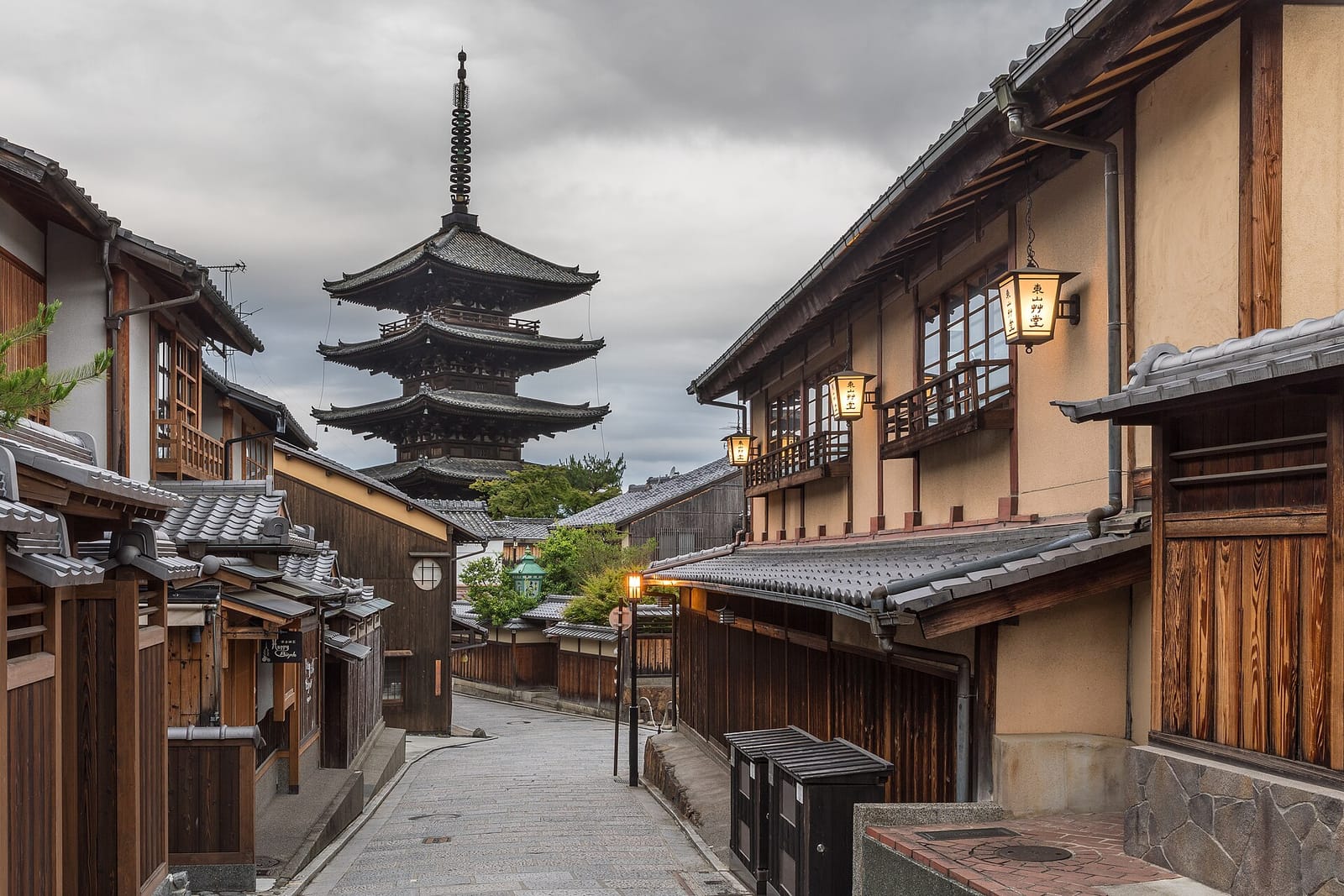 Best Ryokan in Kyoto Under $300: Five Picks by Budget for Two
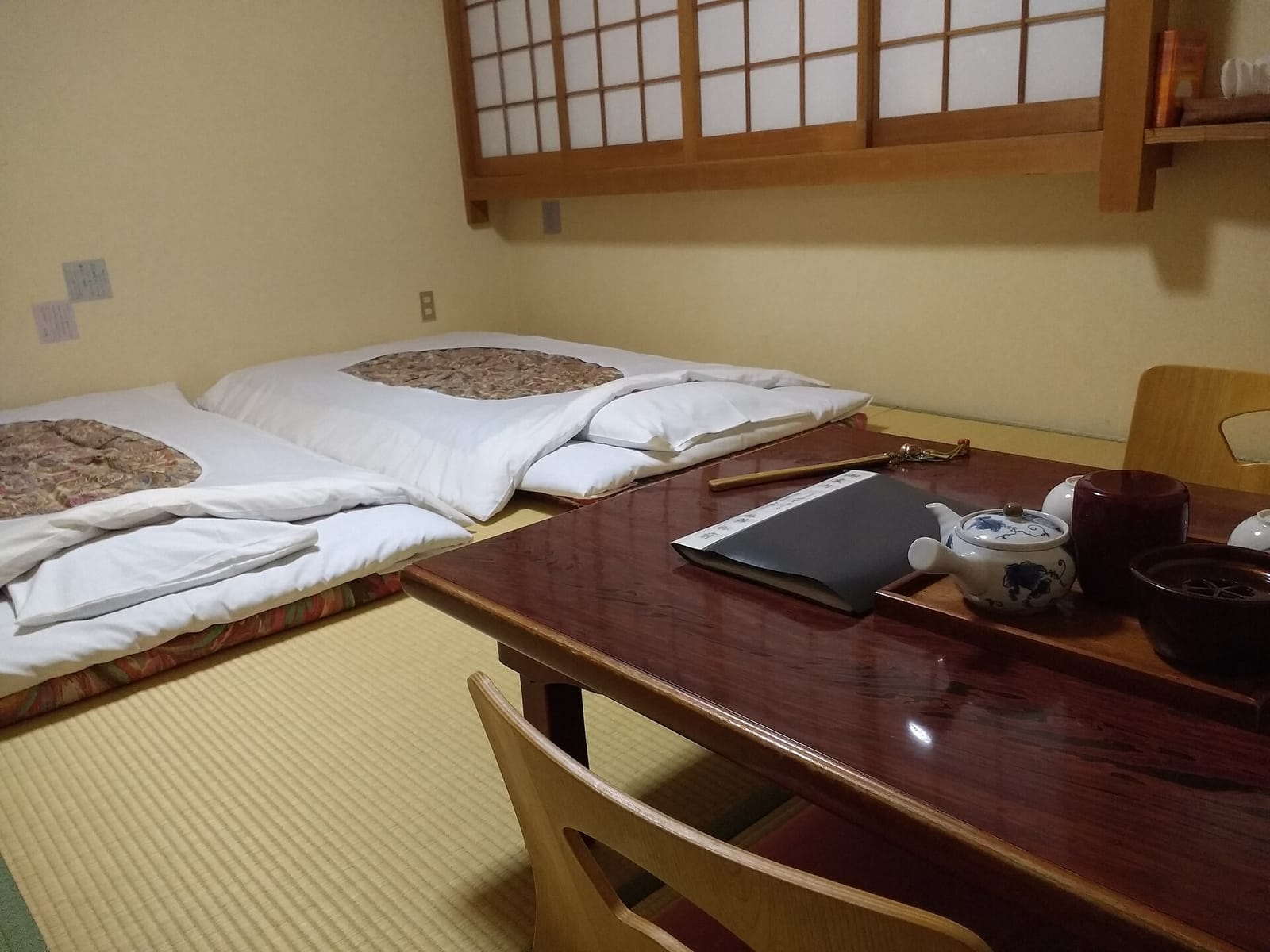 How to Book a Ryokan in Japan as a Foreigner: Steps and Pitfalls
FAQ
How long does it take to walk from Kiyomizu-dera to Gion?
Allow about 30 minutes of pure walking for Kiyomizu-dera to Yasaka Shrine. Kyoto City's official travel guide gives about 10 minutes from the temple to Sannenzaka and Ninenzaka, about 7 minutes on to the Kodai-ji area, and about 5 minutes to Yasaka Shrine. Hanamikoji and Shirakawa are a short walk west of the shrine.
Can you take photos in Gion?
On public streets, yes, with limits. The Southern Gionmachi message on Kyoto City's travel guide asks you not to stop, touch, follow or take unauthorized photos or videos of geiko, and not to enter private property without permission. The city's guide also asks you not to use tripods for streetscape photos because they block traffic.
What time does Kodai-ji open?
Kodai-ji is open 9:00 to 17:30, with entry until 17:00, according to the temple. During its autumn night visit, from October 23 to December 13, 2026, the lights come on at 17:00 and entry continues until 21:30 (as of November 2026).
Is it better to walk Higashiyama in the morning or the evening?
The morning is quieter, and Kyoto City's travel guide recommends starting early for that reason. Kiyomizu-dera opens at 6:00 a.m. The evening is the choice only in autumn, when Kodai-ji and Kiyomizu-dera open at night.
Do you need a bus pass for this walk?
No. You ride once to the start and once home. A regular city bus ride in the flat-fare zone is ¥230 for adults, while the Subway & Bus 1-Day Pass is ¥1,100 (as of November 2026).
Sources
- Kyoto City Official Travel Guide — Higashiyama at Dawn
- Kyoto City Official Travel Guide — Gion manner (Message from Southern Gionmachi)
- Kyoto City Official Travel Guide — Things to keep in mind in the Kiyomizu, Arashiyama and Gion areas
- Kiyomizu-dera — Location and open hours
- Kiyomizu-dera — Official site (2026 special night viewing)
- Kodai-ji — Visiting hours and admission (Japanese)
- Kodai-ji — Official site (autumn 2026 night visit)
- Yasaka Shrine — Access
- Kyoto City Bus & Subway Guide — Taking the Kyoto City Bus
- Kyoto City Bus & Subway Guide — Sightseeing Limited Express Bus
- Kyoto City Transportation Bureau — Autumn 2026 city bus congestion measures
This article contains affiliate links. We may earn a commission at no extra cost to you.