Miyajima Overnight Itinerary: Tides, Last Ferries and Mt Misen
A one-night Miyajima plan: the shrine at 6:30 a.m., the lit-up torii after the day crowds go, last ferries by operator, the ¥100 tax, and Mt Misen times.
At 8:15 p.m. on Miyajima, the last Matsudai Kisen boat back to the mainland has just left, and the shrine buildings on the water are still lit. Itsukushima Shrine lights them every day from sunset until about 11 p.m., according to Dive! Hiroshima, the prefecture’s official tourism site. The next morning the shrine gates open at 6:30 a.m., well before a day trip from the city usually reaches the island. This one-night plan is for couples, solo travelers and families who want those two windows, plus Daisho-in and Mt Misen, at an easy pace. Expect about ¥2,760 per adult for ferries, the visitor tax, the shrine and the ropeway, before your room and the train (as of November 2026).
If you only have a day, our Hiroshima and Miyajima in one day plan covers the Peace Park and the island together. This article is about the night in between.
Why stay the night on Miyajima instead of a day trip?
Stay the night if you want the shrine at opening time, the lit buildings after dark, or a second chance at the tide. A day trip gives you one tide window at most; a night gives you an evening, a morning and often two afternoons.
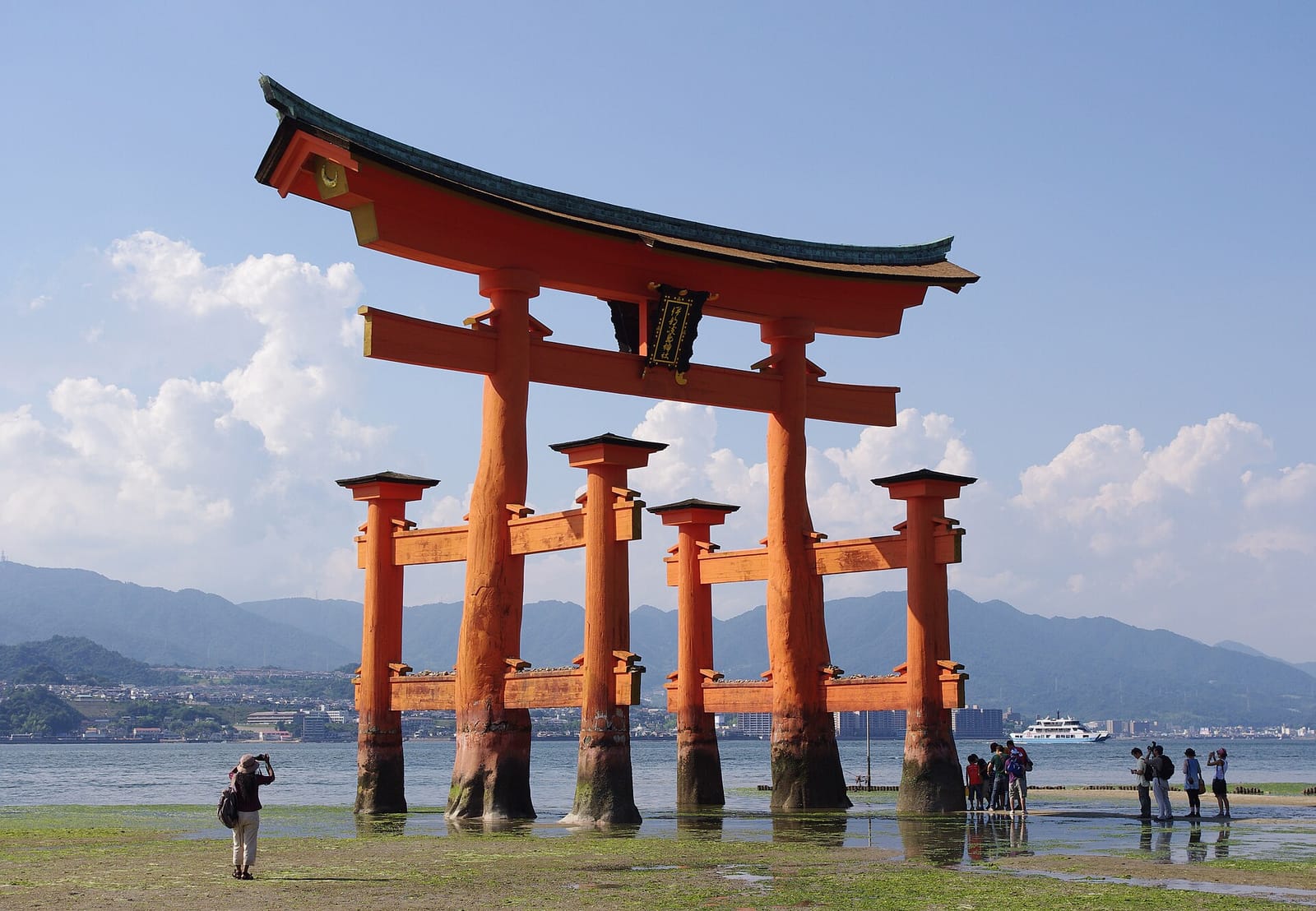
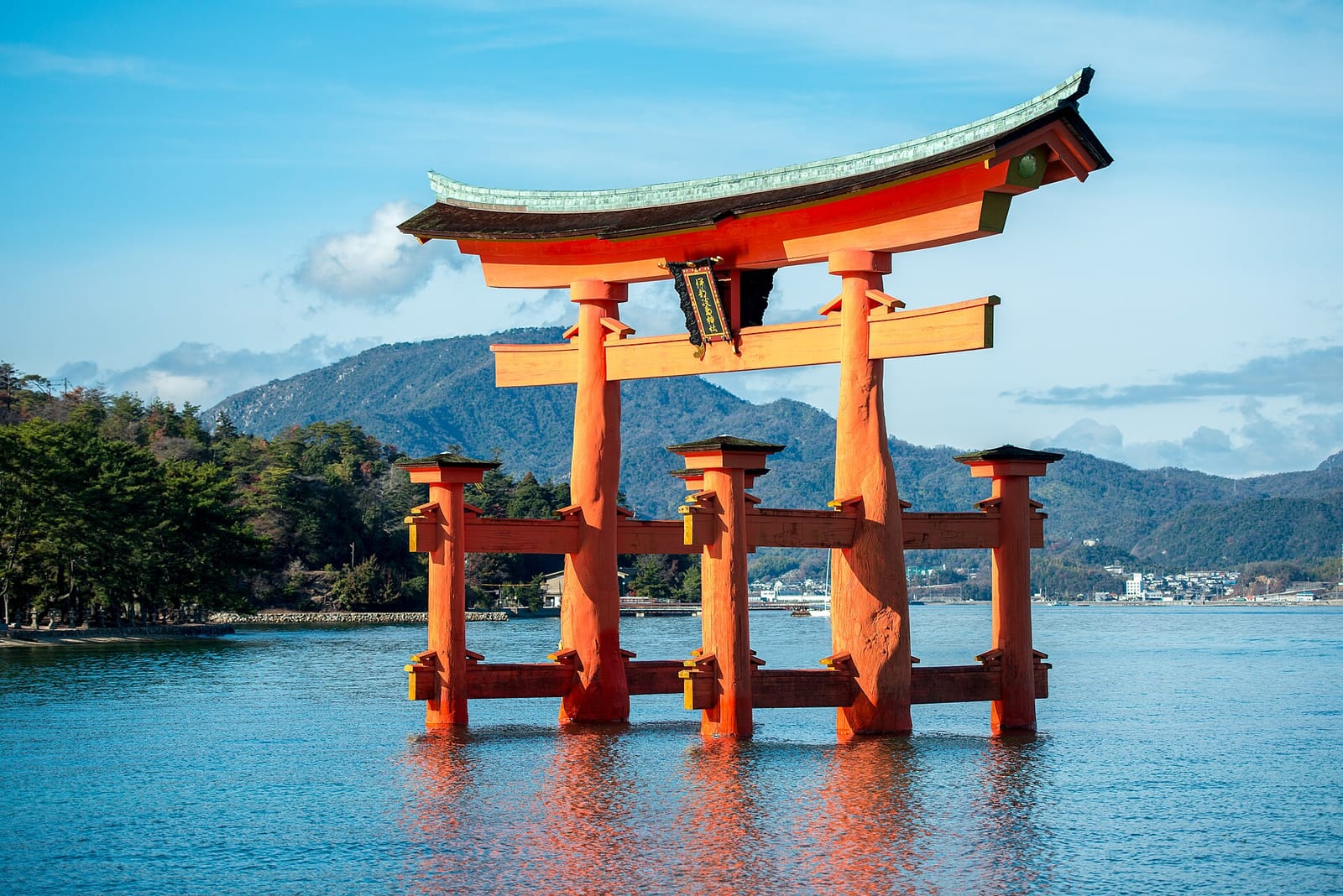
The tide decides what you see at the Great Torii. The Miyajima Tourist Association’s official tide table gives two thresholds:
- Below 100 cm: you can walk out to the torii across the flat.
- Above 250 cm: the shrine appears to float.
The association warns that high tide alone does not make the shrine look like it floats, and not every low tide drops below 100 cm. The table is for Hiroshima Port, and times at Itsukushima Port can be slightly earlier. As an example of how the windows move, the table for November 23, 2026 lists high tides at 8:34 and 20:24 and low tides at 2:07 and 14:37. On a date like that, the evening high tide falls inside the light-up hours and the afternoon low tide falls after check-in. Open the table for your own dates and check the level in centimeters, not just the times.
The evening is the other reason. The last Matsudai Kisen boat leaves the island at 20:15 and the last JR ferry at 22:14 on the regular timetable (as of November 2026), so by night the people left on the island are mostly those staying there. To choose where to sleep, see our guide to which Miyajima ryokan suits your overnight stay.
How do you get to Miyajima, and which ferry should you take?
Take the JR Sanyo Line from Hiroshima Station to Miyajimaguchi (about 30 minutes, according to Dive! Hiroshima), walk about 5 minutes to the pier, then take either ferry for the 10-minute crossing. Both operators sail from Miyajimaguchi; the choice is about passes and the last boat.
| JR Miyajima Ferry | Miyajima Matsudai Kisen | |
|---|---|---|
| Adult fare, one way | ¥180 (child ¥90) | ¥200 (child ¥100); ¥400 round trip |
| Visitor tax | ¥100, added on the way over | ¥100, added on the way over |
| First boat (regular timetable) | 6:25 from Miyajimaguchi, 5:45 from Miyajima | 7:15 from Miyajimaguchi, 7:00 from Miyajima |
| Last boat (regular timetable) | 22:42 from Miyajimaguchi, 22:14 from Miyajima | 20:35 from Miyajimaguchi, 20:15 from Miyajima |
| Passes | Japan Rail Pass and JR-WEST Rail Pass accepted | Hiroden 1 Day Streetcar and Ferry Pass valid |
| Extra | Sailings from Miyajimaguchi between 9:10 and 16:10 pass close to the Great Torii | Takes IC cards and contactless credit cards |
Fares and times are as of November 2026. Both operators run separate busy-day and New Year timetables, so check the page for your travel date.
Two rules matter for an overnight trip:
- The Hiroden pass is a one-day pass. Hiroden says you scratch off a single travel date, so it will not cover the trip back on day 2. Pay as you go on the second day, or use JR.
- You pay the visitor tax once. Hatsukaichi City charges ¥100 per person per visit, collected by the ferry with your fare on the way to the island. Preschool children are exempt.
What does the two-day plan look like, hour by hour?
Arrive in the early afternoon on day 1 and leave mid-afternoon on day 2. That gives you the shrine twice, the torii at night, and Mt Misen in the best light. The plan below uses late-November hours, when the shrine closes at 5:30 p.m.
Day 1: Afternoon arrival and the island after dark
| Time | Where | Transport, time and fare (as of November 2026) |
|---|---|---|
| 13:00 | Hiroshima Station | JR Sanyo Line to Miyajimaguchi, about 30 min (JR Pass valid) |
| 13:45 | Miyajimaguchi pier | JR ferry, 10 min, ¥180 + ¥100 tax; a Great Torii sailing at this hour |
| 14:00 | Miyajima | Leave bags at your hotel or ryokan |
| 14:45 | Itsukushima Shrine | Walk; ¥300; allow 1 hour |
| 16:00 | Great Torii shoreline | Walk; check the tide table for a below-100 cm window |
| 17:30 | Shrine closes | Dinner at your ryokan or in town |
| 19:00–23:00 | Shoreline by the shrine | Walk; buildings lit from sunset until about 11 p.m. |
Day 2: Shrine at opening, Daisho-in and Mt Misen
| Time | Where | Transport, time and fare (as of November 2026) |
|---|---|---|
| 6:30 | Itsukushima Shrine | Walk; opens 6:30 a.m. (second visit is another ¥300) |
| 7:30 | Breakfast | At your accommodation |
| 8:30 | Daisho-in | Walk; gates open 8:00 a.m. |
| 9:45 | Momijidani Park | Walk |
| 10:00 | Miyajima Ropeway, Momijidani Station | Free shuttle bus from the park entrance, or walk; ¥2,000 round trip |
| 10:30 | Shishiiwa Station and Mt Misen | Ropeway about 10 min + 4 min; walk to the summit area |
| 13:30 | Last stretch down | Ropeway down; last car 16:30 |
| 14:30 | Miyajima pier | JR ferry or Matsudai Kisen, 10 min |
| 15:00 | Miyajimaguchi | JR to Hiroshima, about 30 min |
If you hold a JR Pass, the JR ferry covers both crossings. If you visit the shrine only once, choose the morning visit; at 6:30 a.m. you get the buildings with the fewest people.
Autumn leaves or winter oysters: which version suits your dates?
Pick the autumn version from mid to late November and the winter version from January to February. The core plan stays the same; what changes is the order on day 2 and how long you stay out in the evening.
Variant A: Autumn leaves at Momijidani (mid to late November)
The Miyajima Tourist Association says the leaves at Momijidani Park are at their best from mid to late November. The park sits on the way to the ropeway, so move it to the start of day 2 instead of the middle:
- 6:30 Shrine at opening.
- 7:45 Momijidani Park, before the ropeway opens at 9:00 a.m.
- 9:00 Ropeway at opening time.
- After 13:00 Daisho-in on the way back to the pier.
The shrine closes at 5:30 p.m. until November 30, so on day 1 arrive no later than about 3:30 p.m. if you want to go inside.
Variant B: Winter oysters (January to February)
Hiroshima oysters are in season each January and February, according to the Japan Tourism Agency’s multilingual database, which also notes they are usually eaten cooked: grilled, fried or in hot pots. In winter, plan a long dinner on day 1 and keep the walk to the lit shrine short, since it is dark early.
Two winter details change the timing:
- The shrine closes earlier. 5:00 p.m. in December, and 5:30 p.m. from January 4 to the end of February.
- The ropeway has a maintenance break around February. Check the ropeway’s notices before you build day 2 around Mt Misen. If it is closed, swap the ropeway for a longer visit to Daisho-in and the shrine’s Treasure Hall (8:00 a.m. to 5:00 p.m.).
What are the stops, in route order?
The stops below follow the day 1 and day 2 tables. Tick “Add to my route” on each one to open them in Google Maps.
Miyajimaguchi Ferry Pier
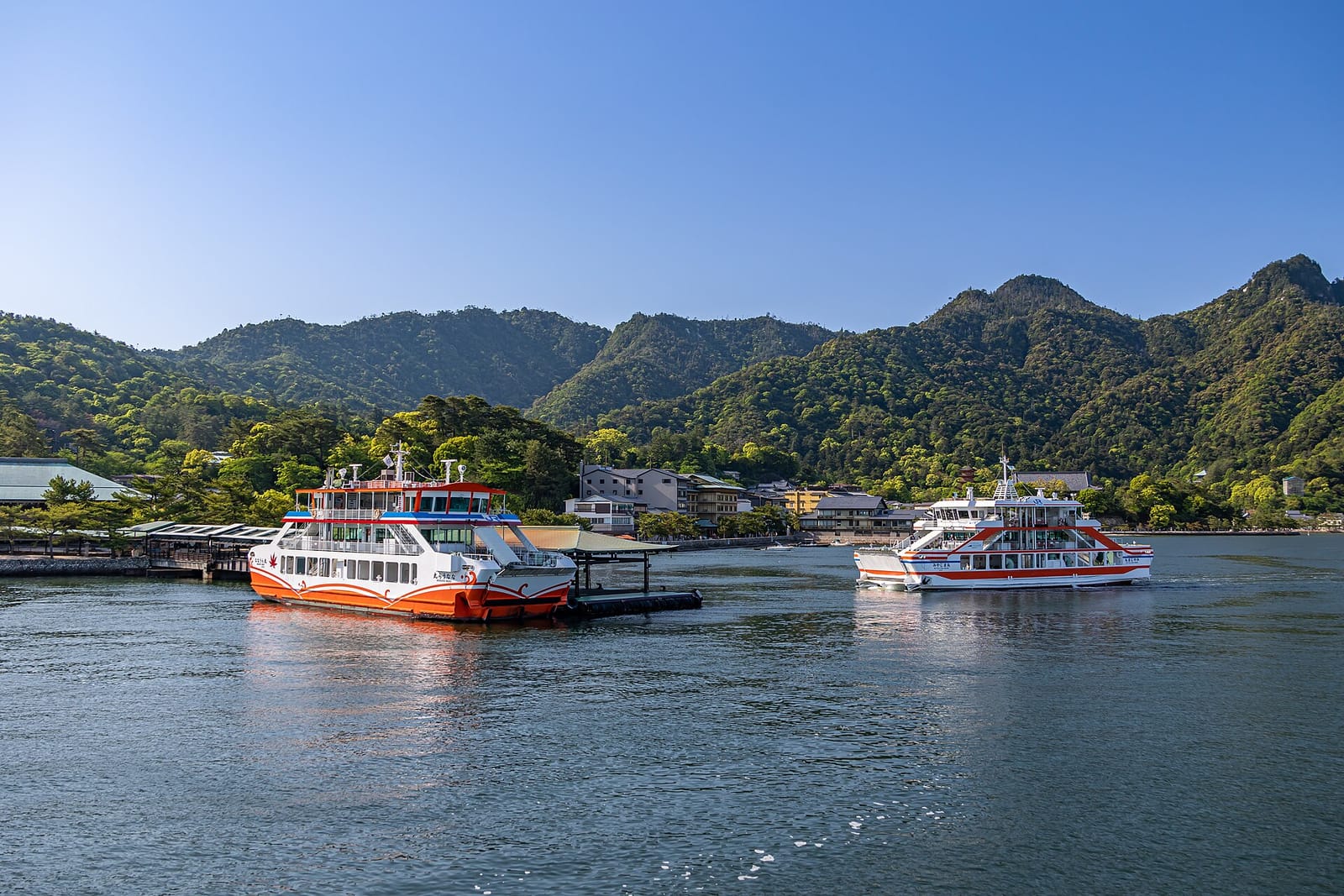
The mainland side of the crossing. JR sailings from here between 9:10 a.m. and 4:10 p.m. take a course close to the Great Torii, which makes the 1:45 p.m. boat in the plan a good first view. The Matsudai Kisen boat leaves from the same area and is the one to take if you are using the Hiroden pass on day 1.
- Price
- JR Miyajima Ferry ¥180 one way (child ¥90) + ¥100 visitor tax (as of November 2026)
- Access
- About 5 min walk from JR Miyajimaguchi Station; about 10 min crossing
- Source
- jr-miyajimaferry.co.jp
Itsukushima Shrine
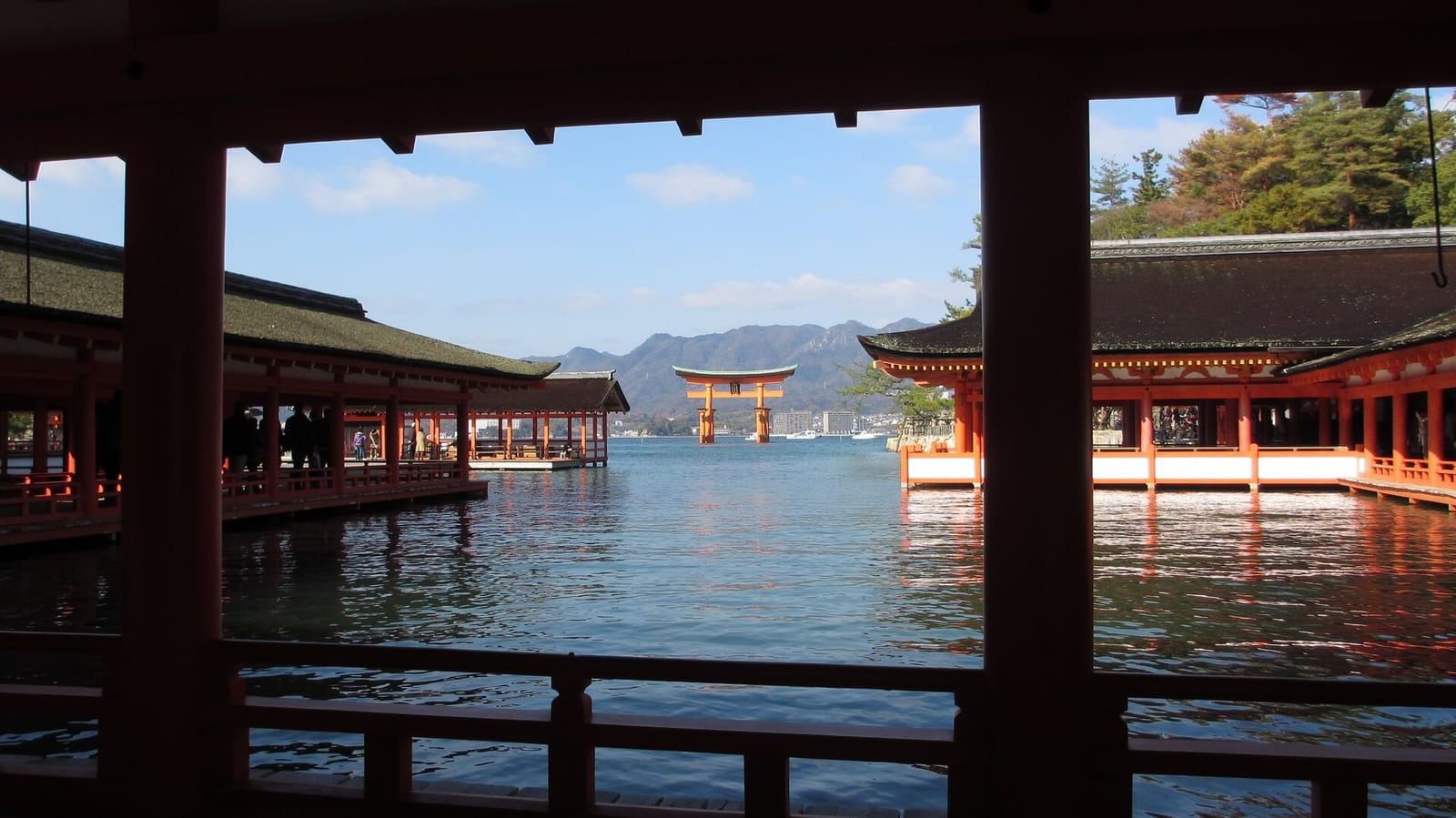
The reason to stay the night. Visit once in the afternoon of day 1 and again at 6:30 a.m. on day 2, when you will share it with few others. The combined ticket with the Treasure Hall is sold only at the shrine entrance. For the night, compare places to stay with the hotel search below; if you choose a ryokan, our guide to booking a ryokan in Japan explains meal times and check-in rules.
- Hours
- 6:30–17:30 Oct 15–Nov 30; 6:30–17:00 Dec; 6:30–17:30 Jan 4–end Feb; 6:30–18:00 Mar 1–Oct 14 (as of November 2026)
- Price
- Adults ¥300, high school ¥200, elementary and junior high ¥100; with Treasure Hall ¥500 (as of November 2026)
- Access
- Short walk from Miyajima pier
- Source
- www.itsukushimajinja.jp
Great Torii of Itsukushima
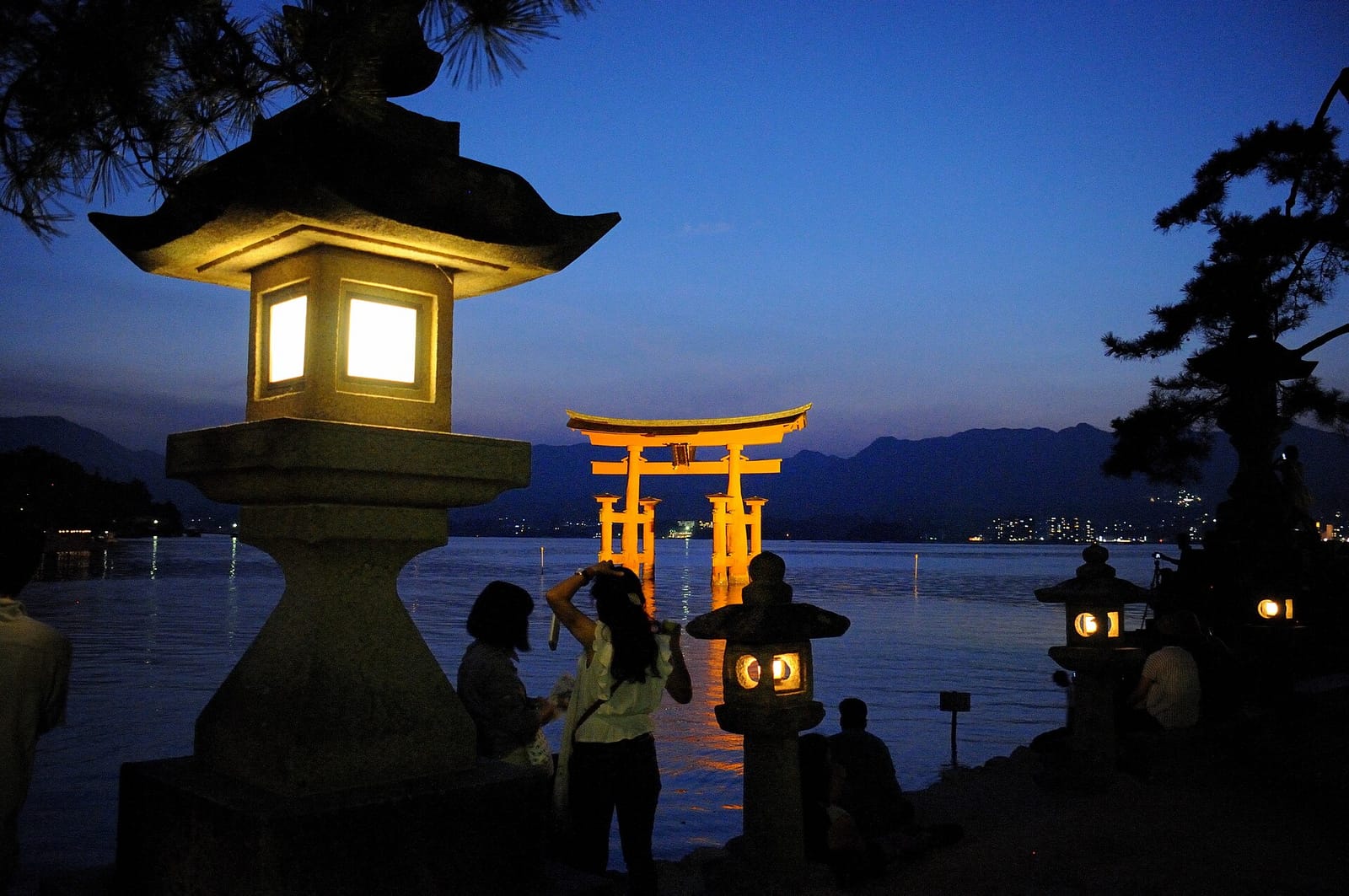
The gate stands in the sea in front of the shrine. Walk out only when the official table shows a level below 100 cm, and watch the water coming back in. After dark, the lit shrine buildings and the gate are visible from the shoreline path; this is the view day visitors on the last boats miss.
- Hours
- Buildings lit from sunset to about 23:00 daily
- Source
- www.miyajima.or.jp
Daisho-in
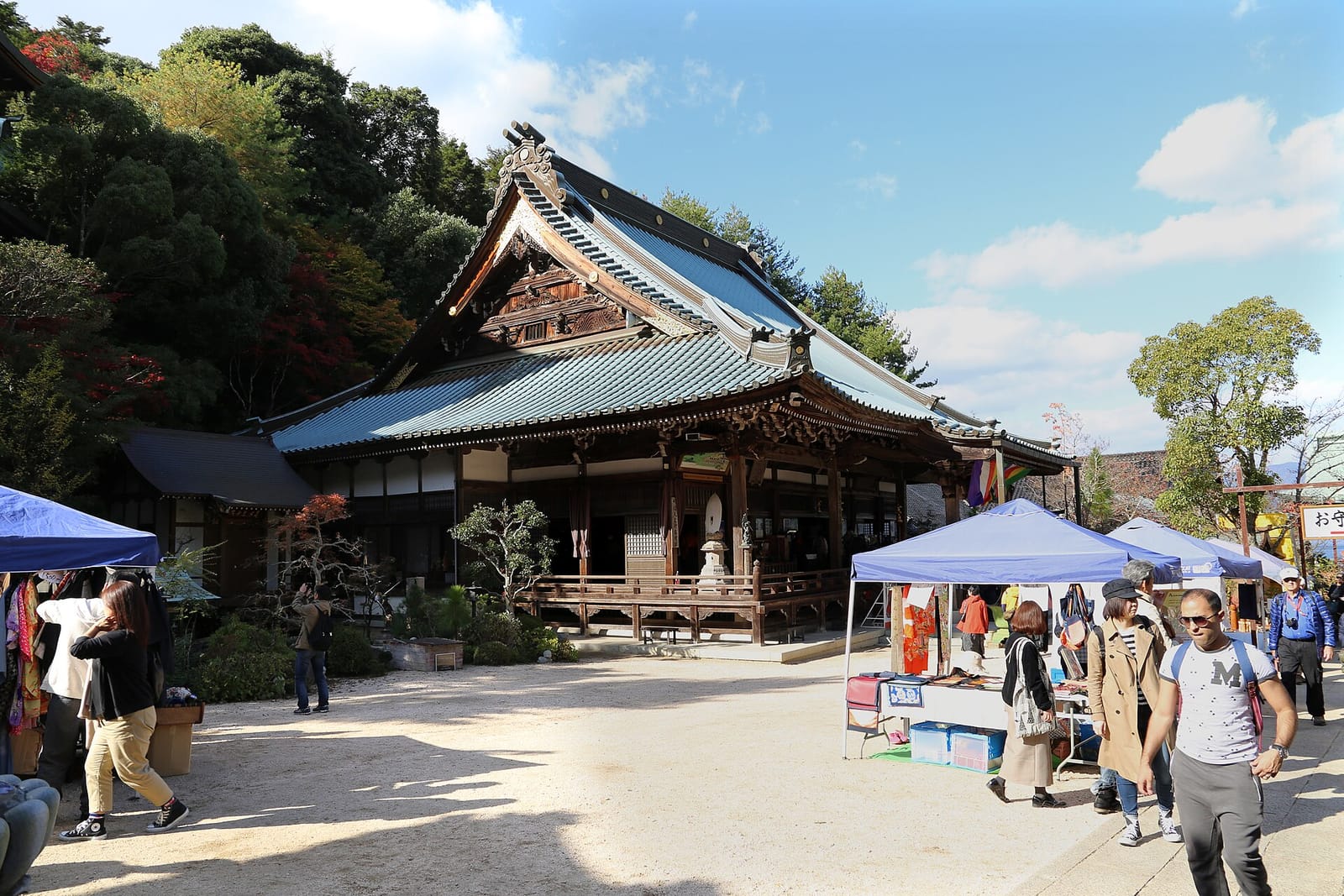
A temple at the foot of Mt Misen, further inland than the shrine. The temple’s site lists gate hours of 8:00 a.m. to 5:00 p.m., so it fits neatly between breakfast and the ropeway. Allow time for the climb through the grounds; the walk from the pier is about 30 minutes.
- Hours
- Gates 8:00–17:00 (as of November 2026)
- Access
- About 30 min walk from Miyajima pier
- Source
- daisho-in.com
Momijidani Park
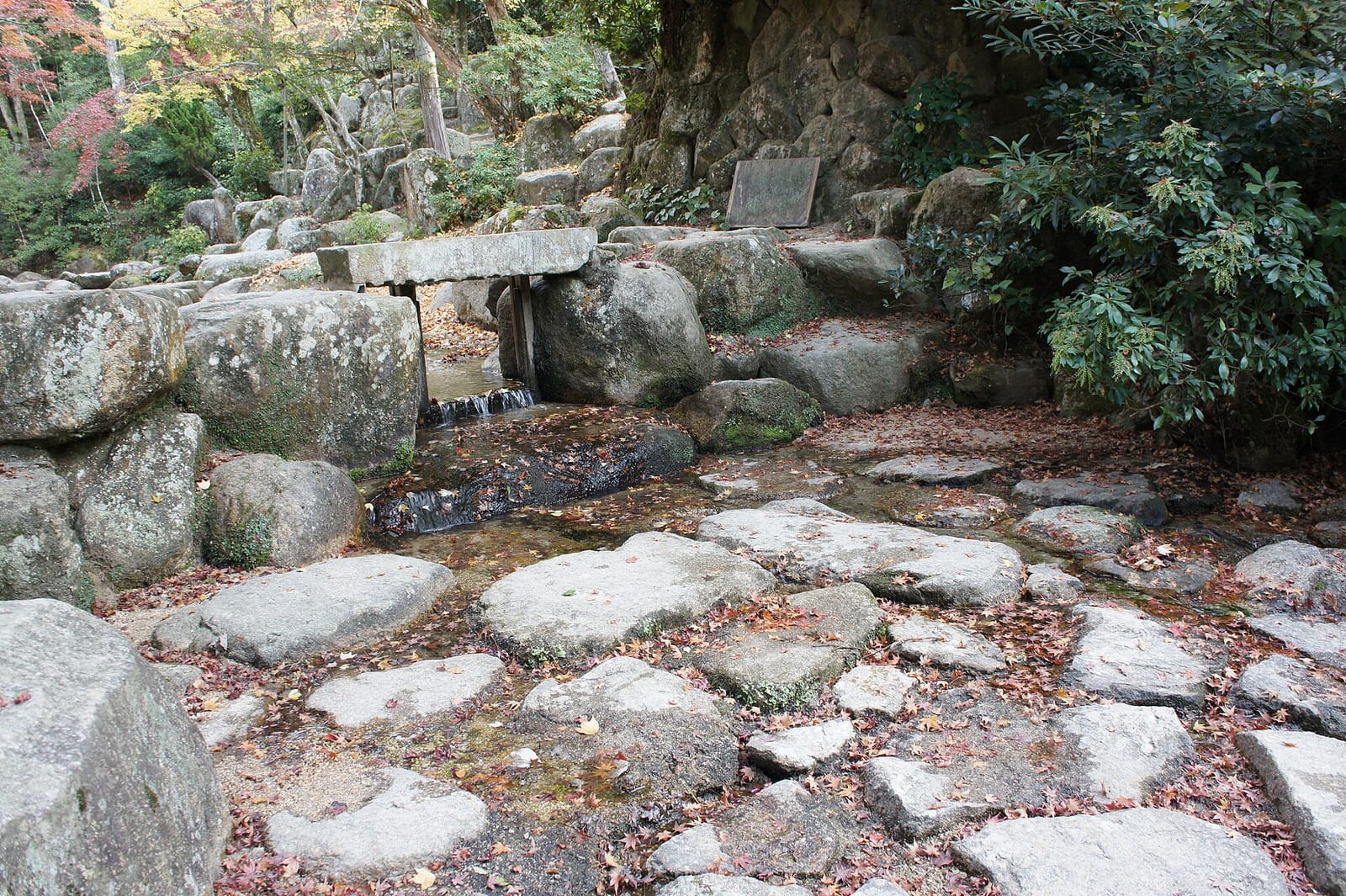
A maple valley whose entrance is at Momiji Bridge. The tourist association says the leaves are best from mid to late November and the green is fresh from spring to summer. The free ropeway shuttle bus leaves from the park entrance.
Miyajima Ropeway
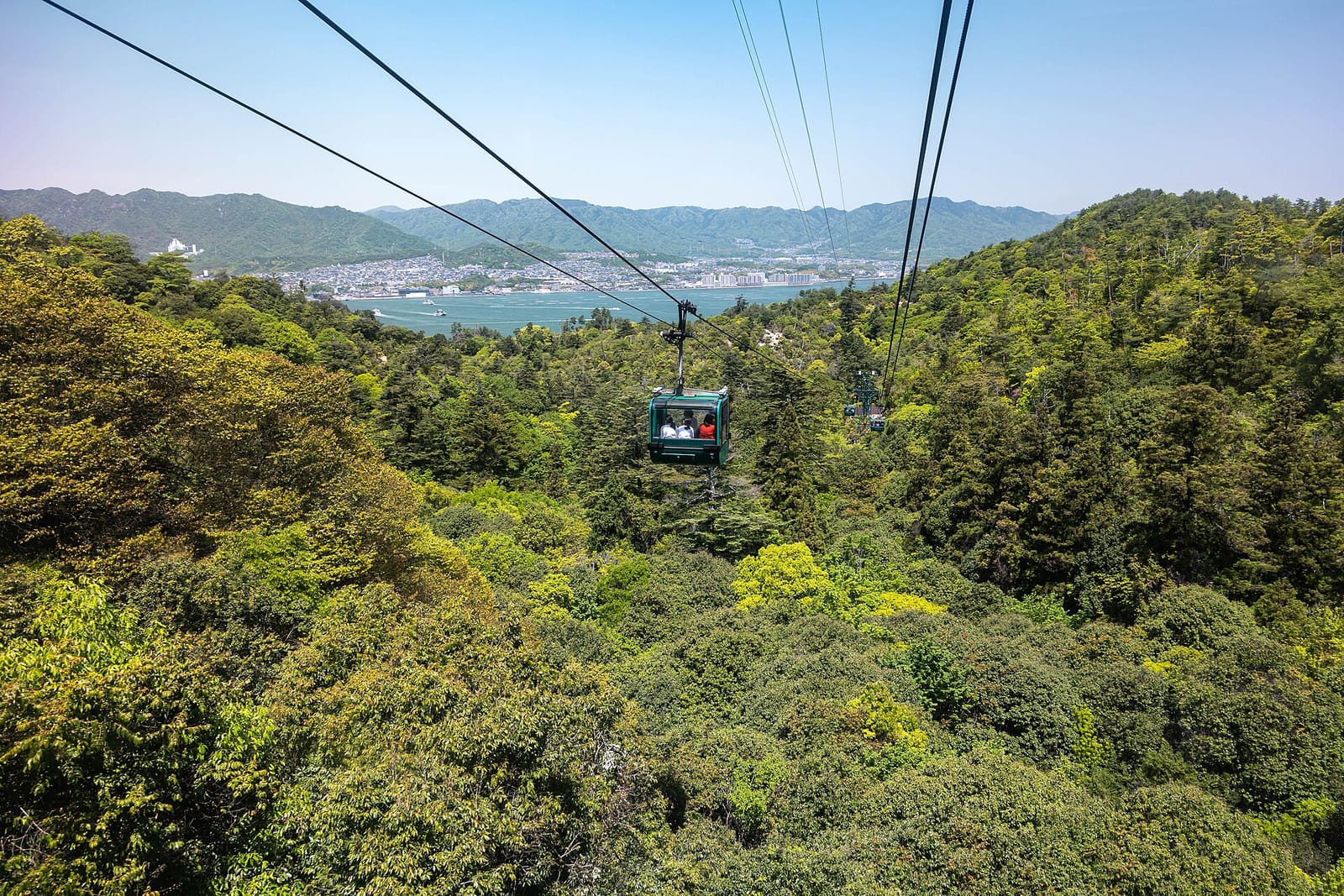
Two lines take you up Mt Misen: a gondola from Momijidani to Kayatani, about 10 minutes, then a funicular to Shishiiwa, about 4 minutes. It stops in strong wind and thunderstorms, and for maintenance around February and July. Being at the station when it opens at 9:00 a.m. is easier on a night stay than on a day trip.
- Hours
- 9:00–16:00; last car down 16:30 (as of November 2026)
- Price
- Adults ¥1,100 one way, ¥2,000 round trip; children ¥550 / ¥1,000 (as of November 2026)
- Access
- Free shuttle bus from Momijidani Park entrance, about every 20 min
- Source
- miyajima-ropeway.info
Mt Misen
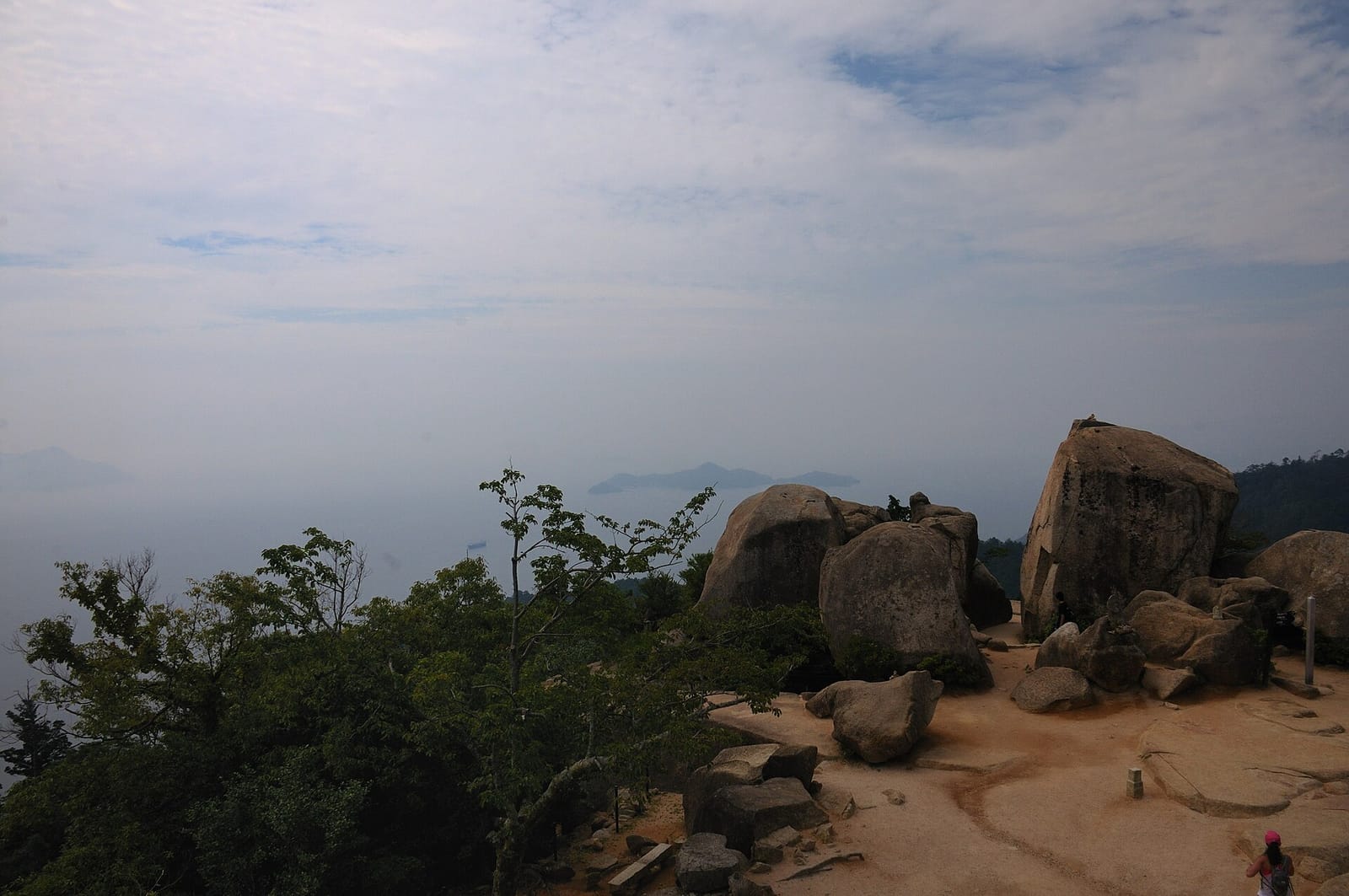
From Shishiiwa Station, the summit area is a further walk on a mountain path. Keep an eye on the clock: the last ropeway car down leaves at 4:30 p.m., and after that you walk down.
What if it rains, or the ropeway is not running?
Keep the shrine and Daisho-in, and drop Mt Misen. The ropeway stops in bad weather, and the summit path is not worth the risk in heavy rain.
- Rain on day 2: do the shrine at 6:30 a.m., then the Treasure Hall when it opens at 8:00 a.m., then Daisho-in. Take an earlier ferry back.
- Ropeway closed: the same order works; add a second look at the torii if the tide table shows a below-100 cm window before you leave.
- Late on day 1: the JR ferry runs until 22:42 from Miyajimaguchi on the regular timetable, so a late arrival still works. Arrive after 5:30 p.m. and you see the shrine only from outside until the next morning.
Should you stay on Miyajima or in Hiroshima city?
Stay on the island if the evening light-up and the 6:30 a.m. shrine are the point of the trip. Stay in Hiroshima if you also want the Peace Memorial Museum when it opens and more choice of rooms; our guide to hotels near Hiroshima Peace Park compares options by tram stop. From the city, the first JR ferry at 6:25 from Miyajimaguchi still gets you to the shrine soon after opening, but only if you catch an early train.
If you are moving on with big suitcases, our guide to luggage forwarding in Japan explains how to send bags ahead, so you can cross on the ferry with a small overnight bag.
What to pack before you go
Maps, train apps and translation drain a phone by mid-afternoon. Keep it in your carry-on: power banks are not allowed in checked luggage.
Japan still runs on coins: there are six of them, from 1 to 500 yen, and you collect a pocketful fast. A holder with a slot for each coin lets you pay the exact amount at ticket machines, shrines and small shops without digging.
 Miyajima Floating Torii Tide Times: How to Read the Official Table
 Miyajima Ryokan Overnight Stay: Which Ryokan Suits Your Trip?
FAQ
Is it worth staying overnight on Miyajima?
Yes, if you want the shrine without crowds or the torii at night. The shrine opens at 6:30 a.m., the buildings are lit from sunset until about 11 p.m., and the island is quieter after the evening boats leave. If you only want a quick look at the torii, a day trip is enough.
What time is the last ferry from Miyajima?
On the regular timetable, the last JR Miyajima Ferry leaves Miyajima at 22:14 and the last Miyajima Matsudai Kisen boat leaves at 20:15 (as of November 2026). Busy-day and New Year timetables differ, so check the operator's page for your date.
Do you pay the Miyajima visitor tax twice if you stay the night?
No. Hatsukaichi City charges ¥100 per person per visit, and the ferry company adds it to your fare when you travel to the island. A one-night stay is still one visit, so you pay it once, on the boat over.
What are the Miyajima Ropeway hours?
The ropeway runs from 9:00 a.m. to 4:00 p.m., with the last car down at 4:30 p.m. A round trip costs ¥2,000 for adults and ¥1,000 for children (as of November 2026). It stops in bad weather and for maintenance around February and July.
When are the autumn leaves at Momijidani?
The Miyajima Tourist Association says the leaves are at their best from mid to late November. The park is on the walk up to the ropeway station, so you can see it on the way to Mt Misen.
Sources
- Itsukushima Shrine — Admission and hours
- Miyajima Tourist Association — Tide table (Japanese)
- Miyajima Tourist Association — Momijidani Park (Japanese)
- JR Miyajima Ferry — Fares
- JR Miyajima Ferry — Timetable
- Miyajima Matsudai Kisen — Fares (Japanese)
- Miyajima Matsudai Kisen — Timetable (Japanese)
- Hatsukaichi City — Miyajima Visitor Tax overview (Japanese)
- Miyajima Ropeway — Hours, fares and facilities
- Miyajima Ropeway — Access and free shuttle bus
- Daisho-in (Japanese)
- Daisho-in — Access (Japanese)
- Dive! Hiroshima — Night views and light-ups (Japanese)
- Dive! Hiroshima — From Hiroshima Station to Miyajima
- Hiroden — 1 Day Streetcar and Ferry Pass
- Japan Tourism Agency multilingual database — Hiroshima Oysters
This article contains affiliate links. We may earn a commission at no extra cost to you.