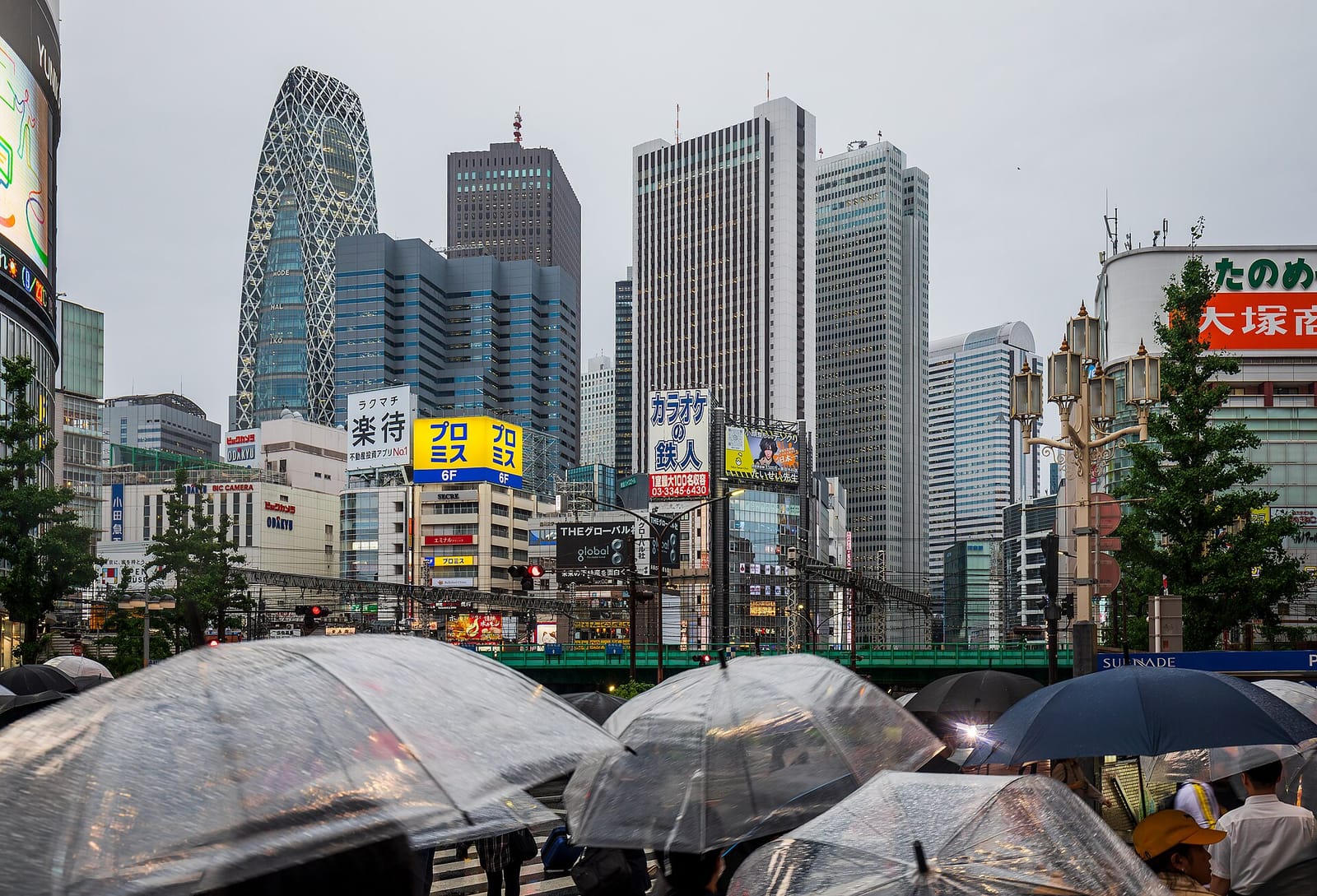
Nishi-Shinjuku Skyscraper Walking Route: Clear-Day and Rainy-Day Plans
A self-guided walk through the Nishi-Shinjuku skyscraper district, with a clear-day loop and a rainy-day plan that uses a free shuttle bus, museums and atriums.
You have one afternoon on the west side of Shinjuku, and you will not know until the morning whether it will rain. That is the real constraint on a walk through the Nishi-Shinjuku skyscraper district: on a dry day the streets between the towers are the point, while on a wet day the open plazas and wide crossings turn into a slog. So this guide gives you two plans built from the same set of towers. The clear-day plan is a walking loop that ends at the free observatory at dusk. The rainy-day plan starts indoors, uses a free shuttle bus, and keeps the outdoor legs short.
Which plan should you pick on the day?
Pick by the morning forecast. If it is dry at noon, take the clear-day loop. If it is raining before you leave, take the rainy-day plan, which moves the museum and lunch to the morning and uses the shuttle bus for the longest leg.
Both plans start at the West Exit of Shinjuku Station. Two checks apply to either one:
- Is it a Monday or Tuesday? The Tokyo Metropolitan Government’s South Observatory closes on the 1st and 3rd Tuesdays of the month, and the North Observatory on the 2nd and 4th Mondays. The SOMPO Museum of Art is closed on Mondays and on November 24, 2026.
- Is it December 29 to January 3? Both observatories close on December 29–31 and January 2–3. Shinjuku Park Tower and the Shinjuku NS Building also close over the New Year holidays.
The two decks, their opening hours and the queue are covered in detail in our Tokyo Metropolitan Government Building observatory guide, so this route only tells you when to go up. If you are new to the station itself, read our Shinjuku Station exits guide first; the West Exit is where both plans begin.
What does the clear-day walking route look like?
On a dry day, walk a loop: north past Cocoon Tower to the LOVE sculpture, south past Keio Plaza Hotel to the park and shrine, west to Shinjuku Park Tower, then back east to the NS Building and up the Tokyo Metropolitan Government tower for dusk.
| Time | Stop | Cost (as of November 2026) |
|---|---|---|
| 13:00 | Leave the West Exit; Mode Gakuen Cocoon Tower | Free (outside only) |
| 13:20 | LOVE sculpture, Shinjuku i-LAND Tower | Free |
| 13:45 | Keio Plaza Hotel, the district’s first tower | Free (outside) |
| 14:05 | Shinjuku Chuo Park and Juniso Kumano Shrine | Free |
| 14:50 | Shinjuku Park Tower | Free to enter |
| 15:30 | Shinjuku NS Building and its pendulum clock | Free |
| 16:00 | Tokyo Metropolitan Government observatory, 45th floor | Free |
| After sunset | TOKYO Night & Light projection, from the plaza | Free |
| 18:00 | Back toward the station; dinner at Omoide Yokocho | Food only |
The whole loop costs nothing in admission. The clock times are a planning guide; you can stretch the park or cut Park Tower if you are running late.
Why this order? The shrine’s amulet and goshuin counter closes at 16:30, so the park and shrine come before the observatory, not after. The South Observatory stays open until 22:00 on most days, which lets you arrive around 16:00, see the city in daylight, and stay until the lights come on. The projection show runs on the same building after sunset, so you only need to come down to the plaza. In late autumn and winter it gets dark early, so do not start the loop much later than 13:00.
What does the rainy-day plan look like?
On a wet day, start indoors at the museum by the station, eat lunch in the next tower, ride the free shuttle bus to Shinjuku Park Tower, and finish at the observatory.
| Time | Stop | Cost (as of November 2026) |
|---|---|---|
| 10:00 | SOMPO Museum of Art, Van Gogh’s Sunflowers | ¥2,000 adults 26+; ¥1,200 ages 18–25 |
| 11:45 | Lunch in the Shinjuku Nomura Building (next door) | Food only |
| 13:15 | Free shuttle bus from West Exit stop No. 28 | Free |
| 13:30 | Shinjuku Park Tower: Living Design Center OZONE and The Conran Shop | Free to enter |
| 15:00 | Shinjuku NS Building atrium and pendulum clock | Free |
| 15:45 | Tokyo Metropolitan Government observatory | Free |
| 17:30 | Toei Oedo Line from Tochomae Station, or walk back for dinner | Fare or food only |
Admissions come to ¥2,000 for an adult 26 or over, plus lunch and dinner.
Three notes for the rainy plan. First, the shuttle bus runs 10:30–18:30, every 20 to 25 minutes, and every 30 minutes on Wednesdays, according to Shinjuku Park Tower. If you would rather walk underground, the building says you can follow the “One Day Street” passage from Shinjuku Station and come up at the Washington Hotel Exit. Second, the walks from Park Tower to the NS Building and on to the Tokyo Metropolitan Government Building are outdoors, so keep an umbrella. Tochomae Station on the Toei Oedo Line connects directly to the No. 1 Building, which saves you the walk back in the rain. Third, a rainy view from the 45th floor can be grey; if the clouds are low, look at the city at night instead, when the lights show through.
If the museum is closed (Mondays, November 24, the New Year holidays, and periodic exhibition changes), spend the morning on our rainy-day Shinjuku list instead and join this plan at the shuttle bus.
Which towers and stops are on the route?
Here are the stops in clear-day order, with the rainy-day extras at the end. Tick “Add to my route” on the ones you want, and the box at the end of the page opens them in order in Google Maps.
Mode Gakuen Cocoon Tower
The first tower you meet on the walk, and the easiest to recognize, thanks to a design inspired by a cocoon. It houses three schools, for fashion, IT and medical services. GO TOKYO notes that only school staff and students may enter, so look at it from the street and the plaza in front.
- Access
- About 3 min walk from the West Exit of Shinjuku Station
- Source
- www.gotokyo.org
LOVE sculpture, Shinjuku i-LAND Tower
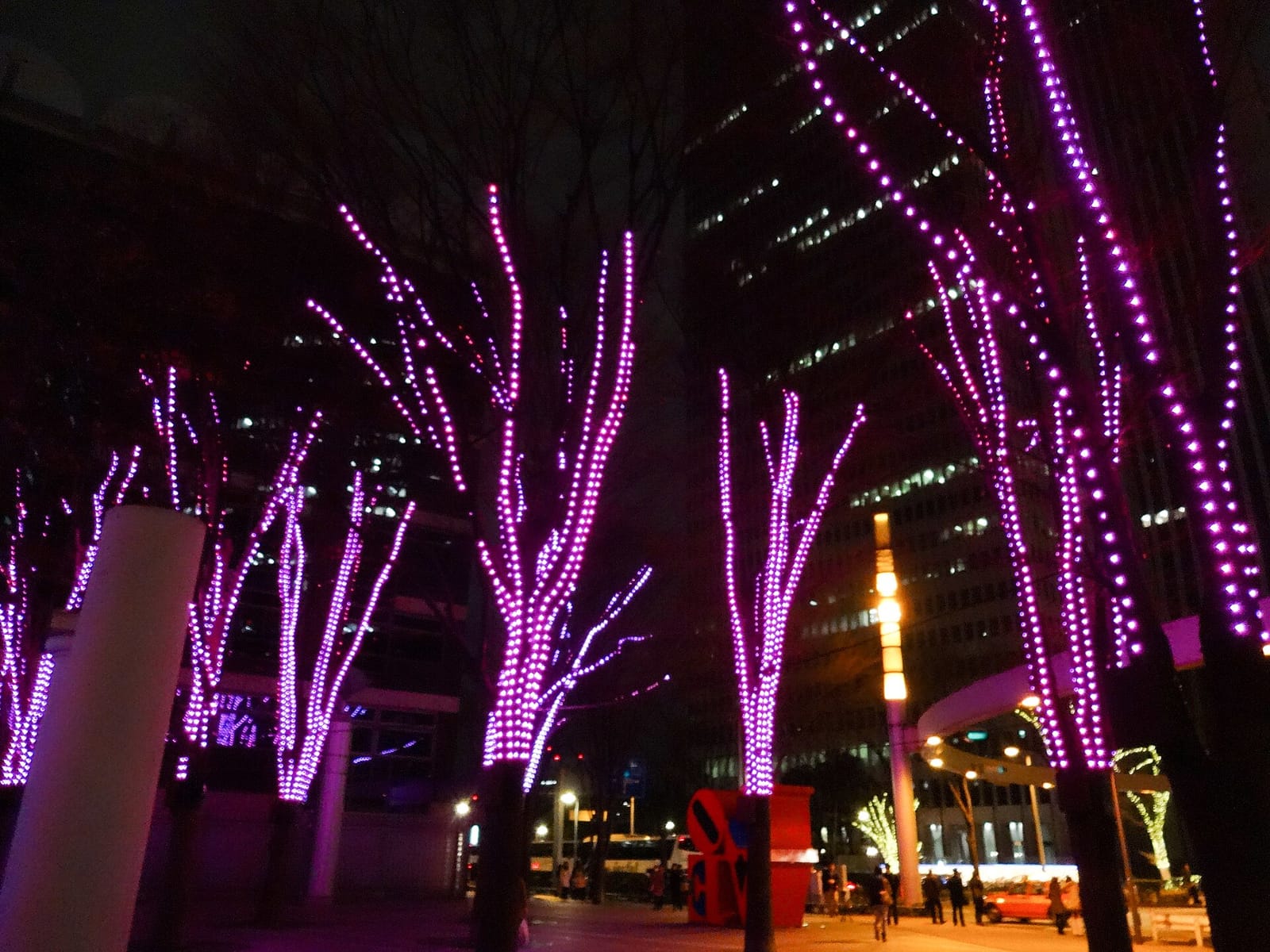
Robert Indiana’s red LOVE sculpture stands outside Shinjuku i-LAND Tower, at the northern end of the district. In the winter illumination season the trees in front are lit up, as in the photo. From here, turn south toward the hotel and the government towers.
Keio Plaza Hotel
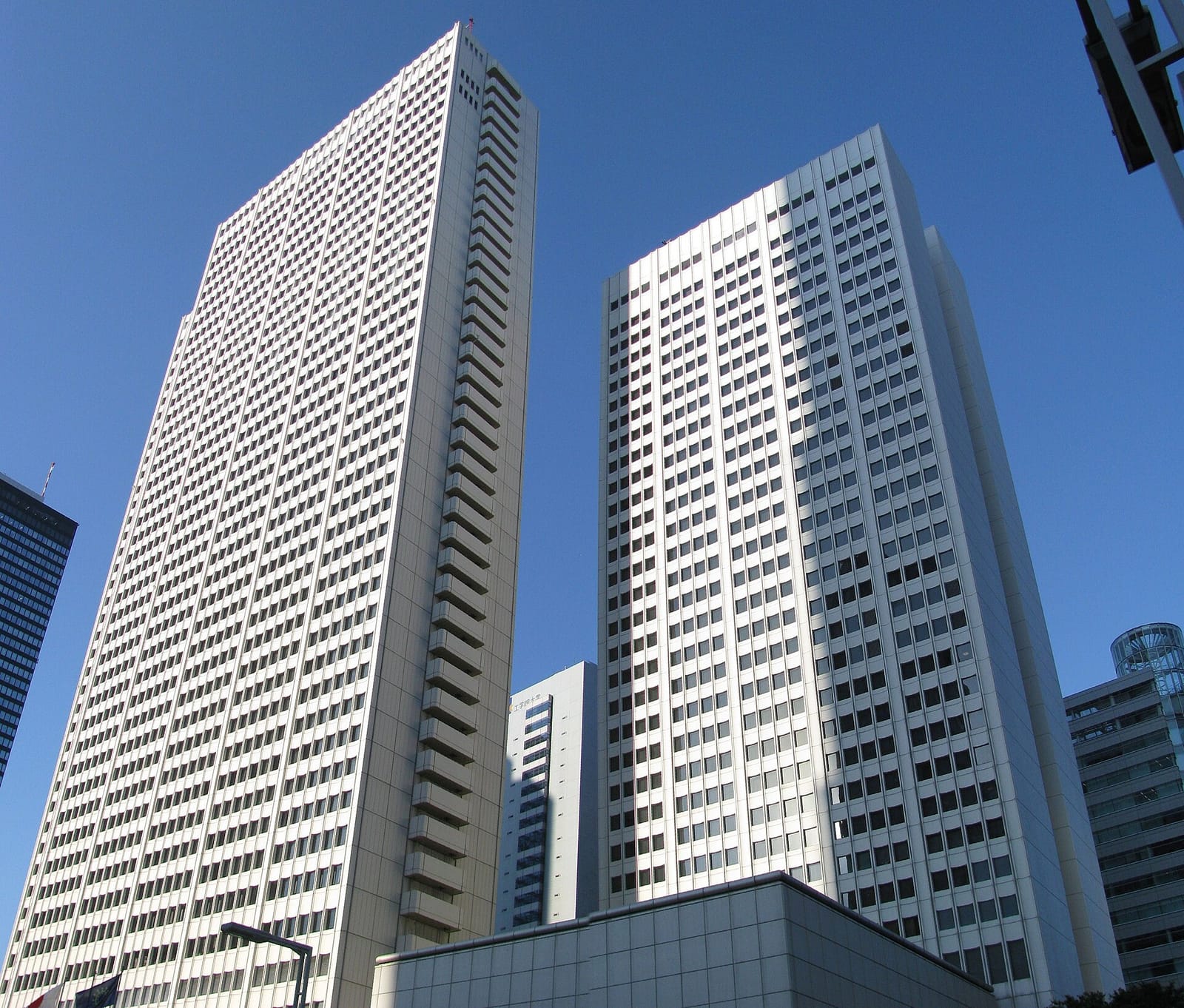
This is where the skyscraper district began. The hotel opened in 1971 at 170 meters, and it describes itself as Japan’s first skyscraper hotel. Most of the towers you pass on this walk came after it. It is still a working hotel, so treat it as a tower to look at on the way to the Tokyo Metropolitan Government Building across the road.
Shinjuku Chuo Park
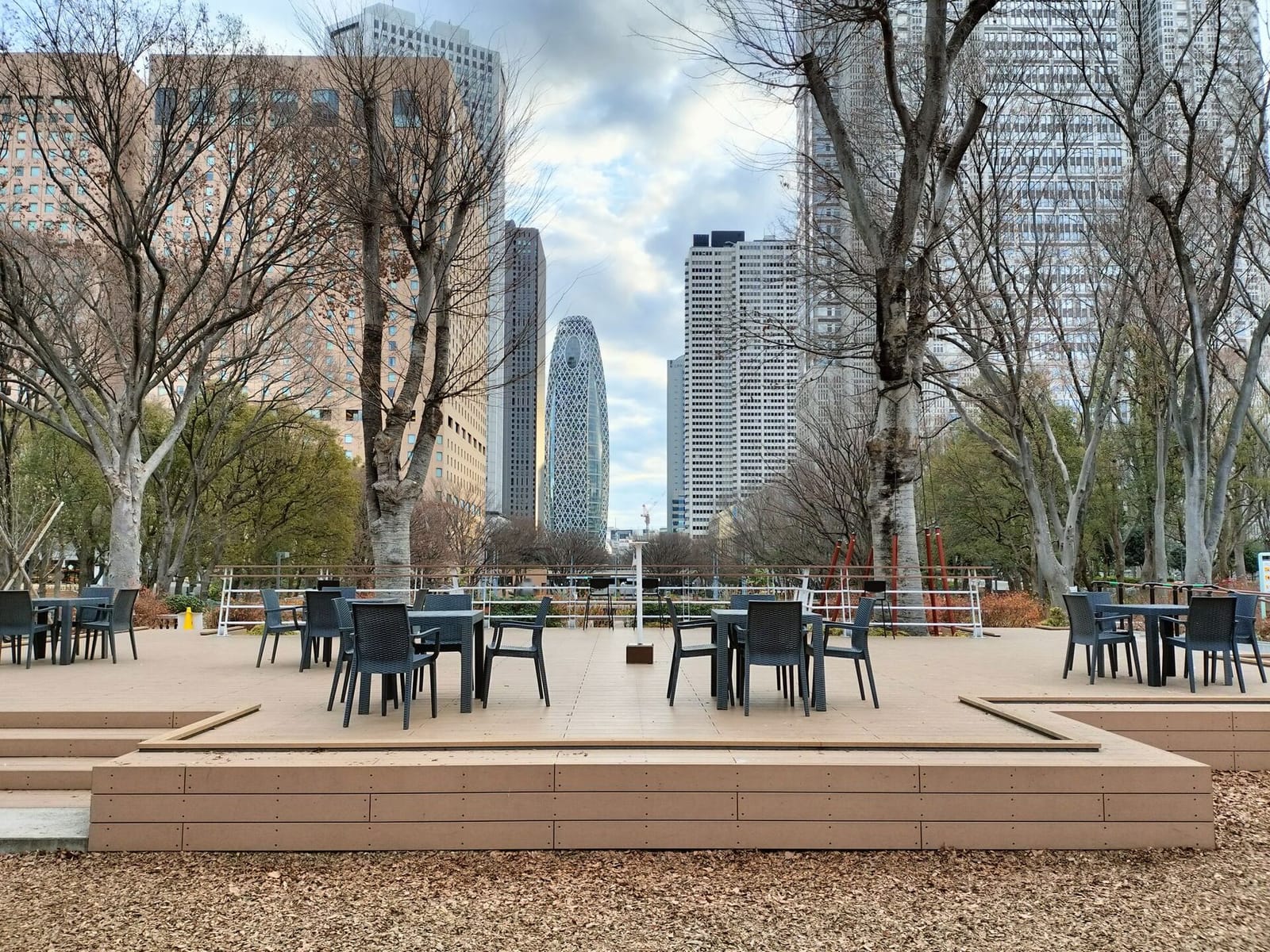
The park opened in 1968 on the site of the old Yodobashi Water Filtering Plant. At about 88,000 square meters, it is the largest ward-run park in Shinjuku, split into North, East and West areas joined by bridges. GO TOKYO points to the Park View Forest for views of the high-rises. It is the one place on the route where you can sit down outside for free.
- Access
- About 10 min walk from the West Exit of Shinjuku Station; about 5 min from Nishi-Shinjuku Station; about 1 min from Exit A5 of Tochomae Station
- Source
- www.shinjukuchuo-park.jp
Juniso Kumano Shrine
A small shrine on the edge of Shinjuku Chuo Park, at 2-11-2 Nishi-Shinjuku. It is a quiet contrast to the towers around it. If you collect goshuin stamps, come before 16:30, when the counter closes.
- Hours
- Amulet and goshuin counter 9:00–16:30 (as of November 2026)
- Source
- 12so-kumanojinja.or.jp
Shinjuku Park Tower
GO TOKYO calls Park Tower officially the second-tallest building in Shinjuku, a few meters shorter than the Tokyo Metropolitan Government Building, with three stepped towers angled so they do not loom over the park. Inside are Park Hyatt Tokyo, the Living Design Center OZONE, The Conran Shop and a row of shops and restaurants. It was also a filming location for Lost in Translation.
- Hours
- Building 7:00–23:30, varies by floor and shop; closed New Year holidays and the third Sunday of February (as of November 2026)
- Access
- About 12 min walk from the South Exit of JR Shinjuku Station; about 8 min from Tochomae Station; free shuttle bus from West Exit stop No. 28, 10:30–18:30
- Source
- www.shinjukuparktower.com
Yukku-Rhythm Grand Pendulum Clock, Shinjuku NS Building
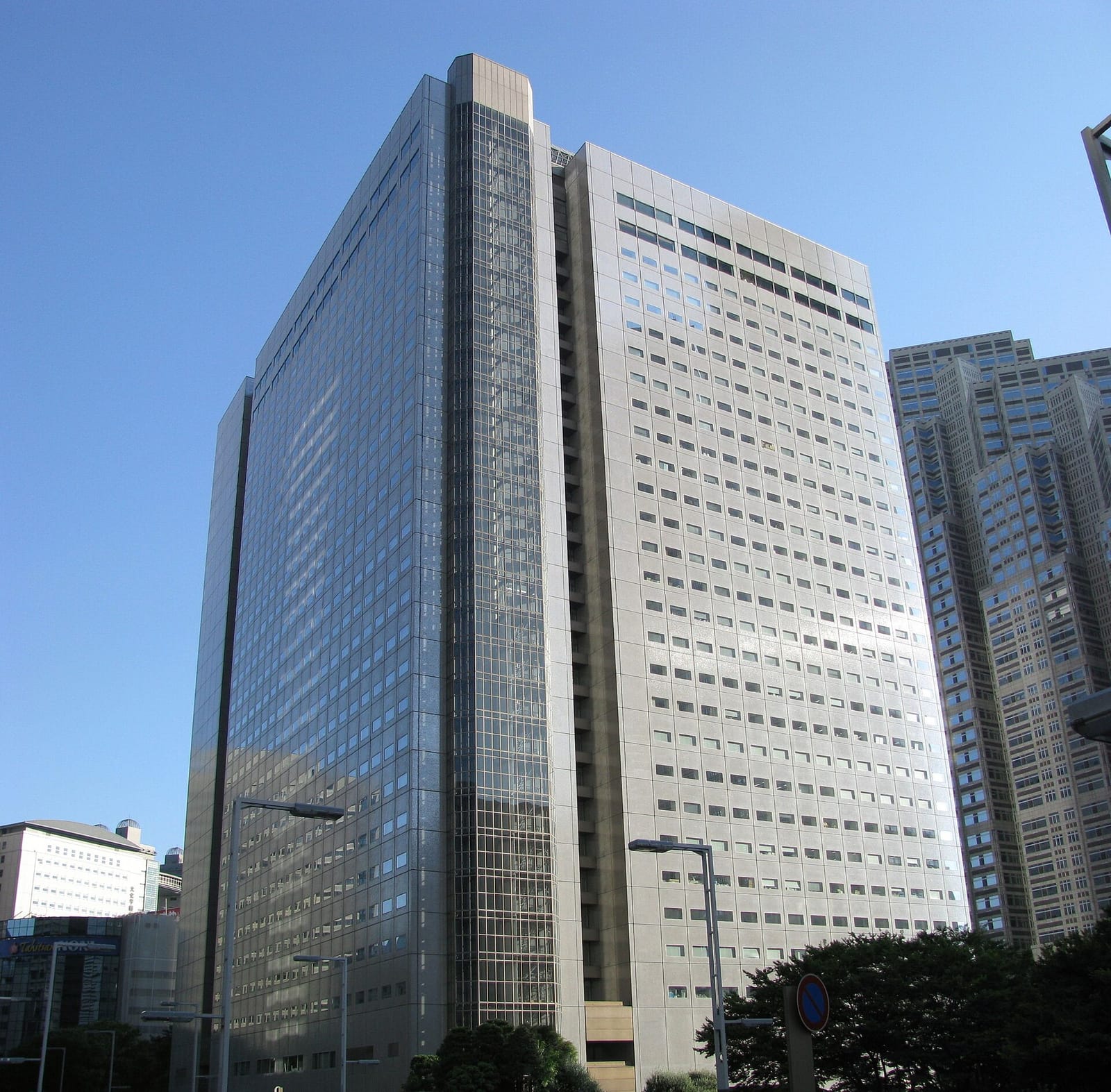
Step inside the NS Building to see its giant clock. GO TOKYO says it was once the world’s largest pendulum clock, 29.1 meters tall with a pendulum over 22 meters long. It has a single hand that goes round once every 24 hours, and each hour is marked with a zodiac sign. It is a dry place to stop between Park Tower and the government towers.
- Hours
- 7:00–23:00; closed New Year holidays and the first Sundays of February and August (as of November 2026)
- Price
- Free
- Access
- About 10 min walk from the South Exit of Shinjuku Station
- Source
- www.gotokyo.org
Tokyo Metropolitan Government Building Observatory
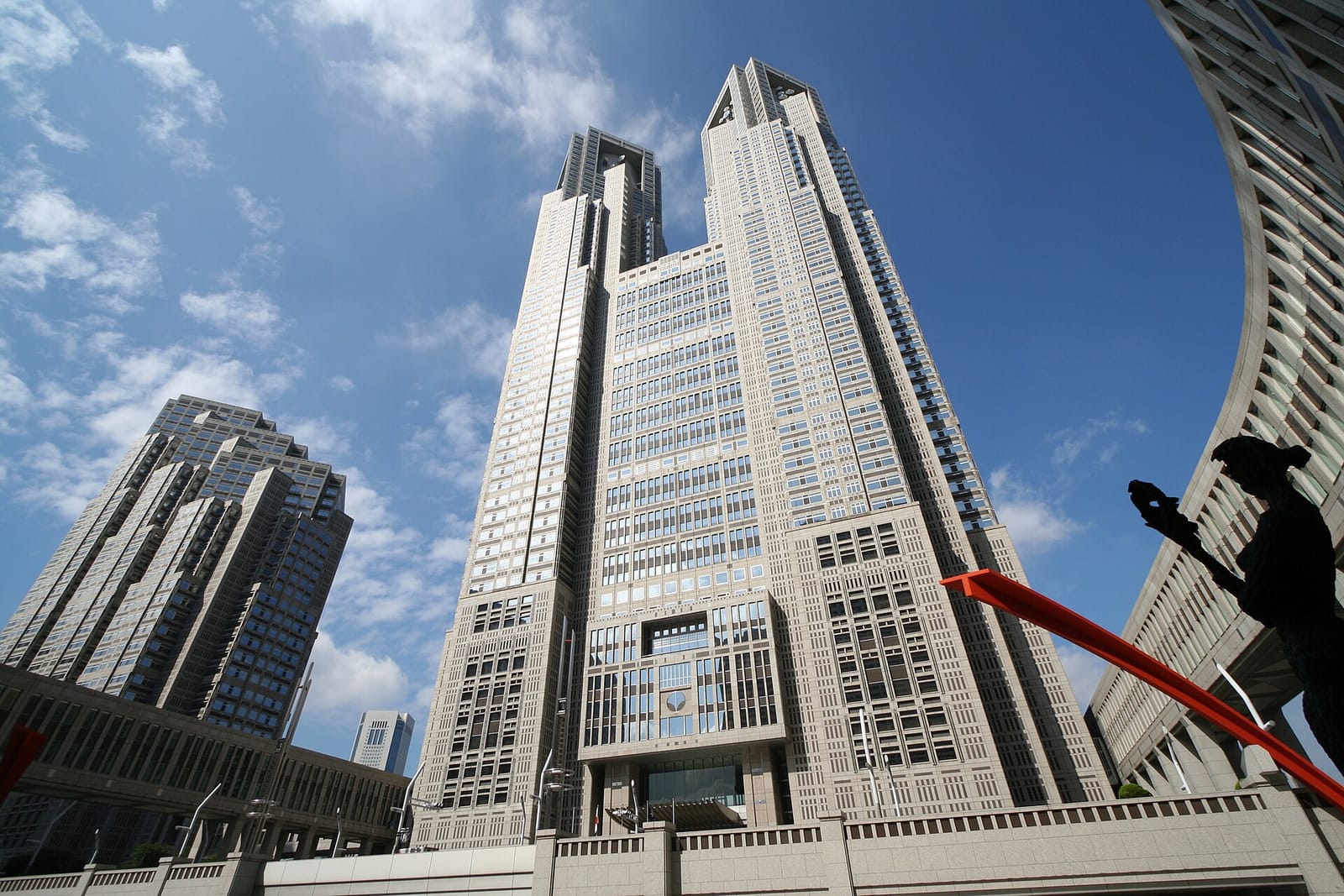
The high point of the route, 202 meters up on the 45th floor. Enter on the 1st floor of the No. 1 Building and take the observatory elevator. From the deck you can pick out the towers you have just walked past. After dark, come down to the plaza for TOKYO Night & Light, a free projection on the building’s facade from the 4th to the 32nd floor, which GO TOKYO says runs several times each evening from after sunset until 21:45.
- Hours
- South 9:30–22:00 (last entry 21:30); North 9:30–17:30, until 22:00 when the South is closed (as of November 2026)
- Price
- Free
- Access
- About 10 min walk from the West Exit of JR Shinjuku Station; about 1 min from Exit A4 of Tochomae Station
- Source
- www.zaimu.metro.tokyo.lg.jp
Shinjuku Center Building
A 223-meter tower on your way back to the station. GO TOKYO notes that it appeared in the 1984 Godzilla film and that about 10,000 people work inside. Walk past it on the way to the Nomura Building and the museum.
- Access
- About 5 min walk from Shinjuku Station
- Source
- www.gotokyo.org
Omoide Yokocho
End the walk at the low, narrow alleys by the West Exit. The official site traces them back to an open-air market set up just after the war. Around 60 of its roughly 80 businesses serve food and drink, mostly grilled offal and yakitori. Our Omoide Yokocho guide explains how the small counters work.
- Access
- At the West Exit of Shinjuku Station
- Source
- shinjuku-omoide.com
SOMPO Museum of Art (rainy day)
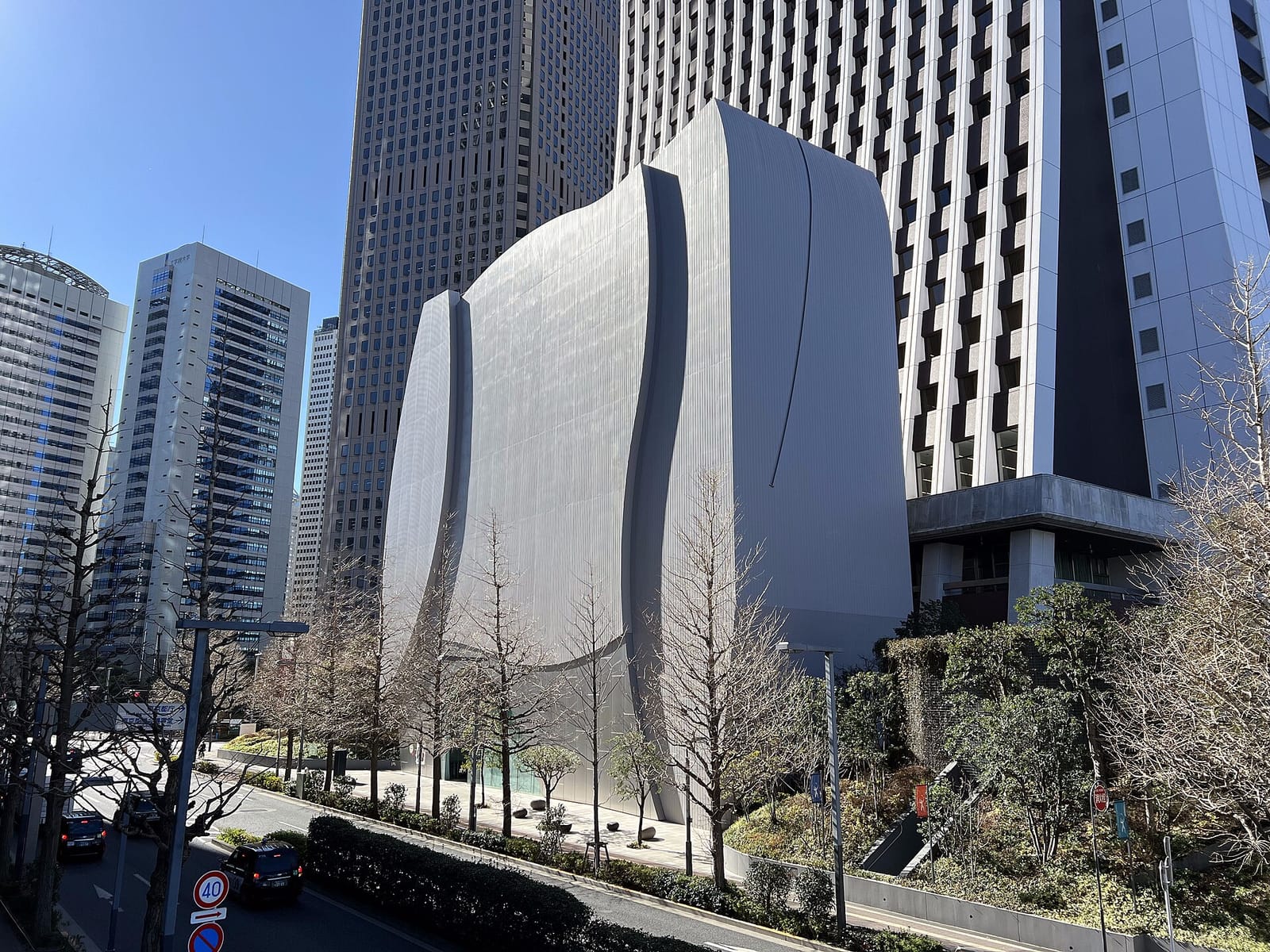
The museum shows Van Gogh’s Sunflowers as part of its collection. Its current special exhibition, a retrospective of the French painter Albert Marquet, runs until December 13, 2026. The next one, on Togo Seiji, starts on January 9, 2027, and the museum says it closes periodically during exhibition changes, so check before you go in late December or early January.
- Hours
- 10:00–18:00, Fridays to 20:00, last entry 30 min before closing; closed Mondays and Nov 24 (as of November 2026)
- Price
- Adults 26+ ¥2,000; ages 18–25 ¥1,200; 17 and under free (as of November 2026)
- Access
- About 5 min walk from the West Exit of JR Shinjuku Station, or from Nishi-Shinjuku and Shinjuku-nishiguchi stations
- Source
- www.sompo-museum.org
Shinjuku Nomura Building (rainy day)
A 50-story tower next to the SOMPO Museum with more than 30 restaurants serving Japanese, Western and Chinese food, according to GO TOKYO. The restaurants on the higher floors look out over the city, which makes it a good lunch stop when it is too wet to walk. Opening hours vary by restaurant.
- Access
- Nishi-Shinjuku Station (Tokyo Metro Marunouchi Line)
- Source
- www.gotokyo.org
How long is the walk, and how do you get around?
Plan on about five hours for the clear-day loop including the observatory, and four to five hours for the rainy-day plan. Everything is within the area between the West Exit of Shinjuku Station and Shinjuku Chuo Park, so walking is the main way to move.
Three transport options help when your legs or the weather give out:
- Toei Oedo Line: Tochomae Station is directly connected to the Tokyo Metropolitan Government Building, and Exit A5 is about 1 minute from Shinjuku Chuo Park.
- Tokyo Metro Marunouchi Line: Nishi-Shinjuku Station is about 5 minutes on foot from Shinjuku Chuo Park, according to the park.
- Free shuttle bus: from stop No. 28 at the West Exit to Shinjuku Park Tower, 10:30–18:30.
If you are carrying bags on a check-out day, drop them first; our Shinjuku Station luggage storage guide lists lockers by exit.
How can you change the route?
Cut stops rather than rush. With only two hours, walk from the West Exit past Cocoon Tower and Keio Plaza Hotel straight to the observatory, then come back past the Center Building to Omoide Yokocho. With kids, spend longer in Shinjuku Chuo Park, which GO TOKYO says has a large slide and a separate play area for toddlers; our guide to things to do in Shinjuku Central Park has its hours and the winter lights.
To turn the walk into a full day, add the garden and the east side from our one day in Shinjuku itinerary, or keep it free from start to finish with our list of free things to do in Shinjuku. For the other side of the station, our Shinjuku east side half-day walk runs from Shinjuku Gyoen to Golden Gai. If the walk makes you want to stay on this side, our guide to Nishi-Shinjuku’s quiet areas to stay compares the calm pockets around the park and the subway stations.
What to pack before you go
Maps, train apps and translation drain a phone by mid-afternoon. Keep it in your carry-on: power banks are not allowed in checked luggage.
Japan still runs on coins: there are six of them, from 1 to 500 yen, and you collect a pocketful fast. A holder with a slot for each coin lets you pay the exact amount at ticket machines, shrines and small shops without digging.
 Shinjuku Hotels With Big Rooms for Families: 6 Picks by Group Size
 Shinjuku Hotels Connected to the Station: What 'Direct' Means
FAQ
How long does it take to walk around the Nishi-Shinjuku skyscrapers?
Allow about five hours for the full clear-day loop with the observatory and the park, or two to three hours if you only walk past the towers and go up the observatory. The towers sit close together, so most legs between stops are short walks.
Can you go inside the Nishi-Shinjuku skyscrapers?
Some, not all. The Tokyo Metropolitan Government observatories, the NS Building atrium, Shinjuku Park Tower's shops and the Nomura Building's restaurants are open to the public. Mode Gakuen Cocoon Tower is a school, and GO TOKYO says only school staff and students may enter.
Is the Tokyo Metropolitan Government Building observatory free?
Yes. Admission to both 45th-floor observatories is free, according to the Tokyo Metropolitan Government. The South Observatory is open 9:30–22:00 (last entry 21:30), and the North Observatory usually closes at 17:30.
What is the best time for the Nishi-Shinjuku skyscraper walk?
Start in the early afternoon so that you reach the observatory before dusk. The TOKYO Night & Light projection on the Tokyo Metropolitan Government Building begins after sunset, and GO TOKYO says the last show ends by 21:45.
Is there a free bus in Nishi-Shinjuku?
Yes. Shinjuku Park Tower runs a free shuttle bus from stop No. 28 at the West Exit of Shinjuku Station, 10:30–18:30, every 20 to 25 minutes (every 30 minutes on Wednesdays), as of November 2026.
Sources
- Tokyo Metropolitan Government — Observatory visitor guide (Japanese)
- Tokyo Metropolitan Government — Facilities and access (Japanese)
- GO TOKYO — Tokyo Metropolitan Government No.1 Building
- GO TOKYO — Mode Gakuen Cocoon Tower
- Keio Plaza Hotel Tokyo — History
- Shinjuku Chuo Park (official site)
- Shinjuku Chuo Park — Access
- GO TOKYO — Shinjuku Chuo Park
- Juniso Kumano Shrine (official site, Japanese)
- Shinjuku Park Tower (official site)
- Shinjuku Park Tower — Access and shuttle bus
- GO TOKYO — Shinjuku Park Tower
- GO TOKYO — Yukku-Rhythm Grand Pendulum Clock (Shinjuku NS Building)
- GO TOKYO — Shinjuku Center Building
- GO TOKYO — Shinjuku Nomura Building
- SOMPO Museum of Art — Visit (hours, admission, access)
- SOMPO Museum of Art — Exhibition schedule
- Shinjuku Omoide Yokocho (official site)
This article contains affiliate links. We may earn a commission at no extra cost to you.