Shinjuku Gyoen Cherry Blossom Season Guide: Varieties, Dates, Crowds
When each of Shinjuku Gyoen's 70 cherry varieties blooms, where to find them, the March 25–April 24 every-day opening, reservations and sakura-season rules.
At 9:00 a.m. on March 25, the gates of Shinjuku Gyoen open on a new schedule. From that morning until April 24, the garden is open every day, Mondays included, until 18:00. It is the busiest month of the garden’s year, and for good reason: the garden counts about 900 cherry trees of around 70 varieties, more than enough to keep something in bloom from late winter into late spring. This guide sorts them by when they flower, shows where to find each one, and explains the rules that only matter in sakura season. For gates, ticket types and a year-round route, see our Shinjuku Gyoen tips.
When do the cherry blossoms bloom at Shinjuku Gyoen?
From February to late April, in three waves. The garden’s own cherry blossom guide gives these windows:
| Wave | Main varieties | When the garden says to look |
|---|---|---|
| Early | Kanzakura and about 20 other early varieties | January or February to early March |
| Main | Somei Yoshino (about 300 trees) | Late March to early April |
| Late | Ichiyo, Kanzan and other yaezakura (double-flowered) | Early to late April, peaking around mid-April |
| Twice a year | Jugatsu-zakura (October cherry) | March, and again from October |
These are typical windows, not fixed dates. The weather moves them every year, so watch the garden’s news page and Tokyo bloom forecasts as March approaches. If your dates are fixed and you miss the Somei Yoshino, the yaezakura, which the garden says peak around mid-April, give you a second chance.
What are the opening hours and prices in cherry blossom season?
From March 15, the garden is open 9:00–18:00, with last entry at 17:30. Before that, from October 1 to March 14, it closes at 16:30 (last entry 16:00). As of November 2026:
| Period | Open | Last entry | Mondays |
|---|---|---|---|
| Until March 14 | 9:00–16:30 | 16:00 | Closed (next weekday if Monday is a holiday) |
| March 15 – March 24 | 9:00–18:00 | 17:30 | Closed (next weekday if Monday is a holiday) |
| March 25 – April 24 (cherry blossom season) | 9:00–18:00 | 17:30 | Open every day |
Admission is ¥500 for adults, ¥250 for seniors 65 and over and students 16 and over, and free for children 15 and under, as of November 2026. You can tap a transport IC card such as Suica at the entry gates, or buy an e-ticket in advance on your phone to skip the ticket counter line. The e-ticket is valid for six months from purchase.
Do you need a reservation in cherry blossom season?
On busy days, you might. The garden’s admission page says it gets extremely crowded in cherry blossom season, so entry on weekends, national holidays and other potentially busy days may require an advance reservation.
As of November 2026, the garden had not published the reservation dates or booking method for spring 2027. The safe plan:
- Check the official Shinjuku Gyoen site from early March for a reservation notice.
- If you can, go on a weekday, and arrive close to 9:00.
- Treat an e-ticket and a reservation as two different things until the official notice says otherwise. An e-ticket is a pre-paid ticket; a reservation, if required, is a slot for a date.
Which cherry varieties bloom first, and where are they?
The first wave is the quietest time to see blossoms in the garden. The early varieties flower in the cold months, before the every-day opening starts, so the normal winter hours and Monday closures apply.
Early-blooming cherries near the teahouse
The garden grows around 20 early-blooming varieties, and points to several near the teahouse, including Tsubakikan-zakura, Atami-zakura and Satsumakan-zakura. It says the Kanzakura cherries are best from February to early March. The teahouses sit in the Japanese Traditional Garden, around the Upper Pond.
- Hours
- 9:00–16:30, last entry 16:00 (Oct 1–Mar 14); closed Mondays (as of November 2026)
- Price
- Adults ¥500 (as of November 2026)
- Access
- Inside the garden, in the Japanese Traditional Garden area
- Source
- policies.env.go.jp
Jugatsu-zakura near Sendagaya Gate
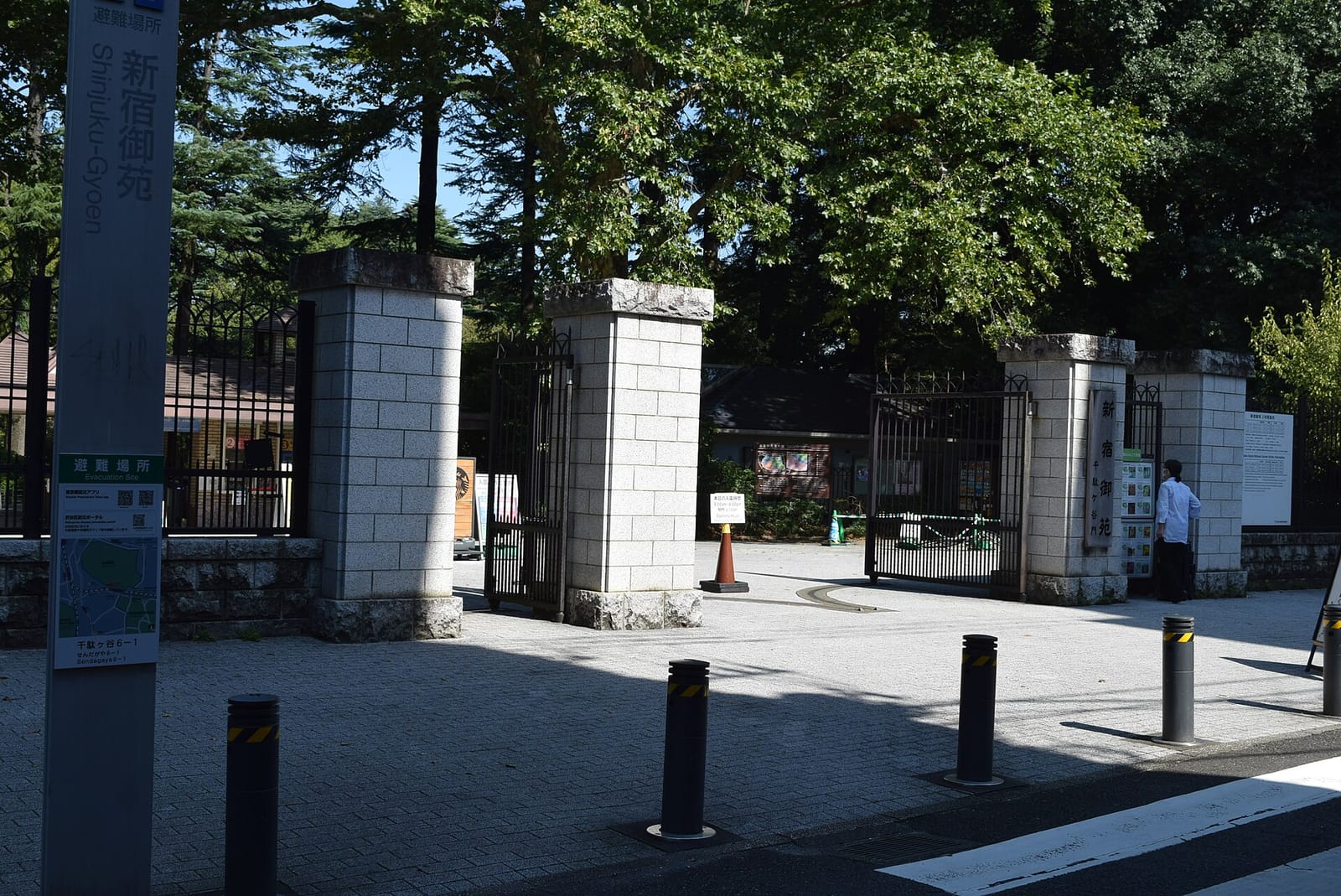
The October cherry flowers twice: in March, and again from October, when its blooms are smaller and sparser. The garden says to look near the garden office and in the Cherry Tree Area by the Sendagaya Gate. It is the one variety you can also catch on an autumn visit.
- Access
- Near the Cherry Tree Area by Sendagaya Gate; 5 min walk from JR Sendagaya Station
- Source
- policies.env.go.jp
Where should you see the Somei Yoshino?
Around the Middle Pond and across the open lawns. The Somei Yoshino is the variety most people picture when they think of cherry blossoms, and it is also the most numerous in the garden, with about 300 trees. They bloom from late March to early April, which overlaps with the start of the every-day opening on March 25.
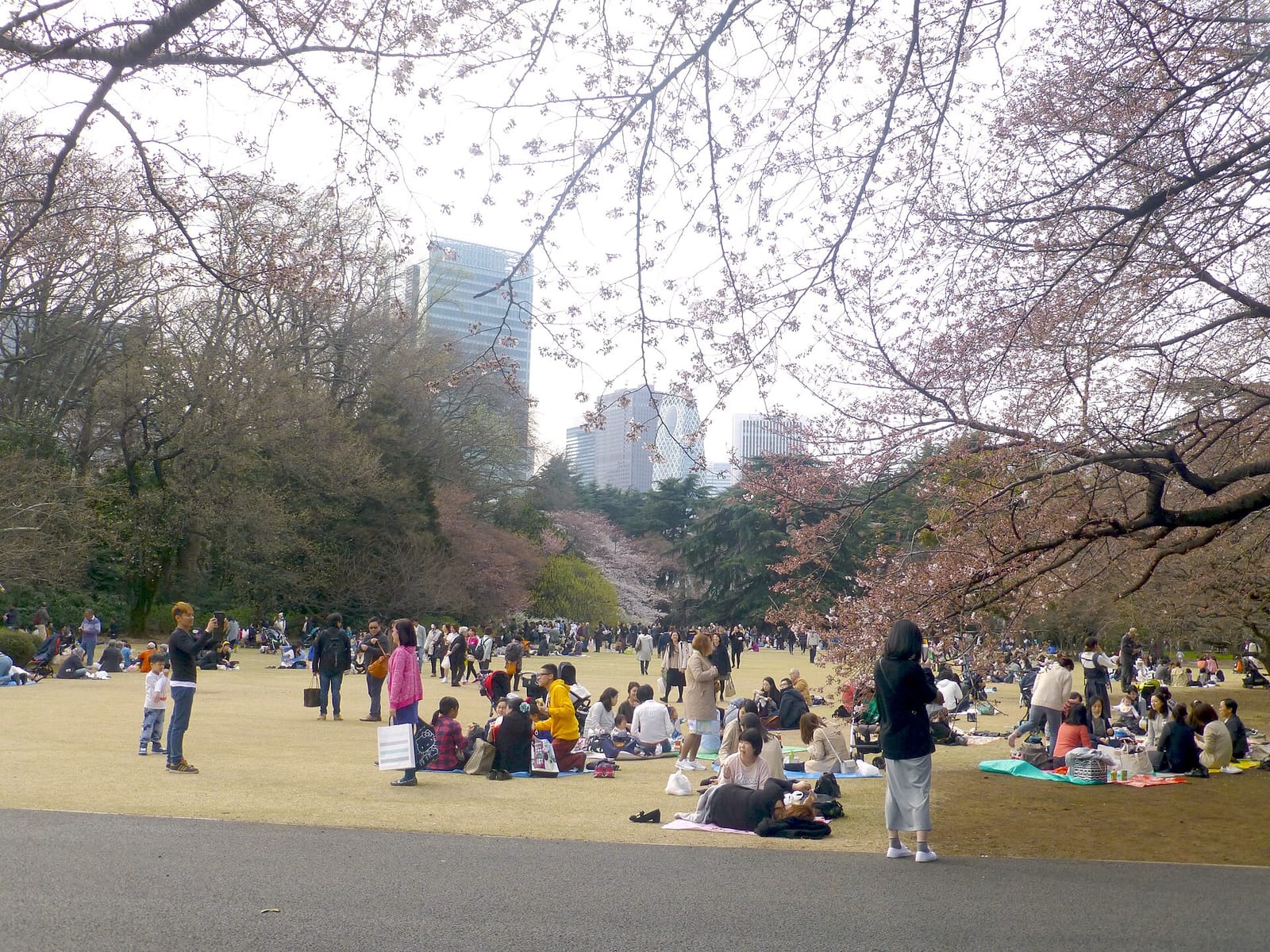
Middle Pond
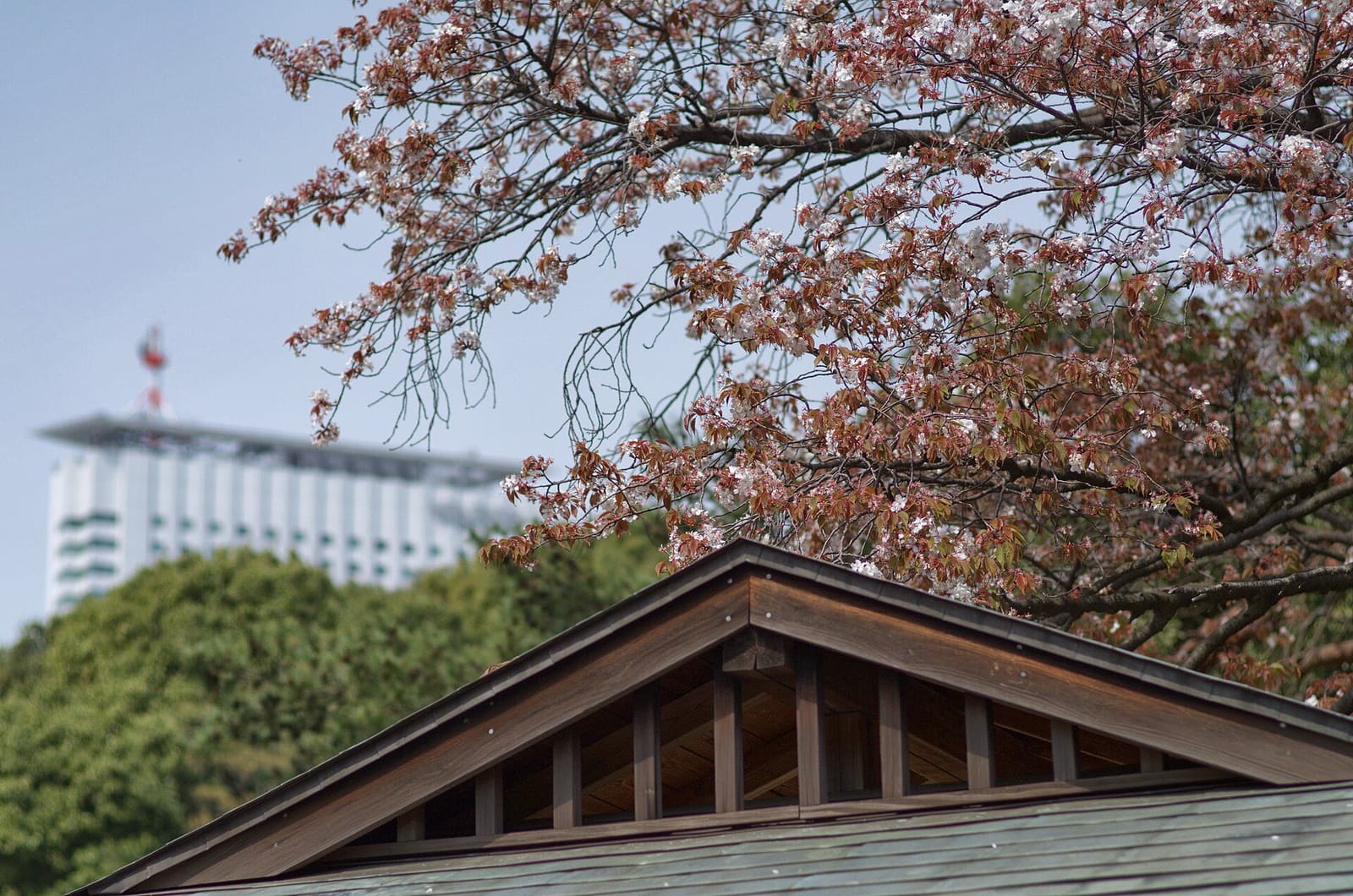
The garden’s own tip for Somei Yoshino is to look for the blossoms reflected in the surface of the Middle Pond, and for the contrast of fresh green and pale pink. The short bloom of this variety is its point: once the petals fall, the second wave takes over.
- Hours
- 9:00–18:00, last entry 17:30 (from Mar 15); open every day Mar 25–Apr 24 (as of November 2026)
- Access
- Inside the garden
- Source
- policies.env.go.jp
Where are the late-blooming yaezakura?
In the Landscape Garden and around the Central Rest House. Yaezakura is not one variety but a general name for double-flowered cherries, and after Somei Yoshino they are the garden’s most common type. The garden lists Ichiyo, Kanzan, Fugenzo, Ukon and Gyoiko among them.
Ichiyo cherries in the Landscape Garden
Ichiyo means “one leaf”, after the leaf-like green stamens at the center of each flower. Nearly 100 of these trees grow in the Landscape Garden, the large lawn area of the garden, and they flower from early to mid-April.
- Hours
- 9:00–18:00, last entry 17:30 (from Mar 15, as of November 2026)
- Access
- Inside the garden
- Source
- policies.env.go.jp
Kanzan cherries near the Central Rest House
The most common yaezakura, with frilly deep-pink flowers from mid- to late April. The garden has about 70 Kanzan trees, many of them near the Central Rest House. Their buds are the ones preserved in salt for sakurayu, a cherry blossom tea.
- Hours
- 9:00–18:00, last entry 17:30 (from Mar 15); open every day until Apr 24 (as of November 2026)
- Access
- Inside the garden
- Source
- policies.env.go.jp
If you arrive at the end of the every-day opening, the Kanzan are your best bet. After April 24, the normal schedule returns, including Monday closures.
Which gate should you use in sakura season?
Pick the gate by the station you are coming from, and consider leaving by a different one. The garden’s access page gives these walking times:
Shinjuku Gate
The closest gate to Shinjuku Station and the busiest. If you are starting from the station, it is still the most direct way in.
- Access
- 10 min walk from Shinjuku Station South Exit; 5 min from Shinjuku-sanchome Station (exit E5, C1 or C5) or Shinjuku-gyoemmae Station Exit 1
- Source
- policies.env.go.jp
Okido Gate
The gate on the east side, next to the greenhouse. From March 15, the greenhouse is open 9:30–17:30 with last entry at 17:00, a useful indoor stop if spring weather turns cold or wet.
- Access
- 5 min walk from Shinjuku-gyoemmae Station Exit 2 (Marunouchi Line)
- Source
- policies.env.go.jp
The Sendagaya Gate (stop 2 above) is 5 minutes from JR Sendagaya Station and from Kokuritsu-Kyogijo Station on the Toei Oedo Line. Tick “Add to my route” on the stops you want, and the box at the end of the page opens them in order as a walking route in Google Maps.
What are the hanami rules at Shinjuku Gyoen?
Stricter than at most Tokyo parks. Picnics on the lawns are fine, but the garden rules, which apply all year, ban several things people often bring to a cherry blossom party:
- Alcoholic beverages
- Fires, portable stoves and anything that produces a flame
- Tents and parasols
- Musical instruments, speakers and other loud equipment
- Occupying the same bench or patch of lawn for a long time
- Smoking, including e-cigarettes, everywhere in the garden
- Picking or damaging flowers, and climbing trees
In busy periods there is an extra rule for photographers. The garden bans tripods, reflector boards and other professional equipment that may block paths when used to photograph or film specific people. For 2027, the restriction covers the whole garden from March 25 to March 31. The garden says dates from April 2027 onward had not yet been decided.
How do you plan the rest of the day?
The garden closes at 18:00 in spring, which leaves the evening free for the rest of Shinjuku. Our one-day Shinjuku itinerary fits the garden into a full day, and our Shinjuku night route picks up after closing time. If you still need a room, our guide to where to stay in Shinjuku for first-timers explains why Shinjuku-sanchome, 5 minutes from the Shinjuku Gate, is a calm base.
 Shinjuku Hotels With Big Rooms for Families: 6 Picks by Group Size
 Shinjuku Hotels Connected to the Station: What 'Direct' Means
FAQ
When is the best time to see cherry blossoms at Shinjuku Gyoen?
For the classic pale-pink Somei Yoshino, late March to early April. The garden's own guide says its double-flowered yaezakura peak around mid-April, and early Kanzakura cherries are best from February to early March. Exact dates move with the weather each year.
Do you need a reservation for Shinjuku Gyoen in cherry blossom season?
Possibly. The garden says entry on weekends, national holidays and other potentially busy days in cherry blossom season may require an advance reservation. Details for spring 2027 had not been published as of November 2026, so check the official news page from early March.
Can you drink alcohol at Shinjuku Gyoen during hanami?
No. Alcoholic beverages are on the garden's list of prohibited items all year, cherry blossom season included. Fires and portable stoves, tents and parasols, and occupying the same spot on a lawn for a long time are also not allowed.
Is Shinjuku Gyoen open on Mondays in cherry blossom season?
Yes. The garden is normally closed on Mondays, but it opens every day from March 25 to April 24. Before March 25, the usual Monday closure applies, which matters if you go for the early-blooming varieties.
Can I bring a tripod to Shinjuku Gyoen for cherry blossom photos?
Not for photos or videos of specific people in the busy period. The garden bans tripods, reflector boards and other professional equipment that may block paths, and has set the 2027 restriction for March 25 to 31 across the whole garden. Dates from April 2027 had not yet been decided.
Sources
- Shinjuku Gyoen National Garden — Cherry Blossom (varieties and bloom timing)
- Shinjuku Gyoen National Garden — Admission (hours, closed days, fees, reservations)
- Shinjuku Gyoen National Garden — Garden Rules
- Shinjuku Gyoen National Garden — Photography/Videography Rules
- Shinjuku Gyoen National Garden — Access
- Shinjuku Gyoen National Garden — Facility Guide
- Shinjuku Gyoen National Garden — Gardens
This article contains affiliate links. We may earn a commission at no extra cost to you.