Shinjuku Gyoen Tips: Gates, Hours, Rules and a Garden Route
Shinjuku Gyoen made simple: which gate to use, winter hours and Monday closures, the ¥500 ticket, banned items, and a route through its three gardens.
The Chrysanthemum Exhibition closed on November 15, and with it Shinjuku Gyoen’s open-every-day schedule. From now until the cherry blossom season starts on March 25, the garden is back to its winter routine: closed on Mondays, and shut by 16:30, with last entry at 16:00. That makes timing the first thing to get right. The good news is that late autumn is when the garden’s 160 or so plane trees turn gold. Here is how to plan a visit, gate by gate.
When should you visit Shinjuku Gyoen?
Go on a weekday morning, and never on a Monday outside the special seasons. The garden’s hours, as of November 2026:
| Period | Open | Last entry |
|---|---|---|
| October 1 – March 14 | 9:00–16:30 | 16:00 |
| March 15 – September 30 (except below) | 9:00–18:00 | 17:30 |
| June 11 – July 31 | 9:00–19:00 | 18:30 |
The garden is closed on Mondays (or the following weekday when Monday is a public holiday) and from December 29 to January 3. It opens every day during cherry blossom season, March 25 to April 24, and the Chrysanthemum Exhibition, November 1 to 15. In cherry blossom season, the garden warns that entry on weekends, holidays and other busy days may need an advance reservation. For which varieties bloom when, see our Shinjuku Gyoen cherry blossom season guide.
In winter, the indoor facilities close earlier than the garden. The greenhouse is open 9:30–16:00 with last entry at 15:30 from October 1 to March 14, so go there first if it is on your list.
How much is it, and how do you pay?
Adults pay ¥500, seniors (65 and over) and students (16 and over) ¥250, and children 15 and under go free, as of November 2026. You can pay at the entry gates with a transport IC card such as Suica or PASMO. To skip the ticket counter line, buy an e-ticket on your phone in advance: it is valid for six months from purchase and you scan its QR code at the gate.
If you live in Tokyo or visit often, a one-year passport costs ¥2,000 for adults. It is issued at the ticket counters, with a photo taken on the spot.
Which gate should you use?
Use the Shinjuku Gate if you are walking from Shinjuku. The garden has three gates, and its access page gives these walking times:
| Gate | Nearest stations | Walk |
|---|---|---|
| Shinjuku Gate | Shinjuku Station, South Exit (JR, Keio, Odakyu) | 10 min |
| Shinjuku-sanchome Station, exit E5 (Fukutoshin) or C1/C5 (Toei Shinjuku) | 5 min | |
| Shinjuku-gyoemmae Station, Exit 1 (Marunouchi) | 5 min | |
| Okido Gate | Shinjuku-gyoemmae Station, Exit 2 (Marunouchi) | 5 min |
| Sendagaya Gate | Sendagaya Station (JR Sobu Line) | 5 min |
| Kokuritsu-Kyogijo Station, exit A5 (Toei Oedo) | 5 min |
A useful trick is to enter at one gate and leave by another. Come in at the Shinjuku Gate from Shinjuku, and walk out of the Sendagaya Gate to catch the JR Sobu Line, or the other way around.
What should you see, and in what order?
Follow the stops below as a loop from the Shinjuku Gate. Tick “Add to my route” on the ones you want, and the box at the end of the page opens them in order as a walking route in Google Maps.
Shinjuku Gate
The busiest entrance and the closest to Shinjuku Station. The garden’s Information Center has opening hours that match the garden’s and explains the seasonal highlights, with a shop and an art gallery in the same building.
- Hours
- 9:00–16:30, last entry 16:00 (Oct 1–Mar 14); closed Mondays (as of November 2026)
- Price
- Adults ¥500; seniors and students ¥250; 15 and under free (as of November 2026)
- Access
- 10 min walk from Shinjuku Station South Exit; 5 min from Shinjuku-sanchome Station
- Source
- policies.env.go.jp
Shinjuku Gyoen Greenhouse
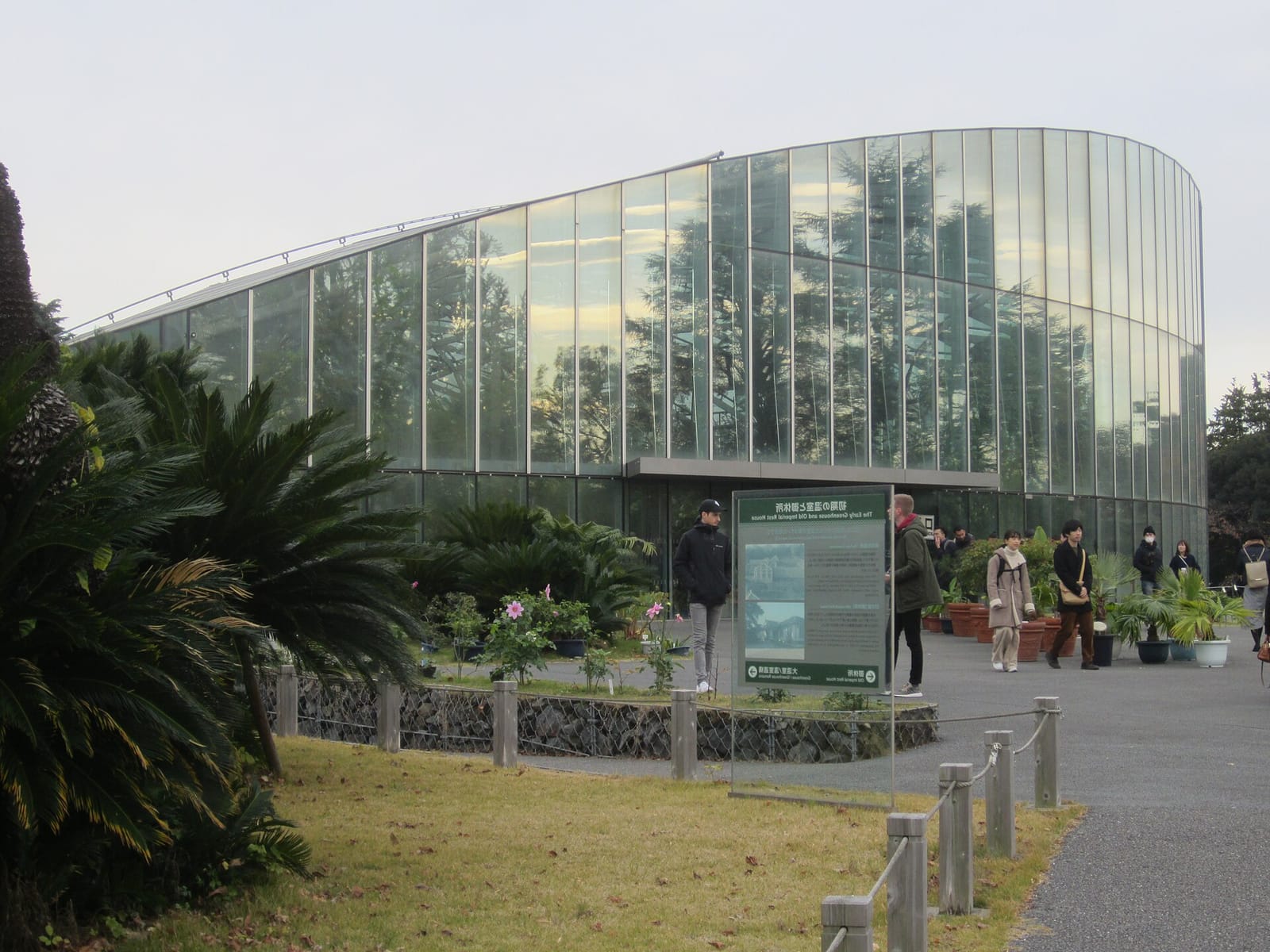
The garden says about 1,000 kinds of plants are displayed here in some 2,750 square meters, in sections for tropical lowland and mountain plants, Okinawan flora and plants from arid regions. Staff run free greenhouse tours each month. It closes before the rest of the garden, so start here.
- Hours
- 9:30–16:00, last entry 15:30 (Oct 1–Mar 14, as of November 2026)
- Access
- Inside the garden, near the Okido Gate
- Source
- policies.env.go.jp
Landscape Garden
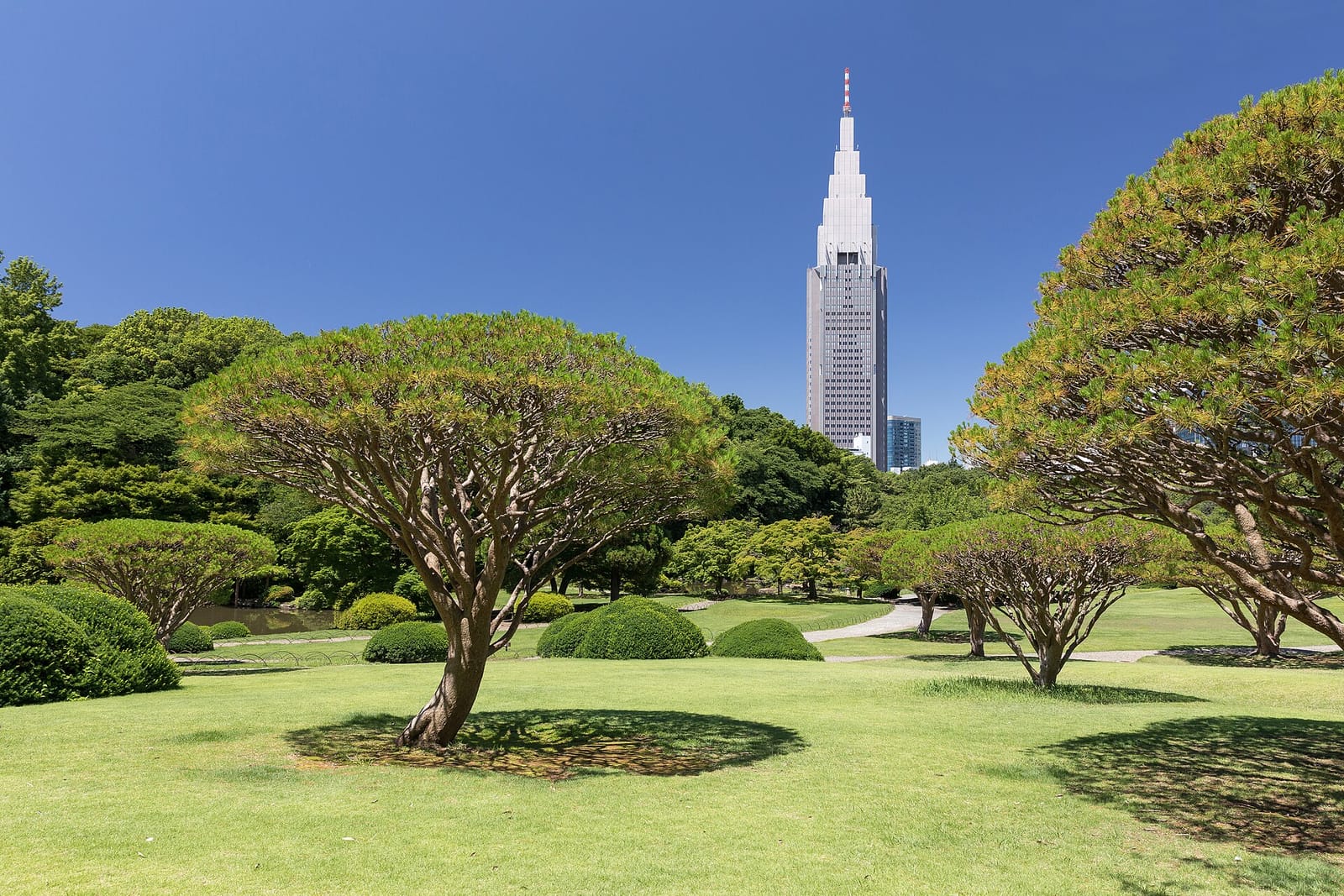
The big open lawn, dotted with tulip trees, Himalayan cedars and other large trees, with cherry trees around its edges. The garden credits its design to Henri Martinet, built around a main viewing axis called the Vista Line. A tall Japanese elm stands facing the Kyu-Gokyu-Sho (Old Imperial Rest House), which opens on the same hours as the garden.
- Access
- Inside the garden
- Source
- policies.env.go.jp
Formal Garden
This is the late-autumn highlight. The garden describes about 160 plane trees in eight straight rows on either side, whose leaves turn bright gold as autumn sets in, around two lawns edged with some 500 rose bushes of 100 kinds. The garden adds that the first London planes in Japan were planted here in the late 1800s.
- Access
- Inside the garden
- Source
- policies.env.go.jp
Japanese Traditional Garden
A strolling path around the Upper Pond leads past the Chinese-style Kyu-Goryo-Tei pavilion and two teahouses, Rakuu-Tei and Shouten-Tei. The garden says this area was first created as an imperial duck habitat and took its present form in 1903. It is also where the Chrysanthemum Exhibition is held each November.
- Access
- Inside the garden, along the Upper Pond
- Source
- policies.env.go.jp
Sendagaya Gate
Leave here to finish the loop without retracing your steps. From Sendagaya Station, the JR Sobu Line runs back toward Shinjuku, or east across the city.
- Access
- 5 min walk to JR Sendagaya Station or Kokuritsu-Kyogijo Station (Toei Oedo Line)
- Source
- policies.env.go.jp
What is the Chrysanthemum Exhibition, and when is it?
It is an annual show of trained chrysanthemums in the Japanese Traditional Garden, held from November 1 to 15. During the exhibition, the garden builds temporary wooden pavilions called uwaya along the paths to display the flowers, in styles such as kengai, where small blooms are trained into a cascade like wild flowers on a cliff.
The tradition goes back a long way. According to the garden, the first imperial chrysanthemum exhibition was held at Akasaka Palace in 1878, the show moved to Shinjuku Gyoen in 1929, and it has been open to the public every year since the garden reopened as a national garden in 1949. If you are in Tokyo in early November next year, it is worth planning around: the garden opens every day during the exhibition, Mondays included.
What can you not bring into Shinjuku Gyoen?
More than most people expect. The garden’s rules ban these items:
- Alcoholic drinks
- Animals, except assistance dogs
- Drones
- Bug nets and cages
- Bicycles, balance bikes and tricycles
- Plants, and household garbage
The rules also ask you not to play ball games such as catch or soccer, use frisbees or boomerangs, skateboard, fly kites, run in groups of 10 or more, or play musical instruments or loudspeakers. Smoking, including e-cigarettes, is banned everywhere in the garden, including the promenade and parking area. Children of elementary-school age or younger can use soft toys such as rubber balls and jump ropes in the Kid’s Area.
A picnic on the lawn is fine, as long as you bring soft drinks and take your rubbish home. The department store food halls around Shinjuku-sanchome are a short walk from the Shinjuku Gate.
What else is near Shinjuku Gyoen?
The garden sits between the department stores of Shinjuku-sanchome and the quieter streets toward Sendagaya, so it slots easily into a day on the east and south sides of Shinjuku. Our free things to do in Shinjuku pairs it with the free observatory on the west side, and our Shinjuku night route picks up after the garden closes at 16:30.
Thinking of staying nearby? Our guide to where to stay in Shinjuku for first-timers explains why Shinjuku-sanchome, 5 minutes from the Shinjuku Gate, is the calmer base. To fit the garden into a full day, with a backup plan for rain, follow our one-day Shinjuku itinerary.
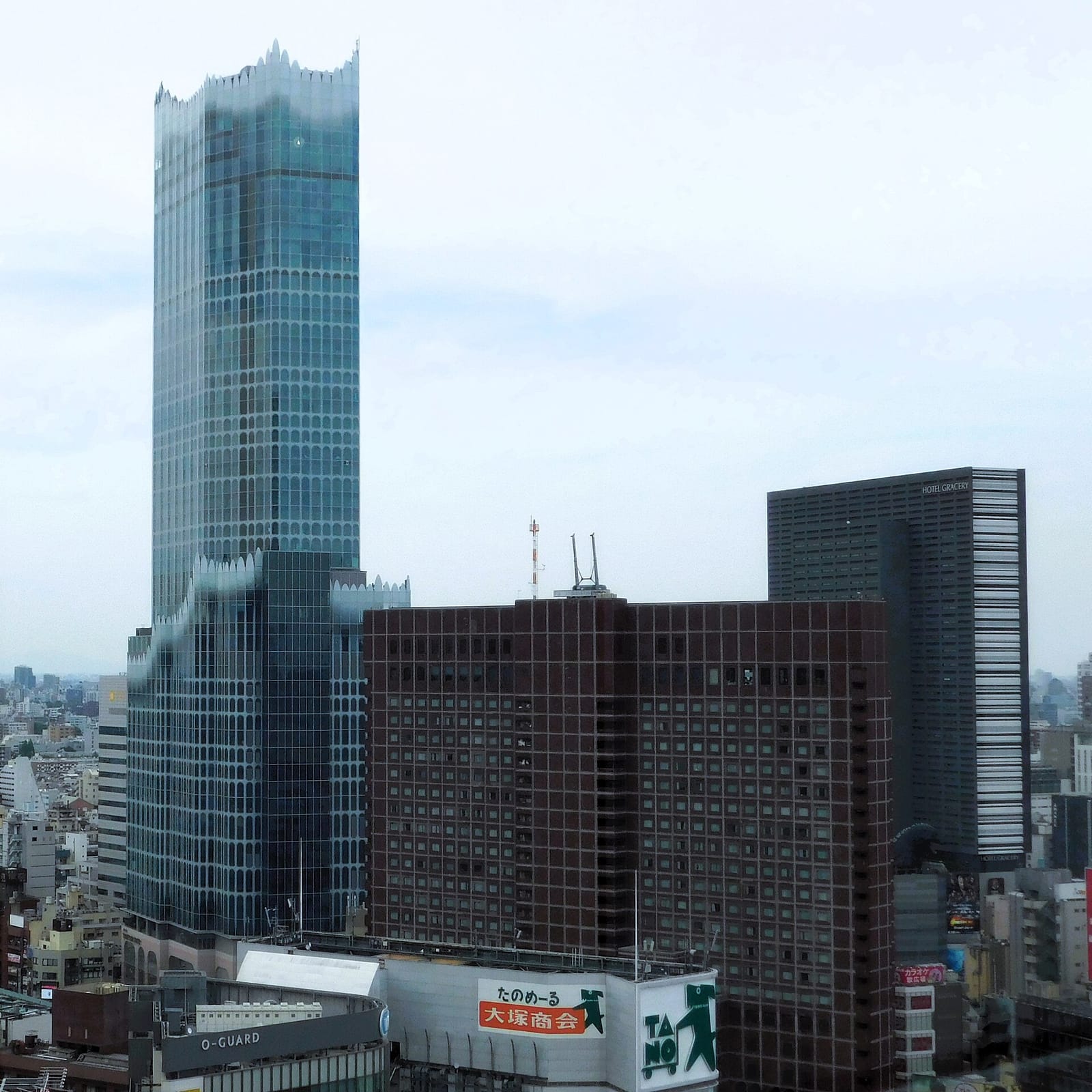 Shinjuku Hotels With Big Rooms for Families: 6 Picks by Group Size
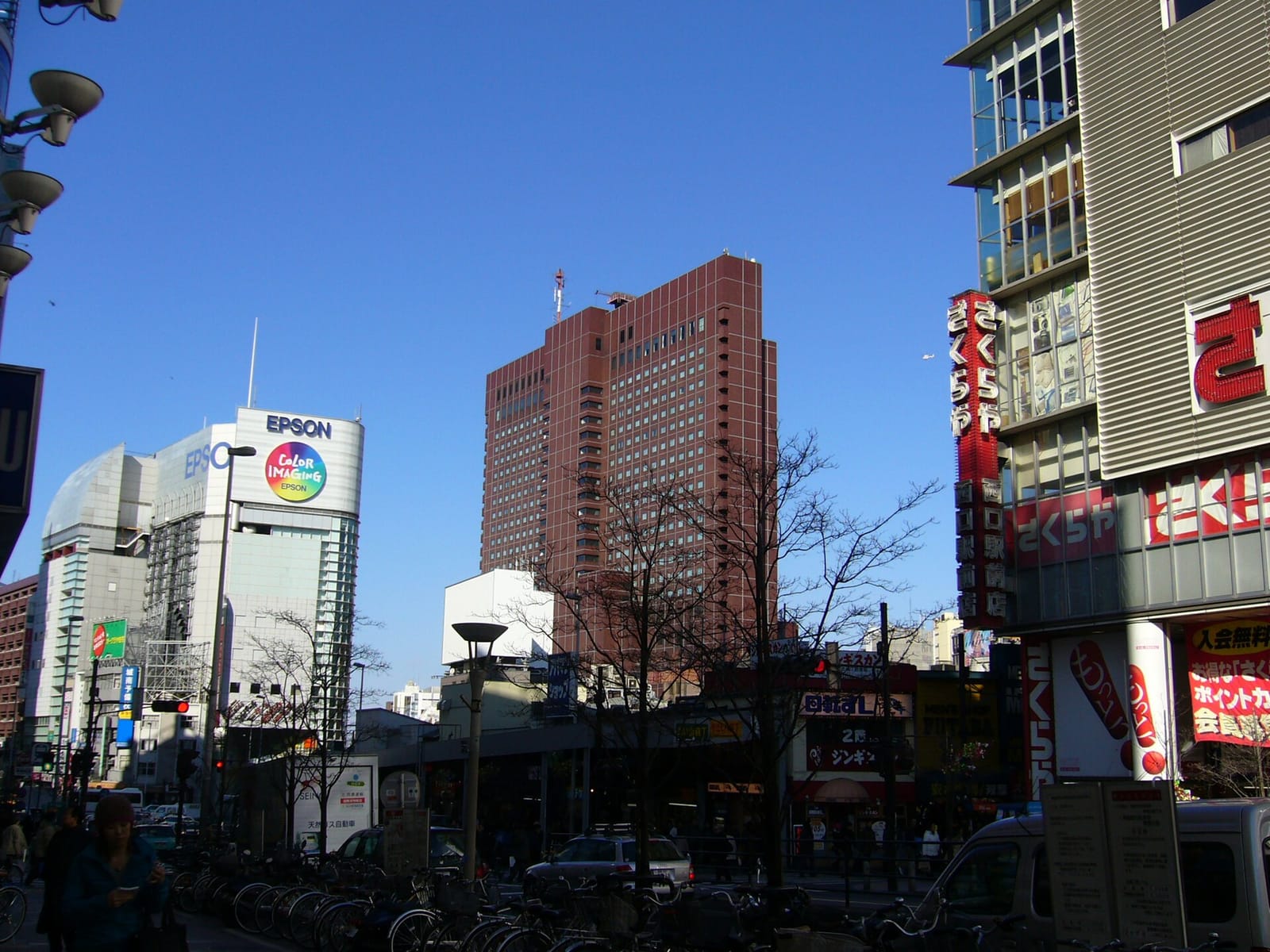 Shinjuku Hotels Connected to the Station: What 'Direct' Means
FAQ
How much does Shinjuku Gyoen cost?
Adults pay ¥500, seniors 65 and over and students 16 and over pay ¥250, and children 15 and under enter free, as of November 2026. A one-year passport is ¥2,000 for adults. You can pay with a transport IC card at the gates.
Is Shinjuku Gyoen open on Mondays?
Usually not. The garden closes on Mondays, or on the next weekday when Monday is a public holiday, and from December 29 to January 3. It opens every day during cherry blossom season (March 25 to April 24) and the Chrysanthemum Exhibition (November 1 to 15).
Can you drink alcohol in Shinjuku Gyoen?
No. Alcoholic drinks are on the garden's list of prohibited items, along with drones, animals other than assistance dogs, and bug nets. Smoking, including e-cigarettes, is banned everywhere in the garden.
Which gate of Shinjuku Gyoen is closest to Shinjuku Station?
The Shinjuku Gate. The garden gives a 10-minute walk from the South Exit of Shinjuku Station and 5 minutes from Shinjuku-sanchome or Shinjuku-gyoemmae stations. The Okido Gate and Sendagaya Gate are on the other sides of the garden.
Do you need a reservation for Shinjuku Gyoen?
Not normally. The garden says entry on weekends, holidays and other busy days in cherry blossom season may require an advance reservation. At other times, an e-ticket bought in advance lets you skip the ticket counter line.
Sources
- Shinjuku Gyoen National Garden — Admission (hours, closed days, fees)
- Shinjuku Gyoen National Garden — Access
- Shinjuku Gyoen National Garden — Garden Rules
- Shinjuku Gyoen National Garden — Facility Guide
- Shinjuku Gyoen National Garden — Gardens (Formal, Landscape, Japanese Traditional)
- Shinjuku Gyoen National Garden — Chrysanthemum Exhibition
- Shinjuku Gyoen National Garden — Greenhouse
- Shinjuku Gyoen National Garden — Giant Trees
This article contains affiliate links. We may earn a commission at no extra cost to you.