Takayama Old Town Walking Guide: A Station-to-Hillside Loop
A self-guided Takayama old town walk in map order, from Hida Kokubunji to the Higashiyama temples, timed around opening and winter closing hours.
8:45: the ticket window at Takayama Jinya opens. 12:00: the morning market on the square outside packs up. 16:00: in winter, Kusakabe Folk Museum closes its doors and Jinya stops selling tickets. 19:00: the last old-town exhibition, at the free Takayama Museum of History and Art, shuts for the night. Those four times decide the order of a good walk through Takayama’s old town.
This guide walks the old town as one loop from JR Takayama Station, in map order: south to the Jinya, across the Miyagawa River into the Sanmachi streets, north to the merchant houses and the Festival Floats Exhibition Hall, up into the Higashiyama temples, and back down through Shiroyama Park. Hours and prices are as of November 2026, with an official source for each stop.
Why walk the old town in this order?
Start at the south end in the morning and finish at the free museum in the evening. Ticketed sights in Takayama close between 16:00 and 17:00, the outdoor paths have no closing time, and the one indoor exhibit open late is the Museum of History and Art, so the indoor stops go first and the hillside and the museum go last.
Three things shape the route:
- Mornings belong to the south end. Takayama Jinya opens at 8:45, and the Jinya-mae Morning Market runs on the square in front of it until noon. The city’s tourism site gives the market hours as 7:00–12:00 from April to November and 8:00–12:00 from December to March.
- The merchant houses close early. Kusakabe Folk Museum’s own site lists 10:00–16:00 and a Thursday closure. Visit it before lunch or right after.
- The hill is for the afternoon. The Higashiyama Walking Course is about 4 km, according to the city, and ends in Shiroyama Park. It is outdoors, so the light and the closing times of the town below no longer matter.
Every stop is between 5 and 20 minutes on foot from JR Takayama Station, according to the city’s tourism site and the Hidatakayama Tourism Association, so you can drop out of the loop at any point and walk back to your train. If you are in town for two days, our Takayama 2 day itinerary fits this walk around both morning markets and Hida Folk Village.
What are the stops, in walking order?
Tick “Add to my route” on each stop to open the whole loop in Google Maps.
Hida Kokubunji Temple
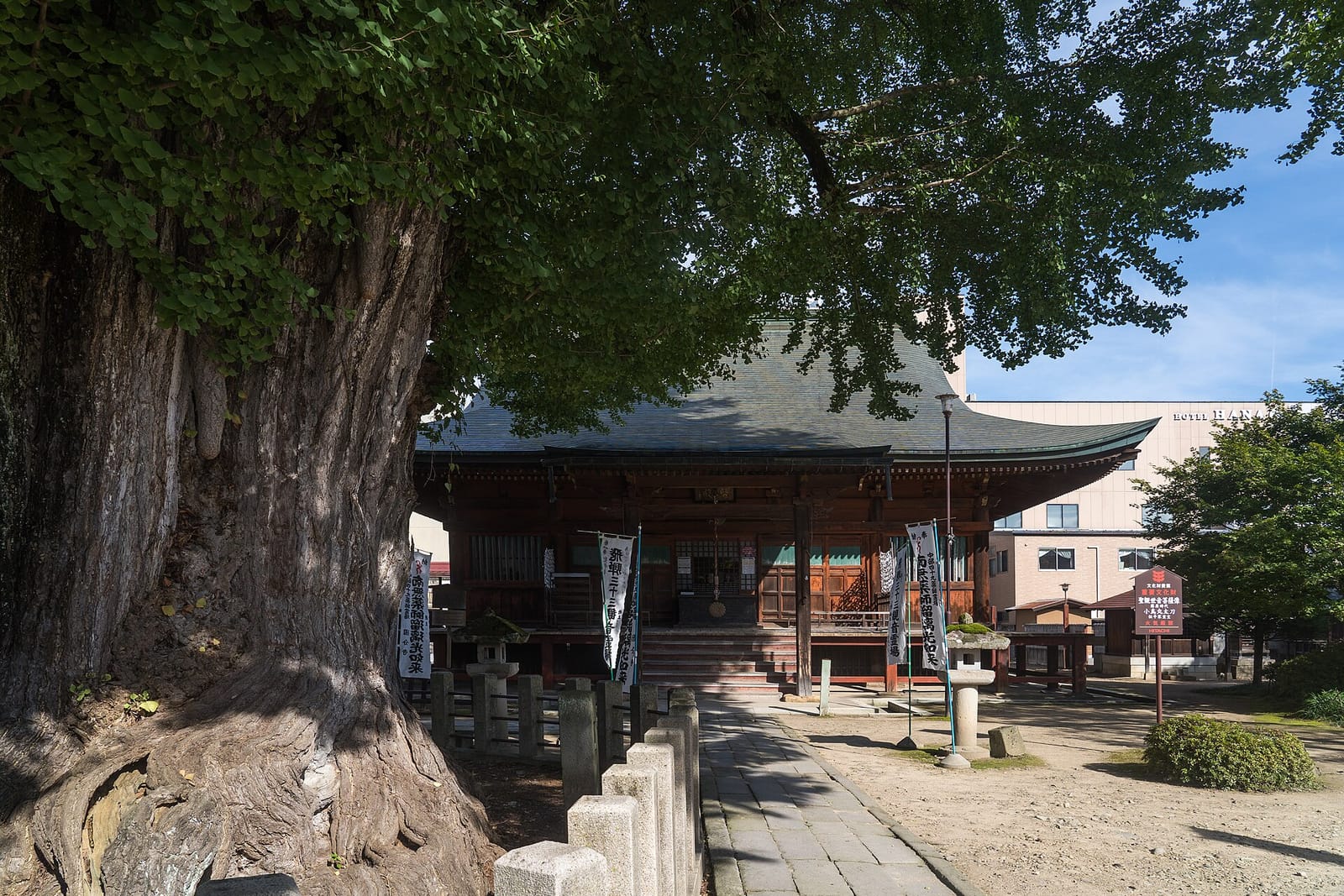
The first stop is the closest one to the station. The tourism association dates the temple’s founding to 746 and describes its main hall as a Muromachi-period building and a National Important Cultural Property. The three-story pagoda was rebuilt in 1821, and the giant ginkgo in the grounds is said to be more than 1,200 years old. You can see the pagoda and the ginkgo from the grounds; the fee is for entering the main hall.
- Hours
- Main hall 9:00–16:00; main hall closed Dec 31 and Jan 1 (as of November 2026)
- Price
- Main hall ¥500 adults, ¥400 elementary and junior high students (as of November 2026)
- Access
- About 5 min walk from JR Takayama Station
- Source
- www.hidatakayama.or.jp
Takayama Jinya
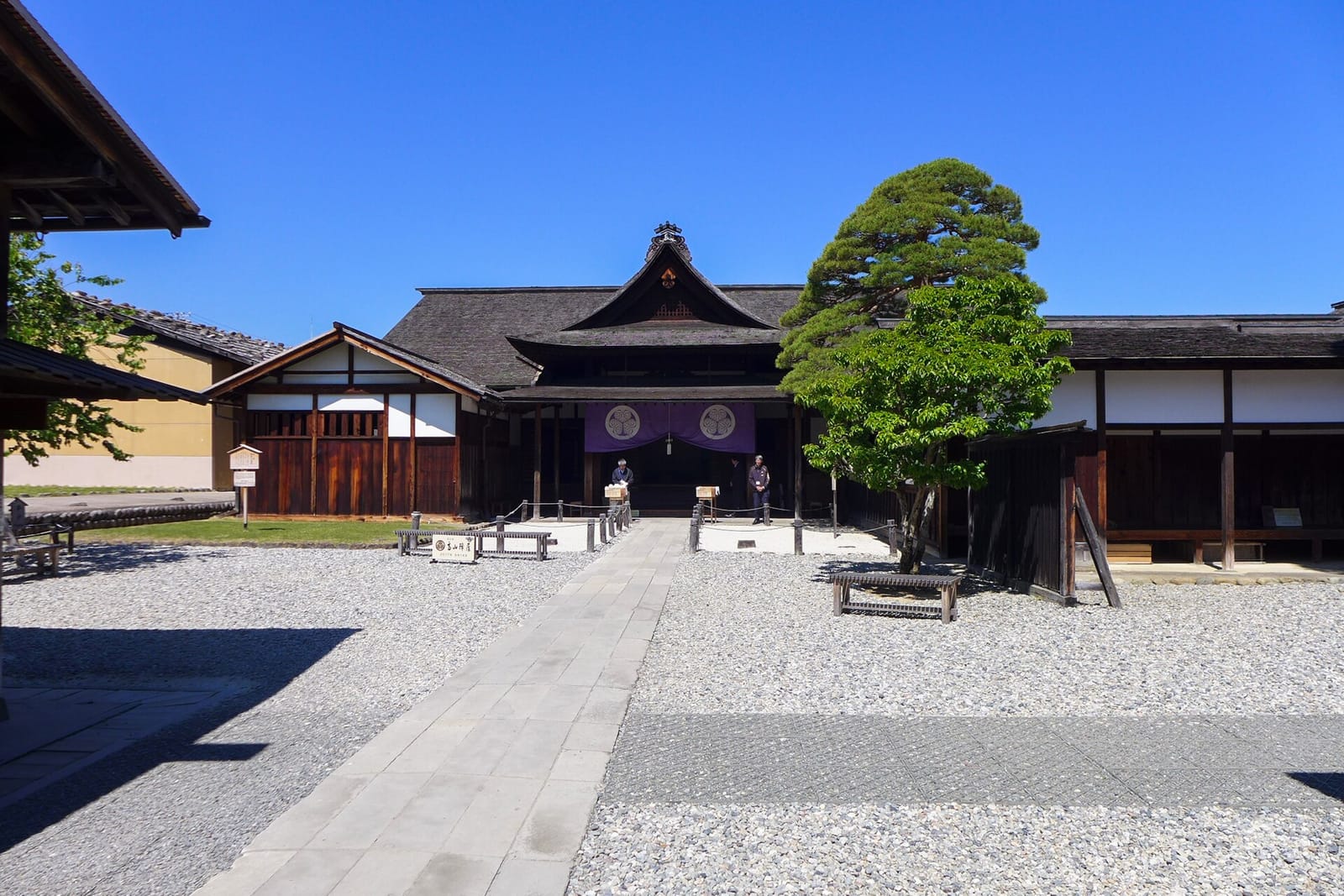
The old government office of the Hida region, with its offices, living rooms and rice storehouses. It is the southern anchor of the walk and the best indoor stop for the morning, because the Jinya-mae Morning Market sets up on the square outside until noon. Staff may ask under-19s for a student ID for free entry. The Jinya may also close for inspections or storms.
- Hours
- 8:45–17:00 Apr–Oct; 8:45–16:30 Nov–Mar; ticket window closes 30 min earlier; closed Dec 29–Jan 3 (as of November 2026)
- Price
- ¥500; ages 18 and under free (as of November 2026)
- Access
- About 15 min walk from JR Takayama Station
- Source
- jinya.gifu.jp
Nakabashi Bridge
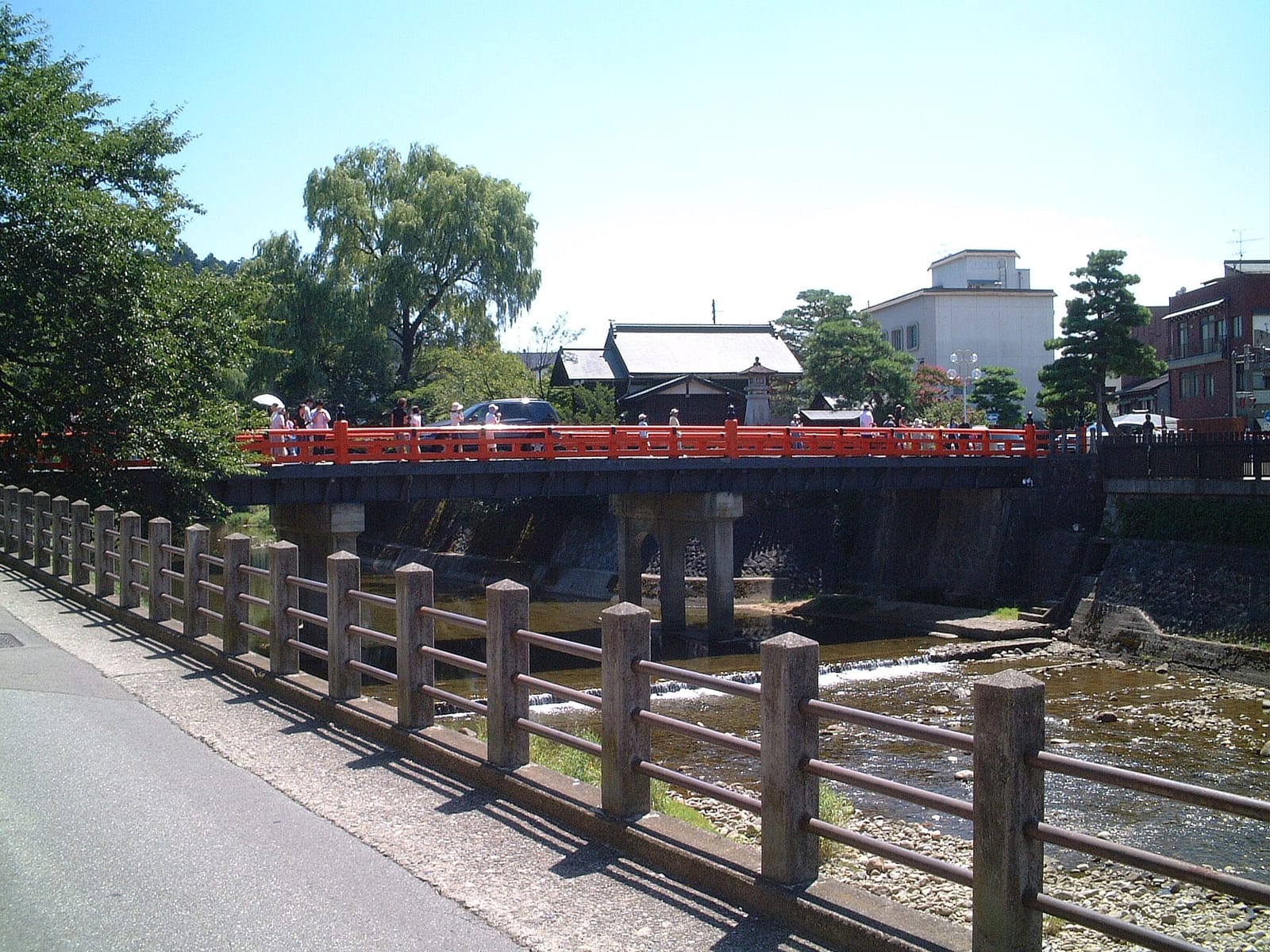
From the Jinya, walk to the Miyagawa River and cross at Nakabashi. The tourism association calls the bridge a symbol of the city, once a key point in the defense of Takayama Castle and the starting point of the old highway. The current bridge dates from a rebuilding in 1925. Cross here and you are at the southern edge of the Sanmachi streets.
- Access
- About 15 min walk from JR Takayama Station
- Source
- www.hidatakayama.or.jp
Sanmachi Traditional Buildings Preservation Area
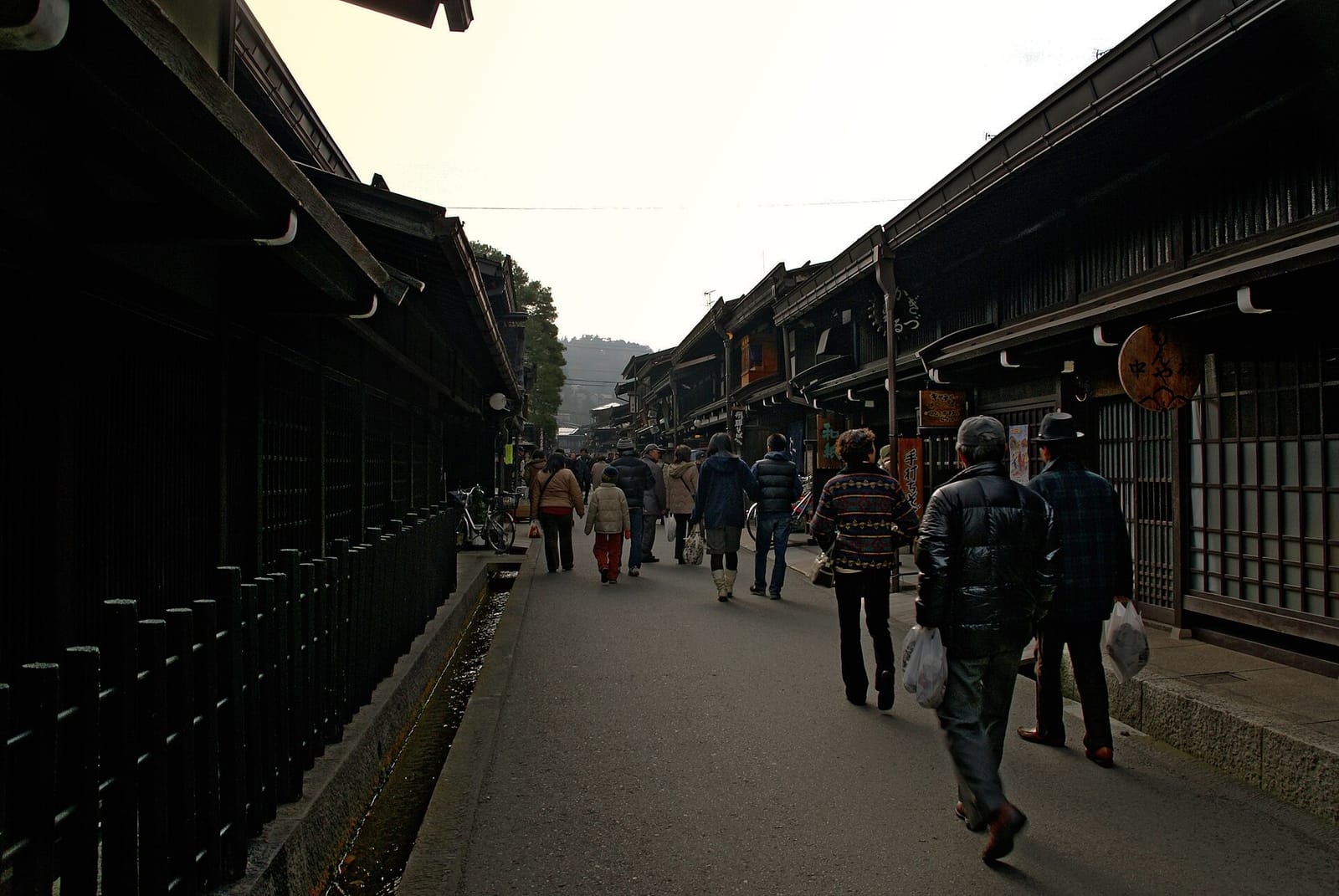
The old merchant quarter, covering parts of Kami-ichinomachi, Kami-ninomachi and Kami-sannomachi. The city points out the long runs of wooden lattice fronts, the water channels under the eaves, and the balls of cedar leaves that sake breweries hang over their doors. Walk the three parallel streets north rather than just the busiest one: the side streets carry the same lattice fronts. Staying within walking distance of here lets you see the streets before the day-trip crowds arrive.
- Price
- Free to walk
- Access
- About 12 min walk from JR Takayama Station
- Source
- www.hida.jp
Kusakabe Folk Museum
North of Sanmachi, walk on into the quieter Shimoninomachi-Ojinmachi preservation area, which the city describes as a lived-in district of confectioners, tatami makers and antique shops rather than souvenir stores. Kusakabe House was built in 1879, and the city notes it was the first old merchant house named a National Important Cultural Property. Look up at the beams over the large earthen-floored hall. The museum’s own site lists Thursdays as its closing day, so plan the loop for another day of the week if this is a priority.
- Hours
- 10:00–16:00; closed Thursdays (as of November 2026)
- Price
- Adults ¥1,000, junior high ¥500, elementary ¥300 (as of November 2026)
- Access
- About 17 min walk from JR Takayama Station
- Source
- www.kusakabe-mingeikan.com
Yoshijima Heritage House
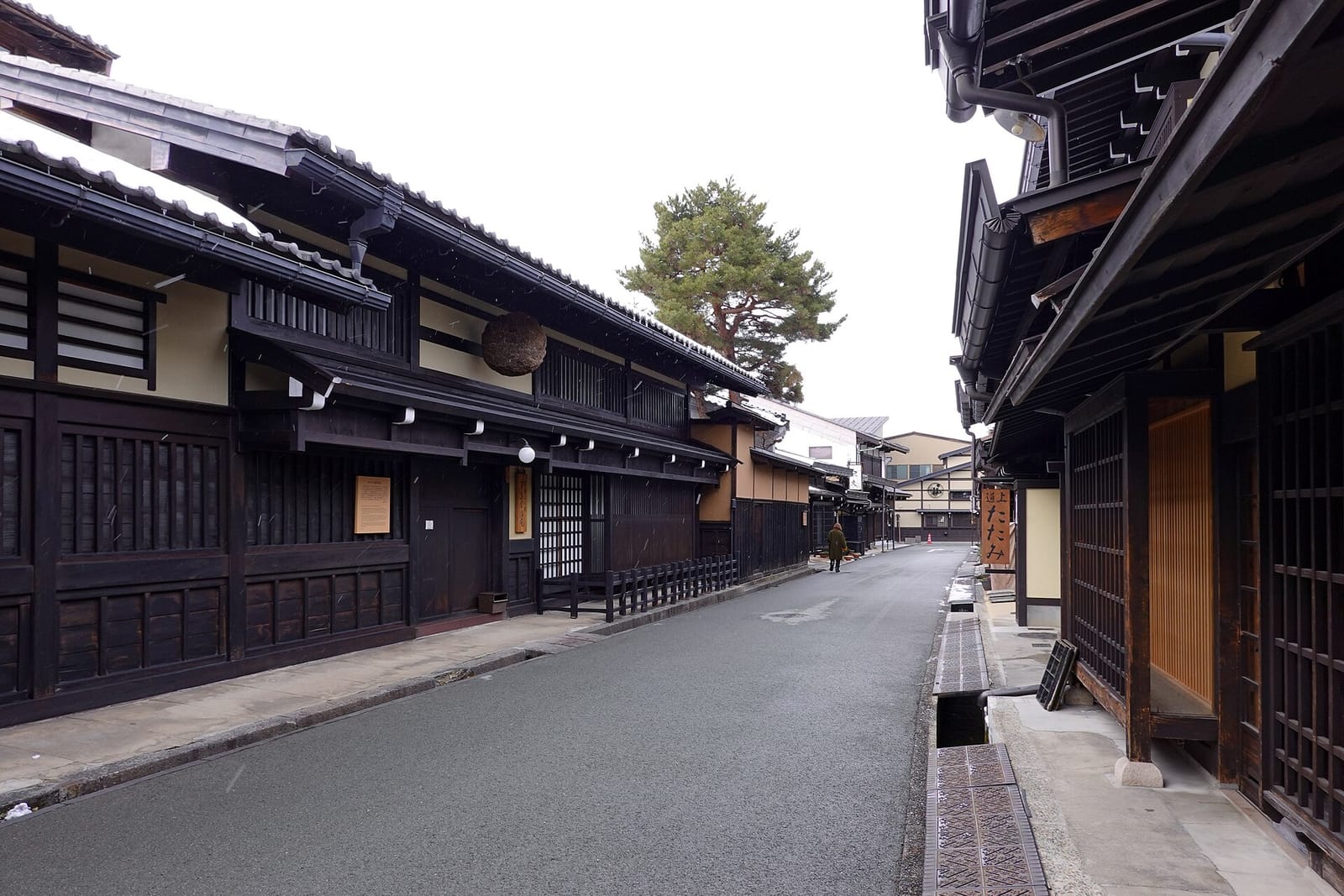
Right next to Kusakabe, and a useful contrast. The city’s page says the house was built in 1908 and long ran as a sake brewery, which is why a large cedar-ball sign hangs under the eaves. Inside, light falls from a high window onto the posts and beams around the central staircase. The city lists it as closed on Tuesdays from December to February and from December 29 to January 1; opening hours vary between published listings, so check before you plan around a late visit.
- Price
- Adults ¥500, elementary and junior high ¥300 (as of November 2026)
- Access
- About 17 min walk from JR Takayama Station, next door to Kusakabe
- Source
- www.hida.jp
Takayama Festival Floats Exhibition Hall
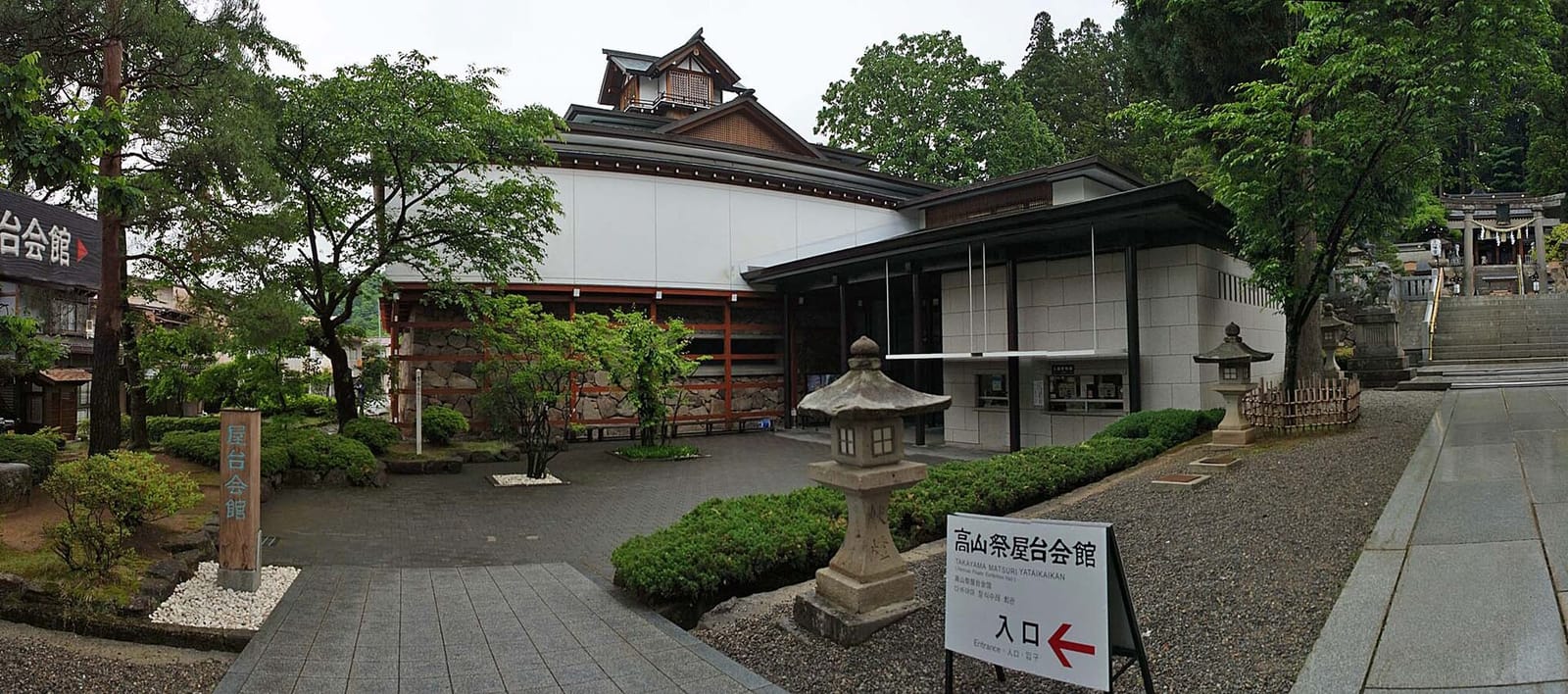
The northern end of the loop, in the grounds of Sakurayama Hachimangu Shrine. The hall shows four of the eleven floats used in the autumn Takayama Festival, and the tourism association says the display changes three times a year. The floats themselves are National Important Cultural Properties. This is the stop to see if you are not in town for the festival on October 9 and 10 or April 14 and 15.
- Hours
- 9:00–17:00 Mar–Nov; 9:00–16:30 Dec–Feb; open all year (as of November 2026)
- Price
- Adults ¥1,000, high school ¥600, elementary and junior high ¥500 (as of November 2026)
- Access
- About 20 min walk from JR Takayama Station
- Source
- www.hidatakayama.or.jp
Higashiyama Temple Area and Walking Course
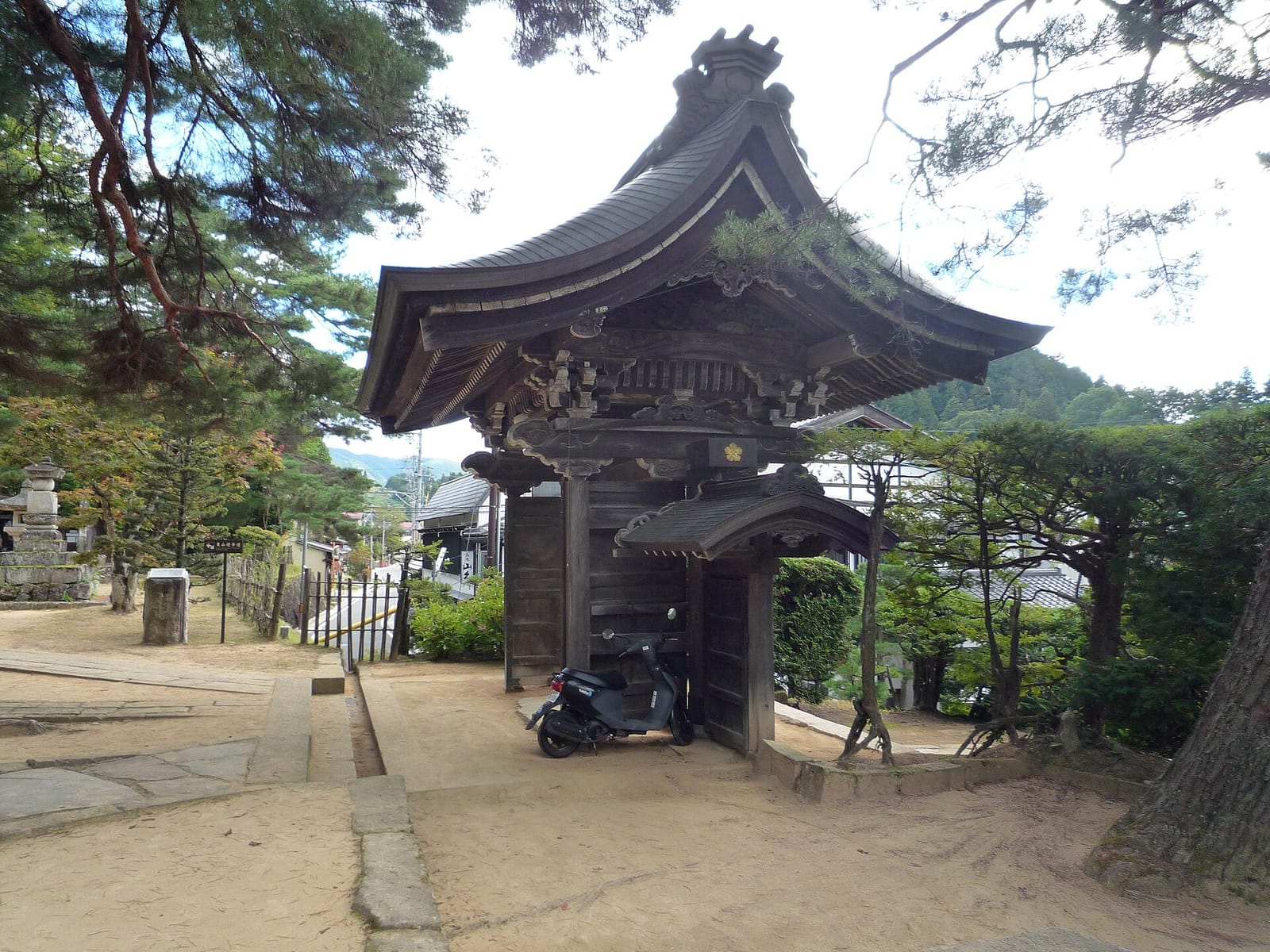
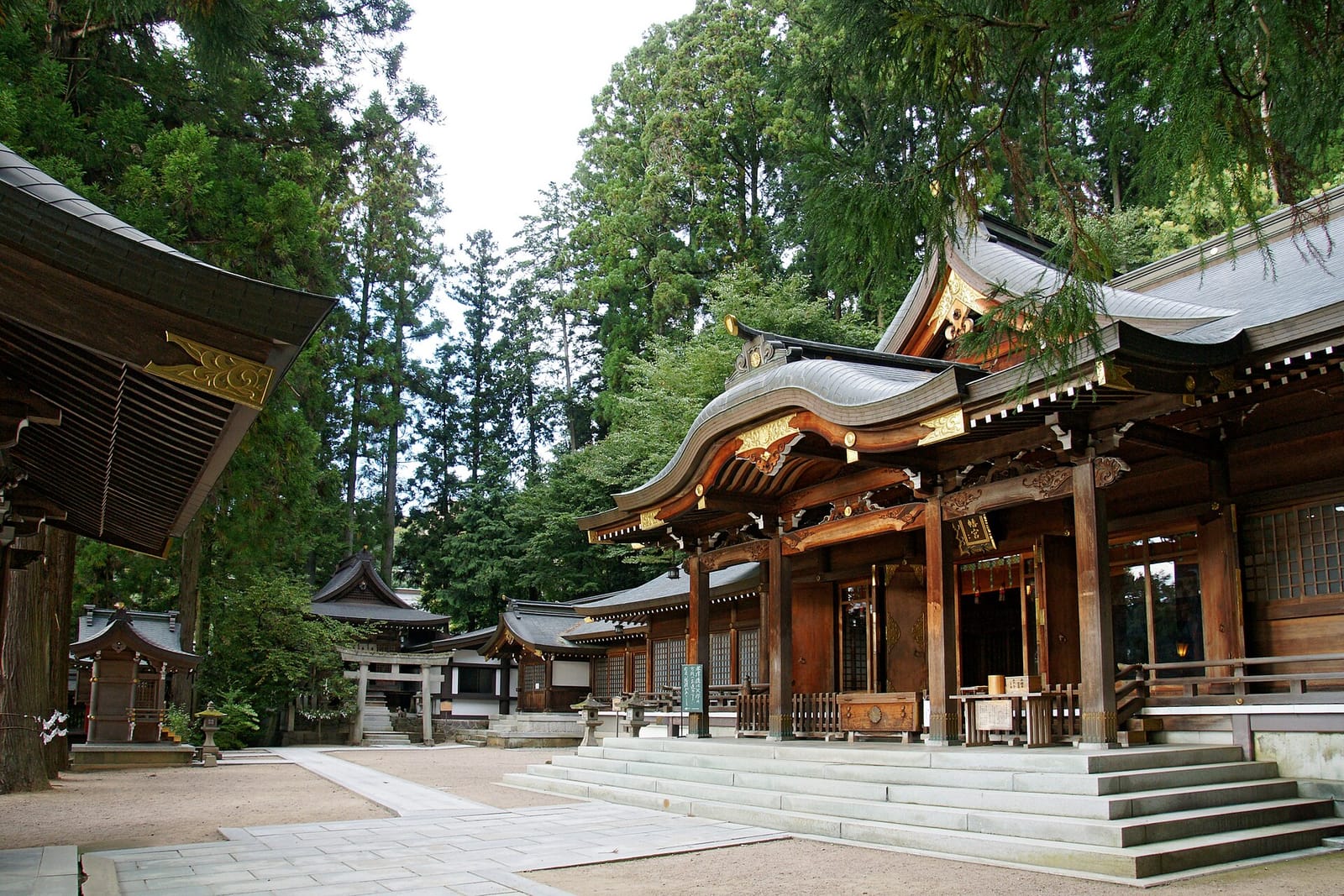
From the shrine, head east and up to the line of temples on the hillside. The city explains that these temples were built and moved here when the town was laid out in the 16th century. The walking course runs about 4 km from Ryuunji Temple south to Shiroyama Park on a maintained path. It is the quietest part of the loop and the one stop with no closing time, so it suits the afternoon.
- Price
- Free to walk
- Access
- About 20 min walk from JR Takayama Station
- Source
- www.hida.jp
Shiroyama Park
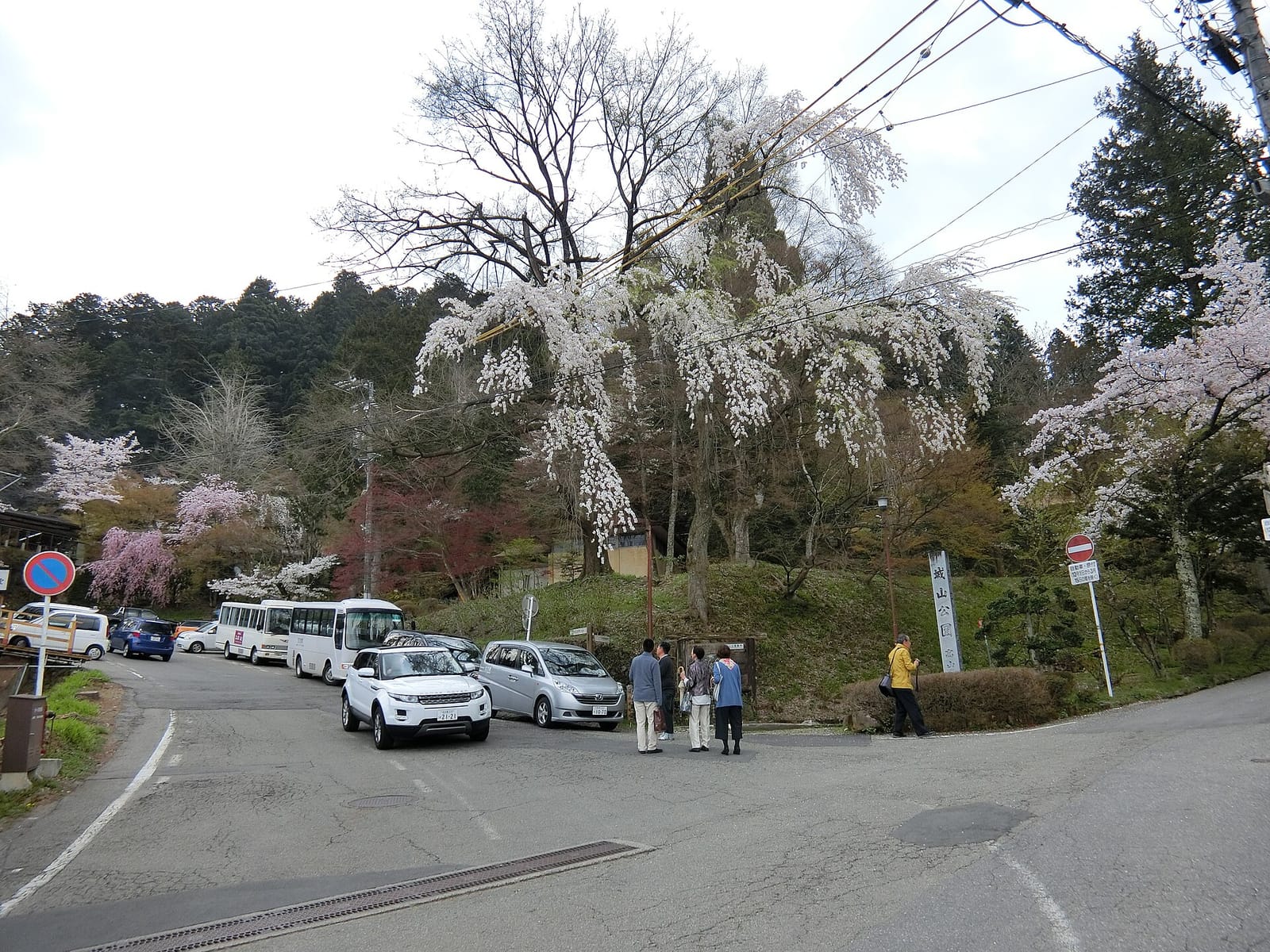
The end of the Higashiyama course, on the site of Takayama Castle, which Kanamori Nagachika built. The tourism association notes a viewing deck on the old main-keep site that looks out over the old town, and cherry blossoms and azaleas in spring. From the park, walk back down toward Kami-ichinomachi on the east side of Sanmachi for the last stop.
- Price
- Free
- Access
- About 20 min walk from JR Takayama Station
- Source
- www.hidatakayama.or.jp
Takayama Museum of History and Art
The last stop is in Kami-ichinomachi, at the east edge of the Sanmachi streets. The museum uses the old storehouses of two merchant families, the timber-dealing Yajima family and the Nagata family of sake brewers, and has 14 exhibition rooms on the Takayama Festival, townhouses and local history. Because it is free and open until 19:00, it is the one indoor stop that still works after the other sights close. The station is about 15 minutes away on foot.
- Hours
- Exhibition rooms 9:00–19:00; garden 7:00–21:00; open all year, with occasional temporary closures (as of November 2026)
- Price
- Free (as of November 2026)
- Access
- About 15 min walk from JR Takayama Station
- Source
- www.hida.jp
How much does the walk cost?
The streets, the Higashiyama course, Shiroyama Park and the Museum of History and Art are free. If you go inside every ticketed stop, adult entry comes to about ¥3,500, as of November 2026.
| Stop | Adult | Notes |
|---|---|---|
| Hida Kokubunji (main hall) | ¥500 | Grounds, pagoda and ginkgo visible from outside |
| Takayama Jinya | ¥500 | Free for ages 18 and under |
| Kusakabe Folk Museum | ¥1,000 | Closed Thursdays |
| Yoshijima Heritage House | ¥500 | Closed Tuesdays, Dec–Feb |
| Festival Floats Exhibition Hall | ¥1,000 | Open all year |
| Museum of History and Art | Free | Open until 19:00 |
| Total | ¥3,500 | Skip Kokubunji’s hall for ¥3,000 |
How do you fit the walk into a half day?
Keep the middle of the loop and drop the ends. A half day from Takayama Jinya to the Festival Floats Exhibition Hall covers stops 2 to 7, which hold the market square, the Sanmachi streets, both merchant houses and the floats, all within about 20 minutes of the station on foot.
- Morning half day: Arrive at Takayama Jinya at 8:45, browse the market outside before noon, walk Sanmachi, then do Kusakabe and Yoshijima after the 10:00 opening and finish at the floats.
- Afternoon half day: Start at the merchant houses, which give you until 16:00 at Kusakabe, then walk the floats hall, come back through Sanmachi, and end at the free museum after the others close.
- Short on time: Walk only Sanmachi and Shimoninomachi-Ojinmachi. The streets are free, and the city puts both preservation areas 12 minutes from the station.
If you are heading out to the gassho villages the same day, take the morning bus first and walk the old town in the afternoon; our Shirakawa-go day trip from Takayama has the timetable and the reservation rules.
What changes in winter?
Closing times come forward and some houses close one day a week, so do the ticketed stops before about 15:30 from December to February. The hillside is still open, but the paths need care after snow.
- Takayama Jinya closes at 16:30 from November to March, and the ticket window closes 30 minutes before. It is shut from December 29 to January 3.
- Kusakabe Folk Museum keeps its 10:00–16:00 hours, with Thursdays closed.
- Yoshijima Heritage House is closed on Tuesdays from December to February and from December 29 to January 1, according to the city.
- The Festival Floats Exhibition Hall closes at 16:30 from December to February, half an hour earlier than the rest of the year.
- The morning markets open at 8:00 from December to March, an hour later than in summer.
With those hours, a winter walk works best as Jinya at opening, the merchant houses before 15:30, the floats hall last among the ticketed stops, and the free museum as an indoor finish. Leave the Higashiyama course for a clear day, and pack shoes with grip: our Japan winter packing list covers footwear and layers for snowy towns.
Where should you stay to walk the old town early?
Stay between JR Takayama Station and the Miyagawa River. From there, Sanmachi is about 12 minutes on foot and the Jinya about 15, so you can be on the streets before the first day-trip buses and trains arrive, and walk back to your room between the morning loop and the hill in the afternoon.
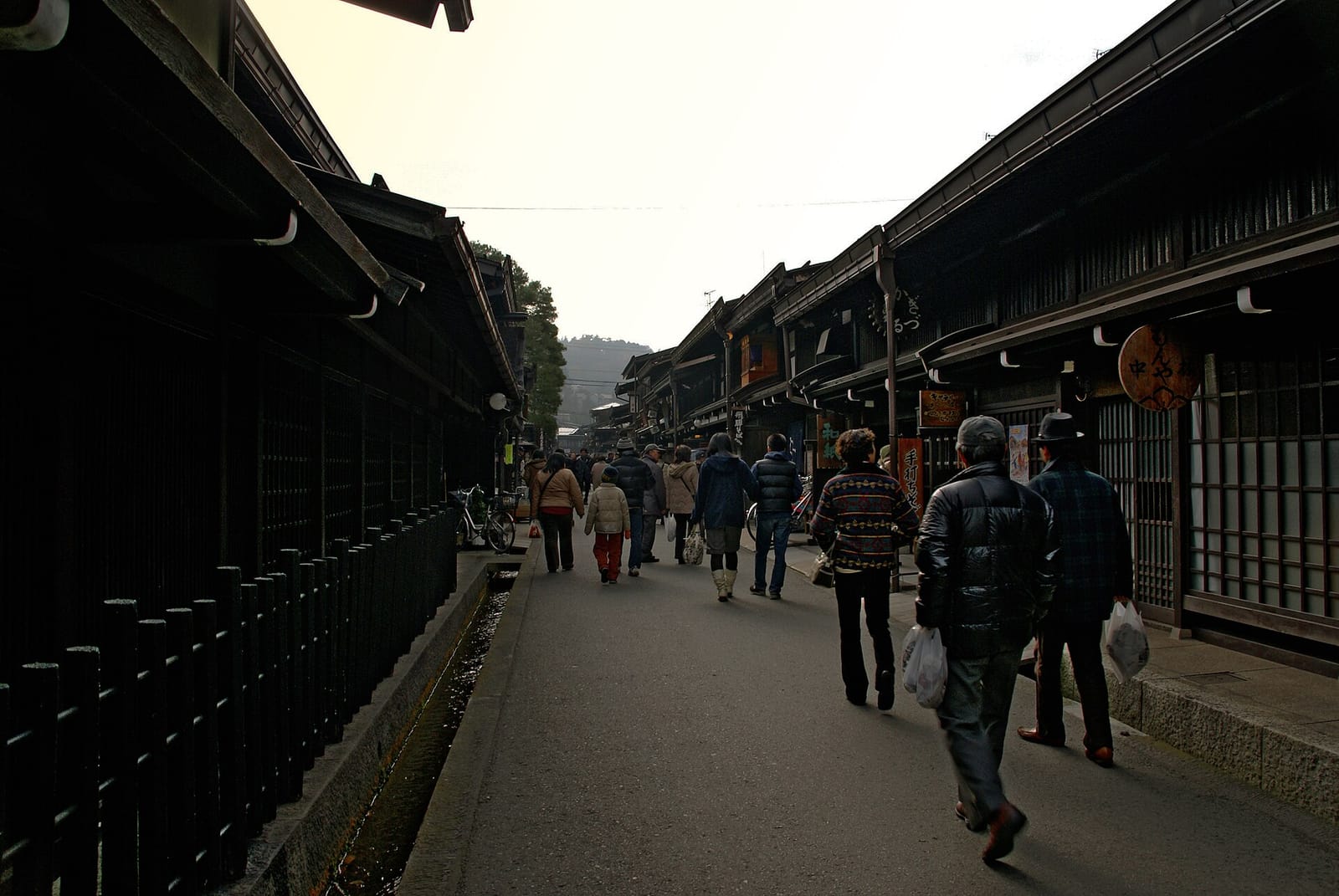 Where to Stay in Takayama: East Exit, West Exit or Old Town?
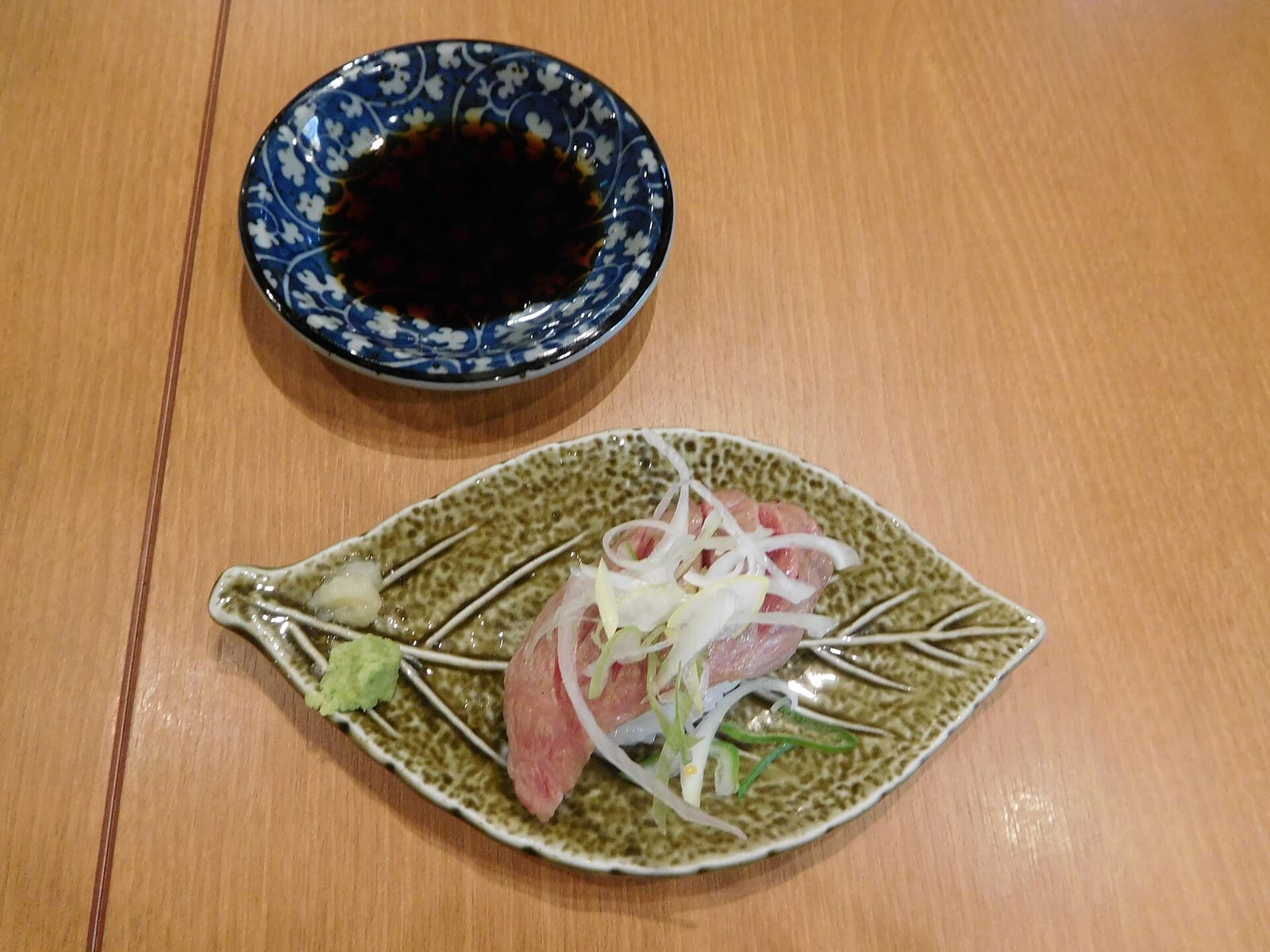 Hida Beef in Takayama: Where to Eat It, from ¥800 Sushi to Steak
FAQ
How long does it take to walk Takayama old town?
The Sanmachi streets alone fit into an hour or two. The full loop in this guide, with the merchant houses, the Floats Exhibition Hall and the roughly 4 km Higashiyama Walking Course, fills most of a day. Skip Higashiyama and Shiroyama Park for a half day.
Is Takayama old town free to visit?
Yes. The Sanmachi and Shimoninomachi-Ojinmachi streets are public streets with no entry fee, and the Takayama Museum of History and Art is free, according to the city's tourism site. You pay only for the houses, temples and halls you go inside.
How far is Takayama old town from the station?
The city's tourism site gives a 12-minute walk from JR Takayama Station to the Sanmachi preservation area and 15 minutes to Takayama Jinya and Nakabashi Bridge. The northern stops, Kusakabe and Yoshijima houses, are about 17 minutes away and the Festival Floats Exhibition Hall about 20 minutes.
What time do shops and sights in Takayama old town close?
Most ticketed sights close between 16:00 and 17:00. In winter Takayama Jinya closes at 16:30 and Kusakabe Folk Museum at 16:00, as of November 2026. The Takayama Museum of History and Art exhibition rooms stay open until 19:00, which makes it a good last stop.
Is Takayama old town worth visiting in winter?
Yes, but plan around shorter hours. From December to February the Festival Floats Exhibition Hall closes at 16:30 instead of 17:00, Yoshijima Heritage House is closed on Tuesdays, and the hillside paths of Higashiyama and Shiroyama Park can be slippery after snow.
Sources
- Hidatakayama Tourism Association — Hida Kokubunji Temple (Japanese)
- Takayama Jinya — Opening hours and admission
- Hidatakayama Tourism Association — Nakabashi Bridge (Japanese)
- Hida Takayama (Takayama City) — Sanmachi Traditional Buildings Preservation Area
- Hida Takayama (Takayama City) — Shimoninomachi-Ojinmachi Traditional Buildings Preservation Area
- Kusakabe Folk Museum (official site)
- Hida Takayama (Takayama City) — Kusakabe Folk Museum
- Hida Takayama (Takayama City) — Yoshijima Heritage House
- Hidatakayama Tourism Association — Takayama Festival Floats Exhibition Hall (Japanese)
- Hida Takayama (Takayama City) — Higashiyama Temple Area and Walking Course
- Hidatakayama Tourism Association — Shiroyama Park (Japanese)
- Hida Takayama (Takayama City) — Takayama Museum of History and Art
This article contains affiliate links. We may earn a commission at no extra cost to you.