Where to Stay in Kyoto for First-Timers: 4 Areas Compared
Kyoto Station, Gion and Higashiyama, Kawaramachi or Arashiyama? Where first-timers should stay in Kyoto, compared by train times, luggage and evenings.
Five minutes. That is how long JR West says a local train takes from Kyoto Station to Fushimi Inari Shrine. Yasaka Shrine in Gion is about 12 minutes away by train, and Kiyomizu-dera about 25. Those numbers explain most of the choice you face on a first trip. Kyoto’s top sights sit on the east side of the city, its main station sits in the south, and the city buses that link them are often full. Where you sleep decides how much of each day you spend in transit, and whether you can drag a suitcase to your room without a fight. This guide compares the four areas first-timers usually weigh, using official train times, walking distances and the city’s own advice on luggage.
Where should you stay in Kyoto on your first trip? The short answer
- Kyoto Station: best for short stays, heavy luggage, early trains and day trips to Nara or Osaka. For a timed Nara route from here by Kintetsu or JR, see our Nara day trip from Kyoto.
- Gion and Southern Higashiyama: best if you want to walk to temples and old streets in the morning and evening.
- Kawaramachi and Shijo: best for restaurants and shopping, with a direct private-railway route toward Arashiyama.
Arashiyama is the fourth option. It works as a one-night add-on for a quiet morning in the west of the city, but it is a long way from the eastern sights for a first base. If you only have a morning there, our Arashiyama half-day itinerary times the Bamboo Grove, Tenryu-ji and Togetsukyo around their opening hours.
How do the Kyoto areas compare?
| Kyoto Station | Gion / Higashiyama | Kawaramachi / Shijo | Arashiyama | |
|---|---|---|---|---|
| Best for | Short stays, day trips, luggage | Temples on foot, evenings | Restaurants, shopping | Quiet mornings in the west |
| Main lines | JR (incl. Haruka, Shinkansen), Karasuma subway, Kintetsu | Keihan (Gion-Shijo) | Hankyu (Kyoto-Kawaramachi) | JR Sagano, Randen, Hankyu |
| To Yasaka Shrine | About 12 min by JR + Keihan + walk | Walk (5 min from Gion-Shijo Sta.) | Walk (8 min from Kyoto-Kawaramachi Sta.) | Long cross-city trip |
| To Arashiyama | About 11 min by JR rapid to Saga-Arashiyama | Train via Kawaramachi or Kyoto Sta. | Hankyu via Katsura, or Randen from Shijo-Omiya | On your doorstep |
| Arriving with a suitcase | Easiest: no bus needed | Train + walk, or taxi | Train + walk, or taxi | JR from Kyoto Sta. + walk |
| Watch out for | Sights need a train ride | Crowded streets by day | Not on the JR network | Far from eastern sights |
Kyoto Station
- Best for
- Short stays, day trips, luggage
- Main lines
- JR (incl. Haruka, Shinkansen), Karasuma subway, Kintetsu
- To Yasaka Shrine
- About 12 min by JR + Keihan + walk
- To Arashiyama
- About 11 min by JR rapid to Saga-Arashiyama
- Arriving with a suitcase
- Easiest: no bus needed
- Watch out for
- Sights need a train ride
Gion / Higashiyama
- Best for
- Temples on foot, evenings
- Main lines
- Keihan (Gion-Shijo)
- To Yasaka Shrine
- Walk (5 min from Gion-Shijo Sta.)
- To Arashiyama
- Train via Kawaramachi or Kyoto Sta.
- Arriving with a suitcase
- Train + walk, or taxi
- Watch out for
- Crowded streets by day
Kawaramachi / Shijo
- Best for
- Restaurants, shopping
- Main lines
- Hankyu (Kyoto-Kawaramachi)
- To Yasaka Shrine
- Walk (8 min from Kyoto-Kawaramachi Sta.)
- To Arashiyama
- Hankyu via Katsura, or Randen from Shijo-Omiya
- Arriving with a suitcase
- Train + walk, or taxi
- Watch out for
- Not on the JR network
Arashiyama
- Best for
- Quiet mornings in the west
- Main lines
- JR Sagano, Randen, Hankyu
- To Yasaka Shrine
- Long cross-city trip
- To Arashiyama
- On your doorstep
- Arriving with a suitcase
- JR from Kyoto Sta. + walk
- Watch out for
- Far from eastern sights
Kyoto Station: is it a good place to stay?
Yes, especially if your trip is short or your bags are big. Almost every arrival and day-trip route starts here, so you skip the bus with luggage entirely.
The Kyoto City Official Travel Guide lists the lines inside the station: the JR Kyoto Line toward Osaka on platforms 4 to 7, the JR Nara Line to Inari and Uji on 8 to 10, the JR Sagano Line to Saga-Arashiyama on 31 to 33, and the Haruka limited express to Kansai Airport on 6, 7 and 30. The Karasuma subway and the Kintetsu Line, toward Toji Temple and Nara, start here too. JR West describes the Haruka as direct access to Kyoto from Kansai Airport (you need both a train fare and an express fare), and JR Central gives about 130 minutes from Tokyo to Kyoto by Shinkansen. If you are coming from Tokyo, our Shinjuku to Kyoto by Shinkansen guide covers tickets and seats.
Kyoto Station area
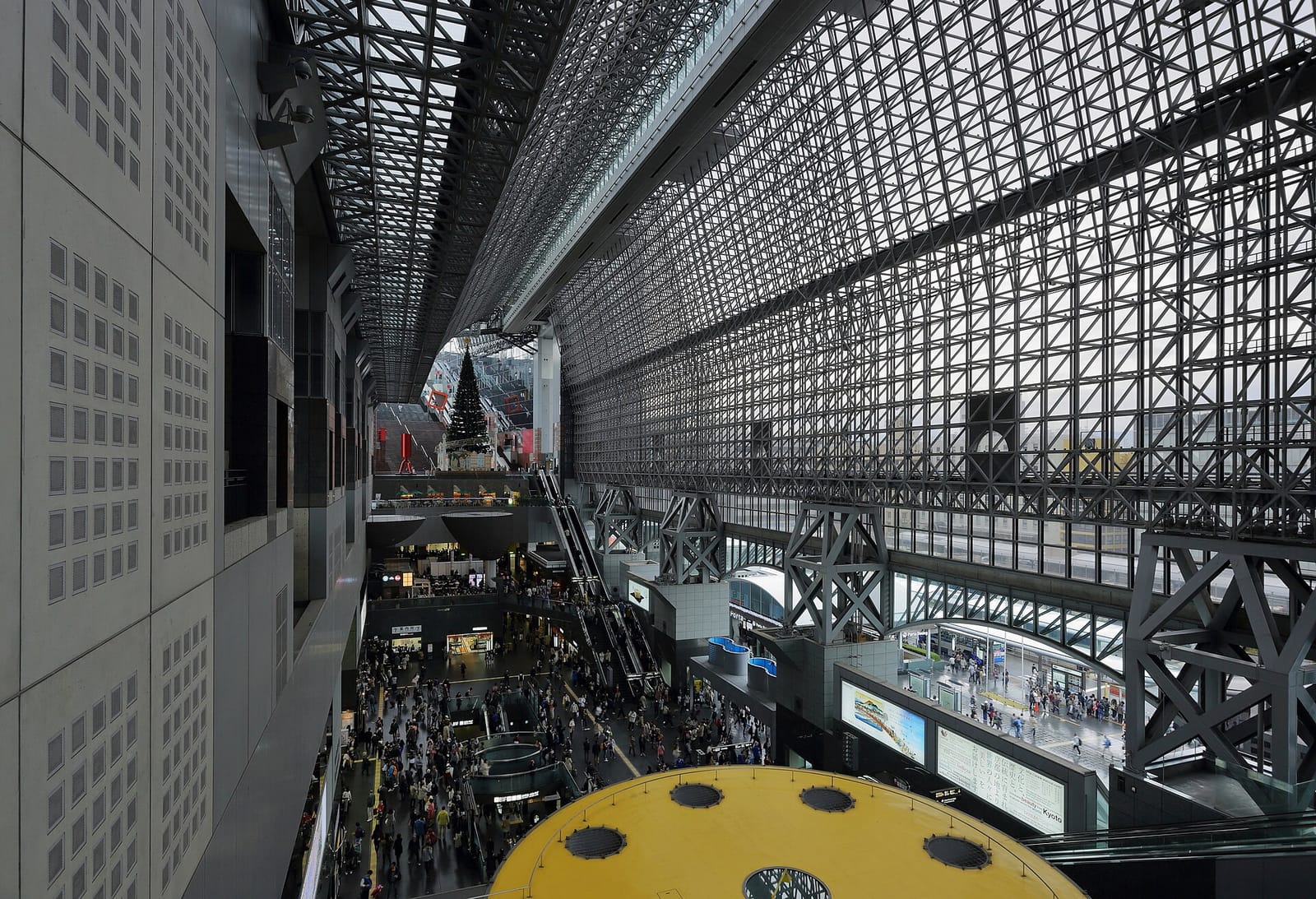
The station has two sides. The north side, the Central Exit, faces Kyoto Tower and has the city bus terminal and a taxi stand in front of Hotel Granvia. The south side, the Hachijo Exit, has another taxi stand and mostly expressway, airport and hotel shuttle buses. Check which exit your hotel lists before you book, because crossing the station with luggage takes time.
- Access
- JR lines incl. Haruka and Shinkansen, Subway Karasuma Line, Kintetsu Line; city buses at the Central Exit
- Source
- kyoto.travel
Sightseeing from here is mostly by train. JR West’s route to Yasaka Shrine takes the Nara Line one stop to Tofukuji (about 2 minutes), then the Keihan Line to Gion-Shijo (about 5 minutes, roughly every 10 minutes), then a 5-minute walk from Exit 7. For Fushimi Inari, take a local train on the Nara Line, not an express: JR West warns that expresses skip Inari Station.
The trade-off is atmosphere. The station area is a transport hub, and evenings in Gion or along the river mean a train or taxi ride back.
Gion and Southern Higashiyama: is it worth staying near the temples?
Yes, if seeing the old streets early and late matters more to you than easy arrivals. This is the only area where the classic sights are a walk from your door.
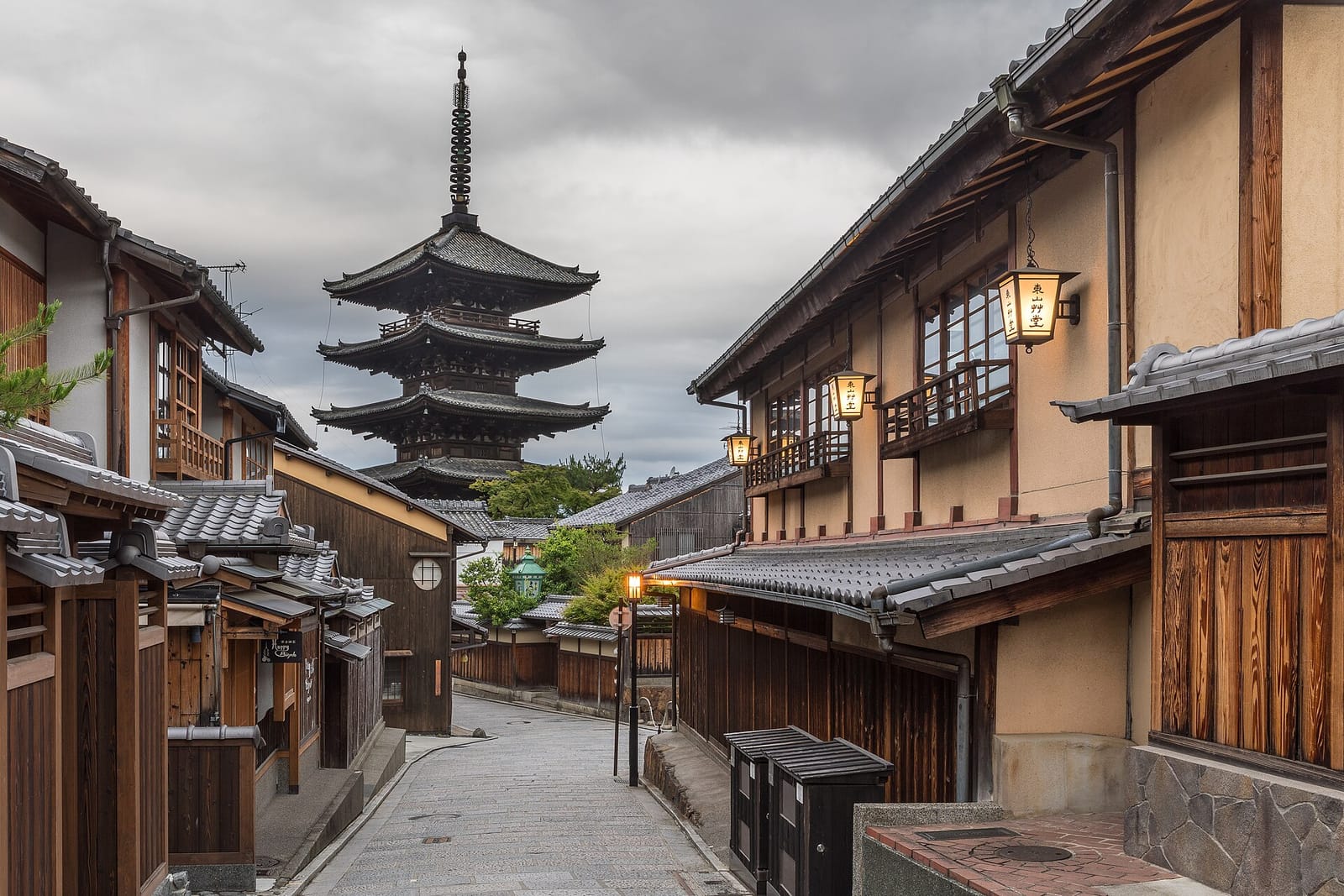
Yasaka Shrine’s own access page gives a 5-minute walk from Keihan Gion-Shijo Station and 8 minutes from Hankyu Kyoto-Kawaramachi Station. Kiyomizu-dera is farther up the hill: the temple lists about 25 minutes on foot from Keihan Kiyomizu-Gojo Station, or a city bus to the Gojozaka stop and a 10-minute walk.
Gion and Southern Higashiyama
Staying here means you can be at the shrine and the stone-paved lanes before the day buses arrive. It also makes evening events easy. From November 21 to 30, 2026, Kiyomizu-dera holds its autumn evening viewing, with entry from 5:30 p.m. to 9:00 p.m. and the grounds open until 9:30 p.m., according to the temple. From a Higashiyama hotel, you walk home afterward.
- Access
- Keihan Gion-Shijo Station; Yasaka Shrine about 5 min walk
- Source
- www.yasaka-jinja.or.jp
Two things to plan for. First, arrival day. The Kyoto City Official Travel Guide notes that buses to Gion and Kiyomizu often have long queues, and the city’s transport bureau says drivers can refuse luggage they judge too large. Take the JR Nara Line and Keihan route with your bags, or a taxi from the Central Exit, instead. Second, the streets around the main sights are crowded during the day, so hotels on quieter side streets are worth a few extra minutes’ walk.
Kawaramachi and Shijo: a good middle ground?
Yes, for travelers who care about restaurants, shopping and evenings out. Kawaramachi sits just west of Gion across the Kamo River, so you can walk to Yasaka Shrine in about 8 minutes from Hankyu Kyoto-Kawaramachi Station.
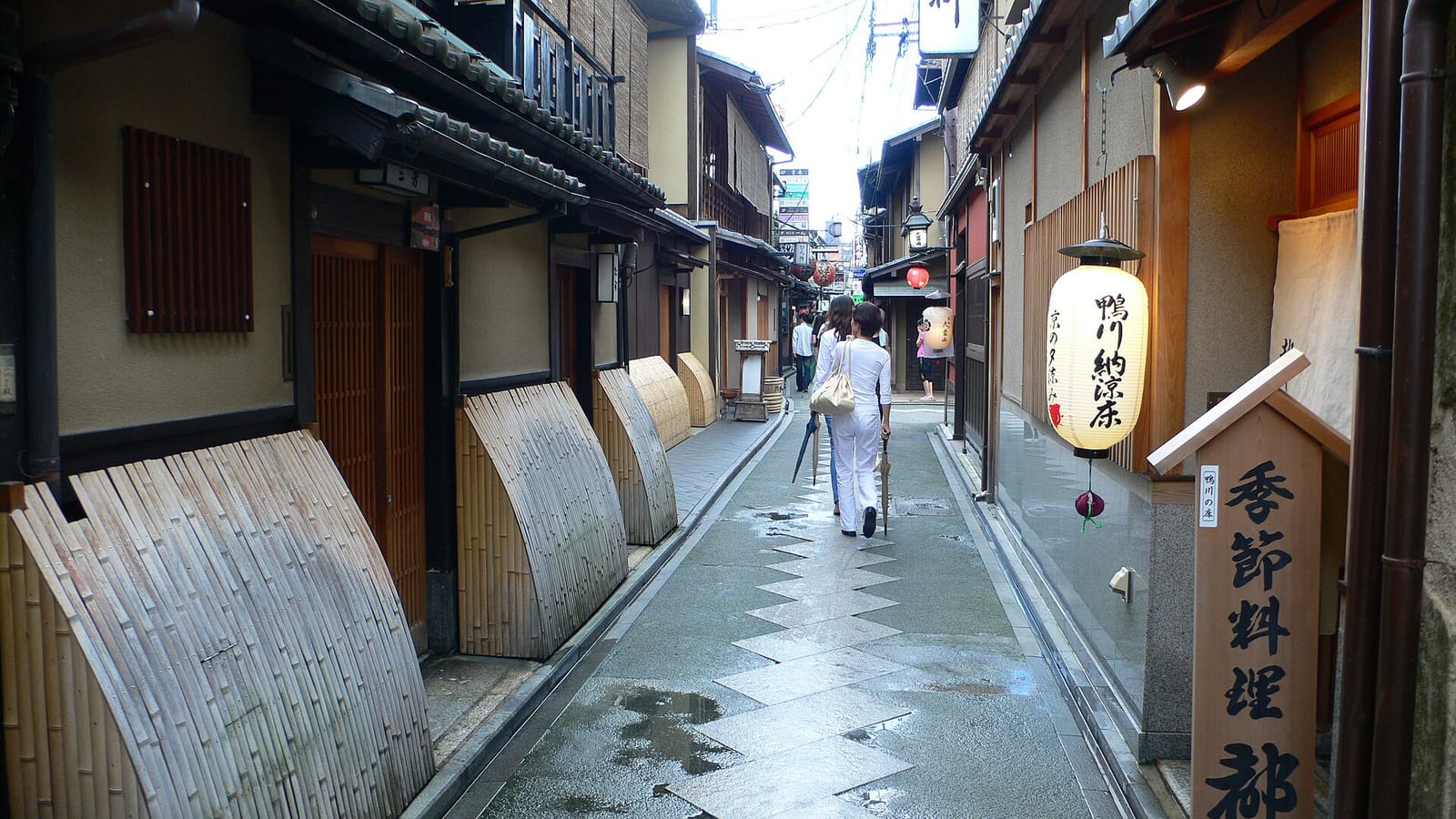
It is also the easiest base for Arashiyama after Kyoto Station. The city’s travel guide gives two routes from Kyoto-Kawaramachi: the Hankyu Kyoto Line toward Katsura with a change to the Hankyu Arashiyama Line, or the Randen tram from Shijo-Omiya to the Keifuku Arashiyama terminal, a 4-minute walk from Togetsu-kyo Bridge. The same guide suggests avoiding City Bus No. 11 along Shijo-dori, which it calls constantly congested.
Kawaramachi and Shijo
The catch is the JR network. Kawaramachi has no JR station, so arriving from the airport or the Shinkansen means changing at Kyoto Station to the subway, the Keihan Line or a taxi. If you plan several JR day trips, the station area saves you that change each time.
- Access
- Hankyu Kyoto-Kawaramachi Station; Yasaka Shrine about 8 min walk
- Source
- www.yasaka-jinja.or.jp
Is Arashiyama a good base for first-timers?
Usually not as your only base, but it is a good one-night add-on. JR’s rapid trains reach Saga-Arashiyama from Kyoto Station in about 11 minutes, according to the city’s travel guide, and Togetsu-kyo Bridge is about 8 minutes on foot from there. The problem is the rest of Kyoto: Gion, Kiyomizu-dera and Fushimi Inari are all on the other side of the city. For a day that links all three on one rail line, see our Kyoto one-day itinerary.
Arashiyama
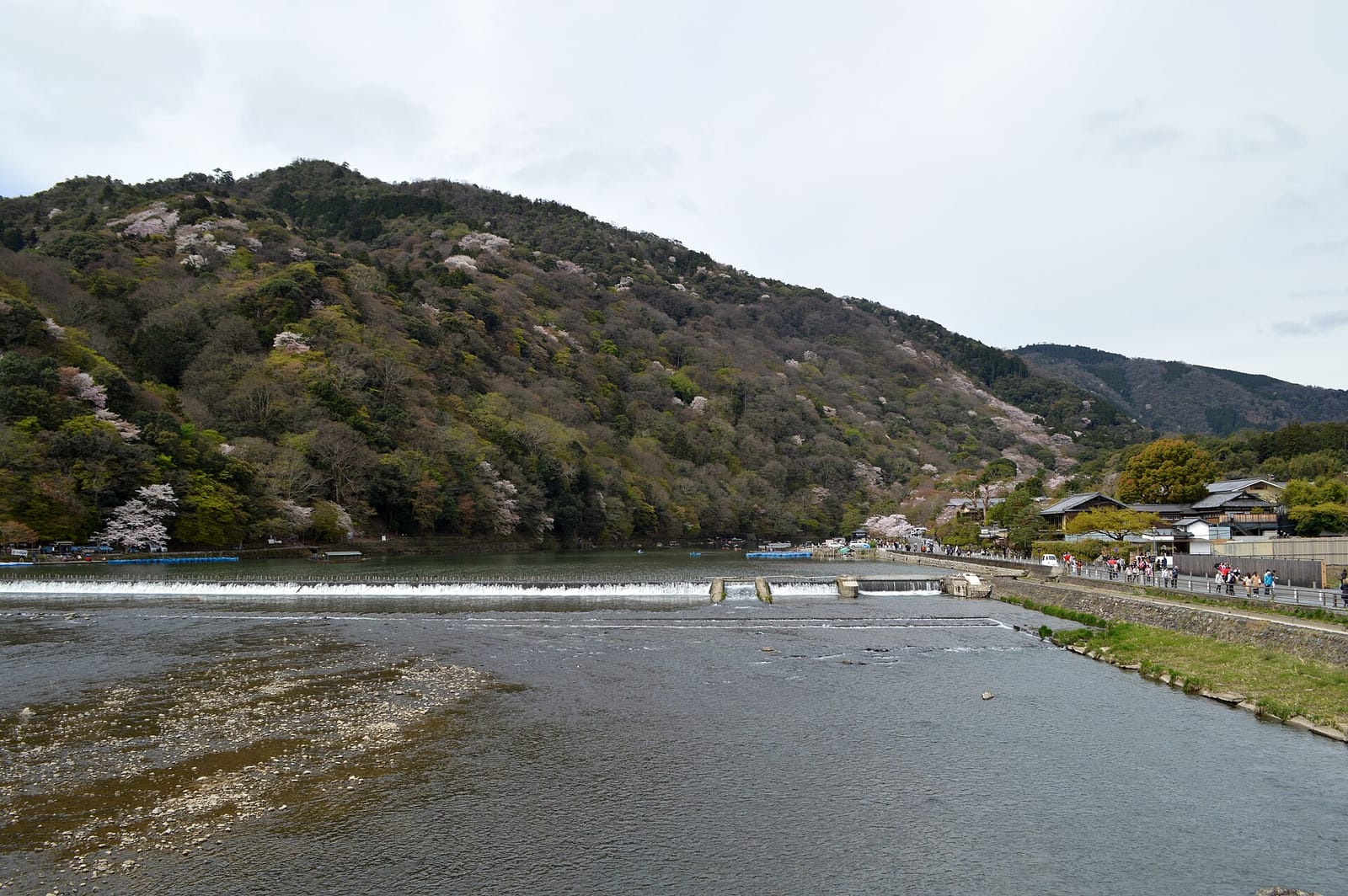
A night here lets you start before the day-trip crowds. Tenryu-ji, a 5-minute walk from Keifuku Arashiyama Station, normally opens its garden at 8:30 a.m. (¥500 for adults, as of November 2026). From November 14 to 30, 2026, the temple opens its Sogen Pond Garden at 7:30 a.m., thirty minutes earlier than usual.
- Access
- JR Saga-Arashiyama Station (about 11 min from Kyoto Station by rapid), Keifuku Arashiyama Station, Hankyu Arashiyama Station
- Source
- www.kyoto.travel
If you go by JR, the city’s guide says the Sagano Line platforms are far from the other platforms at Kyoto Station and the front cars are crowded, so board toward the back.
Which Kyoto area should you choose?
- First trip of 2 to 3 nights, arriving by Haruka or Shinkansen: Kyoto Station, on the side of the exit you will use most.
- First trip, and the temples are the point: Gion or Southern Higashiyama. Take the train or a taxi on arrival day, not the bus.
- Food, shopping and nights out: Kawaramachi and Shijo.
- Four nights or more: split the stay, with one night in Arashiyama for an early start in the west.
- Traveling with children or a lot of luggage: Kyoto Station, where you avoid the city buses entirely.
What else should you know before you book?
Budget for the accommodation tax. Since March 1, 2026, Kyoto charges it per person per night, in five bands set by the room rate:
| Room rate per person per night | Tax |
|---|---|
| Under ¥6,000 | ¥200 |
| ¥6,000 to ¥19,999 | ¥400 |
| ¥20,000 to ¥49,999 | ¥1,000 |
| ¥50,000 to ¥99,999 | ¥4,000 |
| ¥100,000 or more | ¥10,000 |
Plan for your luggage too. Kyoto City’s bus and subway guide asks you to hold backpacks in your arms rather than wear them, and recommends the coin lockers at most stations, generally open from about 5:30 a.m. to midnight. Kyoto Station also has luggage storage and services that send bags on to your hotel, according to the city’s travel guide. That way you can sightsee on arrival day and still use the buses.
Coming from Tokyo? You can compare this with our guide to where to stay in Shinjuku for first-timers, which uses the same approach for Tokyo’s busiest station.
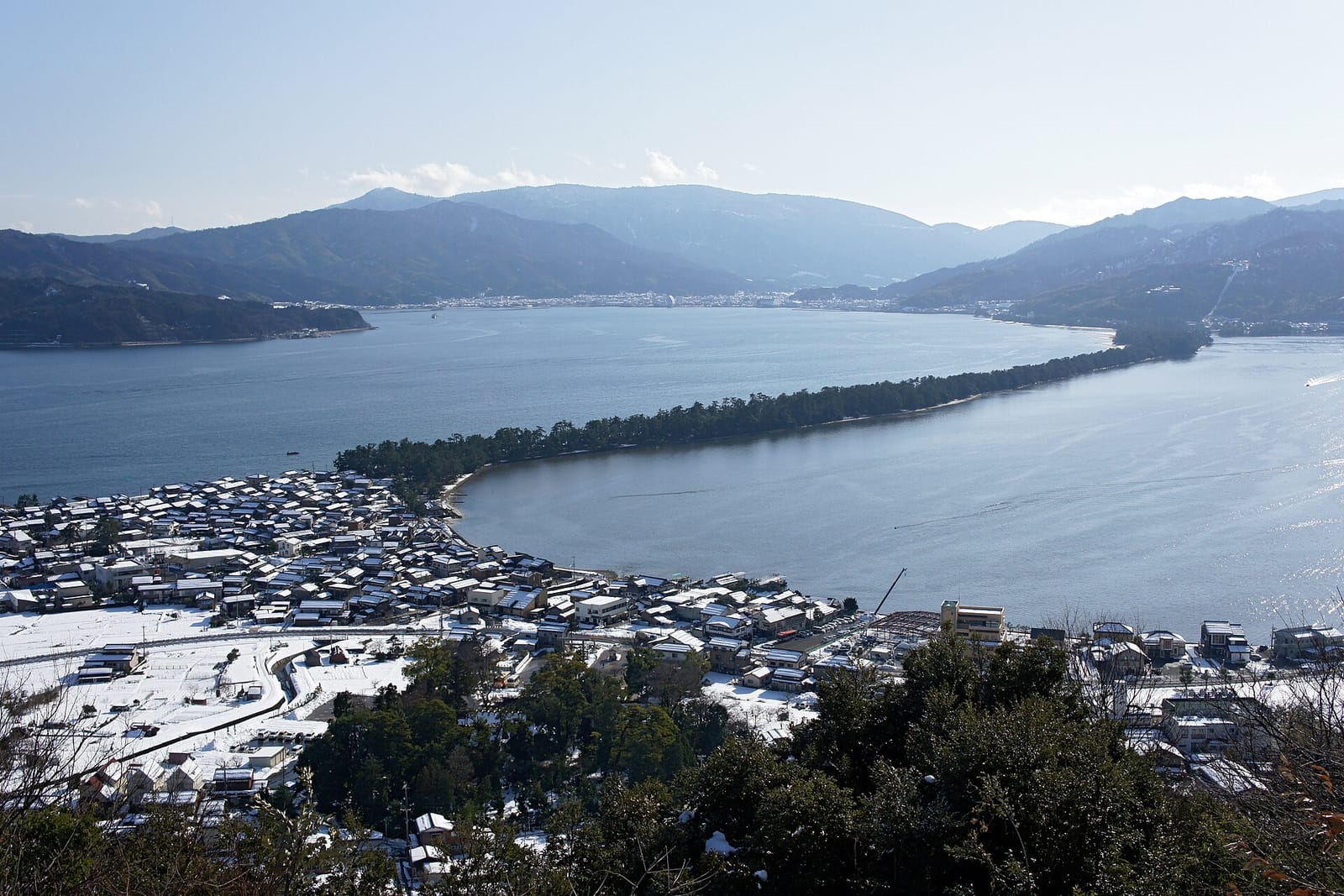 Amanohashidate Day Trip from Kyoto: Train or Bus, Timed Plan
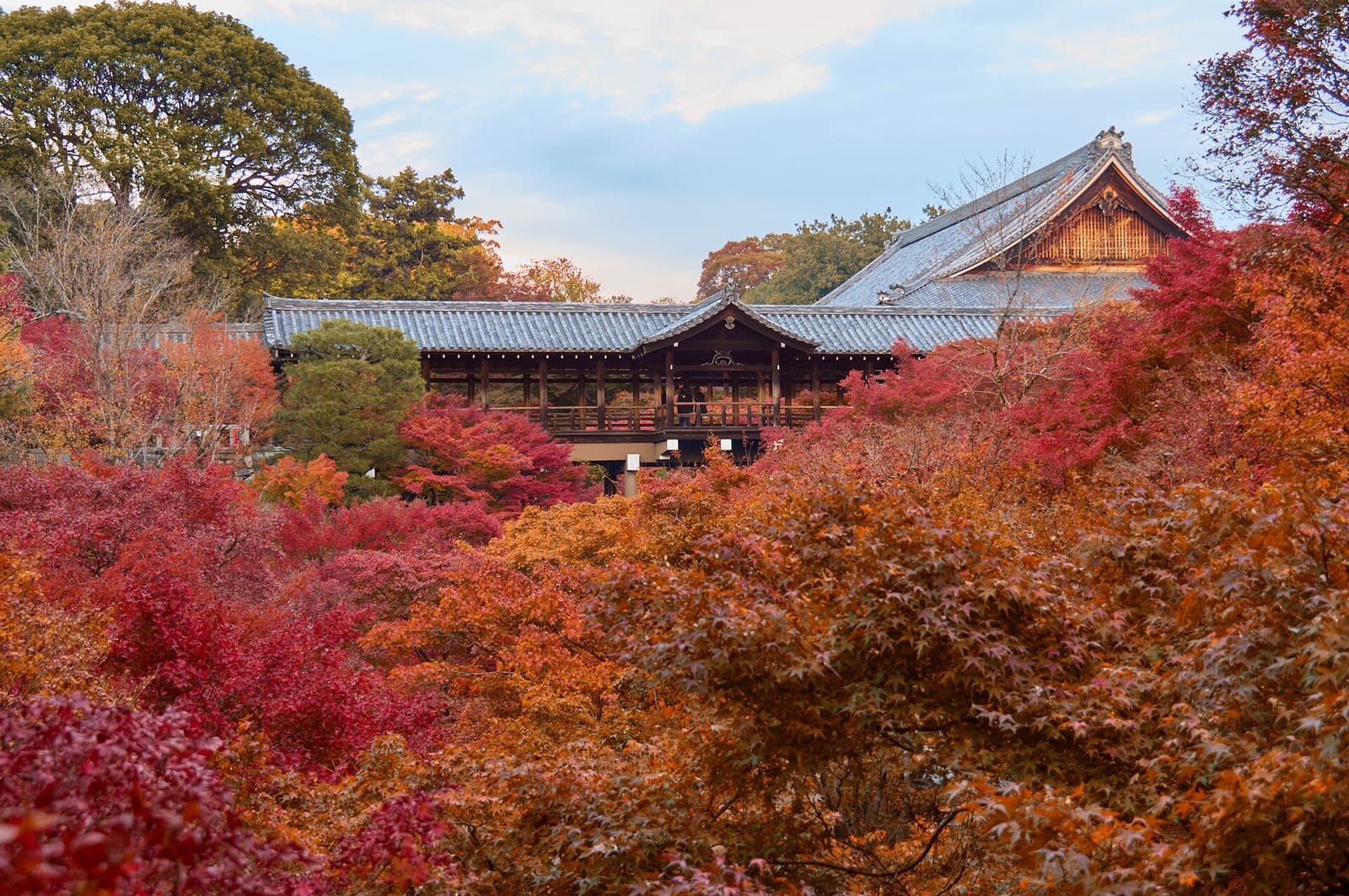 Fushimi Inari and Tofukuji Half Day from Kyoto Station
FAQ
What is the best area to stay in Kyoto for the first time?
For most first-timers, Kyoto Station or Gion. Kyoto Station wins on transport: JR West lists about 5 minutes to Fushimi Inari and about 12 minutes to Yasaka Shrine by train from there. Gion wins on atmosphere, with Yasaka Shrine and the Higashiyama streets within walking distance.
Is it better to stay near Kyoto Station or in Gion?
Stay near Kyoto Station if you have a big suitcase, a short trip or day trips to Nara and Osaka planned. Stay in Gion if you want to walk to temples early and late in the day. The two are linked by the JR Nara Line and the Keihan Line in about 12 minutes.
Can I take a suitcase on Kyoto city buses?
Not reliably. Kyoto City's transport bureau says luggage judged too large by the driver or station staff may not be brought on the bus or subway. Use trains or taxis from Kyoto Station, or a coin locker or luggage-delivery service, and keep backpacks in your arms on board.
How much is Kyoto's accommodation tax?
From March 1, 2026, it is ¥200 to ¥10,000 per person per night, depending on the room rate. A stay under ¥6,000 pays ¥200, ¥6,000 to ¥19,999 pays ¥400, and ¥20,000 to ¥49,999 pays ¥1,000, according to the city's official tourism site.
Is Arashiyama a good place to stay for first-time visitors?
Only if you want quiet mornings there more than easy access to the rest of the city. JR's rapid trains take about 11 minutes from Kyoto Station to Saga-Arashiyama, but most of the big sights are on the opposite, eastern side of Kyoto.
Sources
- Kyoto City Official Travel Guide — 6 tips to keep from getting lost inside Kyoto Station
- Kyoto City Official Travel Guide — Go to your destination smoothly from Kyoto Station
- Kyoto City Official Travel Guide — Comfortable access to Saga-Arashiyama
- Kyoto City Official Travel Guide — Accommodation tax change from March 2026
- Kyoto City Bus & Subway — Large luggage and suitcases
- JR West — Smart travel from Kyoto Station
- JR West — Kyoto Station to Yasaka Shrine
- JR West — Kyoto Station to Fushimi Inari Shrine
- JR West — Usage guide from Kansai Airport
- Central Japan Railway — Kyoto by Shinkansen
- Yasaka Shrine — Access
- Kiyomizu-dera — Information (autumn evening viewing 2026)
- Kiyomizu-dera — Location and access
- Tenryu-ji — Admission and access
- Tenryu-ji — Information (autumn opening hours 2026)
This article contains affiliate links. We may earn a commission at no extra cost to you.