Kyoto One Day Itinerary: Fushimi Inari to Gion on One Line
A timed one-day Kyoto route from Kyoto Station: Fushimi Inari early, Kiyomizu-dera, Sannenzaka, Yasaka Shrine, Gion and Nishiki, with fares and an autumn plan.
The most common mistake on a first day in Kyoto is a map with pins in every corner: Fushimi Inari in the south, Kinkaku-ji in the north, Arashiyama in the west, Gion in the east. Each one is fine on its own. Together they turn your day into a series of city-bus rides, and Kyoto’s buses are exactly where crowds and traffic stack up. This itinerary does the opposite. It keeps you on the east side of the city, on one rail line, and lets you walk downhill from sight to sight: Fushimi Inari early, then Kiyomizu-dera, Sannenzaka, Yasaka Shrine, Gion, Nishiki Market and Pontocho for dinner.
Who it suits: first-time visitors with one full day, staying near Kyoto Station or in Gion. How long: about 12 hours, 7:30 a.m. to 7:30 p.m. Budget: short train and subway fares paid by IC card, a temple admission at Kiyomizu-dera, and meals. Prices and times below are as of November 2026.
What is the mistake to avoid on one day in Kyoto?
Trying to cross the city. Pick one side and stay there. Eastern Kyoto and Fushimi work best for a single day because the main sights line up along the Keihan Main Line and the Higashiyama hills, so you can link them on foot.
Two smaller mistakes follow from the first one:
- Looking for the bus-only day pass. Kyoto City Transportation Bureau stopped selling the Bus 1-Day Pass on September 30, 2023, and it stopped working on March 31, 2024. Guides that still quote ¥600 or ¥700 are out of date. The current pass is the Subway & Bus 1-Day Pass, and our Kyoto bus one-day pass guide explains when it pays off.
- Riding buses with luggage. During its autumn 2026 crowd measures, the bureau asks visitors not to bring large bags such as carry-on cases onto city buses, and to use taxis, trains, or hotel delivery and storage instead. Leave your bags at your hotel or a locker first. Our luggage forwarding guide covers sending them ahead.
Arashiyama is left out on purpose. It sits on the opposite side of the city and deserves its own day.
Plan A: the standard day (weekdays, or any day outside peak season)
Start at Fushimi Inari as early as you can, then let the rest of the day run north and downhill. This is the version to use on most days of the year.
| Time | Where | How you get there | Time on the move |
|---|---|---|---|
| 7:30 | Kyoto Station | JR Nara Line, 2 stops to Inari | About 5–9 min |
| 7:45–9:45 | Fushimi Inari Taisha | Inari Station is right next to the shrine | — |
| 10:00 | Keihan Fushimi-Inari Station | Walk west from the shrine | About 5 min |
| 10:10 | Keihan Kiyomizu-Gojo Station | Keihan Main Line, northbound local | A few stops |
| 10:45–12:00 | Kiyomizu-dera | Walk east from Kiyomizu-Gojo | About 25 min |
| 12:00–13:30 | Sannenzaka and Ninenzaka, lunch | Walk downhill from the temple | — |
| 13:45 | Yasaka Shrine | Walk north | — |
| 14:30 | Gion and Hanamikoji | Walk west across Higashioji-dori | — |
| 15:30 | Nishiki Market | Walk west along Shijo-dori over the Kamo River | — |
| 17:30 | Pontocho, dinner | Walk back east to the river | — |
| 19:30 | Kyoto Station | Subway Karasuma Line from Shijo, 2 stops | 2 stops |
Why Fushimi Inari goes first. It is the stop furthest south, it is two stops from Kyoto Station by JR, and the long tunnels of torii are the part of the day that crowds affect most. Kyoto City’s tourism site recommends the JR Nara Line to get there and advises against city bus Minami 5, whose travel time it says can vary by more than 24 minutes.
Why the Keihan Line and not the bus. From Keihan Fushimi-Inari Station, about 5 minutes’ walk from the shrine, the Keihan Main Line runs north along the Kamo River to Kiyomizu-Gojo and Gion-Shijo. Kyoto City’s tourism site puts the direct ride from Gion-Shijo to Fushimi-Inari at about 22 minutes, and Kiyomizu-Gojo comes one stop before Gion-Shijo. Limited express trains do not stop at Fushimi-Inari, so take a local. From Kiyomizu-Gojo, the temple says the walk takes about 25 minutes, all of it uphill along Gojo-dori and Gojozaka.
The way back. Nishiki Market is about 3 minutes on foot from Shijo Station on the Karasuma Line, according to the market. From there it is two stops south to Kyoto Station. Subway fares start at ¥220 for adults.
Plan B: autumn weekends in November 2026
Keep the same route but run the middle of the day in reverse, and finish at Kiyomizu-dera after dark. This suits the last weekends of November, when buses are busiest and the temple opens in the evening.
| Time | Where | How you get there |
|---|---|---|
| 7:30 | Kyoto Station → Fushimi Inari Taisha | JR Nara Line to Inari, about 5–9 min |
| 10:00 | Keihan Fushimi-Inari → Gion-Shijo | Keihan Main Line local, about 22 min |
| 10:30 | Nishiki Market | Walk west over the river; Nishiki is about 10 min from Keihan Shijo (Gion-Shijo) Station |
| 12:00 | Pontocho, lunch | Walk back east |
| 13:30 | Gion and Hanamikoji | Walk east over Shijo Bridge |
| 14:30 | Yasaka Shrine | About 5 min from Keihan Gion-Shijo, per the shrine |
| 15:00 | Ninenzaka and Sannenzaka | Walk south and uphill |
| 17:30 | Kiyomizu-dera evening special visit | At the top of the slopes |
| 19:30 | Kiyomizu-Gojo → Kyoto Station | Walk to Keihan Kiyomizu-Gojo (about 25 min), or a bus from Gojozaka |
What is different this month. Kiyomizu-dera holds its autumn evening special visit from November 21 to 30, 2026, from 5:30 p.m., with last entry at 9:00 p.m. and the gates open until 9:30 p.m. No reservation is needed, according to the temple. Kyoto City Bus runs crowd measures on Saturdays, Sundays and holidays from October 31 to November 29, 2026, with November 21–23, 28 and 29 as priority days. On those weekend days, riders on buses 5, 105 and 206 bound for Kyoto Station can switch to the subway for free at Higashiyama Sanjo between 15:45 and 19:20: pay the bus fare, take a transfer ticket, and exchange it at Higashiyama Station.
If it rains. Cut the climb at Fushimi Inari short and stay on the lower torii paths, move Nishiki Market and lunch to the late morning as in Plan B, and keep Kiyomizu-dera for the afternoon. The route has the same rail lines either way, so rain does not change how you get around.
What are the stops, in order?
The stops below follow Plan A. Tick “Add to my route” on each one to open the day in Google Maps.
Kyoto Station
Start and finish. Take the JR Nara Line south; the shrine says Inari is two stations and about 5 minutes away. Staying near the station makes the 7:30 start easy and puts you two subway stops from Shijo at night. Our guide to Gion or Kyoto Station compares the two bases.
- Access
- JR Nara Line to Inari Station, 2 stops, about 5 min
- Source
- inari.jp
Fushimi Inari Taisha
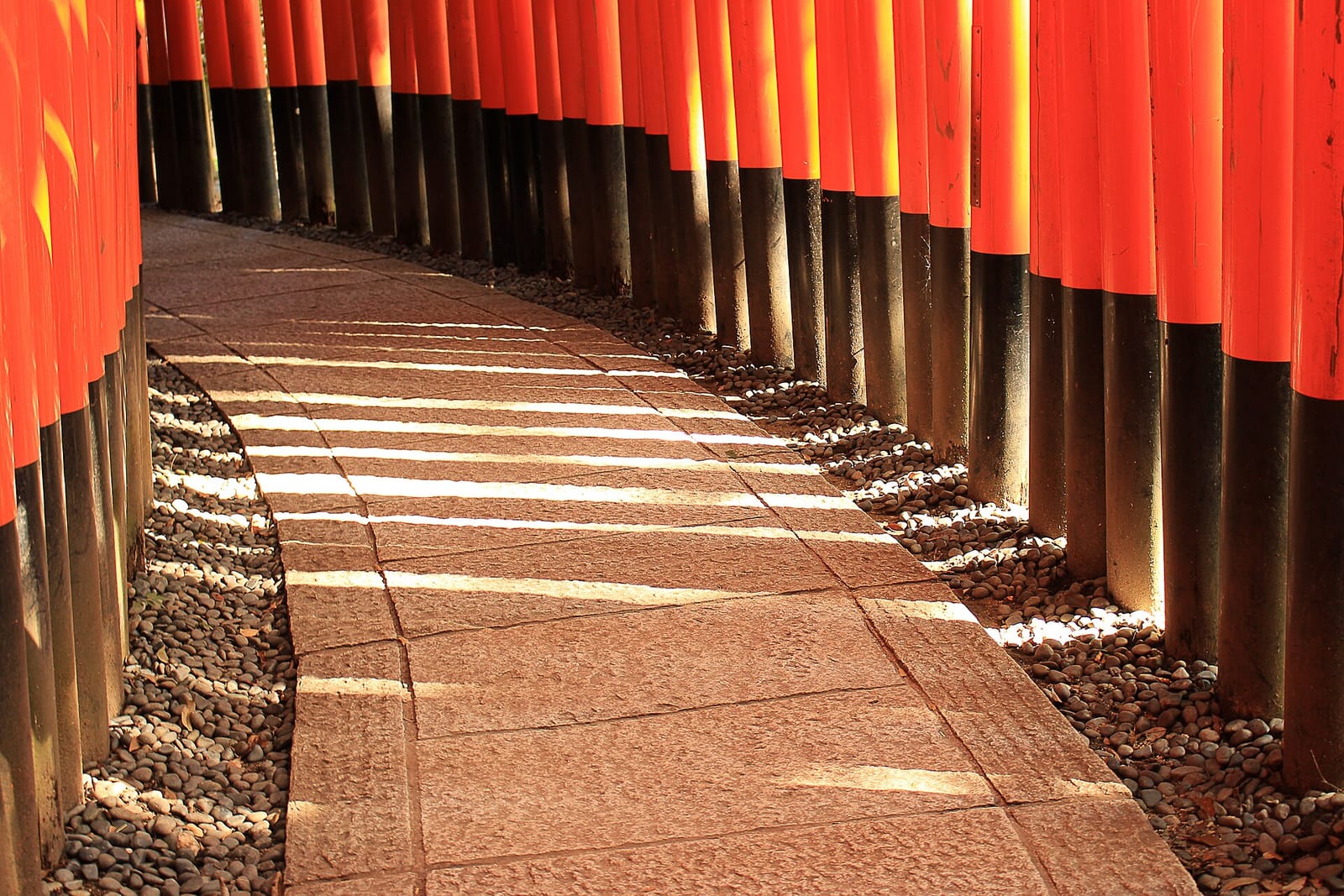
The head shrine of Inari, with paths of vermilion torii running up Mt. Inari, which the shrine gives as 233 m high. Two hours is enough to walk the main torii paths and come back down before 10:00. The shrine’s visitor rules ban drones, eating or drinking outside marked rest areas (including while walking), and blocking narrow paths while taking photos.
- Access
- Next to JR Inari Station; about 5 min walk from Keihan Fushimi-Inari Station
- Source
- inari.jp
Kiyomizu-dera
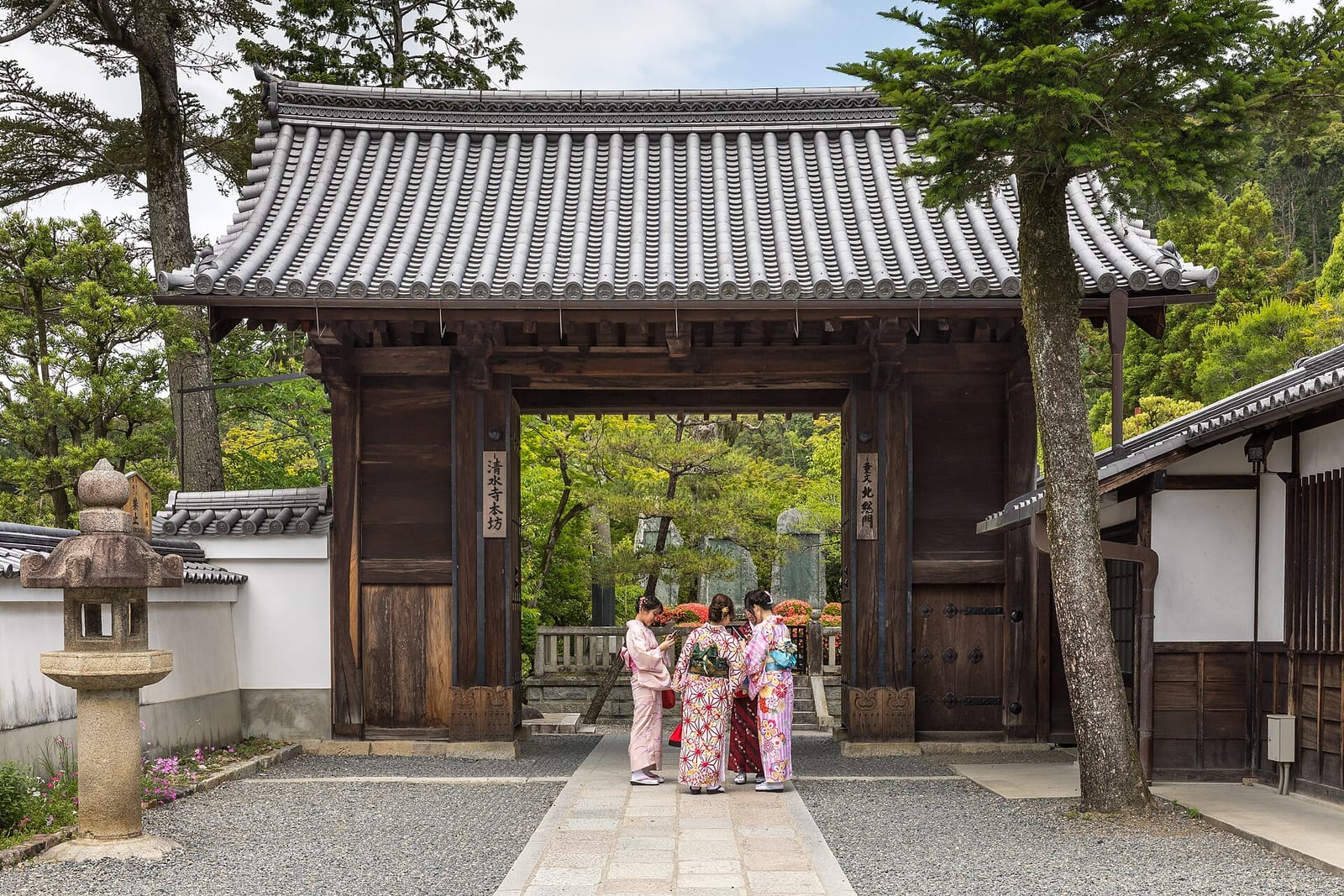
The temple with the wooden stage over the hillside. The temple has no parking and recommends public transport or a taxi. From Kyoto Station, city buses 206 and 100 stop at Gojozaka, about 10 minutes’ walk below the temple, and the EX100 and EX101 sightseeing express buses reach Gojozaka in about 10 minutes for ¥500 (as of November 2026).
- Hours
- Opens 6:00; closing time varies by season. Autumn evening visit Nov 21–30, 2026, 17:30–21:00 last entry
- Access
- About 25 min walk from Keihan Kiyomizu-Gojo; about 10 min walk from the Gojozaka bus stop
- Source
- www.kiyomizudera.or.jp
Sannenzaka and Ninenzaka
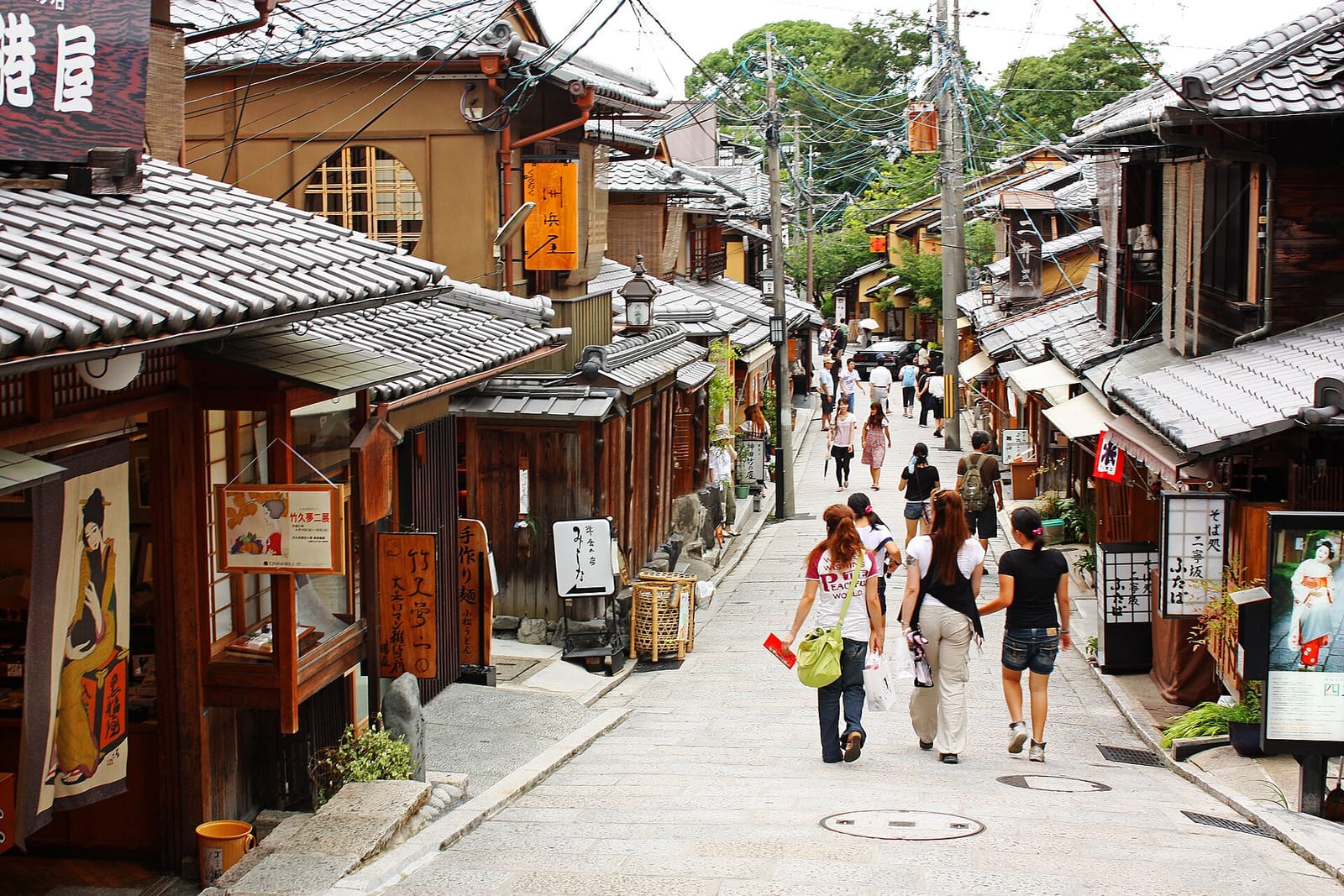
Two stepped lanes of old wooden shops that lead down from Kiyomizu-dera toward Yasaka Shrine. This is where the route turns into a downhill walk, and it is the natural place for lunch. If you want to walk this stretch in kimono, our Gion kimono rental guide lists the shops and return times.
Yasaka Shrine
The shrine at the east end of Shijo-dori, and the hinge of the day: Sannenzaka is to the south, Gion is to the west. The shrine office is open 9:00 to 17:00 if you want a goshuin stamp.
- Access
- About 5 min walk from Keihan Gion-Shijo; about 8 min from Hankyu Kyoto-Kawaramachi; near the Gion bus stop (route 206)
- Source
- www.yasaka-jinja.or.jp
Hanamikoji, Gion
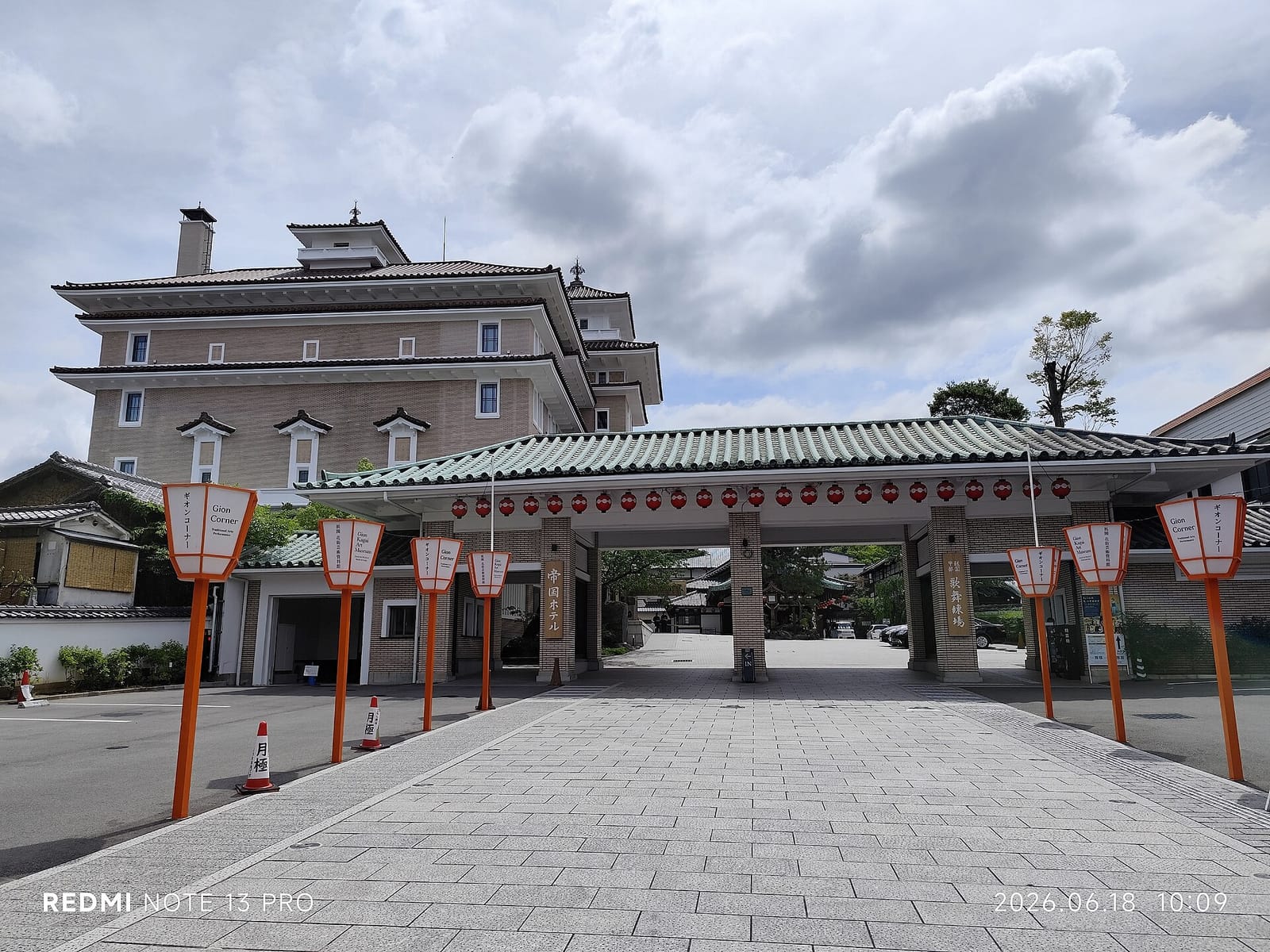
The stone-paved street of teahouses running south from Shijo-dori. Many side lanes here are private, so follow the posted signs about entry and photography. Staying in Gion puts you a short walk from both this street and Pontocho; see our best hotels in Gion.
Nishiki Market
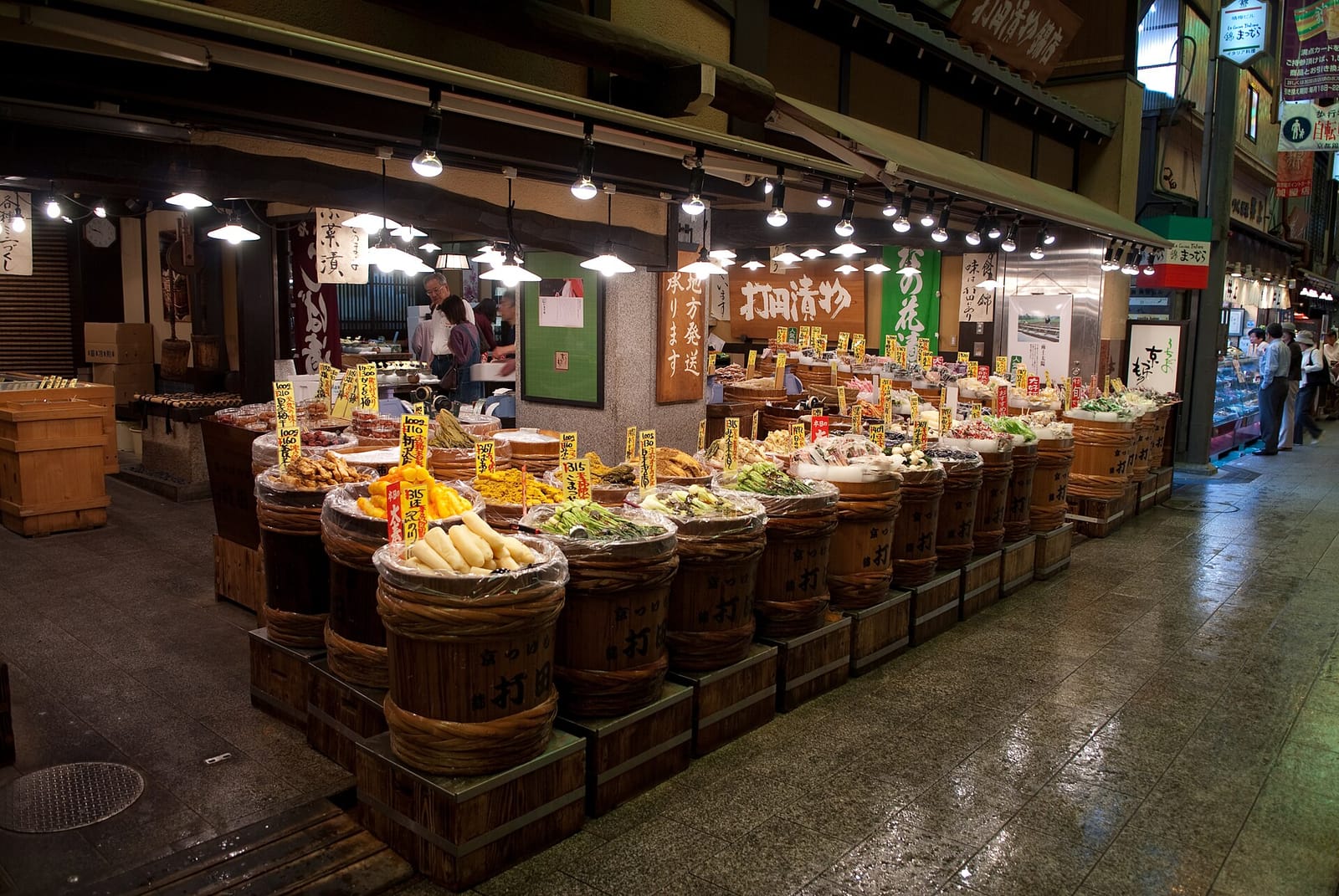
A 390-meter covered market street of food shops. The market asks visitors not to eat while walking: eat in front of or inside the shop where you bought the food. Shops set their own hours, so go in the afternoon rather than after dinner.
- Access
- About 3 min walk from Subway Shijo or Hankyu Karasuma; about 4 min from Hankyu Kyoto-Kawaramachi; about 10 min from Keihan Shijo
- Source
- www.kyoto-nishiki.or.jp
Pontocho
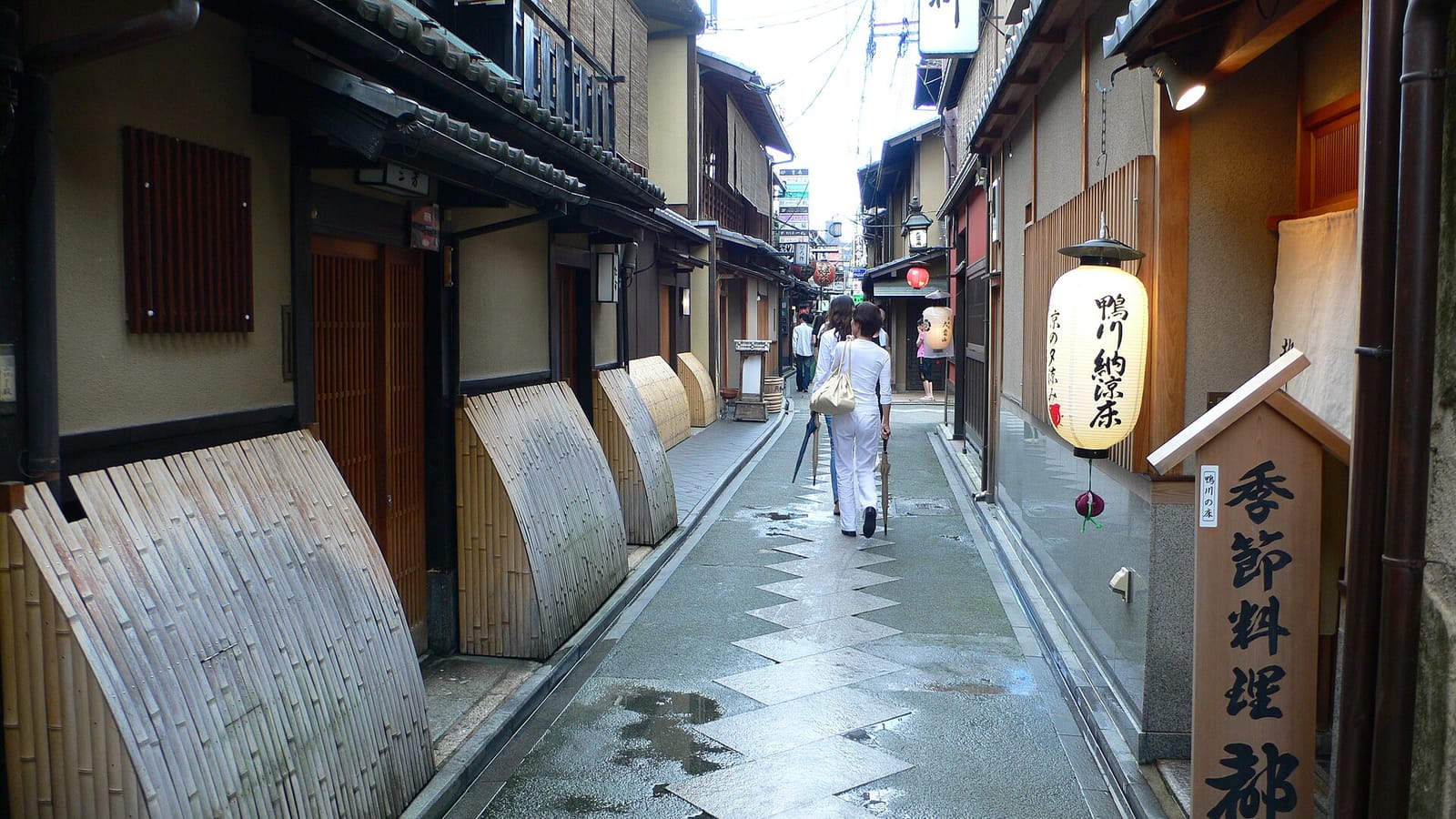
A narrow lane of restaurants between Kiyamachi and the Kamo River, just north of Shijo-dori. End the day here with dinner, then walk west along Shijo-dori to Shijo Station for the subway back to Kyoto Station.
Do you need a day pass for this route?
Usually not. The Subway & Bus 1-Day Pass costs ¥1,100 for adults and ¥550 for children (as of November 2026). It covers all city buses and both subway lines, but not JR or Keihan trains, and those carry you on the longest legs of this day. Plan A uses one subway ride. Pay as you go with an IC card such as ICOCA, Suica or PASMO instead.
| Fare (adult, as of November 2026) | Price |
|---|---|
| City bus, flat-fare zone | ¥230 |
| EX100 / EX101 sightseeing express bus | ¥500 |
| Subway, shortest band (0–3 km) | ¥220 |
| Subway & Bus 1-Day Pass | ¥1,100 |
The pass starts to pay off from the fifth regular bus ride of the day, which this route does not need. It is valid only on the day you first use it, not for 24 hours. Two more points from the bureau: city buses do not accept credit or debit cards, and the Japan Rail Pass is not valid on them. If your day leans on buses instead, for example from a hotel in the north of the city, buy the pass at the Kyoto Station Bus Information Center.
What if you are coming from Tokyo for the day?
Then run Plan B, starting later. Plan B puts the stops that do not depend on the clock (Nishiki, Pontocho and Gion) in the middle of the day and ends at Kiyomizu-dera, so a later arrival from the Shinkansen still fits. Our Shinjuku to Kyoto by Shinkansen guide covers the train times and tickets. For a longer stay, see where to stay in Kyoto for first-timers.
Have three days instead? Our Kyoto 3-day itinerary gives the east, the west and north, and Fushimi Inari with Uji or Nara one day each.
What to pack before you go
Maps, train apps and translation drain a phone by mid-afternoon. Keep it in your carry-on: power banks are not allowed in checked luggage.
Japan still runs on coins: there are six of them, from 1 to 500 yen, and you collect a pocketful fast. A holder with a slot for each coin lets you pay the exact amount at ticket machines, shrines and small shops without digging.
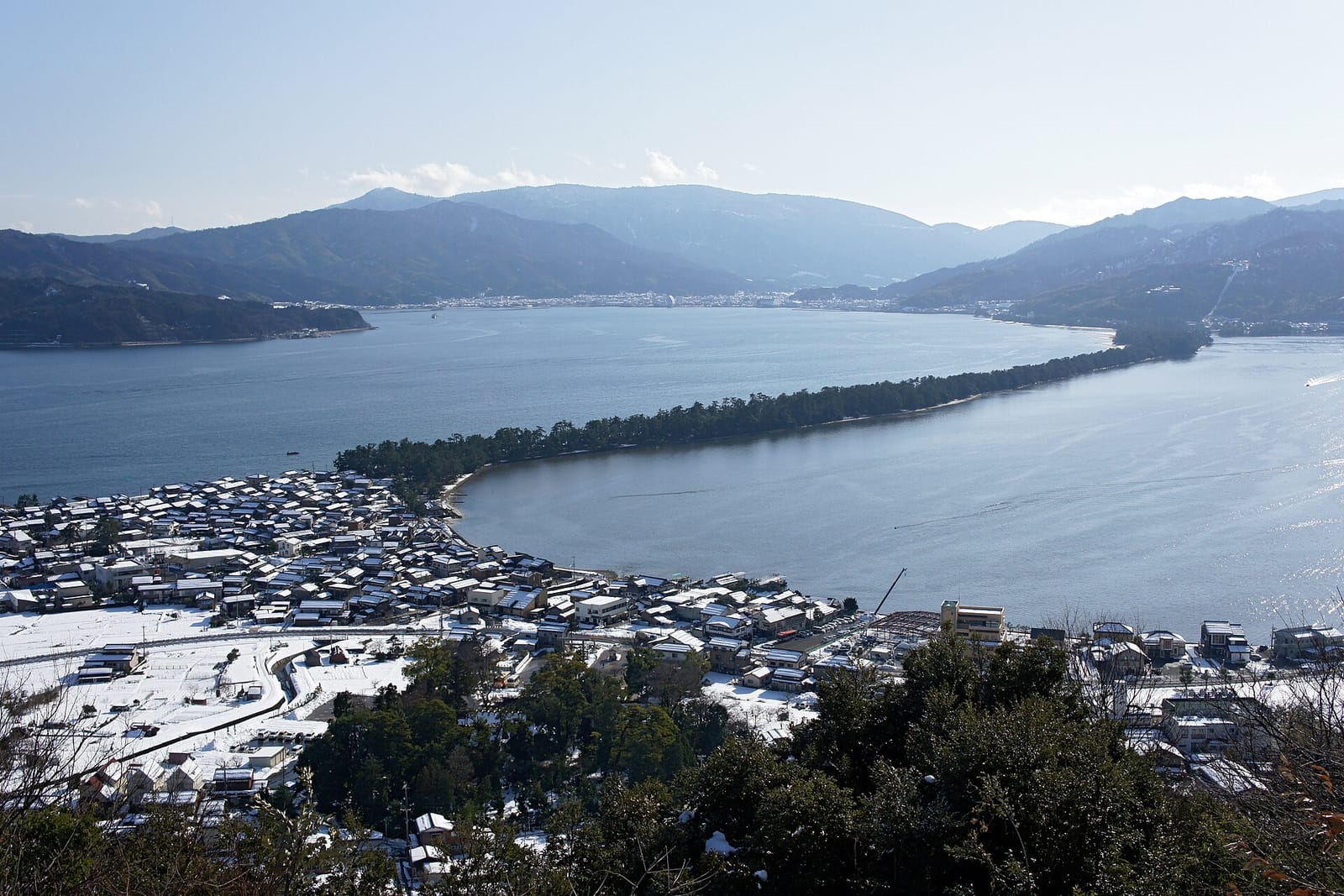 Amanohashidate Day Trip from Kyoto: Train or Bus, Timed Plan
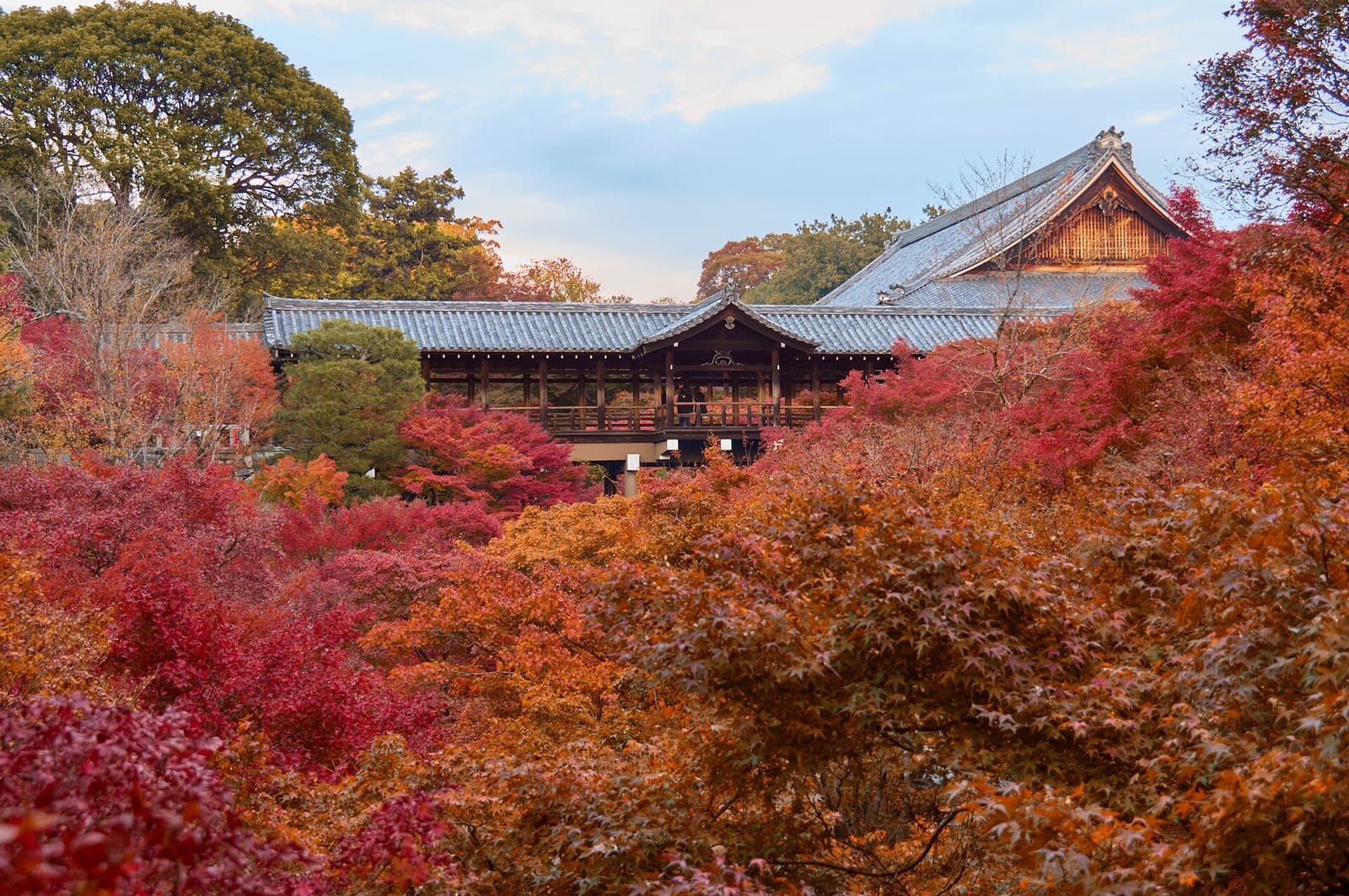 Fushimi Inari and Tofukuji Half Day from Kyoto Station
FAQ
Can you see Kyoto in one day?
You can see one side of it well. This route stays in eastern Kyoto and Fushimi, where Fushimi Inari, Kiyomizu-dera, Yasaka Shrine and Gion sit close to one rail line. Adding Arashiyama or Kinkaku-ji on the same day means long crosstown bus rides instead of sights.
How do you get from Kyoto Station to Fushimi Inari?
Take the JR Nara Line two stops to Inari Station. The shrine says the ride takes about 5 minutes and the shrine is right next to the station; Kyoto City's tourism site gives about 9 minutes and notes that rapid and local trains all stop at Inari.
Is there still a Kyoto bus one-day pass?
Not a bus-only one. Kyoto City Transportation Bureau stopped selling the Bus 1-Day Pass on September 30, 2023, and it could not be used after March 31, 2024. The Subway & Bus 1-Day Pass replaced it at ¥1,100 for adults and ¥550 for children (as of November 2026).
What time does Kiyomizu-dera open?
Kiyomizu-dera opens at 6:00 a.m., and the closing time changes with the season and events, according to the temple. From November 21 to 30, 2026, it holds an autumn evening special visit from 5:30 p.m., with last entry at 9:00 p.m.
Should you take the bus or the train in Kyoto in one day?
Use trains for the long legs and walk the rest. On autumn weekends Kyoto City runs congestion measures for city buses and asks visitors with large bags not to ride them. On this route, JR, Keihan and the subway cover every longer leg.
Sources
- Fushimi Inari Taisha — Access
- Fushimi Inari Taisha — Official site (Mt. Inari)
- Fushimi Inari Taisha — Request for all visitors
- Kyoto City Official Travel Guide — Comfortable access to Fushimi Inari Taisha
- Kiyomizu-dera — Location and open hours
- Kiyomizu-dera — Official site (autumn 2026 evening special visit)
- Yasaka Shrine — Access
- Nishiki Market — Official site (length, eating rules)
- Nishiki Market — Access
- Kyoto City Bus & Subway Guide — Subway & Bus 1-Day Pass
- Kyoto City Transportation Bureau — Bus 1-Day Pass sales ended
- Kyoto City Bus & Subway Guide — Taking the Kyoto City Bus
- Kyoto City Bus & Subway Guide — Sightseeing Limited Express Bus
- Kyoto City Bus & Subway Guide — Subway fares
- Kyoto City Transportation Bureau — Autumn 2026 city bus congestion measures
This article contains affiliate links. We may earn a commission at no extra cost to you.