Nikko Day Trip from Tokyo: Timed Plan, Trains, Pass and Costs
A timed Nikko day trip from Tokyo: Tobu limited express from Asakusa, the NIKKO PASS, Shinkyo, Toshogu, Futarasan, Taiyuin and Kanmangafuchi, with fares.
A Nikko day trip from Tokyo works if you settle three things before you leave. First, which railway: Tobu from Asakusa is the direct, cheaper line, and JR via Utsunomiya makes sense only if you already hold a rail pass. Second, whether to buy the NIKKO PASS: it is for foreign passport holders and covers the base fare and local buses, but not the limited express seat. Third, which season’s closing times apply: from November to March, Toshogu and the other shrines close at 4 p.m., an hour earlier than in summer. Once those are decided, the day itself is simple. Below is a timed plan from Asakusa, the costs line by line, the five stops in walking order, and backup plans for rain, a JR Pass or a late start.
Prices, fares and timetables in this guide are as of November 2026, from Tobu Railway, the shrines and temples, and Visit Nikko.
How long does a Nikko day trip take, and what does it cost?
Plan on about 12 hours door to door from Asakusa, and about ¥9,100 per adult on a regular day before food. The train takes about 1 hour 50 minutes each way, which leaves roughly eight hours in Nikko.
| Item | Adult price (as of November 2026) | Notes |
|---|---|---|
| NIKKO PASS World Heritage Area | ¥3,000 | One Asakusa–Shimo-Imaichi round trip, Tobu trains Shimo-Imaichi–Tobu-Nikko, Tobu buses in the World Heritage area. Valid 2 days. |
| Limited express ticket, Asakusa–Tobu-Nikko | ¥1,650 each way | Kegon and Revaty Kegon, regular period. ¥1,850 in busy periods, ¥1,450 in quiet periods. |
| Shinkyo Bridge crossing | ¥300 | Cash only |
| Rinnoji set ticket (Sanbutsudo + Taiyuin) | ¥900 | |
| Toshogu Shrine | ¥1,600 | Cash only, per Visit Nikko |
| Total, regular day | about ¥9,100 | Food and souvenirs extra |
About the fares. Tobu’s fare table lists Asakusa to Tobu-Nikko at ¥1,400 for the base fare plus ¥1,650 for the Kegon or Revaty Kegon limited express charge. Tobu adds ¥200 on busy days and takes off ¥200 on quiet days. Its calendar marks most autumn weekends as busy, including November 28 and 29, and December weekends as busy too. Spacia X has its own fare page with separate seat charges.
Is the NIKKO PASS worth it for one day? Two base fares come to ¥2,800, so the ¥3,000 pass costs ¥200 more than single tickets, and it adds the local buses and a second day of validity. Tobu says the pass is sold only to foreign travelers, plus Japanese nationals travelling with them. You can buy it online as a digital ticket, or in person at the Tobu Tourist Information Center Asakusa from one month before travel. It does not include shrine or temple admission or the limited express ticket. When you book limited express seats together with the pass online, Tobu says the reservation must be completed 3 days before departure, and the tickets are collected at the Tourist Information Center Asakusa only.
If you are staying on the Shinjuku side, our guide to getting from Shinjuku to Asakusa by train covers the 35-minute ride to the start. A Tokyo subway pass will not help on this day: as our Tokyo Subway Ticket guide points out, Nikko is outside the subway network.
To check whether the pass beats single tickets for your exact plan, including Lake Chuzenji and Kinugawa Onsen, see our NIKKO PASS break-even guide.
What does the day look like, hour by hour?
This plan uses the Tobu timetable revised on March 14, 2026, and the November to March closing times. From April to October, everything except the trains opens or closes an hour later, so you gain an hour at the end.
| Time | Where | How | Notes |
|---|---|---|---|
| 6:40 | Tobu Asakusa Station | — | Pick up your pass or tickets |
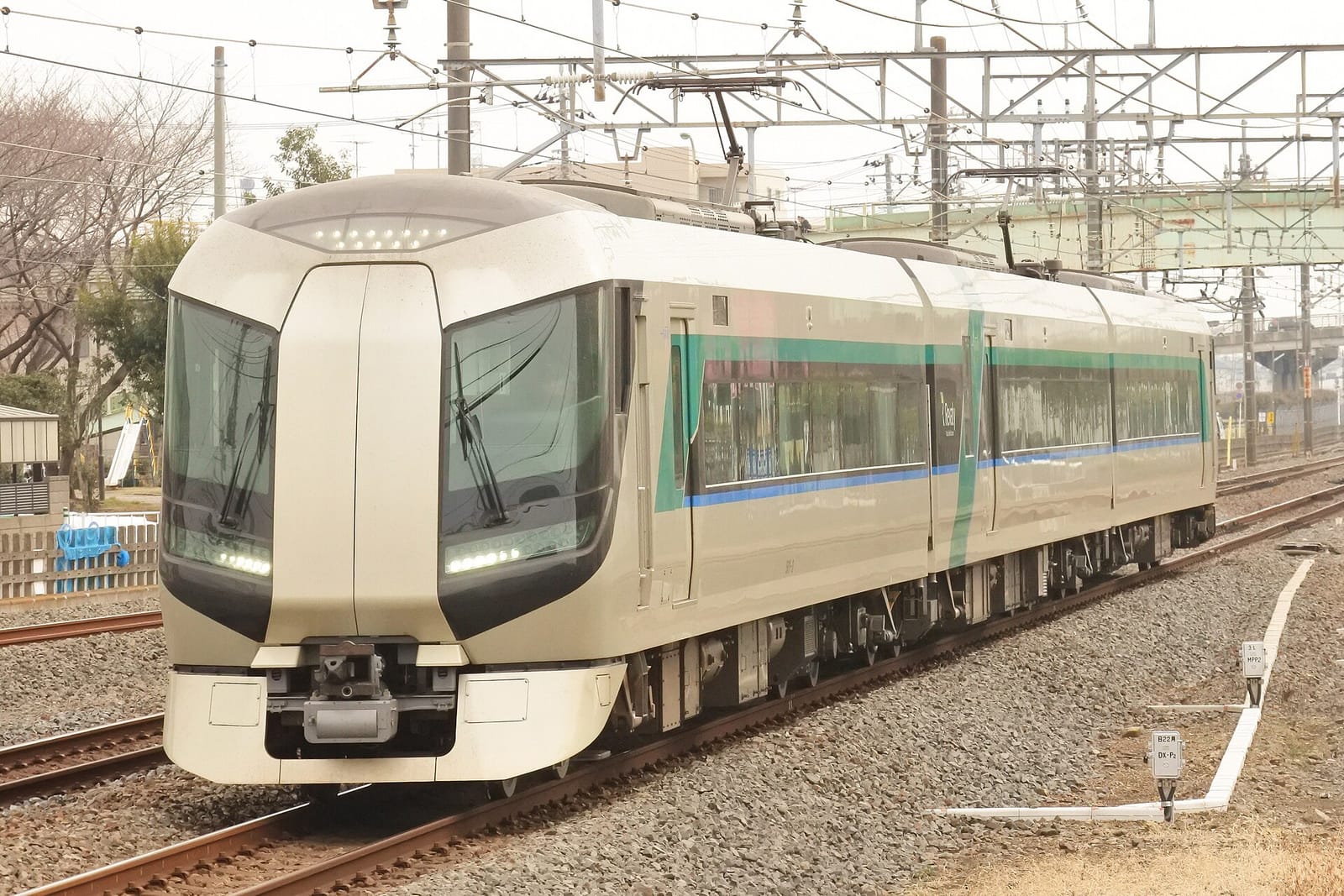
| 7:00 | Depart Asakusa | Limited Express Revaty Kegon 3 | |
| 8:54 | Arrive Tobu-Nikko | — | About 1 hr 54 min |
| 9:10 | Bus to Shinkyo | World Heritage Tour bus, about 5 min | Covered by the pass |
| 9:30 | Shinkyo Bridge | — | Opens 9:30 Nov–Mar |
| 10:00 | Rinnoji Sanbutsudo | Walk | Buy the set ticket here (sold until 13:30 Nov–Mar) |
| 10:45 | Toshogu Shrine | Walk | Allow 1–1.5 hours |
| 12:15 | Lunch | — | Near the shrines or back toward Shinkyo |
| 13:15 | Futarasan Shrine | Walk | |
| 13:45 | Taiyuin | Walk | Uses the set ticket |
| 14:45 | Kanmangafuchi Abyss | Bus to Sogokaikan-mae, then 15 min walk | Skip in heavy rain |
| 16:30 | Back to Tobu-Nikko | Bus | |
| 17:22 | Depart Tobu-Nikko | Limited Express Revaty Kegon 46 | |
| 19:15 | Arrive Asakusa | — | About 1 hr 53 min |
Why 7:00 from Asakusa. Revaty Kegon 3 reaches Tobu-Nikko at 8:54, which lines up with Shinkyo’s 9:30 winter opening. The earlier Revaty Kegon 1 at 6:30 arrives at 8:25 and works if you want to be at Toshogu when it opens at 9:00. Later trains leave you short on time in winter, because Toshogu stops selling tickets at 3:30 p.m.
Why Toshogu before lunch. It is the stop most likely to have a queue, and its last entry is the hard deadline of the day. Rinnoji’s set ticket also stops selling at 1:30 p.m. from November to March, so buy it on your morning visit to Sanbutsudo.
Which stops should you visit, and in what order?
Visit them in this order, starting from the station: Shinkyo, Rinnoji, Toshogu, Futarasan, Taiyuin, then Kanmangafuchi. Tick “Add to my route” on each stop to open the whole day in Google Maps. For a building-by-building walk through Toshogu itself, see our Nikko Toshogu Shrine guide.
Tobu-Nikko Station
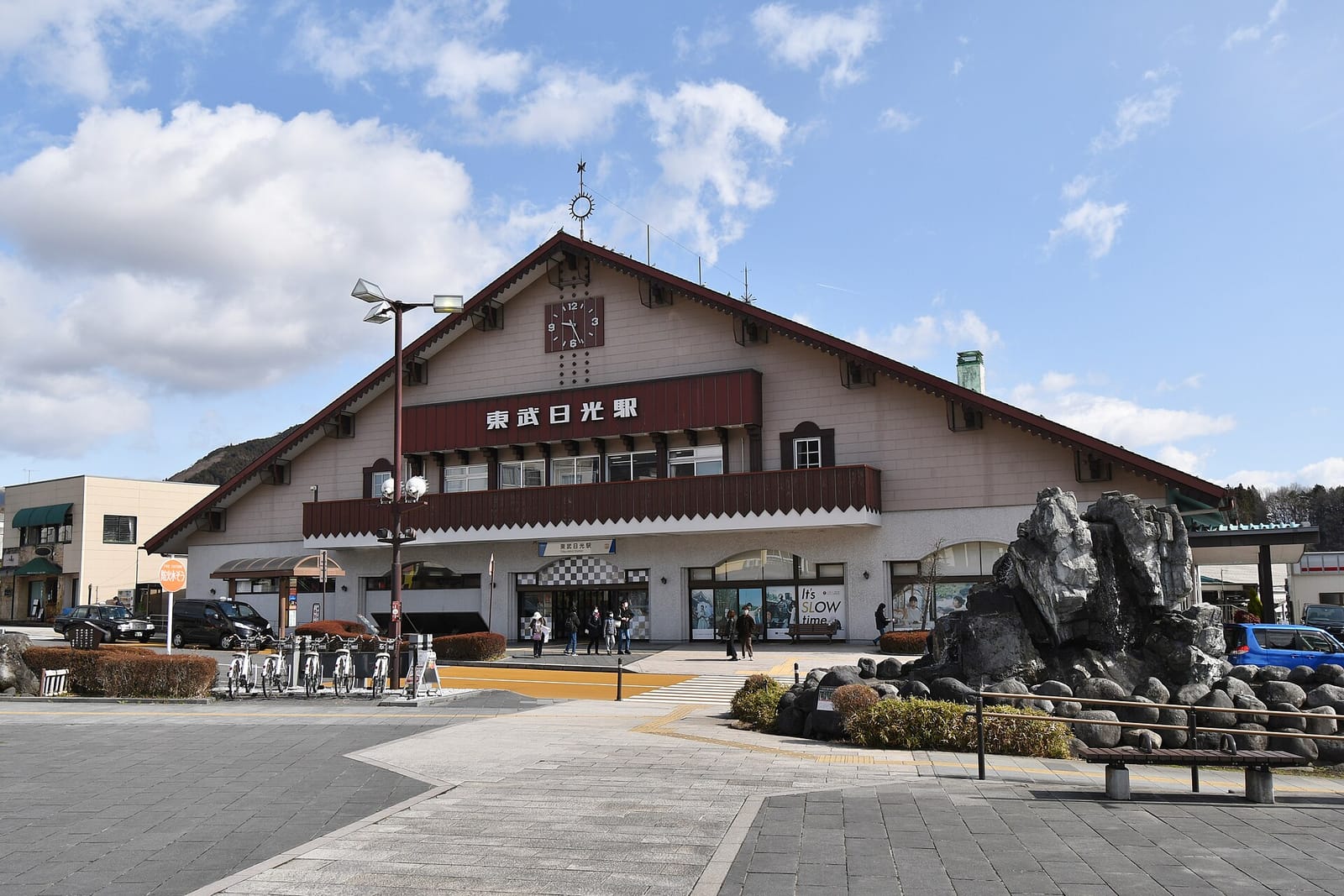
The start and end of the day. Tobu lists the Asakusa to Tobu-Nikko limited express at about 1 hour 50 minutes on a direct train. Visit Nikko says Tobu buses run from here to the major sights as often as every 15 minutes, and the World Heritage Tour bus loops past the shrines and temples. If a single day feels rushed, staying one night near the station lets you see the shrines at opening time and add Lake Chuzenji the next morning; the button below compares hotels in Nikko.
- Access
- About 1 hr 50 min from Asakusa by Tobu limited express
- Source
- www.tobu.co.jp
Shinkyo Bridge
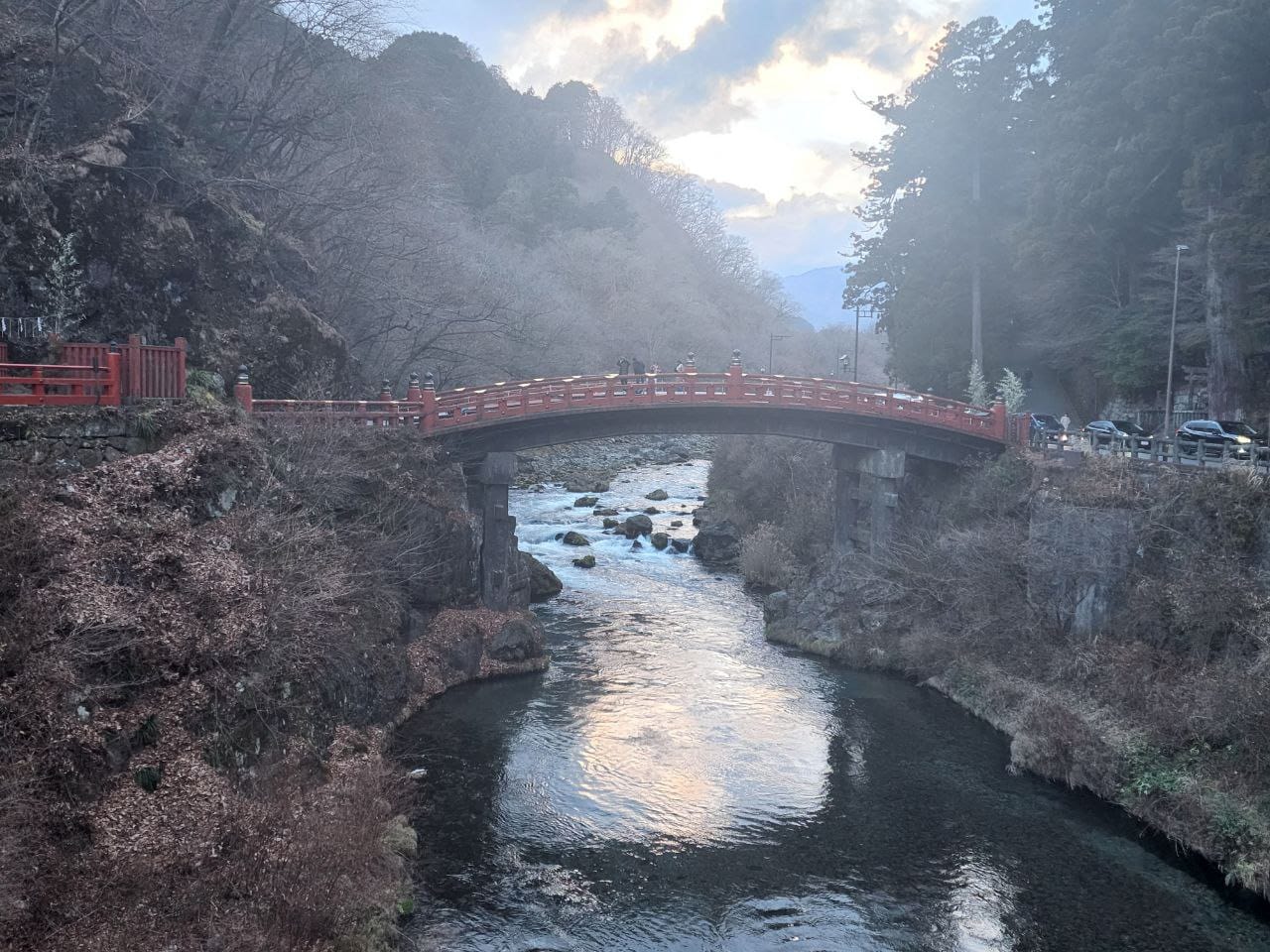
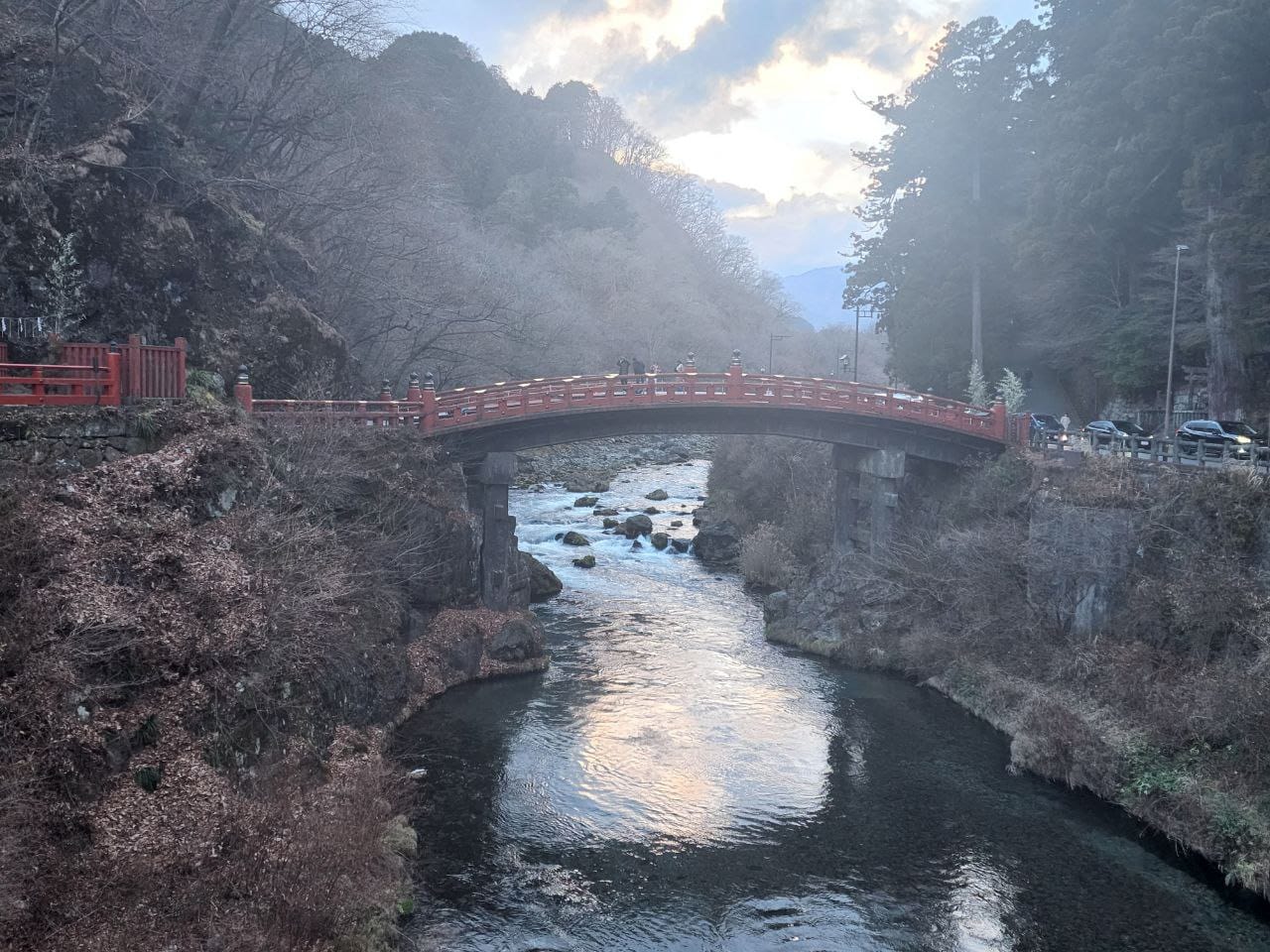
The red-lacquered bridge over the Daiya River marks the entrance to Nikko’s shrine area. You can photograph it from the road for free, but walking across it requires the ¥300 crossing ticket. Note that it opens at 9:30 in winter, half an hour after Toshogu, which is why this plan starts here only at that time.
- Hours
- 9:30–15:30 Nov–Mar; 8:30–16:30 Apr–Oct (as of November 2026)
- Price
- ¥300 crossing ticket, cash only (as of November 2026)
- Access
- World Heritage Tour bus from Tobu-Nikko Station to Shinkyo stop, about 5 min
- Source
- www.visitnikko.jp
Rinnoji Temple (Sanbutsudo)
Rinnoji’s main hall, Sanbutsudo, is the first building you reach on the walk up. Rinnoji sells a set ticket for Sanbutsudo and Taiyuin at ¥900, cheaper than the two single tickets (¥400 and ¥550). The temple says the set ticket is sold only until 1:30 p.m. from November to March and 2:30 p.m. from April to October, so buy it now even though Taiyuin comes later in the day.
- Hours
- 8:00–16:00 Nov–Mar; 8:00–17:00 Apr–Oct; entry ends 30 min before closing (as of November 2026)
- Price
- Sanbutsudo ¥400; set ticket with Taiyuin ¥900 (as of November 2026)
- Access
- Walk uphill from Shinkyo Bridge
- Source
- www.rinnoji.or.jp
Nikko Toshogu Shrine
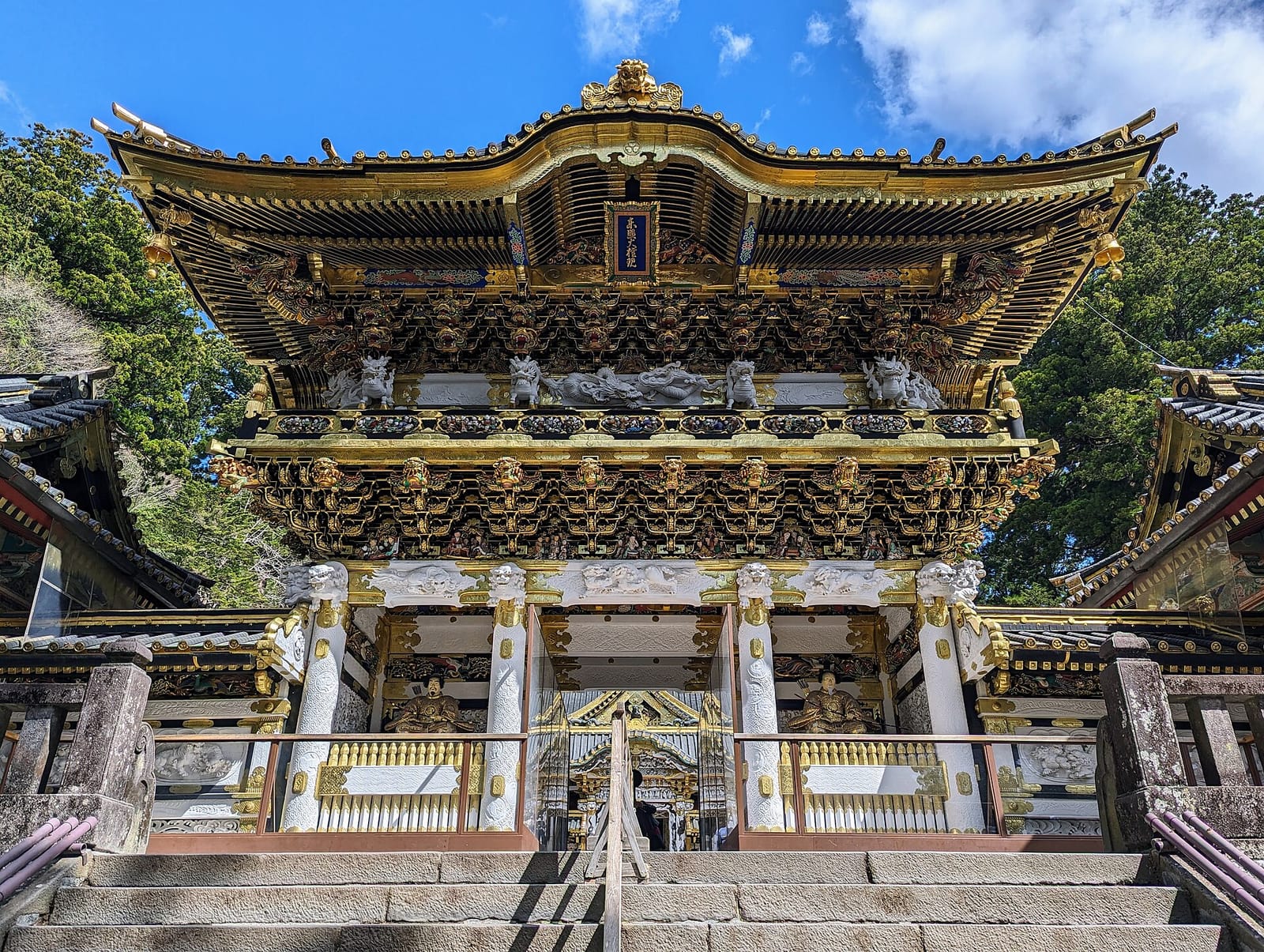
Tokugawa Ieyasu was enshrined here after his death in 1616, and Visit Nikko notes that the Yomeimon gate is one of eight National Treasures on the site. The ¥1,600 ticket covers the area from the Omotemon gate through Yomeimon, the main hall, the East Corridor with the sleeping cat carving, the Okumiya inner shrine and the Honjido hall with its “crying dragon” ceiling. Visit Nikko also points out the three monkeys (“see no evil, hear no evil, speak no evil”) and carved elephants drawn by an artist who had never seen one. The shrine rents a 500-yen audio guide in English just past the Omotemon gate.
- Hours
- 9:00–16:00 Nov–Mar; 9:00–17:00 Apr–Oct; ticket sales end 30 min before closing (as of November 2026)
- Price
- ¥1,600 adults, ¥550 elementary and junior high students (as of November 2026)
- Access
- World Heritage Tour bus to Omotesando stop, about 13 min from Tobu-Nikko Station
- Source
- toshogu.jp
Futarasan Shrine
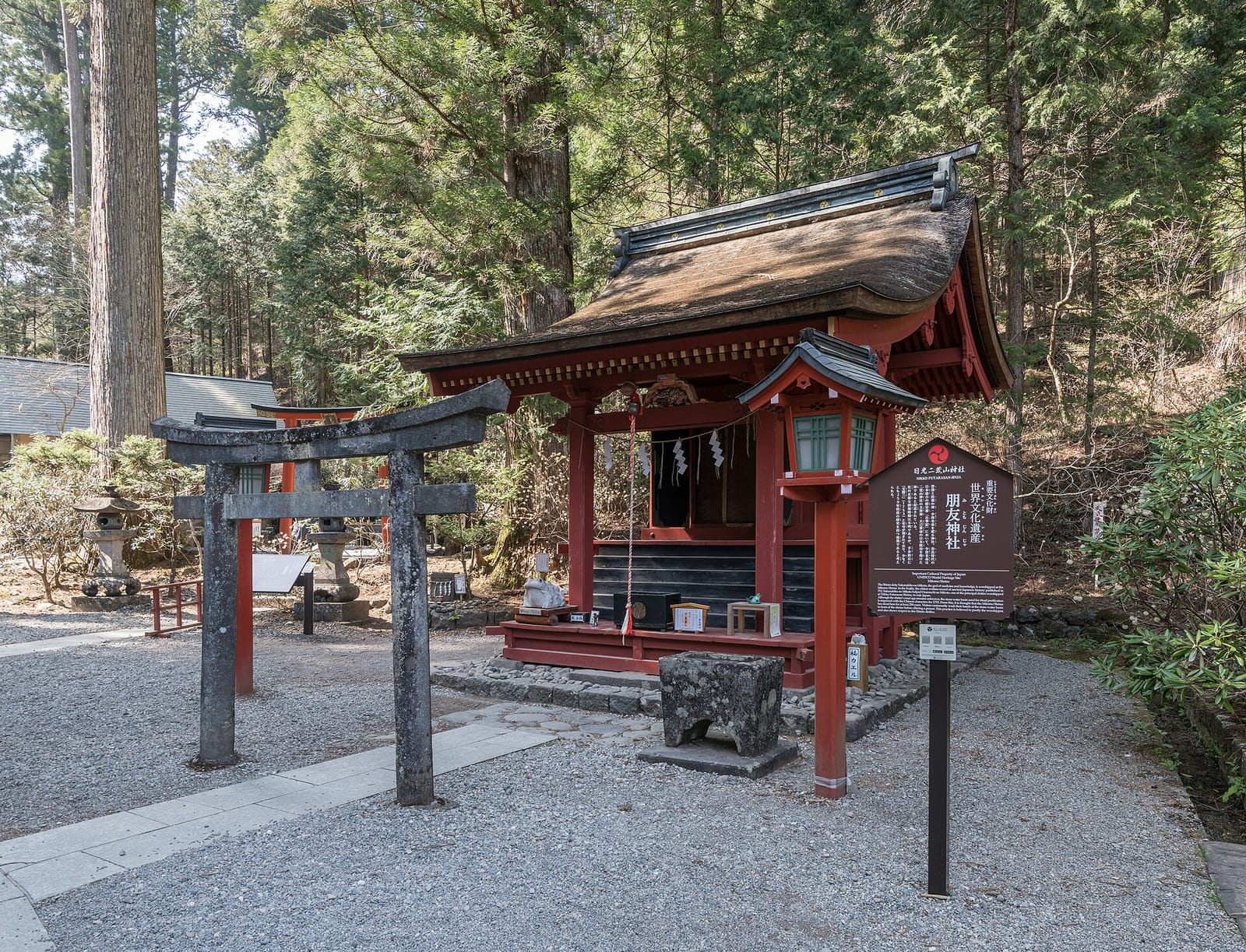
The shrine’s own site lists Shinkyo Bridge among its sacred places and treats the whole of Mt. Nantai as part of the shrine. It sits between Toshogu and Taiyuin, so it fits into the walk without backtracking. The English site describes the bridge and the shrine garden but does not publish current hours, so check at the gate if you plan to enter the garden.
- Access
- Walk west from Toshogu
- Source
- www.futarasan.info
Taiyuin
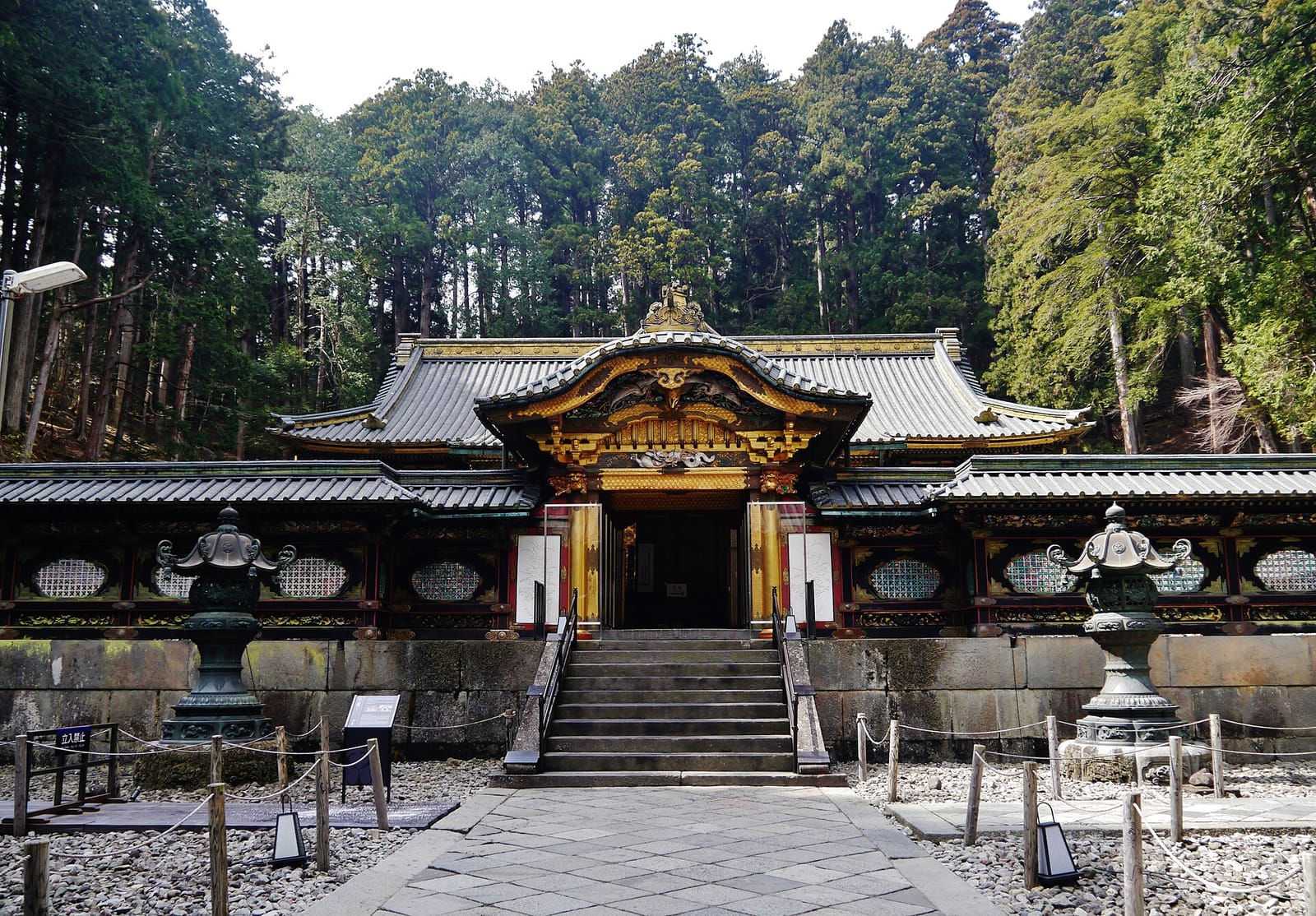
The mausoleum area of Rinnoji, smaller and usually calmer than Toshogu. Rinnoji gives 30 minutes to an hour for a visit. The temple notes that the worship hall can be closed to visitors during ceremonies, so the visit may be shorter on some days.
- Hours
- 8:00–16:00 Nov–Mar; 8:00–17:00 Apr–Oct; entry ends 30 min before closing (as of November 2026)
- Price
- ¥550 alone, or included in the ¥900 set ticket (as of November 2026)
- Access
- Walk from Futarasan Shrine
- Source
- www.rinnoji.or.jp
Kanmangafuchi Abyss
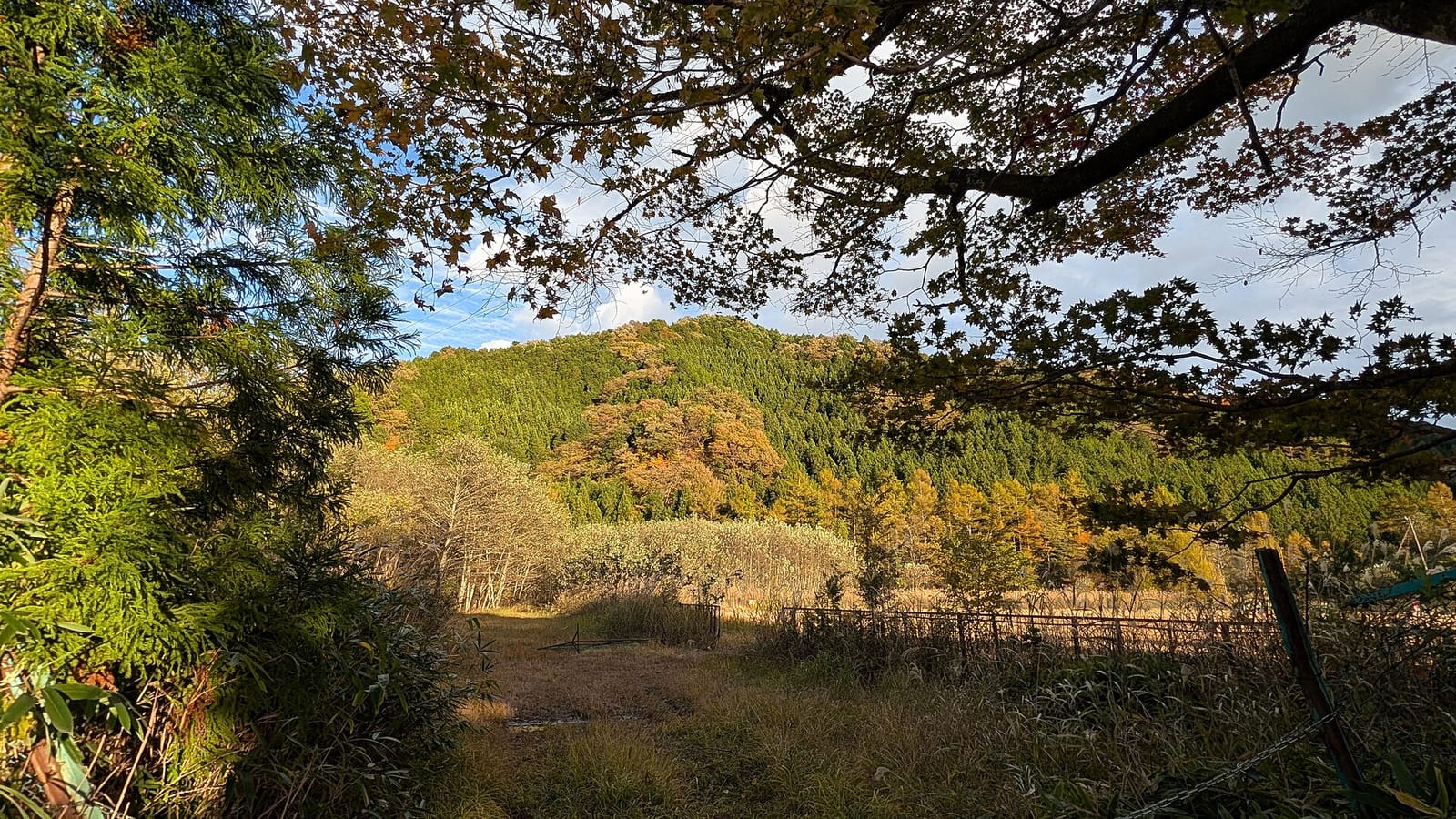
A small gorge on the Daiya River formed by an eruption of Mt. Nantai about 7,000 years ago, per Visit Nikko. The riverside path is lined with around 70 small jizo statues, and local legend says the count changes every time you try. It is the quiet end to a day of crowded shrines, but the path runs along the river, so skip it in heavy rain or after dark in winter.
- Hours
- Open year-round
- Access
- Bus toward Chuzenji Onsen or Yumoto Onsen to Sogokaikan-mae, about 15 min from the stations, then a 15-min walk
- Source
- www.visitnikko.jp
Are there other ways to do the day?
Yes. Three swaps cover most situations: a JR route for rail pass holders, a rainy-day version, and an Oku-Nikko version for those willing to stay the night.
Plan B: you have a Japan Rail Pass or JR East pass
Take the JR route instead of Tobu. Ride the Tohoku Shinkansen from Tokyo Station to Utsunomiya and change to the JR Nikko Line for JR Nikko Station. The Japan National Tourism Organization puts the whole trip at around 1 hour 40 minutes. Visit Nikko notes that this route costs more and has a transfer, but it is fully covered by the Japan Rail Pass.
There is also a direct option from western Tokyo. Limited Express Spacia Nikko and Kinugawa trains run from JR Shinjuku and JR Ikebukuro onto Tobu tracks, about 2 hours to Tobu-Nikko according to Tobu. Visit Nikko says JR East passes cover these through trains. Without a pass, Tobu’s table lists JR Shinjuku to Tobu-Nikko at ¥2,040 base fare plus ¥2,100 limited express. Tobu notes that the NIKKO PASS does not cover this route, and the tickets are not sold at Tobu ticket machines or on Tobu’s online service; book them through JR East’s Ekinet instead. You cannot board these trains with Suica or PASMO alone.
| Route | Time to Nikko | Adult one way (as of November 2026) | Best for |
|---|---|---|---|
| Tobu, Asakusa → Tobu-Nikko | About 1 hr 50 min | ¥1,400 + ¥1,650 limited express (regular day) | Most visitors, NIKKO PASS holders |
| JR, Tokyo → Utsunomiya → Nikko | About 1 hr 40 min | Covered by Japan Rail Pass | JR Pass holders |
| JR–Tobu through train, Shinjuku → Tobu-Nikko | About 2 hr | ¥2,040 + ¥2,100 limited express | Shinjuku hotels, JR East pass holders |
Plan C: it is raining
Keep the shrines and drop the riverside walk. Shinkyo, Rinnoji, Toshogu, Futarasan and Taiyuin are all close together. Replace Kanmangafuchi with the Toshogu Museum (¥1,000, or ¥2,400 with the shrine ticket as a set) and take the bus rather than walking between Shinkyo and the station. Pack for cold: Nikko’s shrines are in the mountains, and our list of what to pack for Japan in winter applies from November.
Plan D: you also want Lake Chuzenji and Kegon Falls
Do not try it in one day from Tokyo in winter. Oku-Nikko is outside the World Heritage Area pass; Tobu’s NIKKO PASS All Area (¥8,000, valid 4 days) covers all Tobu buses in Nikko and the Lake Chuzenji cruise from mid-April to November 30. Also note that Tobu lists the Akechidaira Ropeway as suspended from January 16, 2026 to August 31, 2027. Spend a night near Tobu-Nikko, do the shrines on day one, and head up to the lake the next morning. For an overnight version with a night in Kinugawa Onsen, see our Nikko and Kinugawa Onsen 2-day itinerary. If you prefer to sleep in Tokyo, our guide to budget hotels in Asakusa lists options a short walk from the Tobu platforms.
How do you buy the tickets?
Buy the limited express seat and the base fare as two separate tickets, or the NIKKO PASS plus a limited express ticket. Tobu sells limited express seats online from 9:00 a.m. one month before the travel date, up to 3 minutes before departure, with up to 8 seats per booking. Ticket machines at major Tobu stations also sell them. For the return, book a fixed train rather than hoping for a seat: Revaty Kegon 46 at 17:22 is the last comfortable option after a winter day that ends at 4 p.m.
If your train back is full, Visit Nikko says local trains from Asakusa add about 60 minutes and cost about half the limited express fare. If you hold the NIKKO PASS, its Asakusa round trip is the base fare, so you only need a limited express ticket for the faster trains.
What to pack before you go
Maps, train apps and translation drain a phone by mid-afternoon. Keep it in your carry-on: power banks are not allowed in checked luggage.
Japan still runs on coins: there are six of them, from 1 to 500 yen, and you collect a pocketful fast. A holder with a slot for each coin lets you pay the exact amount at ticket machines, shrines and small shops without digging.
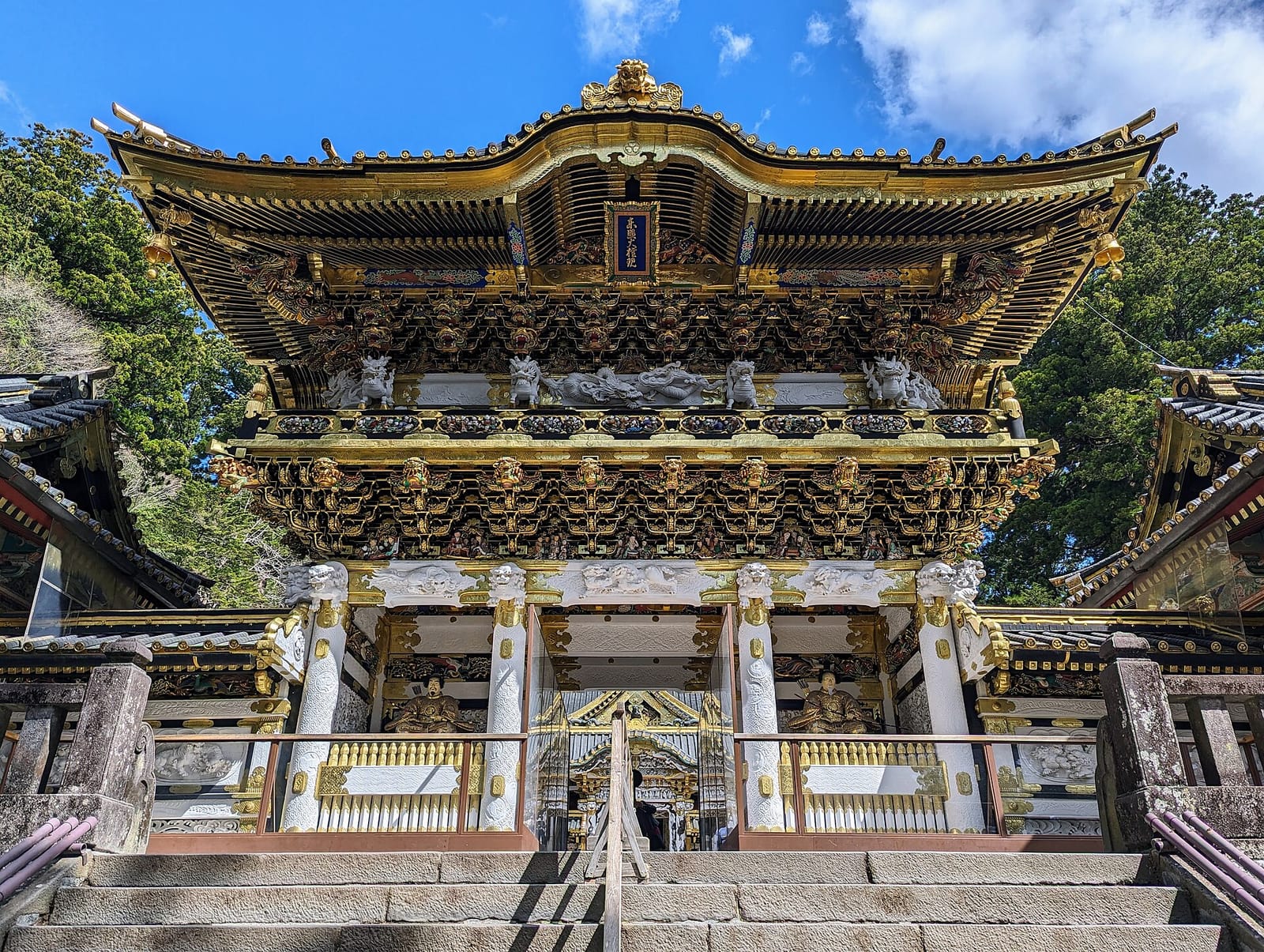 Nikko Toshogu Shrine Guide: Route, Tickets, Hours and Highlights
 Is the NIKKO PASS Worth It? Break-Even Math for Every Trip
FAQ
Is Nikko worth a day trip from Tokyo?
Yes, if you start early. The limited express from Asakusa takes about 1 hour 50 minutes, and the main World Heritage sights (Shinkyo, Rinnoji, Toshogu, Futarasan and Taiyuin) sit close together. A 7:00 departure gives you about eight hours in Nikko before an early-evening train back.
How much does a Nikko day trip from Tokyo cost?
On a regular day, about ¥9,100 per adult as of November 2026: NIKKO PASS World Heritage Area ¥3,000, two limited express tickets ¥3,300, and ¥2,800 in admissions for Shinkyo, Toshogu and the Rinnoji set ticket. Food is extra. On busy days the two limited express tickets cost ¥3,700.
Can you use the Japan Rail Pass to get to Nikko?
Yes, on the JR route. Visit Nikko says the shinkansen to Utsunomiya and the JR Nikko Line are fully covered by the Japan Rail Pass, and JR East passes cover the through trains from JR Shinjuku. Trains that start at Tobu Asakusa are not covered.
Do you need to book the train to Nikko in advance?
Book the limited express seat in advance on weekends and in autumn. Tobu sells seats online from 9:00 a.m. one month before the travel date. If you want limited express tickets with your NIKKO PASS, Tobu says the online reservation must be done 3 days before departure.
How long do you need at Toshogu Shrine?
Plan on at least 1 to 1.5 hours to walk from the Omotemon gate through Yomeimon to the sleeping cat and the Okumiya. Toshogu stops selling tickets 30 minutes before closing, so arrive by 3:30 p.m. from November to March and by 4:30 p.m. from April to October.
Sources
- Tobu Railway — NIKKO PASS World Heritage Area (price, coverage, where to buy)
- Tobu Railway — NIKKO PASS All Area
- Tobu Railway — Access to Nikko
- Tobu Railway — Kegon / Revaty Kegon fare and limited express charge table (PDF)
- Tobu Railway — Seasonal limited express charge calendar (PDF)
- Tobu Railway — JR Shinjuku to Tobu-Nikko through train fares (PDF)
- Tobu Railway — Limited express timetable, outbound (revised March 14, 2026, PDF)
- Tobu Railway — Limited express timetable, inbound (revised March 14, 2026, PDF)
- Tobu Railway — How to purchase limited express tickets
- Visit Nikko — Getting to and around Nikko
- Japan National Tourism Organization — Nikko National Park, how to get there
- Visit Nikko — Shinkyo Bridge
- Rinnoji Temple — Visiting hours and admission (Japanese)
- Nikko Toshogu — Hours and admission (Japanese)
- Visit Nikko — Nikko Toshogu Shrine
- Futarasan Shrine — official English site
- Visit Nikko — Kanmangafuchi Abyss
This article contains affiliate links. We may earn a commission at no extra cost to you.